Match the equipment to the room’s second job. Where a room serves only as a gym, a permanent machine wins on rigidity. Where it is also a bedroom or an office, foldable home gym equipment wins on footprint, and that second case describes most homes asking this question. The rest of the verdict follows from floor time.
The change is measurable. A machine occupies its floor 24 hours a day, while folded equipment occupies it only for the length of a session. Sales figures are beyond what this article can show, so the verdict rests on floor area and hinge design.
Where this came from
For most of the past few decades, a home gym copied a commercial one: a multi-station with a weight stack, or a treadmill on a fixed deck, sized for a room that did nothing else. A machine guides each movement along fixed paths, so its frame must be rigid and bolted into one position, and its mass must hold it still under load.
Free weights move that guidance into the user. The frame then needs rigidity only at the bench and the rack, and every other piece can be a light component that comes out for a session. That shift made folding practical, because a hinge carries a person lying on a bench far more easily than it carries a weight stack with its pulleys.
Treadmills show the early form of the idea: many decks hinge upward. A hinge shrinks the footprint in one dimension only, which is why those units still stand roughly as tall as the deck is long. Rooms did the rest. A space with a bed or a desk in it has to give the floor back after the session, and a machine can’t.
What actually changed in foldable home gym equipment
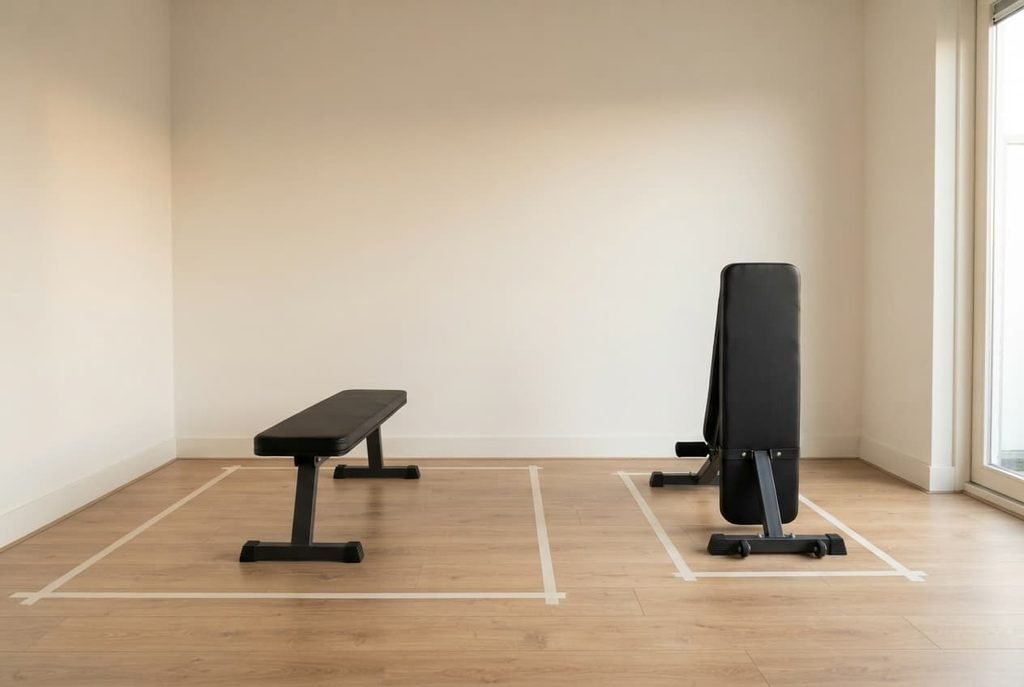
Foldable home gym equipment differs from a machine in four measurable places. The first is floor time: a multi-station of about 120 × 180 cm with 60 cm of clearance on each side claims a zone near 2.4 × 3.0 m, which is 7 m², all day. A fold-flat bench and an adjustable pair claim a 200 × 200 cm exercise zone only for the session, then under 0.5 m² of storage, with the pair in a tray of about 50 × 25 cm and the bench standing on its end.
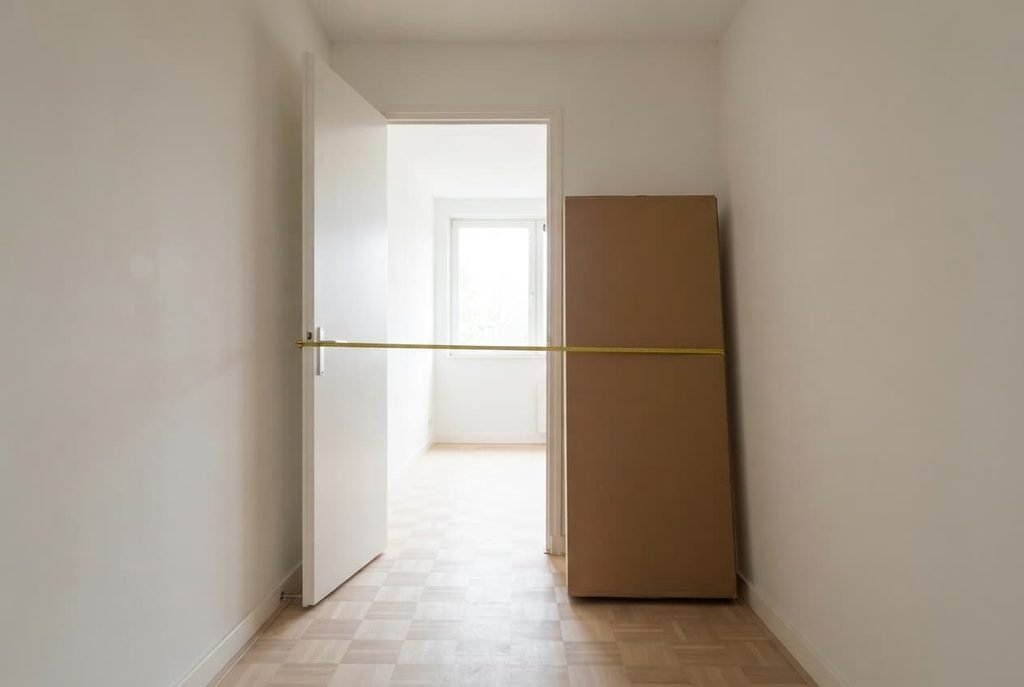
The second is mass per component. A machine is one object of well over 100 kg, while a foldable setup is several pieces that one adult carries up a staircase. A standard interior door leaves roughly 78 cm clear, so the pieces pass through it and a crated machine may not. Selling follows the same logic: a bench goes into a car boot, and a machine needs two people and a van.
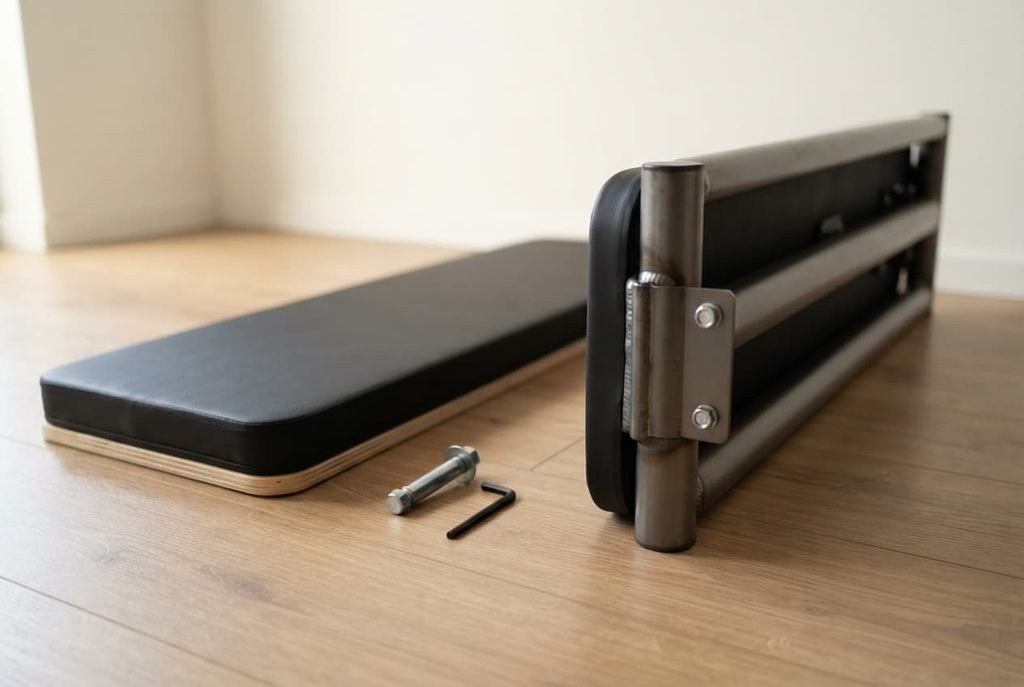
The third is where the stiffness lives. A machine carries load through one continuous frame. A folding piece carries it through a joint, so quality moves from the frame to the hinge: two bolts and a continuous weld hold steady, whereas a single-bolt pivot develops play within months of weekly loaded use.
The fourth is installation. Nothing is anchored, so nothing needs unscrewing from a rented wall.
In short, the footprint now exists only while you train.
Who foldable gym equipment suits, and who it doesn’t
Foldable home gym equipment gives a bedroom or study with a second job its floor back after each session, which is the whole case for folding. A rented flat gains most: nothing is anchored, so the deposit stays untouched. A household lifting under about 25 kg per hand on most weeks of the year meets none of the limits that make a machine worth its floor.
Folding changes the footprint and leaves ceiling height untouched. A 180 cm adult pressing overhead still needs roughly 230 cm clear, so a low attic room gains nothing from a fold.
Some readers should skip it. A basement or garage room that exists only for training has nothing to fold away, and a machine’s guided path suits a person who wants a fixed movement without balancing a load. Lifters working near 100 kg on presses should check the stated rated load of both the hinge and the pad before trusting a fold, because a rating is a number on a label and a hinge is a moving part.
Setup friction decides the rest. Once folding and unfolding takes more than a couple of minutes, the fold becomes the reason a session gets skipped. Which camp you belong to depends on one number: how many hours a week your floor serves as something other than a gym floor.
Is it worth adopting
Foldable home gym equipment is worth adopting where the room has a second job. It asks for no change to the room. Nothing is drilled and nothing is built, and a reversal amounts to selling or storing pieces. The outlay is typically smaller than a machine’s, and the recurring cost is replacing a worn pad or a hinge pin, which takes minutes with ordinary tools. Each piece also sells separately, so a mistake in one purchase doesn’t strand the rest.
Where the room is only a gym, the verdict flips. A machine’s rigidity wins, and a folding joint adds a wear point with no benefit in return. Three things would make the choice date: the extreme version described below, a finish tied to one period of colour fashion, and a commitment that is expensive to undo, such as fixings drilled into a wall.
The version that will date fastest
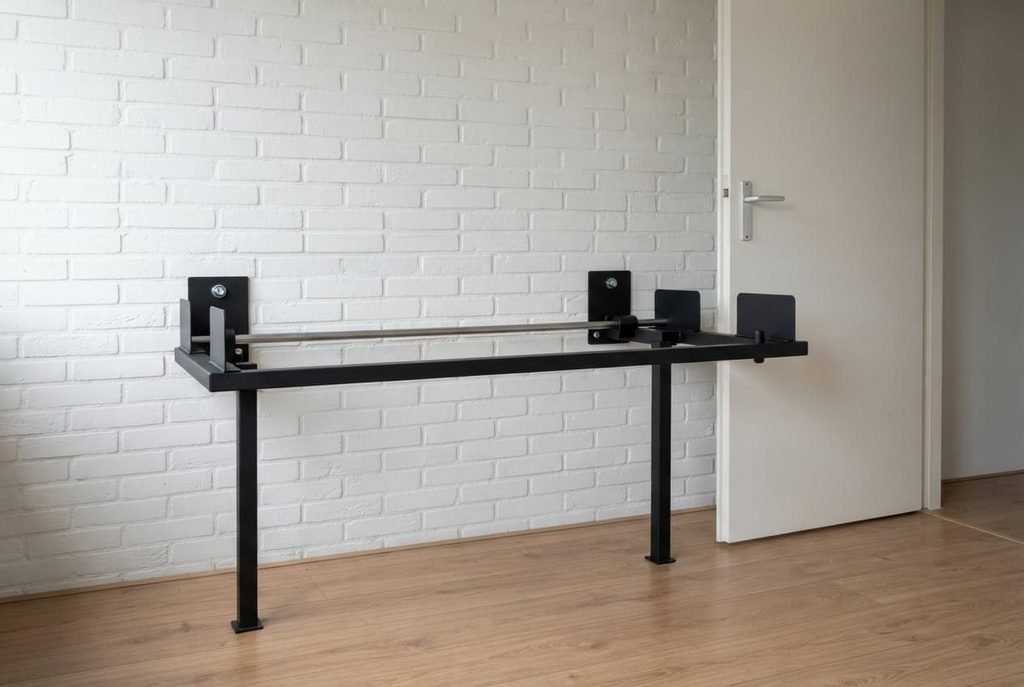
The extreme version is the wall-bolted fold-down rack with fixed plates. Three marks identify it: fixings drilled into one wall, a hinge carrying well over 100 kg, and dimensions sized to one particular room. Fixed plates mean the load can’t be lowered for a lighter user, and the fold-down position can block a door swing. It dates fastest because the next room has different walls, and the hinge carries the heaviest load in the design. The tell is a spec sheet that lists a wall template but no freestanding mode, which means the unit can’t be tested in a shop.
The popular claim that a folding machine gives you everything a permanent one does is false: a weight stack on a hinge is both a machine and a hinge, so it inherits the weaknesses of both. The moderate version pairs a freestanding fold-flat bench with an adjustable pair and bands, which moves to the next flat in one trip.
A fold-away design that needs a drill is a fixture with a hinge.
How to try it without committing
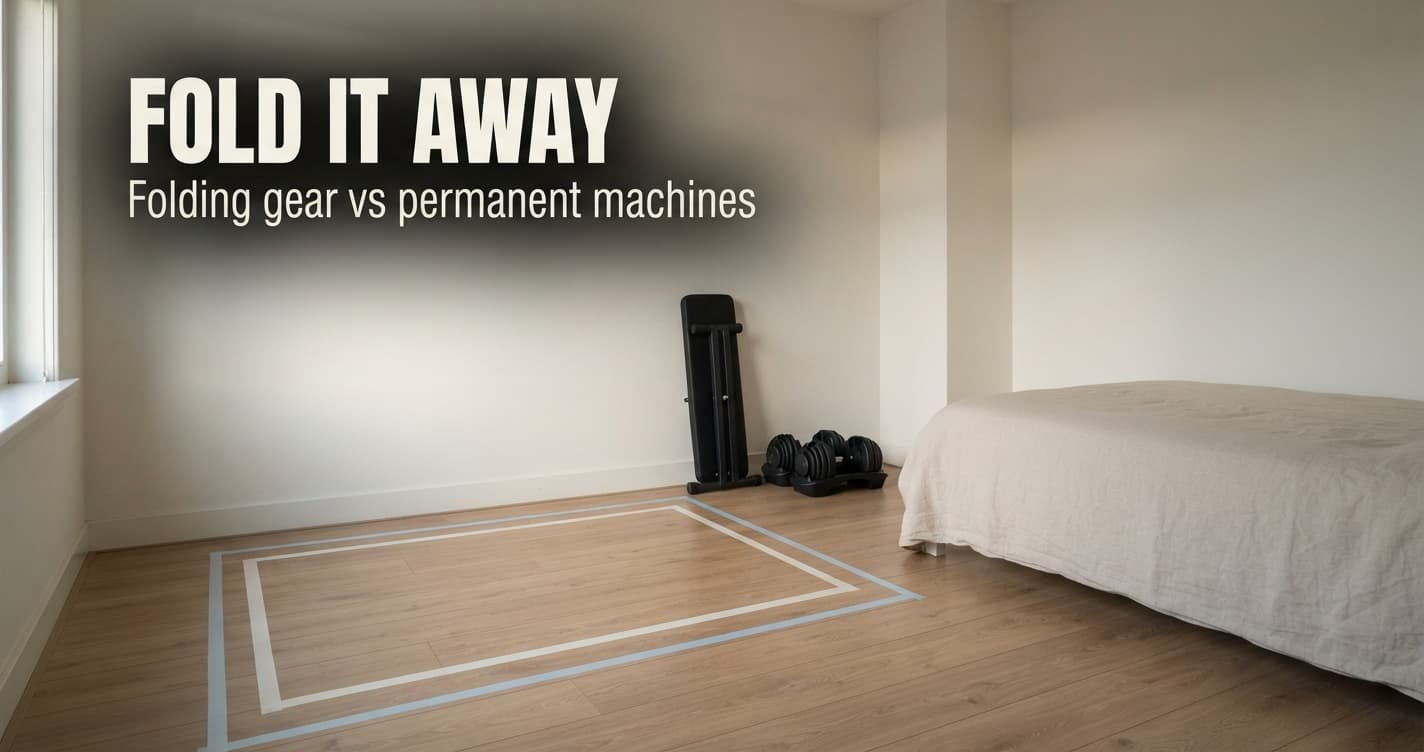
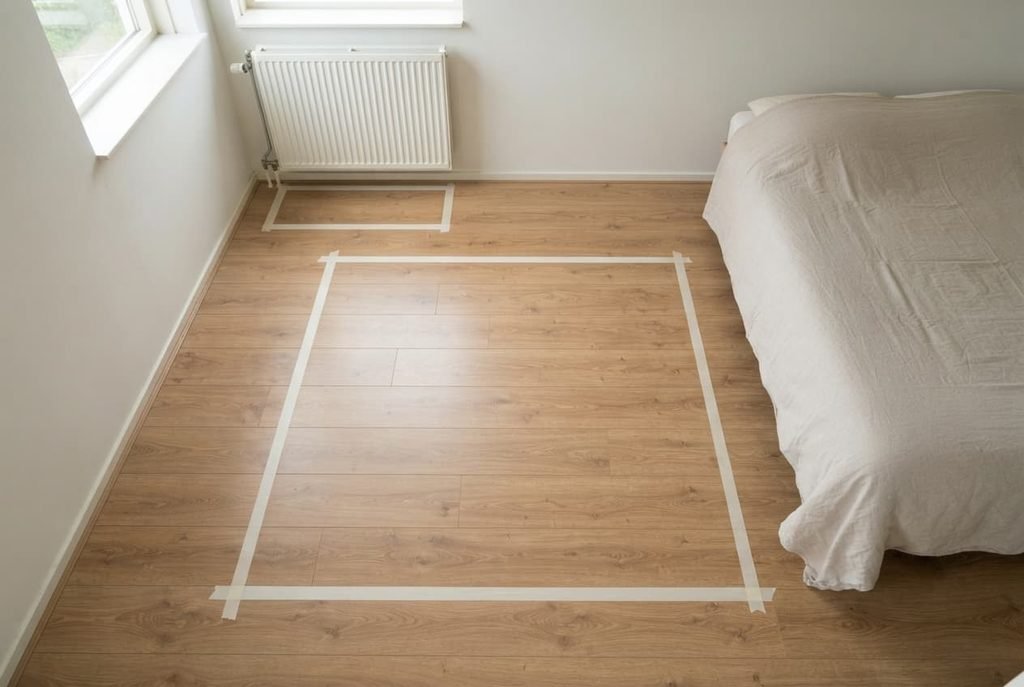
Tape the operating zone and the folded footprint on your floor for a week, a 200 × 200 cm square and a 50 × 25 cm rectangle, and see whether the room still works with the tape down. Then run four weeks on a dumbbell pair in a tray and a set of door-anchor bands before buying any bench, since the first month shows how much equipment you actually use. If a friend owns a fold-flat bench, borrow it for a weekend and listen for creak at the hinge under a loaded rep. Neither step needs a drill, a receipt or a van.
Foldable equipment has taken the small-room job and left the heavy-load job to machines. Choose by what the room does when you’re not training: if it does something else, fold; if it does nothing else, bolt. The hinge, not the label, decides how long the choice lasts, so look at the joint before you look at the finish. Floor time and hinge design settle everything else.
Questions readers keep asking
Should I replace my permanent home gym machine with foldable equipment?
Keep the machine if the room exists for training and you use it weekly. Replace it if you walk around it more than you lift on it, or if the room needs its floor back. Measure the floor time first: a machine claims its zone 24 hours a day, so the question is what else that floor could do.
Is foldable gym equipment good for small apartments?
Yes, when the corner has a second job. A fold-flat bench and an adjustable pair need a 200 × 200 cm zone only during a session and under 0.5 m² of storage afterwards. Check the stairwell and door route first, since a standard interior door leaves roughly 78 cm clear.
How long does foldable gym equipment last?
The hinge decides. A two-bolt hinge with a continuous weld stays steady for years of weekly use, while a single-bolt pivot develops play within months. Pads and hinge pins are the parts that wear, and both swap out in minutes. Check the rated load of the hinge before you buy.