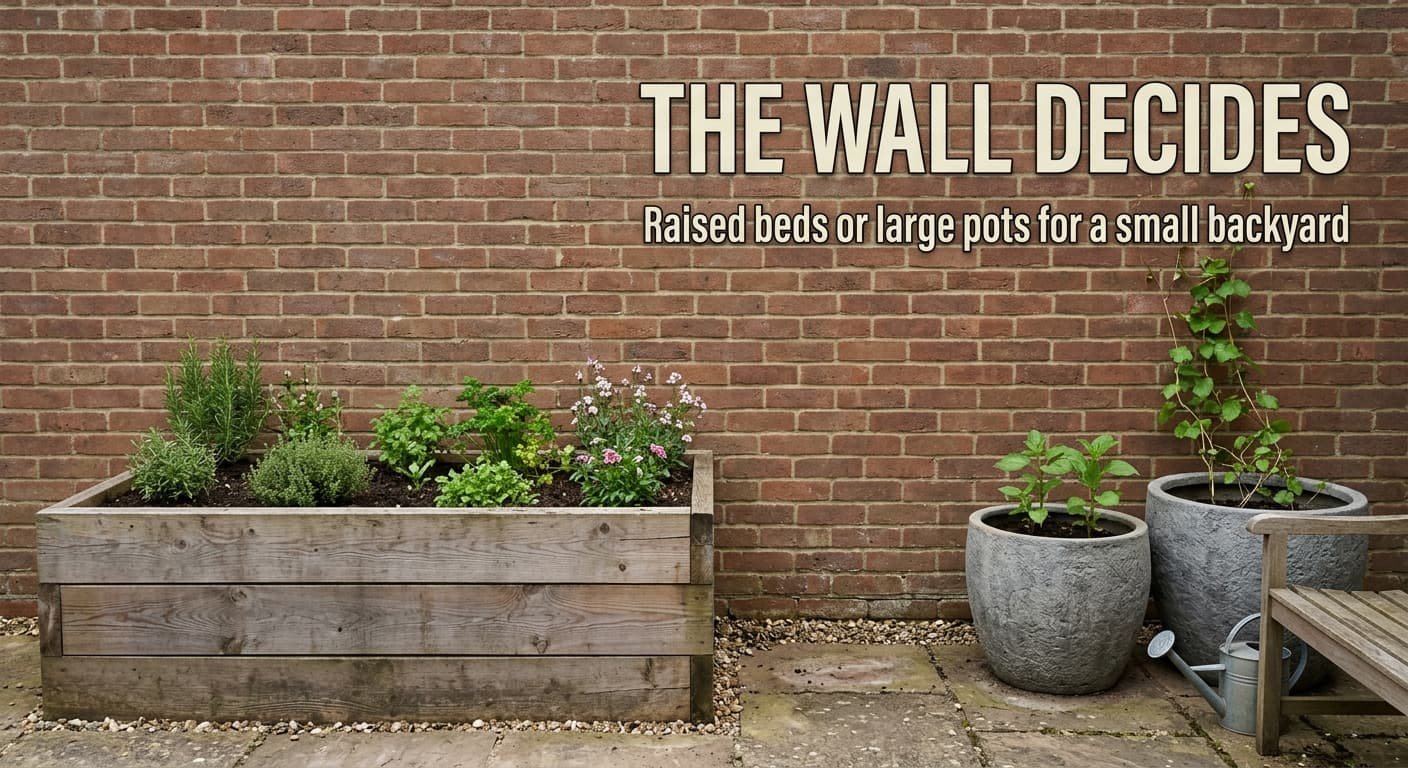
Most advice ranks raised beds above pots, and the ranking hides the property that separates them. That property is exposed wall per litre of soil, because the wall is where heat and water reach the roots. Pick raised beds when the ground is soil and you can’t water daily. Pick large pots when the yard is paved or rented.
All figures below use a Dutch rear garden with a patch 240 cm wide. A large pot is one at least 60 cm across. A bed is a timber frame with an open base. Two quick tests with a spade and a bucket settle it for your patch. They come near the end.
The one property that decides raised beds or large pots
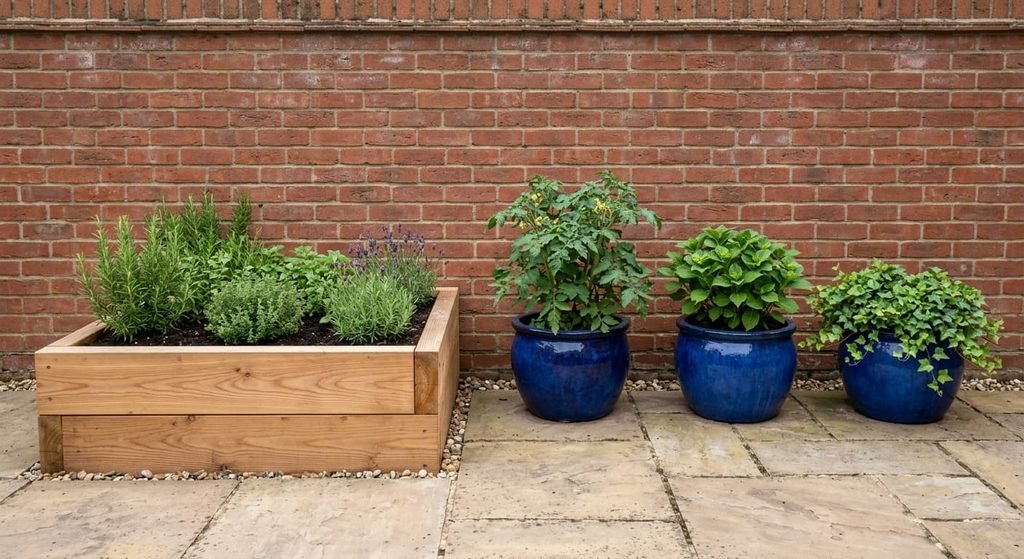
The deciding property is the exposed wall per litre of soil. Soil trades water and heat with the air through its top and through its walls. The tops are alike. A pot 60 cm across and 50 cm tall has about 20 cm² per litre. A bed 30 cm deep has 33 cm². The walls differ. For a round pot the wall per litre is 4 divided by the diameter in centimetres. A pot 40 cm across has 100 cm² per litre, and one 60 cm across has 67 cm². For a bed it’s the perimeter over the plan area. At 120 × 90 cm that gives 39 cm² per litre.
Width changes the result; depth leaves it alone.
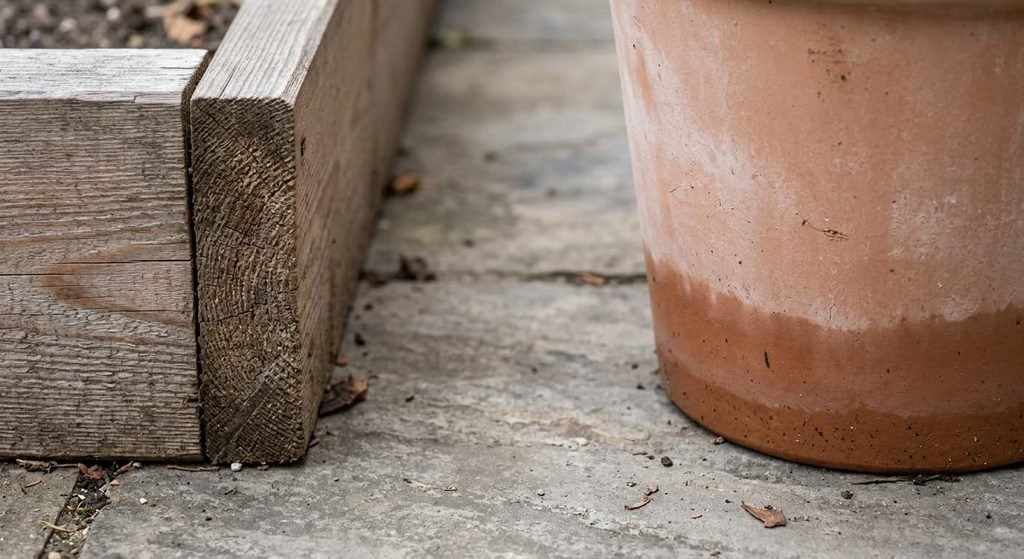
That wall matters in three ways, and they’re easy to check. Terracotta pulls water out through itself, while a dark plastic wall heats the root zone from the side in July. A timber board 25 mm thick resists heat flow roughly fifteen times better than a pot wall 3 mm thick. Wood conducts heat far less than plastic does, and the board is eight times thicker, so the soil behind it follows the air temperature much more slowly than soil in a thin pot does. In January the cold enters the same wall. A bed also has an open base, so its roots meet the ground. A pot’s roots stop where the pot stops.
Head to head
| Property | Raised beds | Large pots |
|---|---|---|
| Wall per litre of soil | 39 cm² at 120 × 90 cm | 67 cm² at 60 cm across, 100 at 40 |
| Water in a dry spell | Open base lets roots reach damp subsoil, so a missed day matters little | Roots stop at the base, so the pot is the whole supply and a missed day shows |
| Frost | Ground warms the soil from below and the board insulates the sides | Cold enters from every side, so a small pot can freeze solid |
| Weight when wet | Fixed in place | About 100 kg for 141 L at 0.7 kg per litre |
| Reach | 60 cm to the middle from either long side, so a path is needed on both | One side, usually along a fence, so no path is needed behind |
| Litres per m² of floor | 300, from 324 L in 1.08 m² | 334, from 141 L on a 65 cm pitch |
| When a part fails | Replace one board, soil stays put | Replace the pot or tip the soil out first |
The floor row surprises people most: large pots pack as much soil into every metre of floor as a bed does. The gap between raised beds or large pots sits in the wall, and in what the roots below can reach.
Where raised beds win over large pots
A bed forgives a missed weekend. Its soil mass is big, and its roots reach the damp ground below. A hot Saturday with nobody home won’t hurt it much. A pot of the same plants may be flat by Sunday evening.
The plain reasons follow. A rotten board is replaced alone, and the soil stays in place. A rim 45 cm high doubles as a seat, and that’s the height of a dining chair. Root crops such as carrots and parsnips want 30 to 40 cm of loose soil. A bed gives that depth across a big area for one fill. A bed 120 cm wide also lets you reach the middle from the sides, so nobody steps on the soil and compacts it. Fresh fill carries few weeds, and a mulch layer keeps it that way.
Beds also suit a patch where the soil beneath is poor. Filling above it with sound soil skips the hardest digging. Boards 25 mm thick usually bow outward in the first wet winter on a span over about 150 cm. A cross-tie across the middle prevents that.
Where large pots win over raised beds
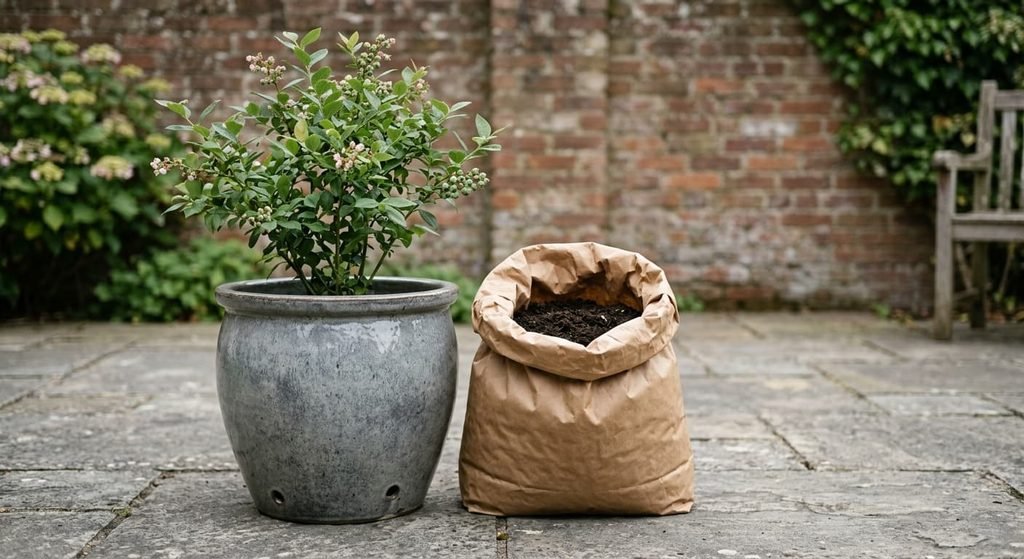
Pots go where soil can’t. On a paved or tiled yard, or over a buried service line, a pot is the only option. A rental is the same story, since pots leave with you. Tip the soil out into bags first. A full pot of 141 L weighs about 100 kg once wet, and nobody lifts that.
Pots also let you choose the soil. A blueberry wants acid soil, and many Dutch garden soils sit near neutral. A pot of acidic compost gives it the right chemistry with no change to the ground. If a plant sickens, you replace the soil in one pot and keep the rest.
Winter wet is another case. A pot on feet drains in minutes, while a bed over heavy clay can hold water against its roots through February. The sun case is the last unglamorous reason. A tall pot shifts 3 m along a wall on a trolley. A plant can follow the light that way, which a bed can’t do.
When neither is right
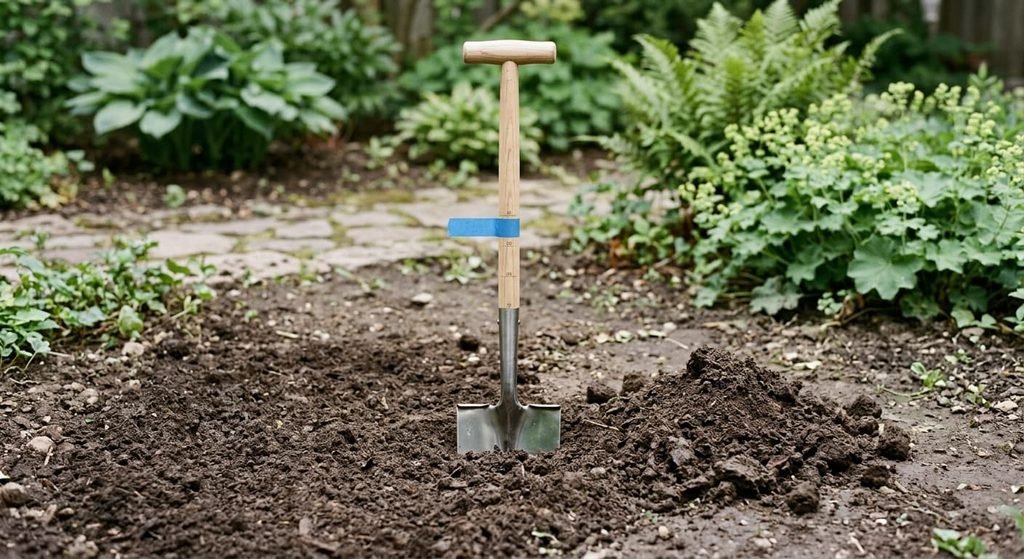
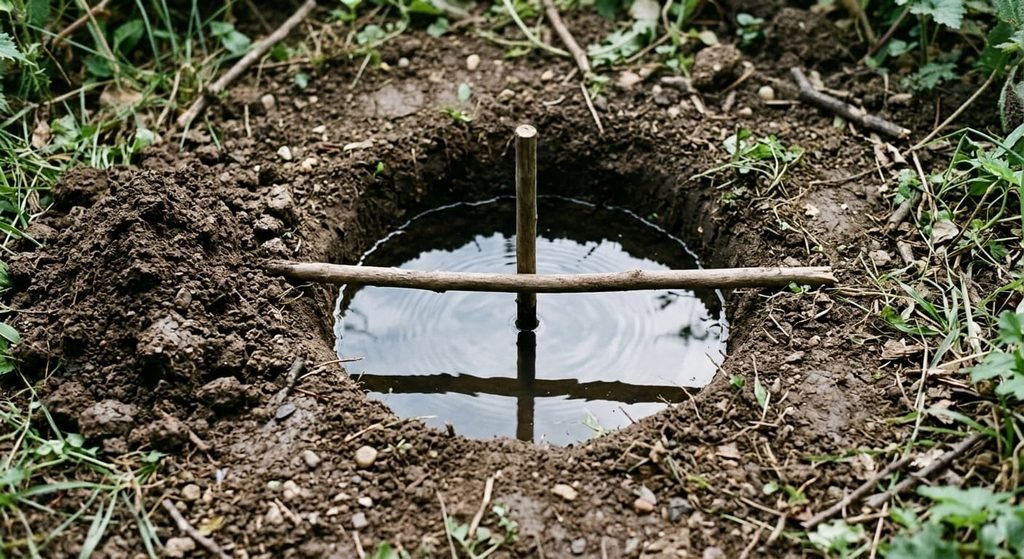
Plant straight into the ground if two tests pass. A spade should go in a full blade, about 25 cm, without hitting rubble. Then dig a hole 30 cm deep and fill it with water, and it should have drained by the next morning.
Roots in the ground have no wall at all.
New-build plots often fail the first test, since builders bury rubble. Heavy clay fails the second. If both pass, a border costs the least and buffers the most. It uses no floor beyond itself. Nothing is built, so there is nothing to rot or refill. Mark it 60 cm deep along the fence, then cut the edge with the spade and mulch it. Lift the turf from the strip and run both tests before buying any board or pot. I’d choose that over raised beds or large pots on any patch that passes, however smart the frames look.
How to decide in thirty seconds
If the spade goes in but the hole holds water overnight, or rubble stops the blade at 15 cm, take raised beds at least 90 cm wide. Fill them above the poor ground. If the yard is paved, or you’ll move within two years, take pots at least 60 cm across. Raised beds or large pots, the July check is the same. Lift a pot, or press a finger into a bed. Wind and sun set how fast your patch dries, and a page can’t measure either. Do both tests this weekend, since they cost a bucket of water. Both take under ten minutes of work, and the water test needs a night to read.
Wall per litre of soil sets how fast roots dry out and how fast they freeze. Width alone changes it. A bed 120 × 90 cm holds 39 cm² per litre. A pot 60 cm across holds 67, and the ground holds none. Choose the ground first if the two tests pass. If they fail, build a bed. With no soil at all, choose pots.
Questions readers keep asking
How long do wooden raised beds last?
The lowest board fails first, because wet soil rots wood where they meet. Replace that board alone and the rest stay sound for years longer. Lining the inside with a membrane keeps wet soil off the timber. A durable hardwood outlasts softwood, though the board in contact with soil still ages first.
Do large pots need watering more often than raised beds?
Yes, in a warm spell. A pot 60 cm across has 67 cm² of wall per litre, against 39 for a bed 120 × 90 cm. Its base is also closed to the ground. Water pots first and most often. A saucer under the pot adds a day or two of margin.
Which suits a rented backyard better?
Pots, because they leave with you. Empty the heaviest into bags before moving, since a full 141 L pot weighs about 100 kg once wet. A raised bed ties you to the ground, so ask your landlord first, and expect to leave it behind when you go.