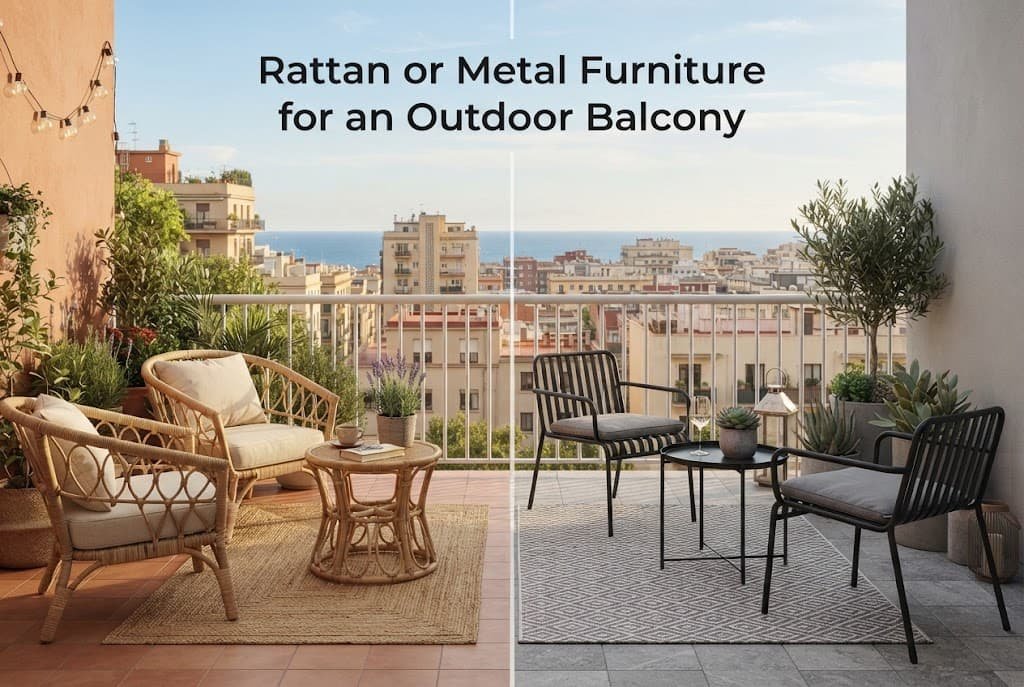
The right material for outdoor balcony furniture isn’t decided by which specific one looks more current in a showroom – it’s genuinely decided by how each one actually behaves against your specific balcony’s real weather exposure and your own actual maintenance habits once it’s fully installed. Rattan and metal furniture solve genuinely different problems, and choosing based on appearance alone misses what actually determines whether either one holds up well over years of actual outdoor use.
The one property that decides it
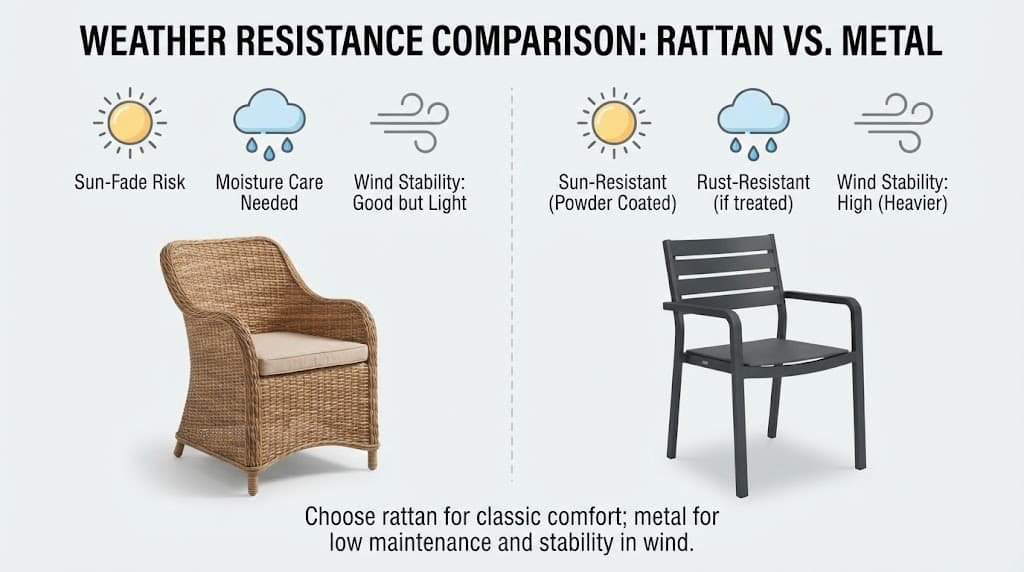
The deciding factor is how each material responds to sustained moisture and temperature swings specifically, not simply which one photographs better in a catalogue. Synthetic rattan handles direct sun and moisture reasonably well without rusting, but genuine natural rattan degrades considerably faster under sustained outdoor exposure than most buyers initially expect; metal furniture genuinely resists moisture damage quite differently depending specifically on its actual finish, with some finishes resisting rust effectively for years while others begin showing surface corrosion within a single season.
This matters because a balcony’s specific exposure – direct sun, coastal salt air, heavy seasonal rain – affects these two material categories in genuinely different ways, which is why the same furniture choice can perform excellently on one balcony and poorly on another with different conditions entirely.
This is precisely why identical-looking furniture can age quite completely differently between two separate households, even when both genuinely bought what appeared to be the exact same category of product entirely. A rattan or metal piece performing genuinely well on a sheltered, low-exposure balcony offers relatively little evidence about how the same material will actually hold up on an exposed, high-wind, or genuinely coastal balcony, since the underlying stress each piece actually experiences differs quite considerably despite the material category being technically identical on paper.
Head to head
| Rattan (Synthetic) | Metal | |
|---|---|---|
| Handles moisture | Generally strong, purpose-built for outdoor use | Varies considerably by specific finish quality |
| Weight | Lighter, easier to rearrange | Heavier, more stable in wind |
| Visual warmth | Softer, more textured appearance | Sleeker, more structured appearance |
| Fading over time | Good with quality synthetic weave | Can fade or chip depending on coating |
| Comfort without added cushions | Generally more comfortable bare | Often needs cushions for comfort |
| Typical upkeep | Occasional cleaning, minimal upkeep | Depends on finish, some need reapplication |
The single row that surprises people most is moisture resistance specifically. Many people naturally assume metal is inherently the more weather-resistant choice since it’s a hard, solid material, but the actual determining factor is the specific protective finish genuinely applied, not the base material itself – a poorly finished metal piece can genuinely develop rust considerably faster than a well-made synthetic rattan piece exposed to the exact same environmental conditions.
Where rattan wins
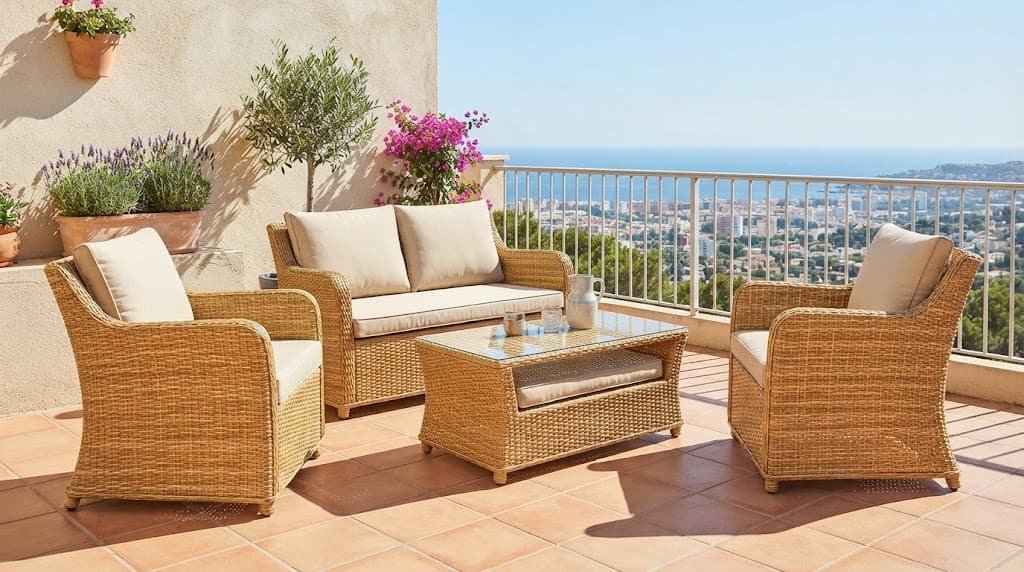
A balcony experiencing genuinely strong, direct sun exposure for much of the day benefits from synthetic rattan’s generally better resistance to sun-related material breakdown, since quality synthetic weaves are specifically engineered for this kind of sustained UV exposure in a way many metal finishes simply aren’t designed to match. The unglamorous reason: rattan furniture is also considerably lighter, which genuinely matters more than it might initially seem for anyone who actually rearranges their balcony furniture fairly regularly rather than leaving it permanently fixed in one position.
Anyone genuinely renting rather than owning outright benefits from this same lightness in a rather different way – synthetic rattan pieces are typically considerably easier to move entirely when relocating, without requiring help or special equipment the way a much heavier metal set often does when an actual move genuinely becomes necessary.
Where metal wins
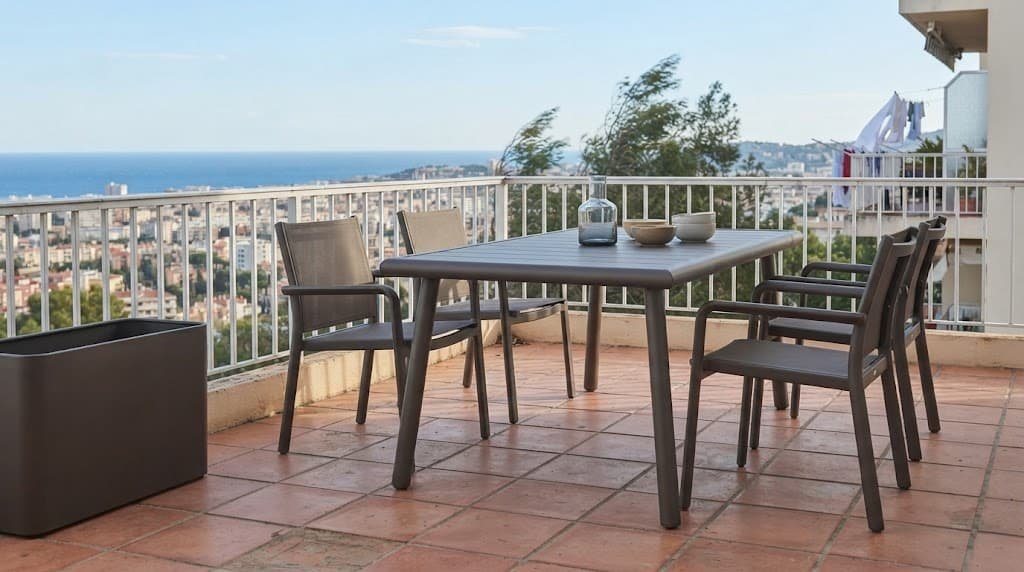
A balcony experiencing genuinely strong, sustained wind exposure benefits from metal furniture’s greater weight and stability, since lighter rattan pieces can shift or even tip in conditions that metal furniture simply sits through without issue. The unglamorous reason: metal furniture with a genuinely quality finish also tends to have a considerably longer realistic lifespan before needing replacement, which matters more over a decade of ownership than the initial purchase comparison alone might suggest.
Anyone genuinely wanting a sleek, minimal visual style overall benefits from metal’s structured appearance in a rather different way, since its cleaner lines and more architectural silhouette suit certain design directions considerably more naturally than rattan’s inherently softer, more textured woven appearance genuinely does, regardless of either material’s actual practical performance characteristics.
When neither is right
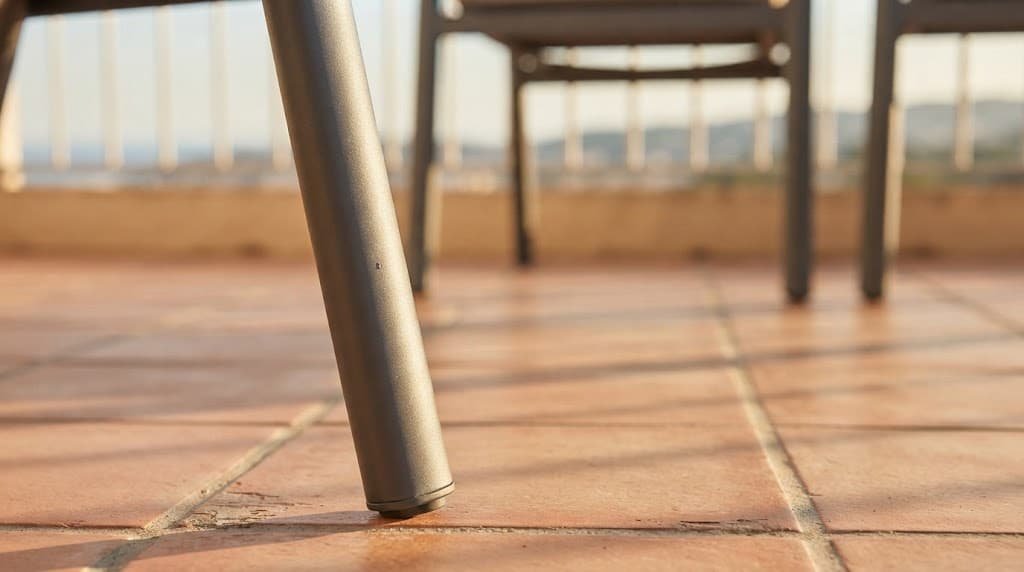
Choosing furniture material based purely on matching your indoor decor’s aesthetic, without checking whether that specific piece was actually designed for outdoor use at all, is worth ruling out regardless of which material you’d otherwise prefer.
Furniture designed for indoor use, even when made from rattan or metal that resembles outdoor-rated versions, often lacks the specific weatherproofing treatment outdoor conditions genuinely require, and this distinction matters more to long-term durability than the choice between rattan and metal does on its own.
This particular caution applies with especially strong force to pieces marketed primarily through appealing indoor-style lifestyle photography, where the genuine outdoor suitability of the actual materials used is remarkably easy to overlook amid attractive overall styling. A piece that looks genuinely at home in an outdoor setting within a photograph doesn’t guarantee at all that it was actually engineered to genuinely withstand that setting’s real conditions over an extended period of time.
How to decide in thirty seconds
If your balcony genuinely gets significant direct sun and you value easy rearranging, choose synthetic rattan instead. Its sun resistance and considerably lighter weight directly address the specific conditions and daily use pattern that genuinely favour it.
If your balcony genuinely experiences significant wind or you prioritise long-term durability over easy rearranging, choose metal with a genuinely quality finish instead. Its stability and typically considerably longer lifespan directly address conditions rattan structurally handles noticeably less well.
What changes the answer later
Moving to a genuinely different balcony with meaningfully different exposure – considerably more wind, or considerably more direct sun than your previous space – entirely resets this calculation rather than simply carrying over the previous material preference automatically, since the underlying conditions that favoured one material originally may not apply in a genuinely different environment.
Noticing any early signs of wear on your current furniture – fading, surface rust, fraying – is genuinely worth revisiting the choice at specifically, rather than simply assuming the same material will continue performing adequately just because it did so initially.
Questions readers keep asking
Is synthetic rattan as durable as natural rattan for outdoor use?
Generally yes, quite genuinely, and often considerably more so – synthetic rattan is specifically engineered to resist the moisture and UV degradation that causes genuine natural rattan to deteriorate relatively quickly in sustained outdoor conditions, making it the considerably more practical choice for most balcony applications specifically and reliably over time.
Does metal furniture need more maintenance than rattan overall?
It depends quite heavily on the specific finish quality involved – a genuinely well-finished metal piece can require considerably less ongoing maintenance than rattan over time, while a poorly finished one may need considerably more regular attention to prevent rust from developing and gradually spreading across the entire piece.
Can I mix rattan and metal furniture on the same balcony?
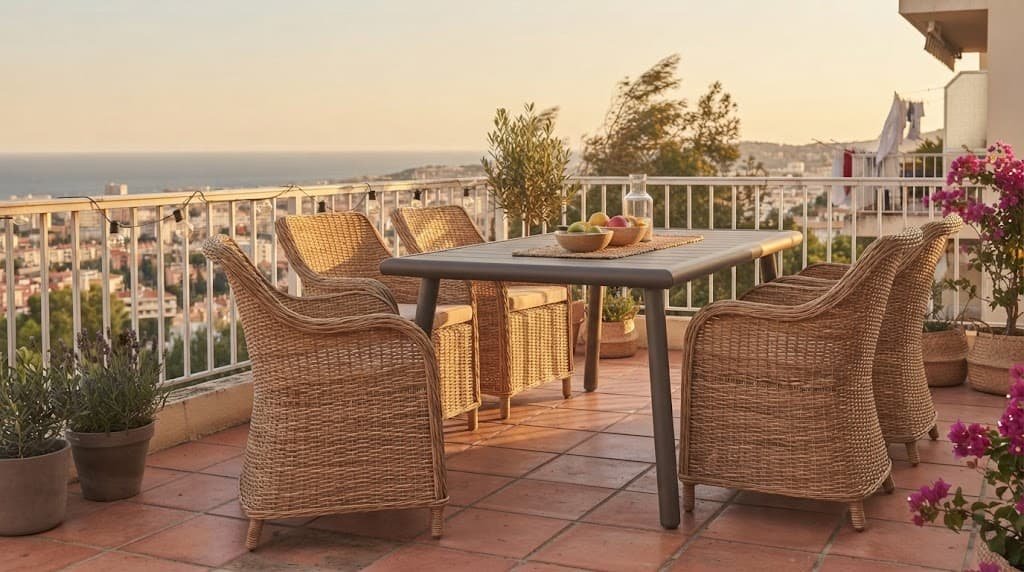
Yes, absolutely, and it’s a genuinely reasonable approach for many different spaces – using each material where its specific strengths matter most, such as a stable metal table paired with lighter rattan chairs, can genuinely work well provided some deliberate visual coordination ties the combination together intentionally throughout.
How do I know if a piece is genuinely rated for outdoor use rather than just indoor-styled?
Check the product description explicitly and carefully for outdoor or all-weather rating language, rather than simply assuming a material that resembles outdoor furniture is actually genuinely treated for it. A piece with no explicit outdoor rating whatsoever, even if visually quite similar to genuine weatherproofed options, should generally be treated as strictly indoor-only regardless of the specific material it happens to be made from.