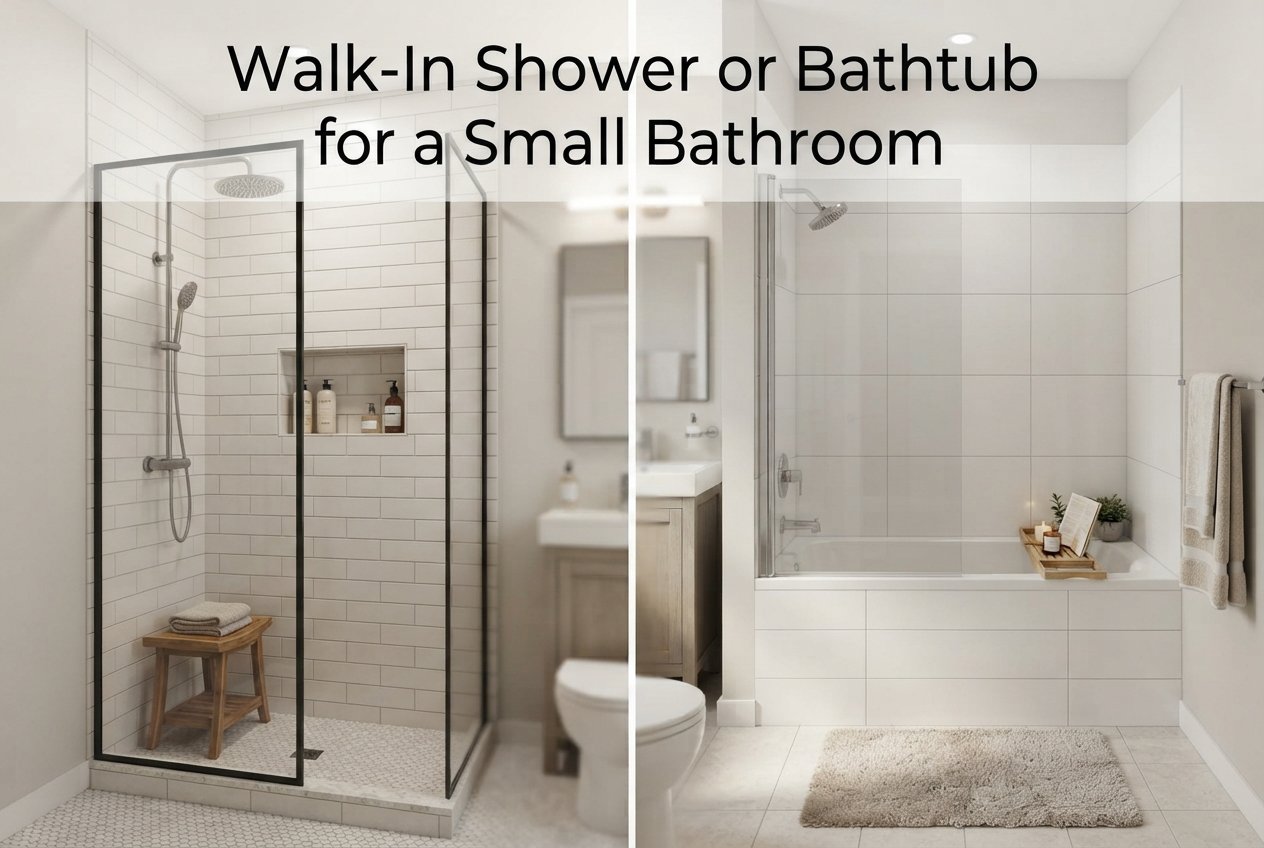
The right choice for a small bathroom isn’t decided by which one looks more impressive in a showroom – it’s decided by how each one actually fits your specific space and your household’s genuine daily bathing habits once it’s installed. A walk-in shower and a bathtub solve genuinely different practical needs, and choosing based on trend alone misses what actually determines whether either one works well in a genuinely small space.
The one property that decides it
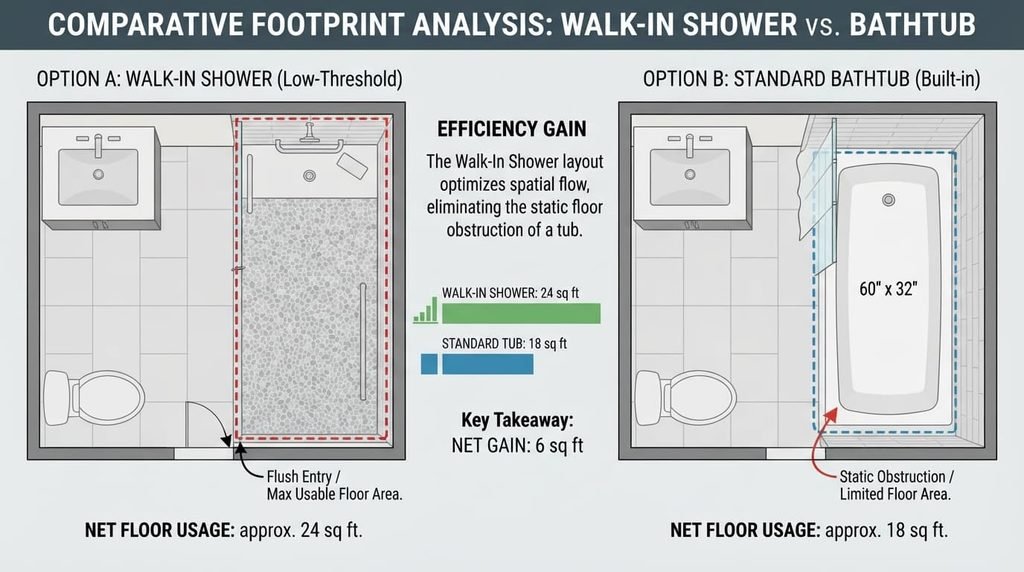
The deciding factor is how much your household genuinely uses baths specifically, not simply which option is currently more popular in bathroom design. A walk-in shower typically uses a small bathroom’s limited floor space more efficiently, while a bathtub directly serves a household that genuinely bathes regularly, in a way a shower structurally can’t replicate.
This matters because a small bathroom’s limited square footage makes this trade-off considerably more consequential than it would be in a larger space – choosing a bathtub in a genuinely tight bathroom sacrifices meaningful floor space and visual openness for a bathing function your household may or may not actually use regularly.
Head to head
| Walk-In Shower | Bathtub | |
|---|---|---|
| Uses floor space well | Generally higher | Generally lower |
| Lets you take a bath | No | Yes |
| Visual openness in a small room | Generally better | Generally more enclosed |
| Easy for some users | Often easier | Can be more difficult |
| What buyers expect | Varies by market | Often expected in at least one bathroom |
| Typical setup cost | Varies | Varies |
The row that surprises people most is resale expectation specifically. Many assume a walk-in shower is always the more sensible choice for a small bathroom, but some housing markets and buyer expectations still favour having at least one bathtub somewhere in a home, which is worth checking specifically for your own local context before assuming a shower is universally the more sensible long-term choice.
Where a walk-in shower wins
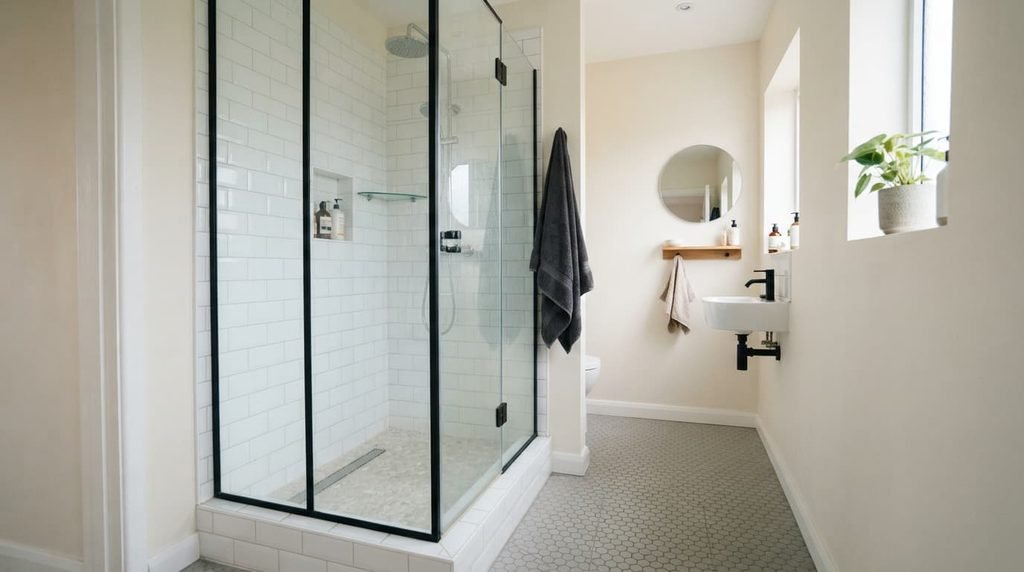
Anyone whose household genuinely rarely or never uses a bathtub specifically benefits from a walk-in shower’s more efficient use of a small bathroom’s limited floor space, since the freed-up area directly supports the visual openness and practical circulation space a genuinely small bathroom benefits from. The unglamorous reason: a walk-in shower is also often somewhat easier to keep visually clean-looking day to day, since there’s no basin retaining standing water the way a bathtub can between uses.
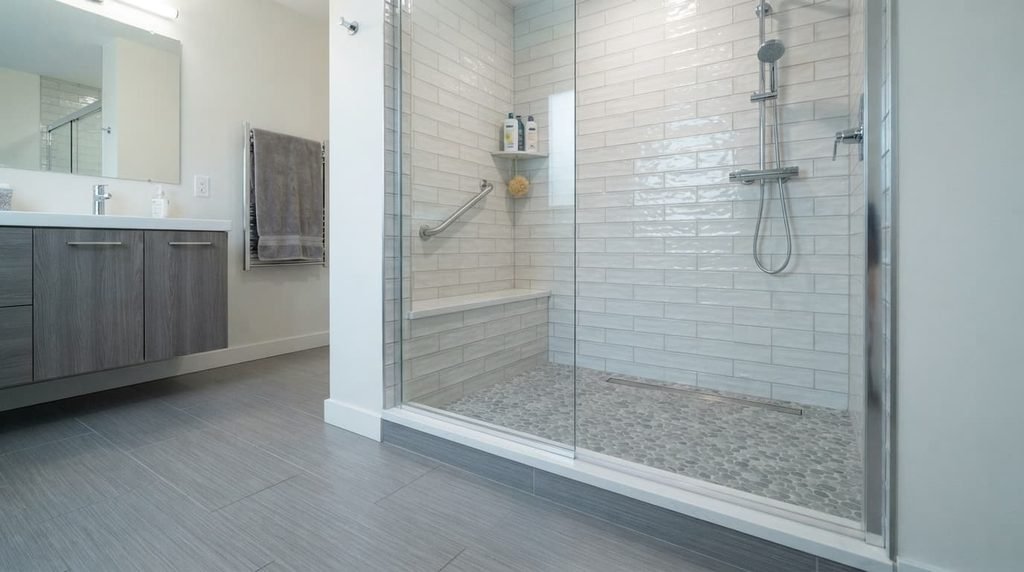
Anyone with mobility considerations that make stepping over a tub’s raised edge genuinely difficult also benefits from a walk-in shower’s typically lower entry threshold, since this specific accessibility factor can matter considerably more than either option’s aesthetic appeal for households where this is a genuine daily consideration.
Where a bathtub wins
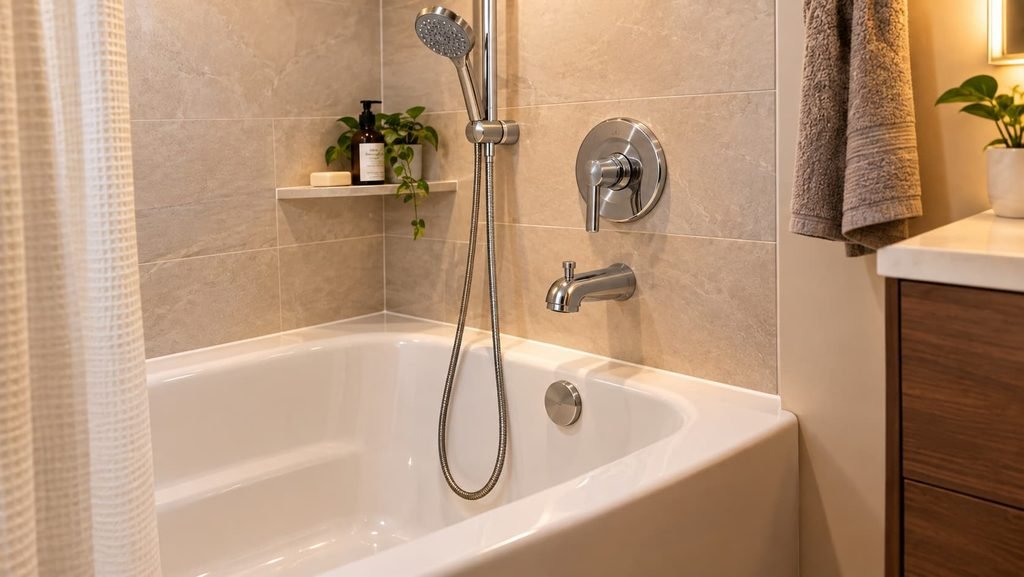
Anyone whose household genuinely does bathe regularly – young children specifically, or adults who genuinely prefer bathing over showering – benefits from a bathtub’s ability to serve that specific need, since a walk-in shower simply cannot replicate the bathing function regardless of how well-designed it is. The unglamorous reason: a bathtub with a shower attachment also technically preserves both functions in one fixture, which matters more than it might initially seem for a household genuinely uncertain about permanently committing to shower-only bathing going forward.
Anyone who finds genuine relaxation value in bathing specifically, beyond simply washing, also benefits from this same function in a different way, since a bath serves a genuinely different purpose than a shower for people who use bathing time as deliberate rest or unwinding, not merely as a hygiene task to complete quickly.
When neither is right
Choosing a bathtub purely because it’s traditionally expected, without confirming your own household genuinely uses baths regularly, is worth ruling out regardless of local resale expectations.
A bathtub that goes unused as a bathtub, serving purely as an oversized, harder-to-clean shower enclosure, sacrifices a small bathroom’s limited floor space for a function nobody in the household actually uses, while a resale-motivated bathtub decision should weigh your own genuine near-term living plans against a hypothetical future buyer’s preferences specifically.
How to decide in thirty seconds
If your household genuinely bathes regularly, choose a bathtub, or a tub-shower combination. Its ability to serve actual bathing needs directly addresses a function a walk-in shower structurally can’t provide.
If your household genuinely doesn’t bathe regularly, choose a walk-in shower. Its more efficient use of a small bathroom’s limited floor space directly addresses the openness a bathtub would otherwise sacrifice for an unused function.
What changes the answer later
Having young children join the household after previously not needing a bathtub is worth reconsidering the choice at, since bathing needs often genuinely change with a household’s composition in ways that weren’t relevant to your original decision.
Planning to sell your home within a relatively near timeframe is also worth reconsidering the choice at, since local resale expectations become more relevant to weigh against your own household’s genuine daily use pattern as your own remaining time in the home Grows shorter.
What people get wrong when making this choice
The most common mistake is assuming this decision is purely about current design trends, when a household’s actual, genuine bathing habits matter considerably more for long-term satisfaction than which option currently photographs better for design inspiration. A trend-driven choice that ignores genuine daily use patterns often results in regret once the initial visual appeal settles into actual daily reality.
A second common mistake is underestimating how difficult and costly reversing this decision can be later, treating it as an easily changeable choice when in practice, converting between a shower and a bathtub typically involves meaningful plumbing, tiling, and structural work. This makes the decision considerably more consequential than many other bathroom styling choices, worth genuinely careful consideration specifically because of how disruptive changing your mind later actually is.
Questions readers keep asking
Does a walk-in shower always make a small bathroom feel more open than a bathtub would?
Generally yes, though the specific difference depends on the shower’s actual design – a shower with a solid, opaque enclosure provides less of this openness benefit than one with a more open, glass-fronted design, so the specific style chosen still matters within the broader category.
Is it possible to have both a shower and bath function without a full separate installation of each?
Yes, a tub-shower combination is a common way to preserve both functions within roughly the footprint of a bathtub alone, though it doesn’t provide the full floor-space efficiency benefit a dedicated walk-in shower alone would offer.
Does removing a bathtub require significant plumbing changes compared to keeping one?
Generally not for the core plumbing itself, since both options typically use the same basic water supply and drainage connections, though the specific fixture installation and any surrounding tile or surround work does differ meaningfully between the two options in terms of labour and materials involved.
Does removing a bathtub in favour of a shower genuinely affect home resale value?
It can, depending on your specific local market and the number of other bathrooms with tubs in your home – checking local buyer expectations specifically, rather than assuming a universal answer, is worth doing if resale value is a genuine near-term consideration for your decision.