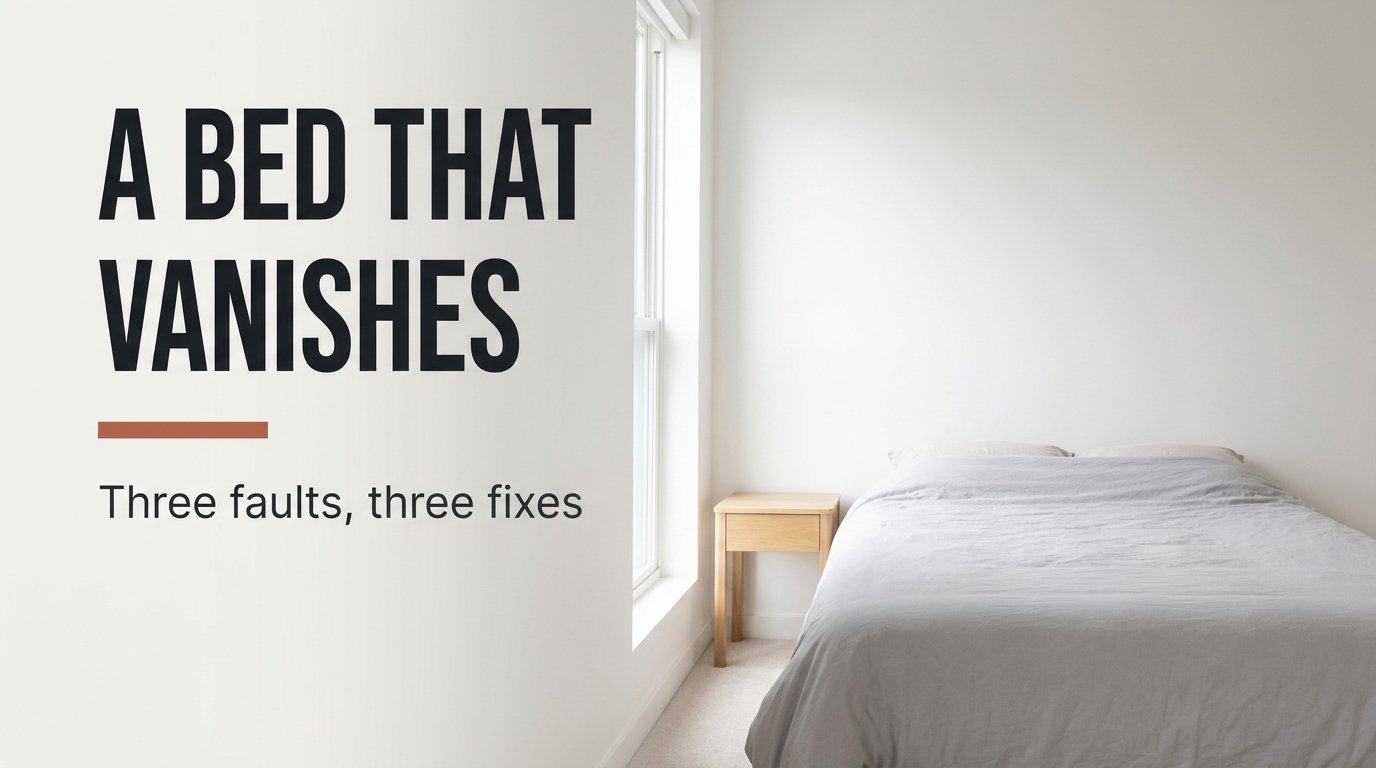
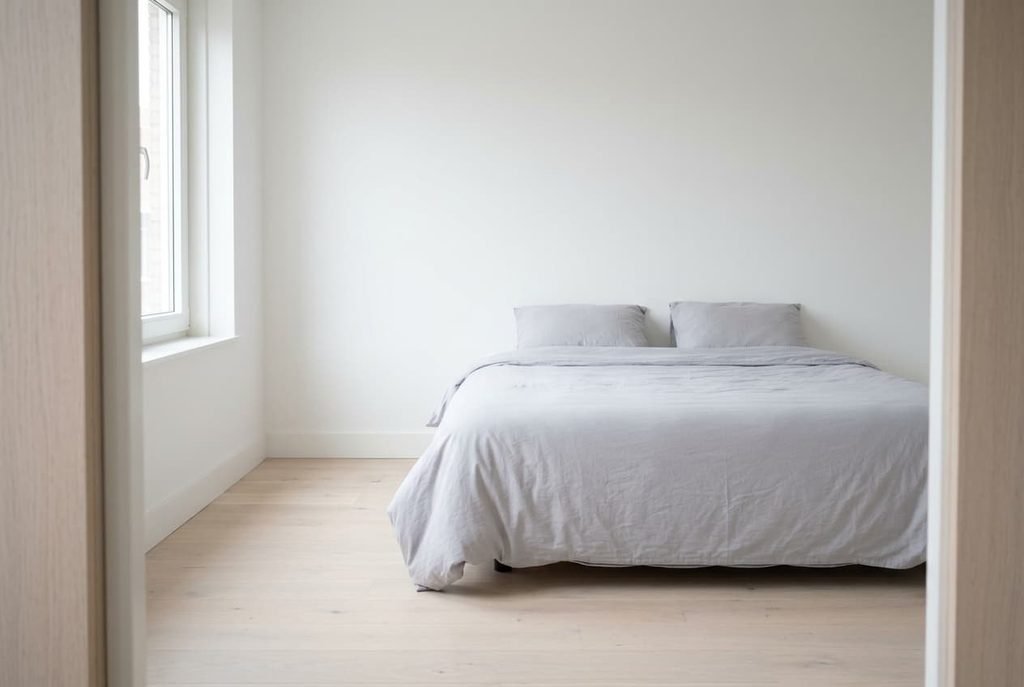
A double bed is the biggest object in a bedroom, so it’s odd when the room seems to hide it. Take a Dutch bedroom measuring 330 by 400 cm and holding a frame of 170 by 210 cm against the short wall. The bed covers 52% of that wall’s width and still fades. Three faults can make a double bed seem to disappear, and none of them is about taste or budget. This page measures each fault with a tape and a paint-chart strip, then fixes them from the free one to the one you buy. The figures are round assumptions, so treat them as rough guides for your room.
What Makes a Double Bed Seem to Disappear
The eye finds an object by its edges. It needs a difference in tone between the thing and what’s behind it. It also needs bulk that lifts it off the wall, plus a position that the room’s lines point towards. When any of those fades, the object recedes, however large it is. A white mug on a white table vanishes in the same way.
Beds are especially prone to this because bedding is usually soft and pale, and close in tone to the walls. Hotel beds are dressed to stand out, with a clear tone gap and a tall head, then centred on the wall. A home bed often has none of those. The frame sits low, with its upper edge near 55 cm. That’s only 22% of the wall’s 250 cm height.
The usual response is to shop for a bigger bed, which rarely helps. A mattress 20 cm wider raises the bed from 52% to 58% of the wall. The same low, pale shape remains, while the room gives up 10 cm per side.
Each cause can be measured, and the checks below take about ten minutes.
Checks for a Double Bed That Seems to Disappear
1. From the doorway, note what your eye reaches first. Should it land on the window or the wardrobe, the bed has lost the contest. The other four checks will tell you why.
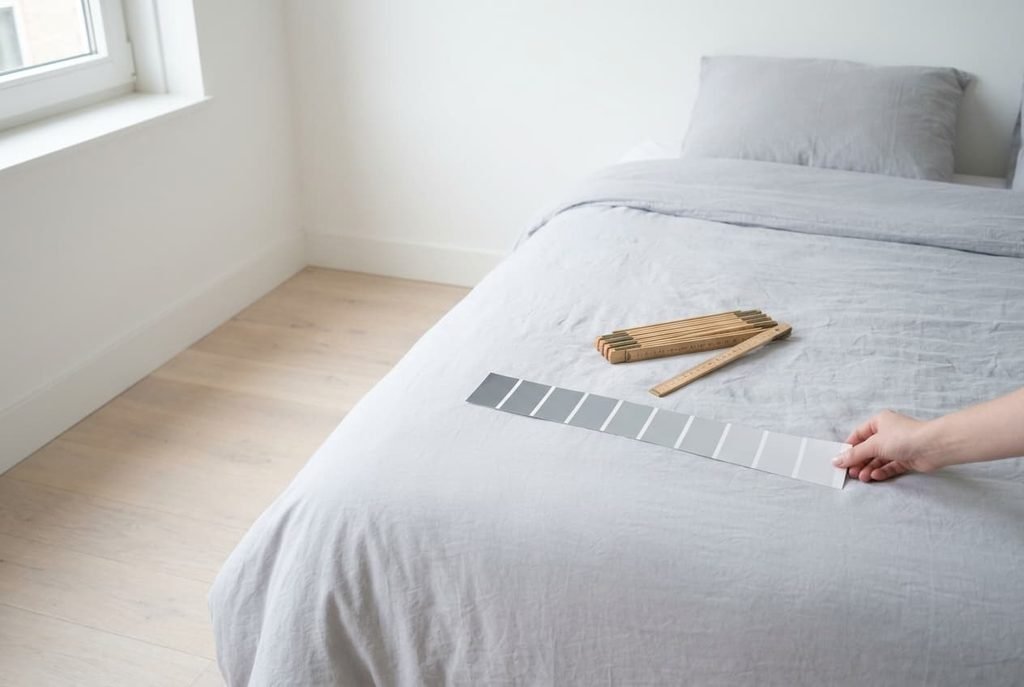
2. Hold a paint-chart strip against the bedding and read its tone on a scale of 1 to 9. Repeat that for the wall and the floor. If all three sit within two steps of each other, the bed has no visible edge.
3. Divide the bed’s width by the wall’s width. At 170 cm against a 330 cm wall that gives 52%. Anything under about 45% asks for a wider headboard to carry the shape.
4. Measure the gap beside the bed on both sides, out to the closest wall or piece of furniture. If the two gaps differ by more than 10 cm, the bed sits off-centre. The room’s lines then point past it.
5. Look at the tallest thing at the bed’s head. If it’s under 60 cm, the wall above has nothing to hold the eye. The bed reads as a low block.
Three Faults, Free Fix First
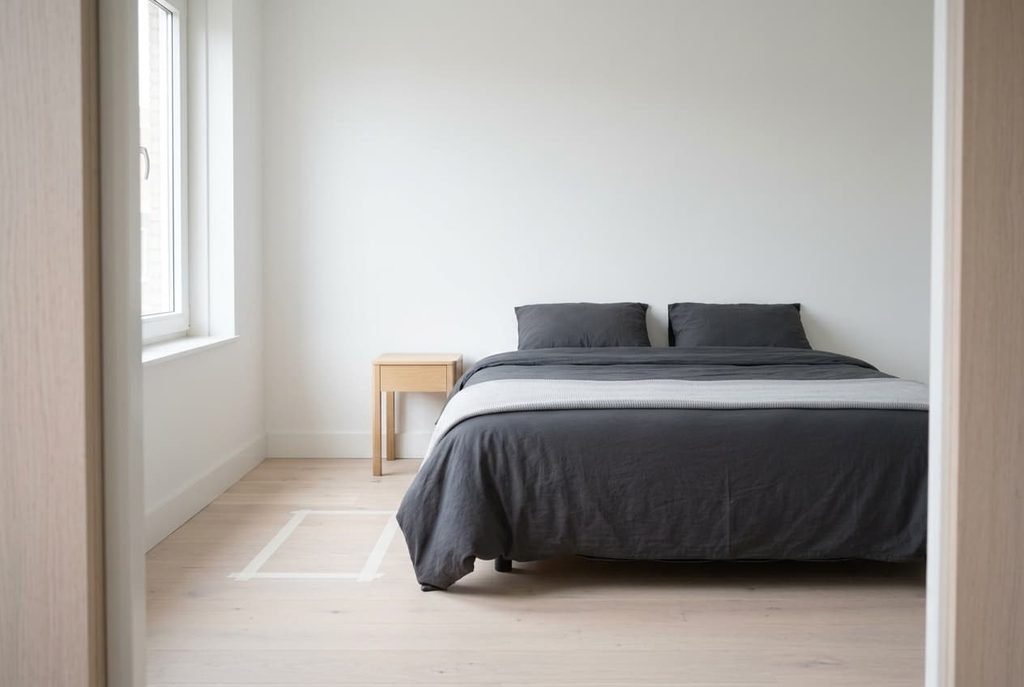
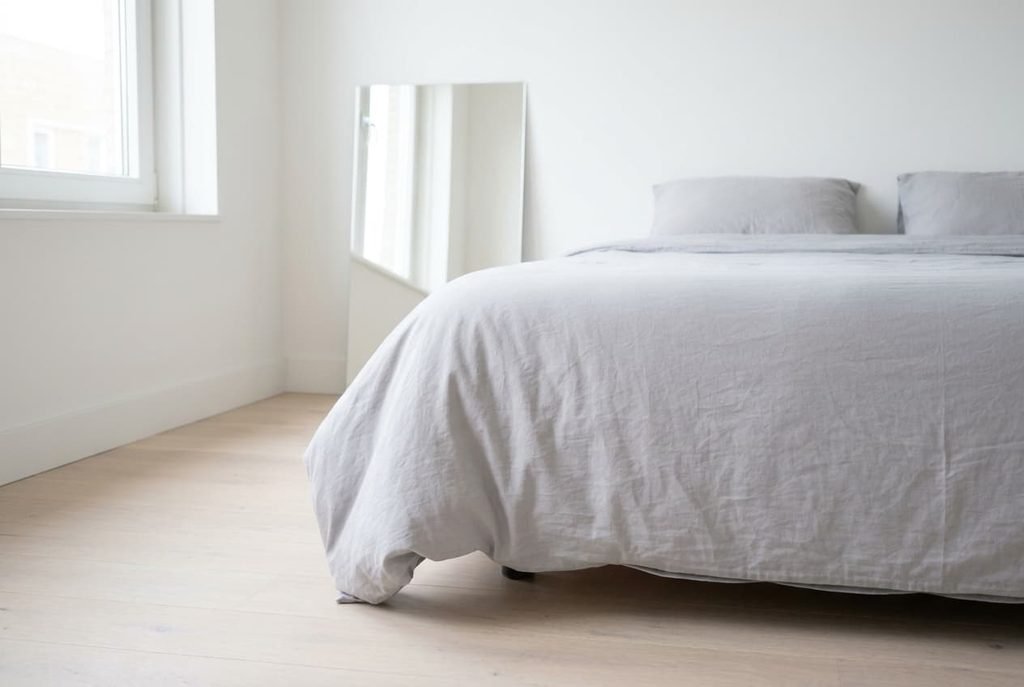
The bedding matches the wall and the floor, so the bed has no visible edge. Say the wall reads as step 5 on the strip, the duvet as step 5 and the oak floor as step 6. Check in daylight, then under the lamp, because evening light can pull the steps together. The cure is free. Use the darkest or lightest bedding you already own, so the duvet sits at step 2 or step 8. Lay a throw in a different tone across the foot. A gap of three steps gives the bed an outline, and the whole job costs an evening of rearranging linen. Bulk limits the fix, since a very low frame can still look flat after the swap.
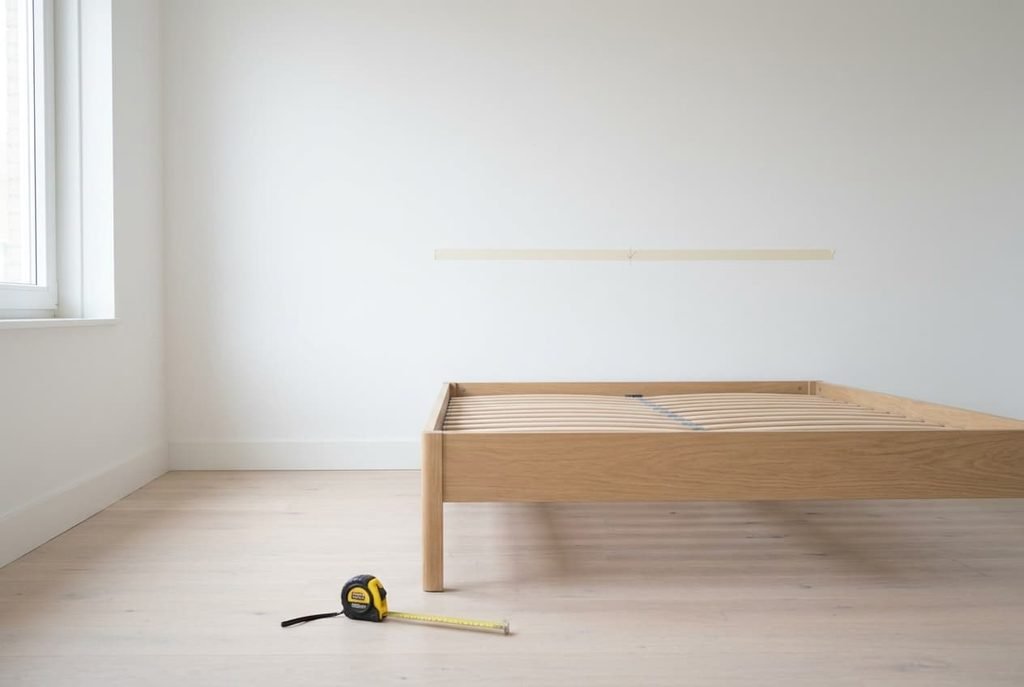
The bed sits off-centre on its wall, and that alone can make a double bed seem to disappear, because the room’s lines point past it. A frame centred 120 cm in from the left-hand wall, where the wall’s middle sits at 165 cm, puts the bed 45 cm out. A single bedside table on the wider side makes it worse. Slide the bed 45 cm to the right and each side gets 80 cm. That’s enough for a table 40 cm wide with room to reach past it. Tape the new position out on the floor first, so you can judge the result before you move the frame. The job needs an hour and a helper. A door or a radiator may fix the position, and then a narrower table on the tight side is the answer.
The wall above the bed is bare and the bed has no headboard, so the whole shape stays low. A headboard 175 cm across and 110 cm high lifts the bed’s silhouette from 22% to 44% of the wall’s height. It gives the eye an upright to follow. Here is the single purchase, and its cost depends on the material and the fixing. A freestanding model needs no drilling, which suits a rental. Pick a headboard no more than 5 cm wider or narrower than the frame, which lets the two read as one shape. A headboard can’t rescue a bed with matching bedding or a bed off-centre. Make the bed visible first and add height second.
Preventing the Problem in the Next Bedroom
Mark the wall’s centre with tape at 165 cm before the bed arrives. Then push the frame until its middle meets the tape, ideally with a friend watching from the doorway. That removes the placement fault on day one. Then take the paint-chart strip to the shop when you buy bedding, and pick a set three steps from the wall.
Settle the headboard question before you buy the bed too. A frame that rises 100 cm at its head looks very different from a plain one. Do these three things before the bed arrives and nothing will make a double bed seem to disappear later.
Ten minutes with tape and a paint-chart strip at the start saves a month of wondering why the room feels unfinished.
The Fix Not Worth Doing
Resist upgrading to a wider mattress. A mattress 20 cm wider changes the bed’s share of the wall by only 6 points, from 52% to 58%. It also takes 10 cm from both sides of the room, and the bed keeps the same colour as the wall and the same low profile, so the shape that fades stays the shape you have.
A wider mattress also makes the bed harder to carry round a tight landing, and it needs new bedding to fit. All of that money buys six points of presence, while a darker duvet cover buys three tone steps for nothing. The comparison isn’t close, and it tells you where to spend first. A mirror behind the bed fares no better, since it doubles the pale surface without adding an edge. The headboard remains the only purchase that changes the silhouette.
Put the tape to work before any purchase. Whatever makes a double bed seem to disappear can be found with a tape and a paint-chart strip. The doorway test tells you when you’re done. Work through the checks in order and stop the moment your eye lands on the bed from the door. Most people finish after the bedding and the centring, and the headboard stays a choice rather than a need. A bed the eye finds at once makes the room look planned, and that effect carries more weight than any one piece of furniture you could buy.
Questions Readers Keep Asking
What usually causes this?
Tone is the most common cause. Bedding often sits within two steps of both wall and floor, which leaves the bed without an edge. Hold a paint-chart strip against each. If they match, change the bedding first. No money is involved, just an evening.
Is there a quick fix?
Yes. Put the darkest or lightest bedding you own on the bed and add a throw in another tone across the foot. The bed gets a visible outline within minutes, and the check is simple: look from the doorway and see whether your eye lands on it.
Can I fix it without renovating?
Yes, nearly always. The bedding swap and the 45 cm shift involve no tools beyond a tape. Only the headboard needs buying, and a freestanding one needs no drilling, which suits a rental. Nothing here touches the walls or the floor.