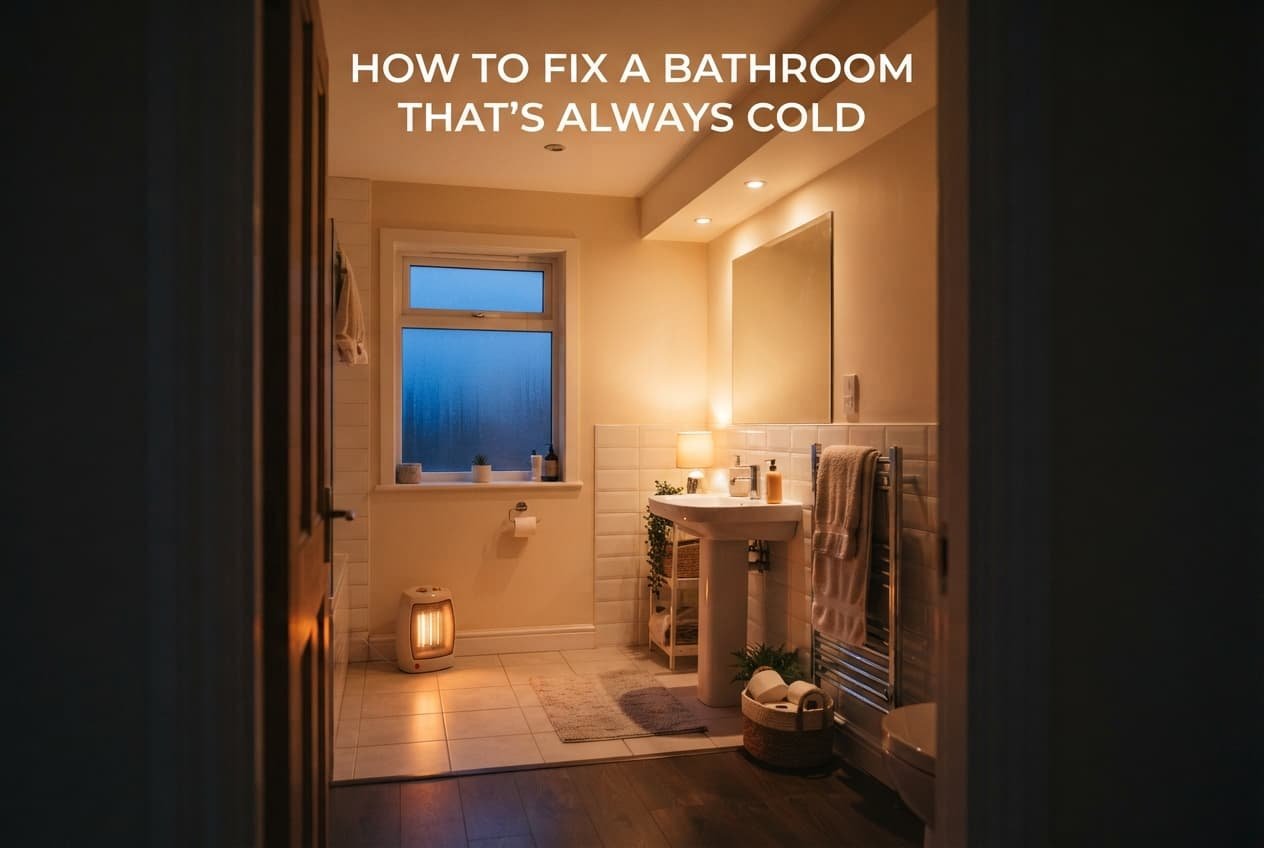
A bathroom that’s genuinely always cold usually isn’t a room with no possible fix – it’s a space where specific, addressable factors are combining to lose heat faster than other rooms in your home, which is a fundamentally different problem than simply having a room in an inherently poor location. Understanding which factor is actually driving the cold determines whether the fix is simple and immediate, or genuinely requires a more substantial change.
What is actually happening
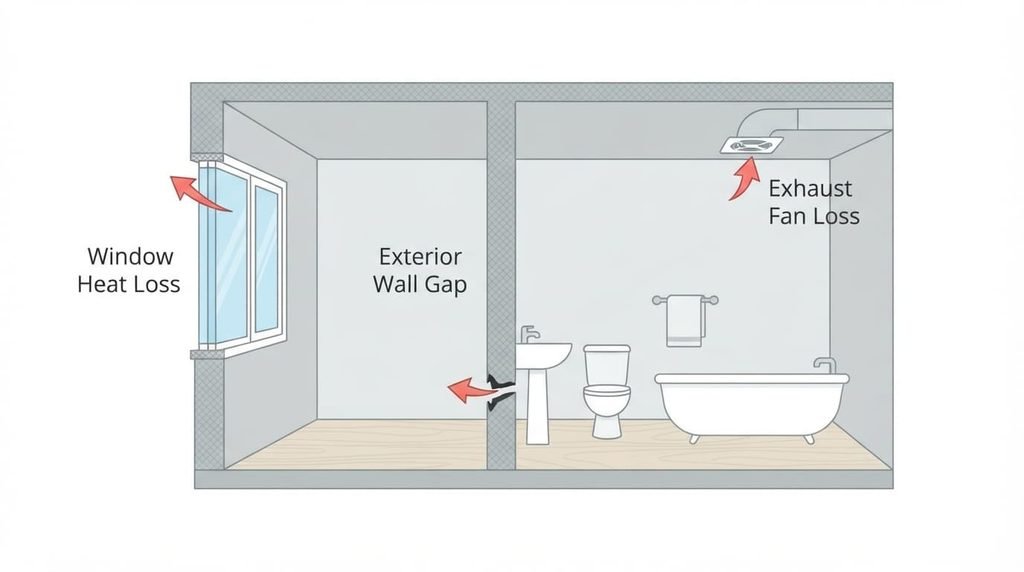
Persistent cold in a bathroom typically stems from a combination of hard, non-insulating surfaces throughout the room, inadequate heating specifically for that room, and genuine heat loss through windows, exterior walls, or gaps around fixtures. A bathroom’s typical tile and hard flooring genuinely retains less warmth than carpeted or wood-floored rooms, which compounds with any heating inadequacy to make the room feel considerably colder than its actual measured temperature might suggest.
This matters because “the bathroom is cold” often gets treated as an unavoidable property of the room’s materials, when the actual issue is frequently this specific combination of factors, meaning a fix addressing only one – adding a bath mat, for instance – may not fully resolve genuine persistent cold on its own.
Confirm which pattern you have
Check whether the bathroom feels notably colder than your home’s other rooms even when your general heating is running normally, or whether it’s simply cold because your overall home heating hasn’t reached that specific room yet during a typical heating cycle – this distinguishes a bathroom-specific heat loss problem from a broader home heating distribution issue.
Check specifically for cold air near windows, exterior walls, or around any fixtures during a typical cold day, since drafts from these specific sources point toward genuine heat loss requiring different fixes than simply insufficient heating output alone would.
The fixes, in order of cost
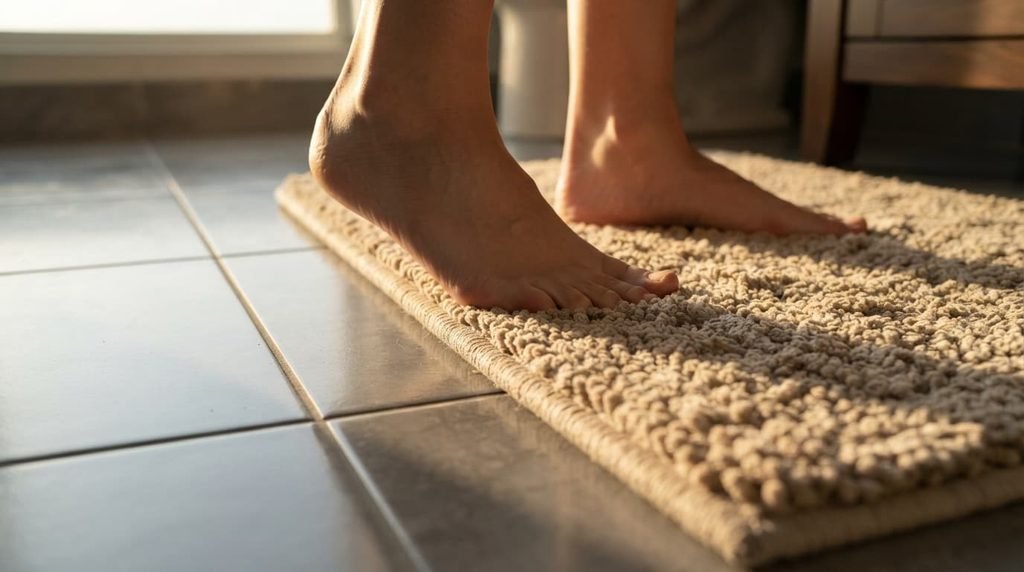
1. Add a bath mat or rug on the coldest floor areas specifically, positioned where you actually stand most. This costs relatively little and directly addresses the immediate physical sensation of cold hard flooring, without requiring any change to the room’s actual heating or insulation.
2. Check and seal any obvious gaps around windows or where pipes pass through exterior walls. This is a modest addition to the total cost but directly addresses genuine draft-related heat loss at its actual source, rather than simply compensating for continued cold air entering the room.
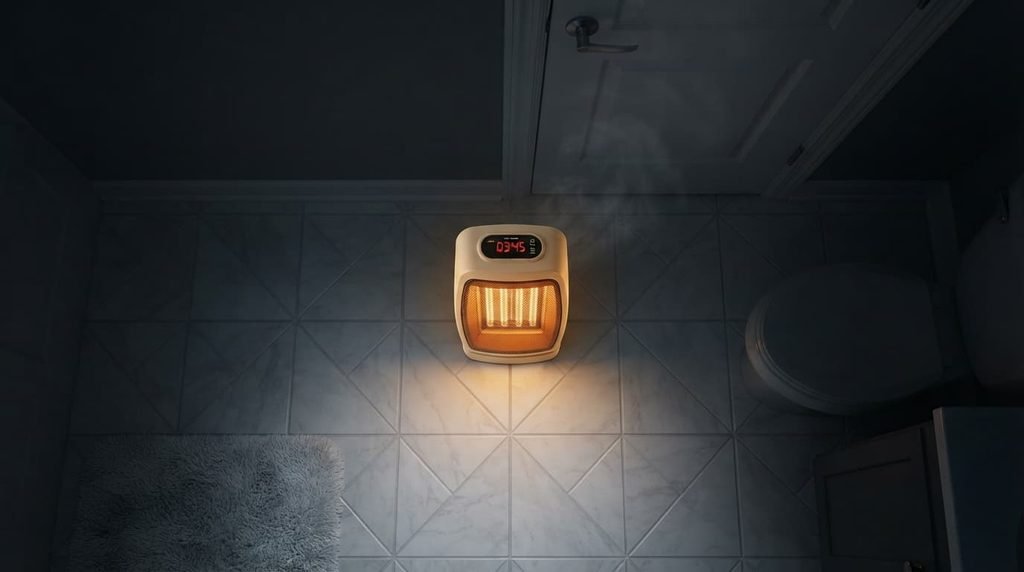
3. Add a dedicated space heater rated safely for bathroom use, positioned well away from water sources and following its specific safety guidance closely. This directly addresses inadequate heating for a bathroom that consistently runs cold relative to your home’s other rooms, without requiring any change to your home’s central heating system.
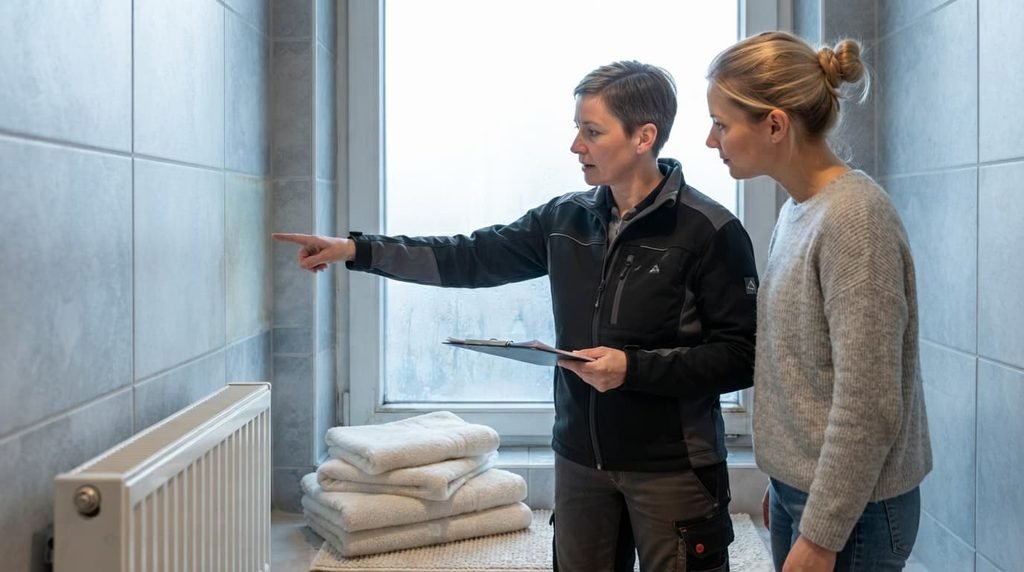
4. For a room with a genuine, persistent heat loss problem the fixes above don’t resolve, consult a licensed heating professional about the space’s specific insulation and heating needs. This is a professional consultation, not a DIY project – any change to your home’s actual heating system or structural insulation needs proper assessment of your specific setup before being considered further.
What isn’t worth doing
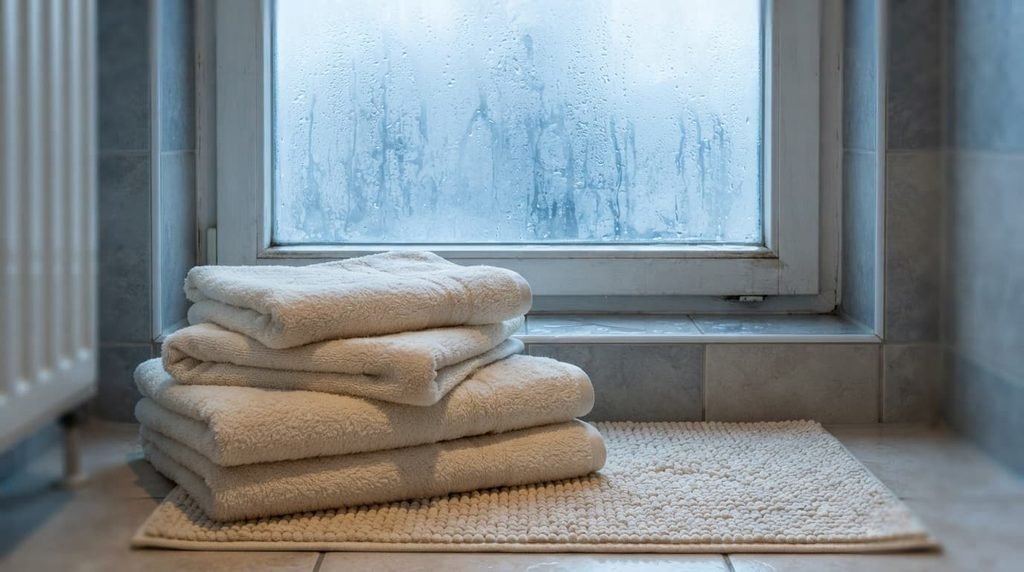
Relying entirely on a bath mat and warm towels as your complete cold-bathroom solution, without addressing genuine heat loss or inadequate heating specifically, isn’t worth doing as a complete fix on its own.
Surface-level warmth items help with the immediate physical sensation of contact with cold surfaces, but without addressing actual heat loss through drafts or genuinely inadequate room heating, the underlying cold persists regardless of how many soft, warm items you add around the room’s edges.
Ventilation fan usage also compounds this problem specifically, since a bathroom exhaust fan, while genuinely necessary for moisture control, actively removes warm air from the room while it’s running, meaning heavy fan use during and after a shower can meaningfully offset whatever heating the room has received, particularly in a room already prone to persistent cold. This isn’t a reason to avoid using the fan, since moisture control matters too, but it’s worth being aware of as a contributing factor when troubleshooting genuine cold specifically.
What people get wrong about fixing this
The most common mistake is assuming a cold bathroom is simply an unavoidable property of the room, when the actual cause is frequently a specific, addressable combination of factors rather than something inherent to bathrooms generally. Many bathrooms in the same home vary considerably in temperature specifically because of these addressable differences, not because bathrooms as a category are inherently colder than other rooms.
A second common mistake is addressing only the symptom during actual bathroom use, without considering whether the room could be pre-warmed before you actually need it. A bathroom that’s been closed off and cold all day benefits from a heater running briefly before you actually enter, rather than only addressing the cold once you’re already in the room experiencing it directly.
What changes if your situation is different
If your bathroom’s cold problem is genuinely limited to specific early morning hours rather than persisting throughout the entire day, prioritise a simpler, targeted fix – a bath mat and a portable heater used specifically during that window – over a more substantial insulation change, since the actual problem window may not justify additional cost and complexity.
If you’re renting and structural or heating system changes genuinely aren’t available to you, the bath mat, gap-sealing, and portable heater fixes become your practical ceiling, and a genuinely well-chosen combination of these can meaningfully address most persistent cold without requiring any structural change to the space at all.
The one thing to check before you commit
If you’re pursuing the licensed heating professional option specifically, confirm with them whether your home’s existing heating system can genuinely support additional capacity for this specific room, since this determines both feasibility and cost in ways that aren’t visible from simply assessing the room itself.
This matters more for this specific option than for the other fixes above, since those remaining fixes are all fully reversible, low-cost, and require no professional assessment at all, while a heating system change carries genuine cost and complexity worth confirming clearly before any further planning proceeds.
Questions readers keep asking
Is a portable space heater genuinely safe to use in a bathroom?
Only if it’s specifically rated for bathroom or high-moisture use and positioned well away from any water source, following its manufacturer’s safety guidance closely – a heater not rated for this specific environment poses a genuine safety risk and shouldn’t be used in a bathroom regardless of how cold the room feels.
Does bathroom tile always feel cold, or can flooring choice genuinely make a difference?
Tile does conduct heat away from bare skin more readily than some other flooring materials, though certain tile types and installation approaches can reduce this effect somewhat, making flooring choice a genuine, if secondary, factor worth considering alongside the heating and draft fixes covered above.
When is it worth considering a proper heating system upgrade instead of the simpler fixes?
If you’ve genuinely tried sealing drafts and adding supplemental heating and the room still doesn’t achieve comfortable temperatures for your specific needs, that’s the point worth consulting a licensed professional about a more substantial heating solution, rather than starting there before trying the simpler, lower-cost fixes first.