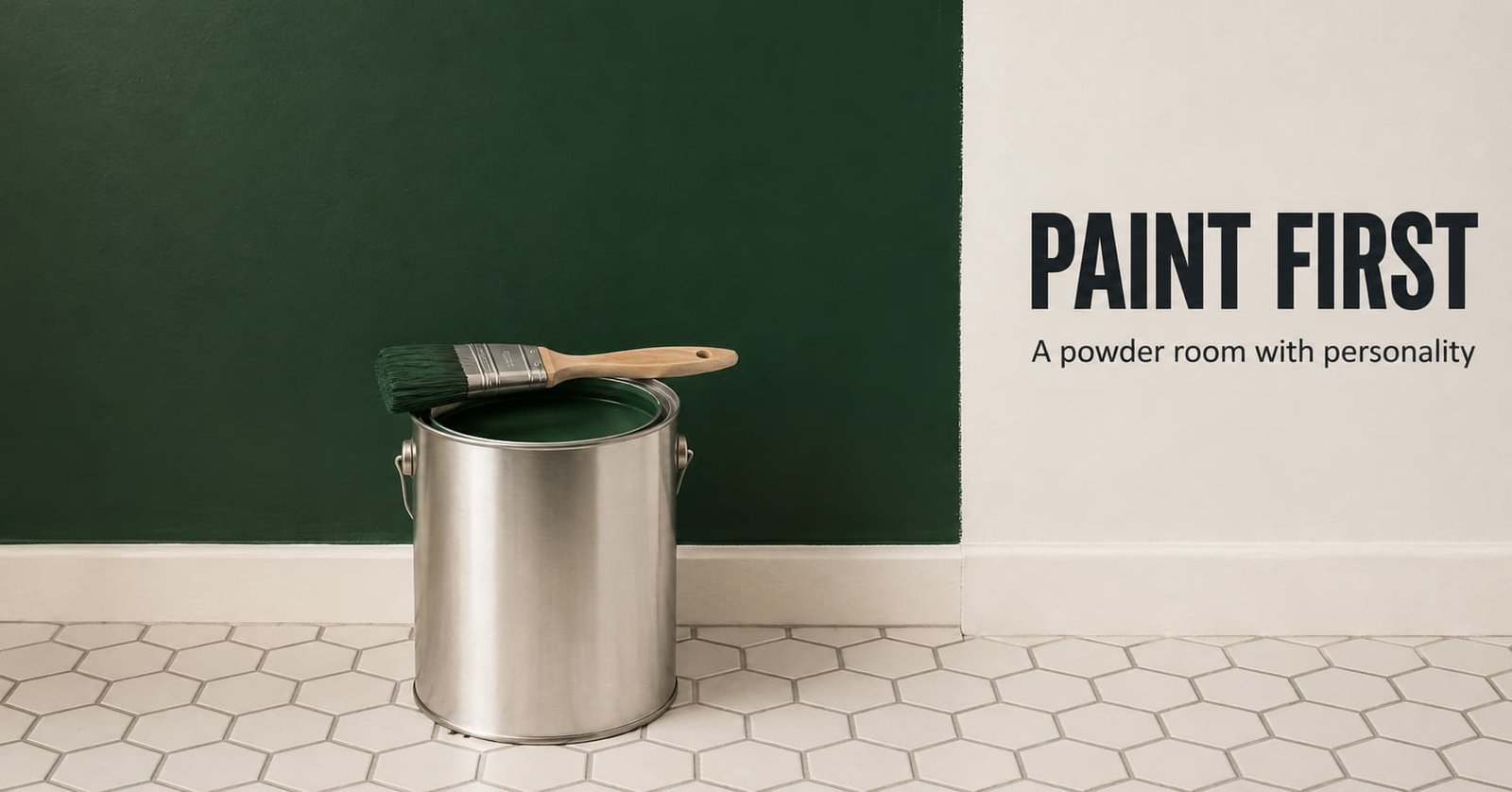
What gives a powder room with personality its start when the budget is almost nothing? One tin of matt paint in a single deep colour, bought before anything else. A mirror and lighting follow. The door and a good towel come last.
This list assumes a room about 90 cm wide and 150 cm deep, where every surface sits within arm’s reach. Prices are left out because they date within a season, so each item carries a construction test you can apply in the shop instead. The order matters more than the amount, because the first purchase changes what everything after it has to do.
The spending rule behind a powder room with personality
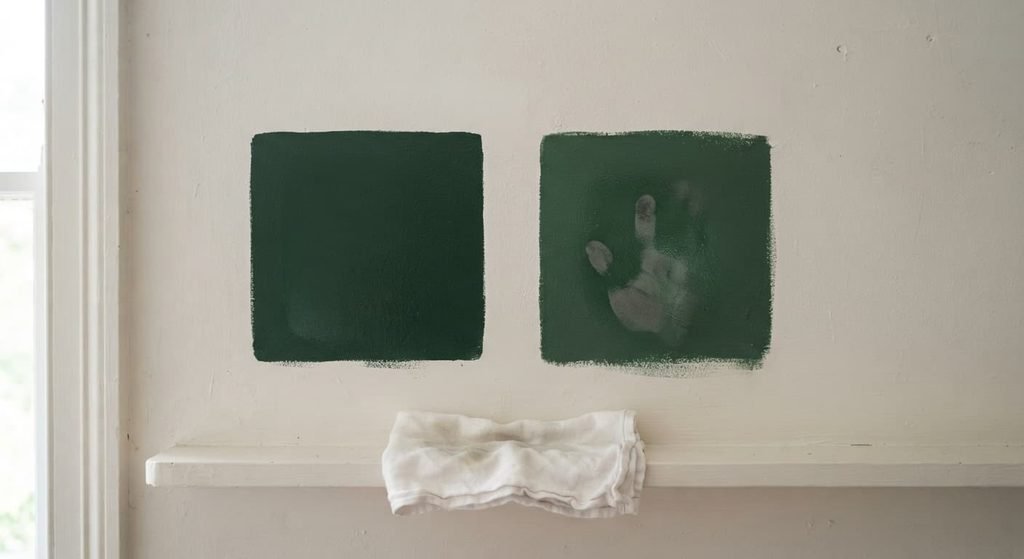
In a room this narrow a guest’s hand or face meets almost everything. Spend on what a hand touches or a face meets, and save on what an eye only passes. Wear explains why. A shoulder brushes the wall on every visit, and a palm pushes the door. A face fills the mirror, so these surfaces age fast and show it at close range. Scrub resistance, the ability of paint to survive wet wiping, is the number that tells you how a wall will cope. A picture is seen once from a metre away and can be cheap.
The rule has a second half: money goes first where a mistake is hardest to undo. Wiring is the costliest to reverse and paint the cheapest, with tile between them, since another coat reverses paint in an afternoon. That makes paint the cheapest large effect available, and wiring the item worth doing properly once.
I’d defend painting before buying anything else, against the widely repeated advice to start with wallpaper. Paper usually costs more per square metre. It shows every join at arm’s length, and it takes a day to remove.
Paint can be changed on Sunday.
Buying a powder room with character, in order
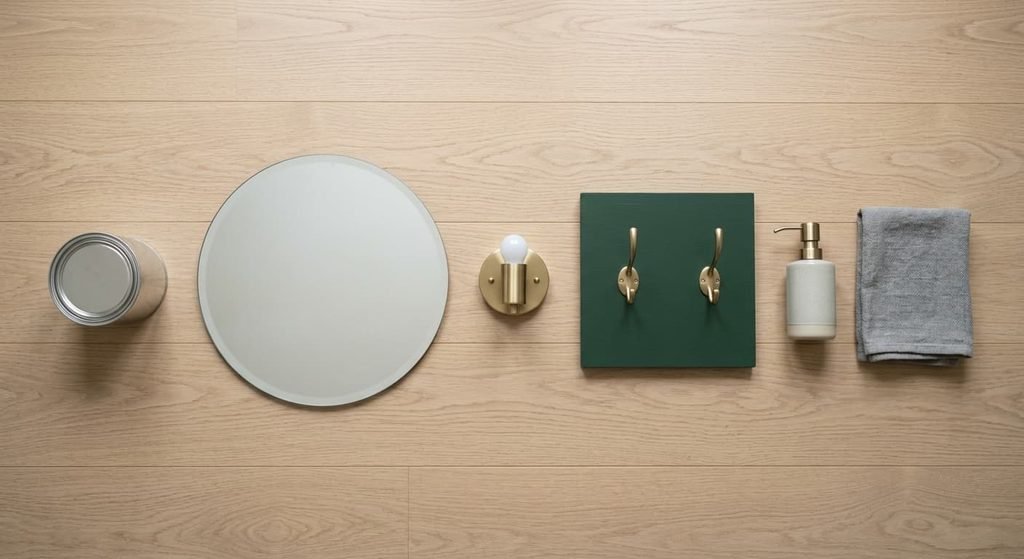
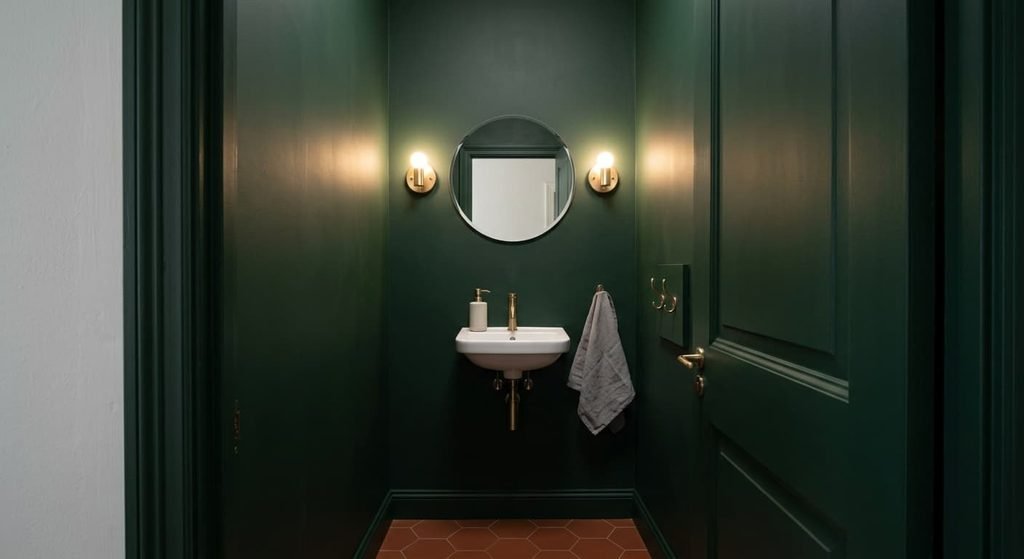
1. A tin of matt wall paint in one deep colour, with a wet-scrub class of 1 or 2 printed on the tin, class 1 being the most durable. The four walls come to roughly 10 square metres after the door, so two coats need about 20 square metres of coverage; check the figure on your tin. It comes first because the walls are the largest surface and another coat reverses the choice. Every later item has to suit this colour. Tier: MID, since hands touch it daily. A bad version is a class 4 or 5 paint that marks as soon as a damp cloth goes over it.
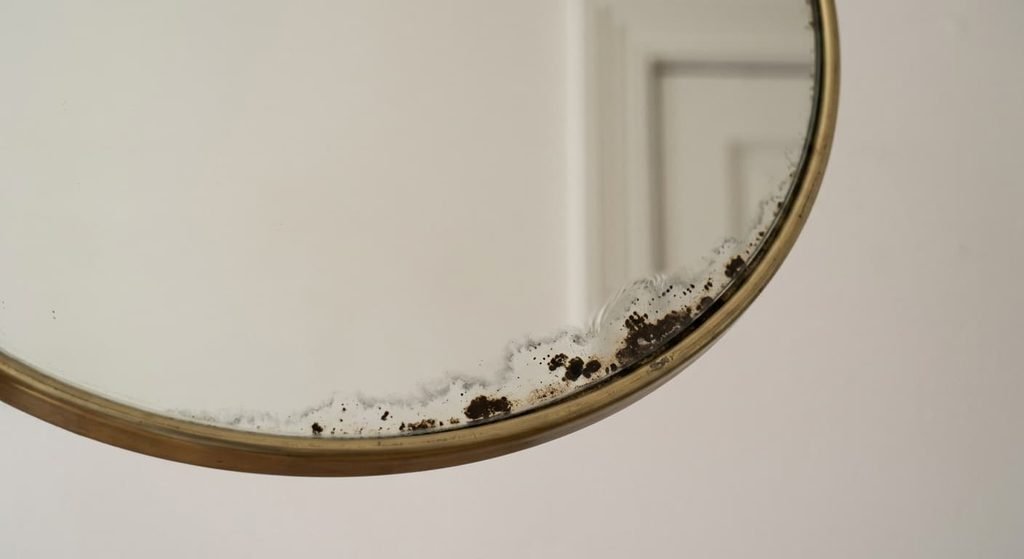
2. A round mirror about 40 cm across, in real silvered glass with a sealed back. It follows because it fixes the eye line the lighting must serve, and it hangs with its centre at about 155 cm. Tier: BUY CHEAP, because second-hand glass does the same job as new. A bad version shows dark creeping spots at the edge, where the silvering was left unsealed and has started to corrode.
3. A pair of wall lights at face height with warm 2700 K bulbs, fitted by an electrician. It sits third because it is the hardest item to change later and needs the mirror’s position first. Swapping the existing ceiling bulb for a warm one costs almost nothing and can wait for the lights. Tier: BUY ONCE, because the fitting stays in the wall for years. A bad version carries no stated protection rating, which matters within reach of a basin.
4. The back of the door: paint in the wall colour, or a single roll of removable wallpaper. It sits fourth because a seated guest faces this surface and it needs the colour from item 1. Tier: BUY CHEAP, because it is a decorative layer that comes off. A bad version is thin paper that lifts at the edge where a hand pushes the door.
5. A heavy linen or tightly woven cotton hand towel and a refillable dispenser in glass or ceramic with a metal pump. It sits last because both are the final touch and depend on the colour already chosen. Tier: MID, because every guest handles them. A bad version is a loose-weave towel that stays damp and a plastic pump that cracks within months.
Where to spend and where not to
Put the money into the paint and the lights. In a powder room with personality the tin’s scrub class decides whether a damp cloth removes a fingerprint or a stain, and the protection rating on a fitting decides whether it is safe within reach of a tap. Both are written on the product, so you can judge them without knowing the price.
Argue the mirror down. Readers expect a mirror to be the big outlay, yet the mirror can be second-hand, because a mirror is bought for its shape and its silvering, and both can be checked by eye. Look at the edges for dark spots and tilt the glass to see whether the reflection stays straight. A clean old mirror beats a new one with a damaged backing.
The towel and dispenser sit in the middle. They are touched by every guest, which earns a better weave and a metal pump, but both are replaced on a schedule and never reach the top tier. The cheapest item here is the door finish, and the electrician’s visit probably makes the wall lights the largest outlay.
The label tells you more than the price does.
What this order assumes, and when it breaks
The order for a powder room with personality assumes you may paint, that a wiring point exists near the basin and that the walls are plaster rather than tile. A renter breaks the first assumption. Swap item 1 for a roll of removable wallpaper on the back of the door and one wall, and move the colour decision into the towel and the mirror frame.
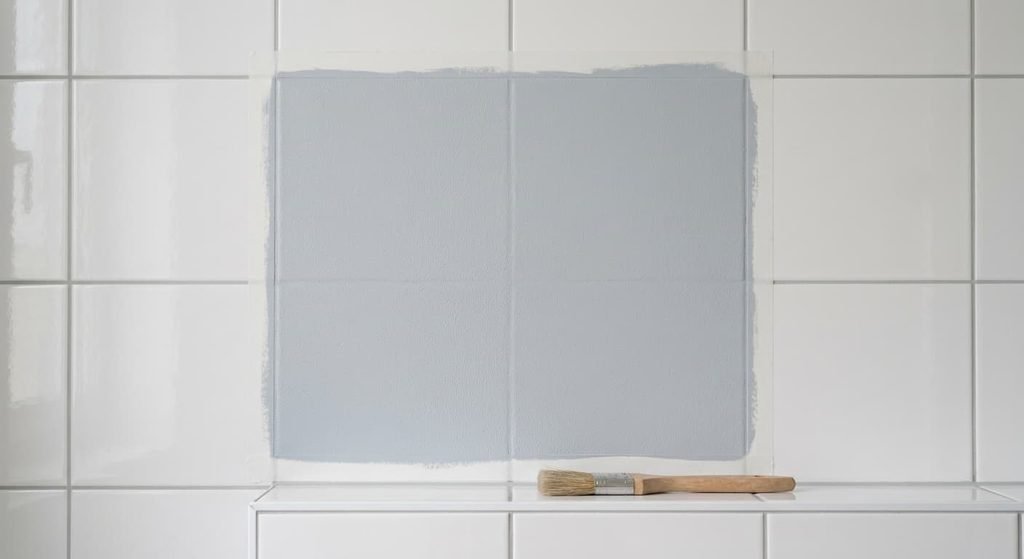
A room with wall tiles breaks the third. Glazed tile gives ordinary paint little to grip, so the tin’s label should say it suits tile, or a primer made for the surface goes on first. The first purchase then becomes the primer. With no wiring point near the basin the electrician’s cost rises, and item 3 may slide to the end. A warm ceiling bulb and the mirror carry the room meanwhile.
A windowless room needs one extra check: test a sample patch under your own bulb before painting, because that bulb is the only light the colour will ever meet. The patch doesn’t cost much and it prevents a repaint.
What to skip entirely
The skip list begins with wallpaper on all four walls. In a room 90 cm wide, pattern within reach of both shoulders reads as pressure rather than personality, and the paper is the costliest way to cover the surface. Keep pattern to one plane and paint the rest.
A rug is the next to go. It’s a slip hazard on small tile and it traps water near the basin, and even a mat 60 cm wide covers floor that the bowl needs left open. Scented candles add a naked flame in a space too small to leave one unattended. A gallery wall of small frames crowds a wall that has only about 150 cm of length, which makes the room look smaller.
The first purchase is paint in one deep colour, chosen for its scrub class. Then come a second-hand mirror and face-height lights, followed by a finished door and a good towel. Spend where a hand or face meets the room and save where an eye only passes. If the budget stops after one purchase, stop after the paint, since a deep colour with a clean door already gives a guest something to remember. Everything after it can wait until the paint has proved itself.
Questions readers keep asking
How many things give a powder room with personality?
Five are enough: paint, mirror, lights, door finish, towel. Each one either covers a large surface or sits at hand or face height. More than five adds clutter to a room 90 cm wide, and the extras rarely change what a guest remembers.
What should you buy first for a powder room makeover?
Buy paint first. It covers the largest surface and reverses with another coat. It also sets the colour every later item must match. Choose a matt finish with a wet-scrub class of 1 or 2 printed on the tin, so a damp cloth removes marks without leaving a shine.
How do you judge a second-hand mirror for a powder room?
Check the edges first. Dark creeping spots mean the silvering is corroding from an unsealed edge. Then tilt the glass and watch a straight line, such as a door frame, for waves. Reject the mirror if the spotting is spreading inward or the line bends.