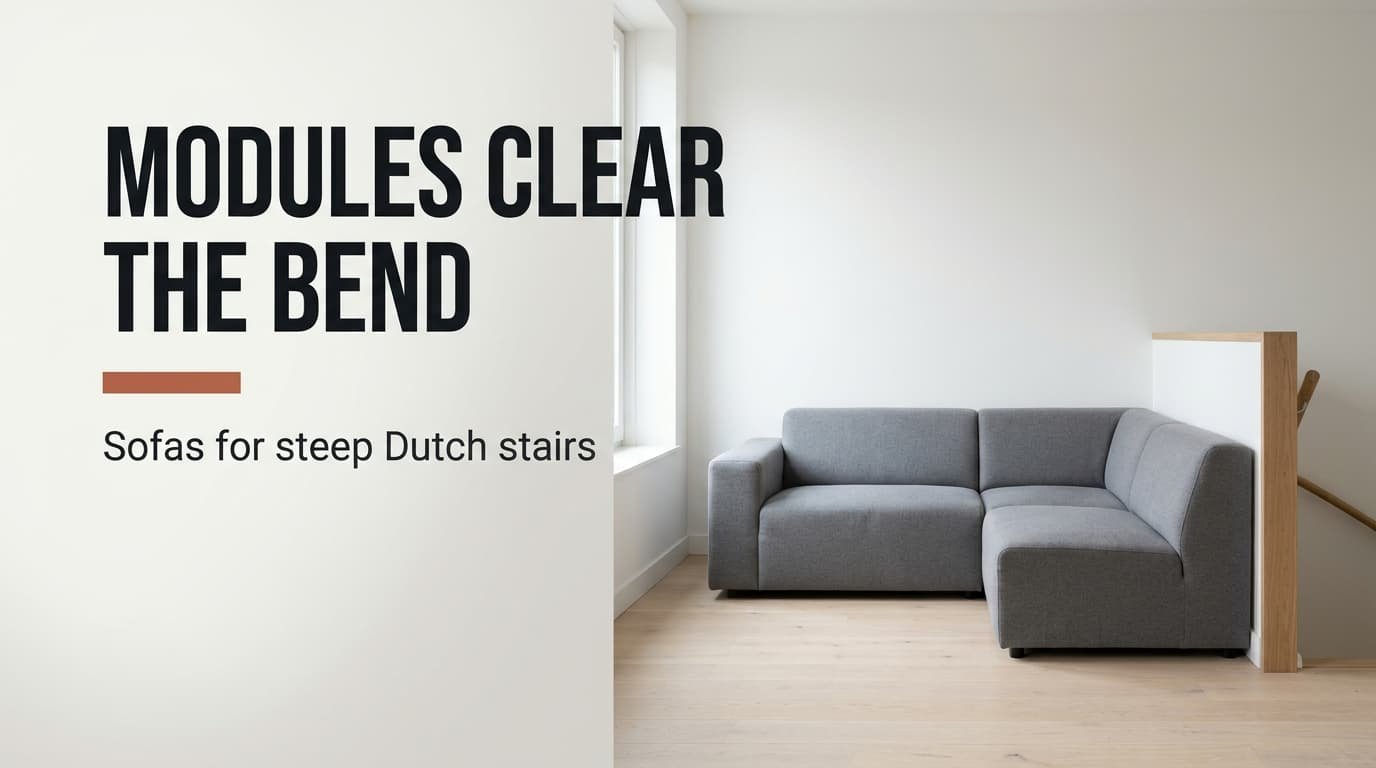
A 220 cm sofa cannot swing round a bend between two 75 cm passages, and that bit of geometry explains much of the shift. Sectional sofas replacing fixed sofas is a story about access before it is a story about style. Whether it suits your flat depends on two readings, the length of the longest piece and how narrow the tightest bend is. Our example is a rented second-floor flat in Haarlem, reached by a stair 75 cm wide with one turning landing. All the figures are approximate, so measure your own route from the street to the sitting room before you copy any of ours.
Sectional Sofas Replacing Fixed Sofas: What Changed in Dutch Flats
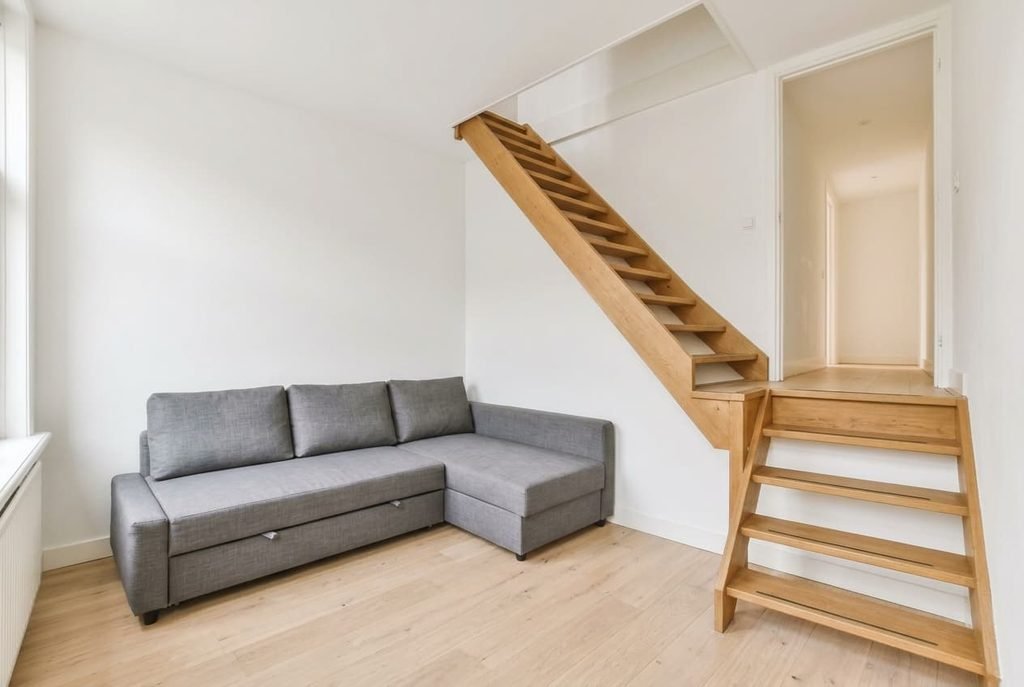
Older Dutch buildings have narrow stairwells, and the living room often sits two floors above the street. A sofa that arrives in one piece has to turn at every landing, so each landing becomes a hurdle. A hoisting beam on the gable can lift a sofa through a window, but that needs a wide window and a dry day.
Delivery adds a further pressure. A team can refuse a route with two tight turns, and then the buyer inherits the problem of getting the sofa upstairs.
Tenants also move more often than owners do, and each move meets a different stair. A sofa that fitted the last flat may refuse the next one. Buyers now ask first whether a piece can come apart, and only then whether it looks right.
Rooms have changed their jobs too. A sitting room doubling as a desk space or a play corner changes shape during the week. Modules follow that change, whereas a fixed sofa stays wherever the delivery team left it.
The stair is the real client of the sofa.
What a Sectional Does to a Living Room Now It Is Everywhere
Take a three-seat sofa measuring 220 × 95 cm. A thin rod can pass a right-angle bend between two passages of width w only if its length stays under about 2.83 × w. With w at 75 cm that limit is roughly 212 cm even before the sofa gets any depth, so a body 95 cm deep fails long before the thin-rod figure.
Split the same sofa into two modules of 110 × 95 cm. Each half is now 110 cm long, which is a little over half the limit. The pair also weighs half as much per trip, about 30 kg a module against 60 kg for the whole, so two people can carry each piece round a landing without strain. They bring the halves up in turn and join them in the room.
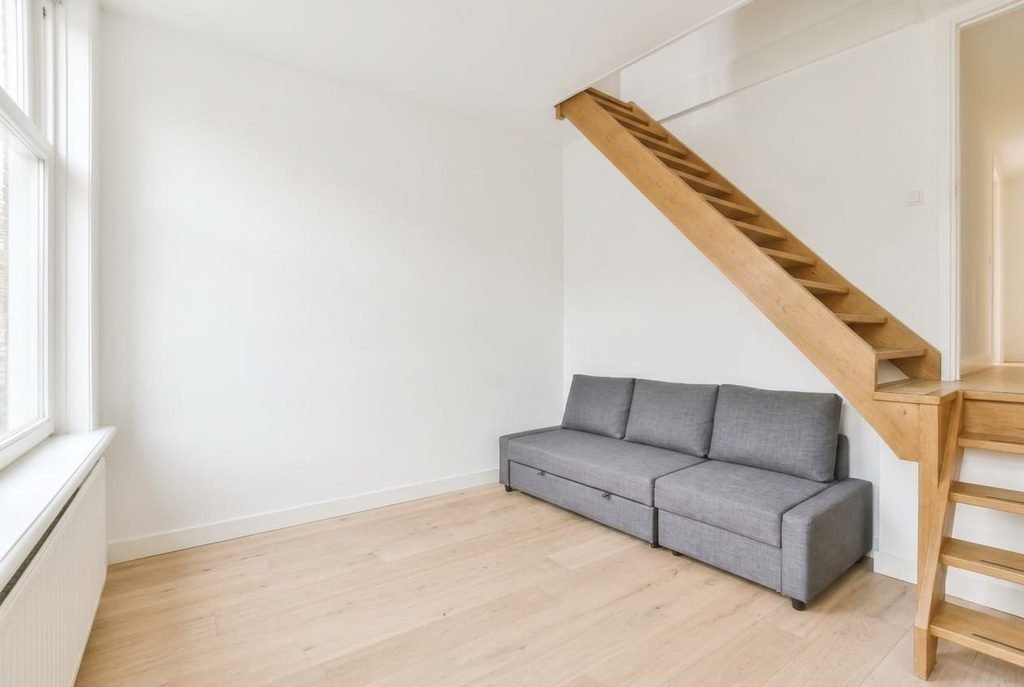
The room changes as well. Before, the one-piece sofa had one layout, a straight line along a wall. Two modules give three. They can stand as a straight line of 220 cm, as two separate seats facing each other, or as an L-shape with the second module turned 90°. In a sitting room of 330 × 440 cm the L-shape tucks into one corner and leaves the floor beside the window open.
Measured this way, the change in sectional sofas replacing fixed sofas is easy to state. The longest piece shrinks from 220 cm to 110 cm, and the number of layouts rises from one to three.
Which Flats Gain When Sectional Sofas Replace Fixed Sofas
A flat with a stair narrower than about 80 cm gains the most. The route decides everything. Modules are the only way a three-seat sofa reaches the room without a window hoist. Check the landing as well as the steps, because a tight turn blocks a long piece more often than a narrow stair does.
A household that moves every two or three years gains next. Modules rebuild into whatever shape the next living room allows, so one purchase serves three different rooms. A fixed sofa tied to one wall can only follow if the new stair is wide enough.
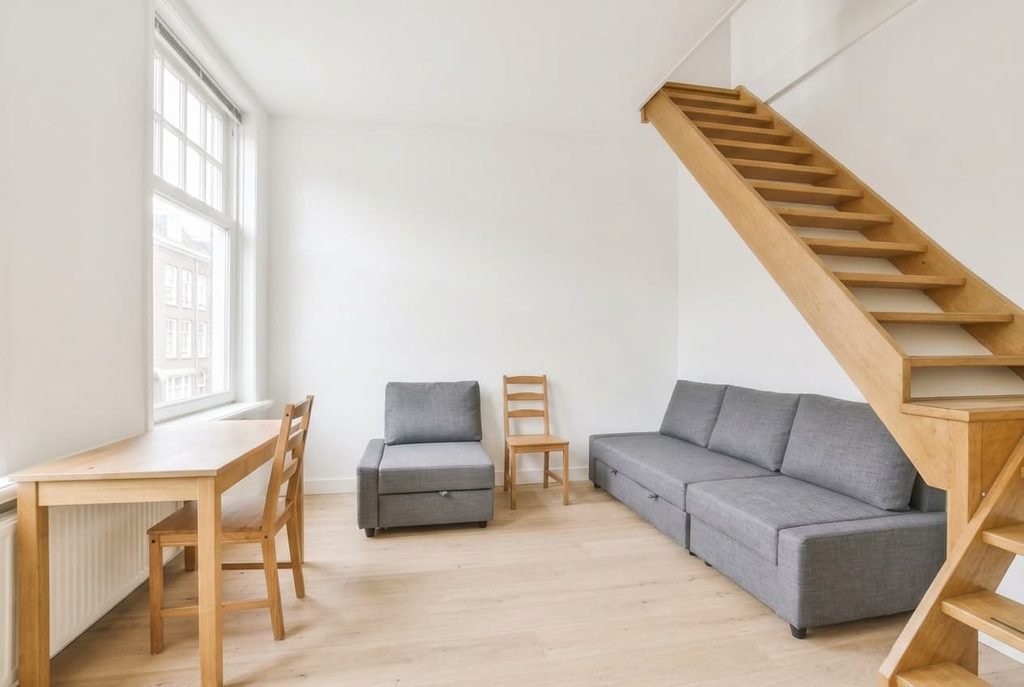
A shared room gains too. Our example room doubles as a desk space on weekdays, so the household pulls one module away for a chair and pushes it back at the weekend. A fixed sofa can’t do that, and a chair squeezed into the gap never feels comfortable.
The modules help when the old sofa must leave, too. Taking a fixed sofa down the same stair is just as hard as bringing it up, and the household carries the problem twice.
A flat with a wide stair and a long lease, with a room that never changes, gains almost nothing. The modules only add seams to a sofa that would have arrived whole, and the household pays for flexibility it won’t use.
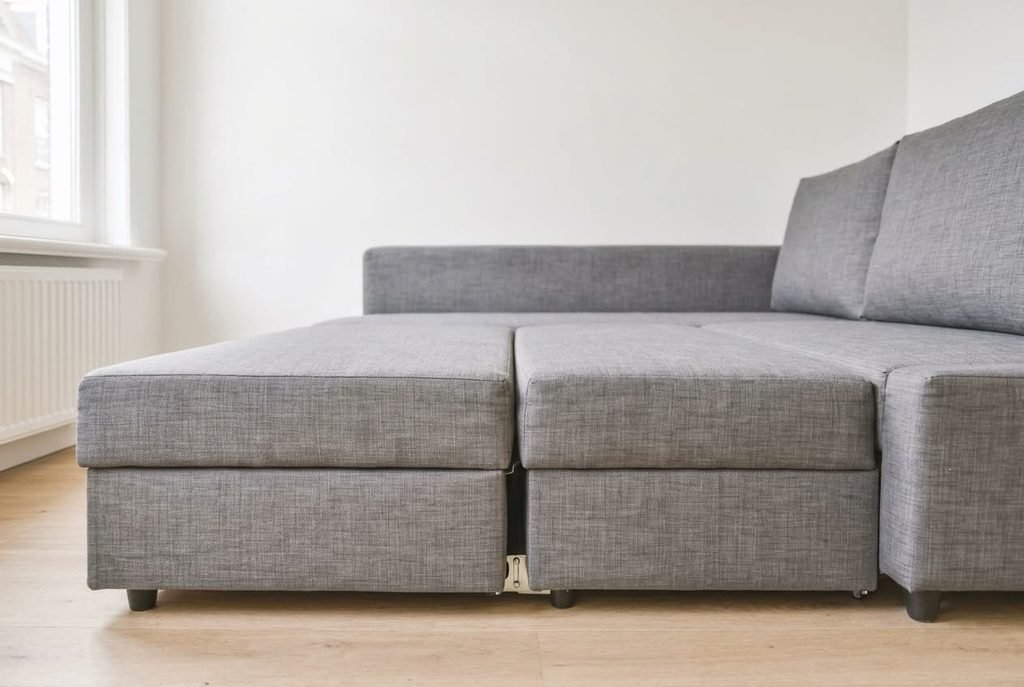
Is a Sectional Worth It in a Small Living Room?
A sectional is worth it where the route to the room is narrower than the sofa is long, and in that case it is the only practical answer. Elsewhere the case weakens.
The weak points are the joins. Each seam adds a gap of several millimetres, and the gap collects crumbs. A connector that works loose lets two modules drift apart by 2 or 3 cm over a year, and that’s enough to show. The cushions on the seam also wear faster, because they rub at the edge.
A fixed frame is stiffer, since it was built as one unit. If your stair is wide and you plan to stay ten years, a fixed sofa is the stronger choice. Sectional sofas replacing fixed sofas is a good trade on a narrow stair and a poor one on a wide stair.
Choose a sectional because of the stairs and the moves, never because it is fashionable.
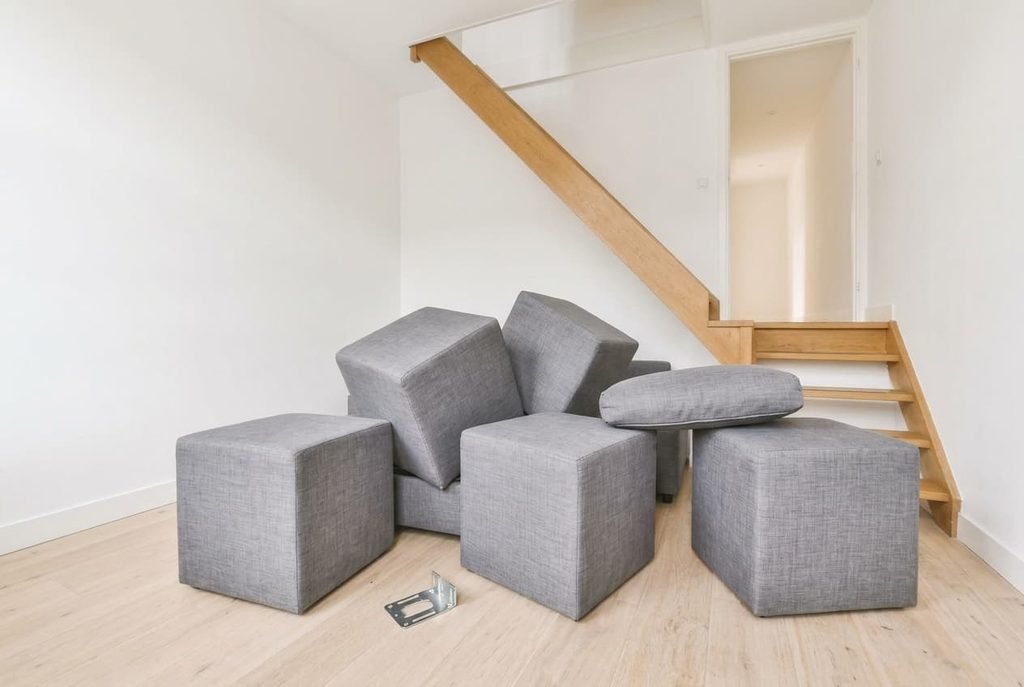
The Extreme Version Worth Leaving Alone
The extreme version is a sofa built from six or eight loose cubes, which promises a new layout every week. It rarely delivers. Each extra module adds another seam and another connector, so six modules bring five joins to keep tight.
Loose cubes also slide on a hard floor. A household that rearranges weekly spends the time it saved on carrying, and the modules wear at the corners where they’re lifted. The result is a room that never reaches a finished state.
Stop at two or three modules. That count crosses the narrowest bend without multiplying the seams, and it keeps the three layouts that matter. Anything beyond it serves the idea of flexibility more than it serves the room, and the extra joins will outlast your enthusiasm for moving things around.
Matching covers are another trap. Eight modules means eight cushions to keep the same shade, and one faded cover makes the whole sofa look patched. Two or three modules need only a pair of covers to match.
A Cardboard Test Before You Order
Cut two cardboard rectangles, one the size of the longest module and one the size of the whole sofa, then carry both along the route from the street door. Mark every bend where the long one jams and where the short one passes. A module that passes the whole route is safe to order.
Do the test with a helper, because a shape 95 cm deep needs a second person to judge the clearance. Note the narrowest point in centimetres and write it on the cardboard. Check the delivery team’s route as well, and measure the room again once the first module is in place.
Sectional sofas replacing fixed sofas makes sense when the cardboard says so. Order only after the short piece clears the worst bend with 5 cm to spare. If the sectional doesn’t earn its seams on that route, keep the fixed sofa you have and let the fashion pass. Hold on to the cardboard until delivery day, since it helps you direct the carriers.
Questions Readers Keep Asking
Should I replace a fixed sofa I already own?
Only if it won’t survive the next move. A fixed sofa that fits your current stair and is still sound can stay. Replace it when the next flat’s route is narrower or when the frame sags. Measure the new stair and landing, then decide; the numbers will settle it.
Who does a sectional suit best?
Tenants who move every few years, households with a narrow stair and rooms that change use through the week. People who like to rearrange will enjoy one. A household that wants a single layout for a decade is better served by a fixed frame, which feels sturdier.
How long will the joins last?
Connectors can loosen over a year or two, especially if modules are pushed or pulled by hand. Check them every few months and tighten any that gape. A module with a solid wooden frame holds a joint longer than a light frame, so lift one end to feel the weight before you buy.