A walk-in closet that genuinely develops a persistent musty smell usually isn’t a space with no possible fix – it’s a space where specific, addressable moisture and airflow factors are combining to create conditions that produce this smell, which is a fundamentally different problem than simply having a closet in an inherently poor location. Understanding which factor is actually driving the smell determines whether the fix is simple and immediate, or genuinely requires a more substantial change.
What is actually happening
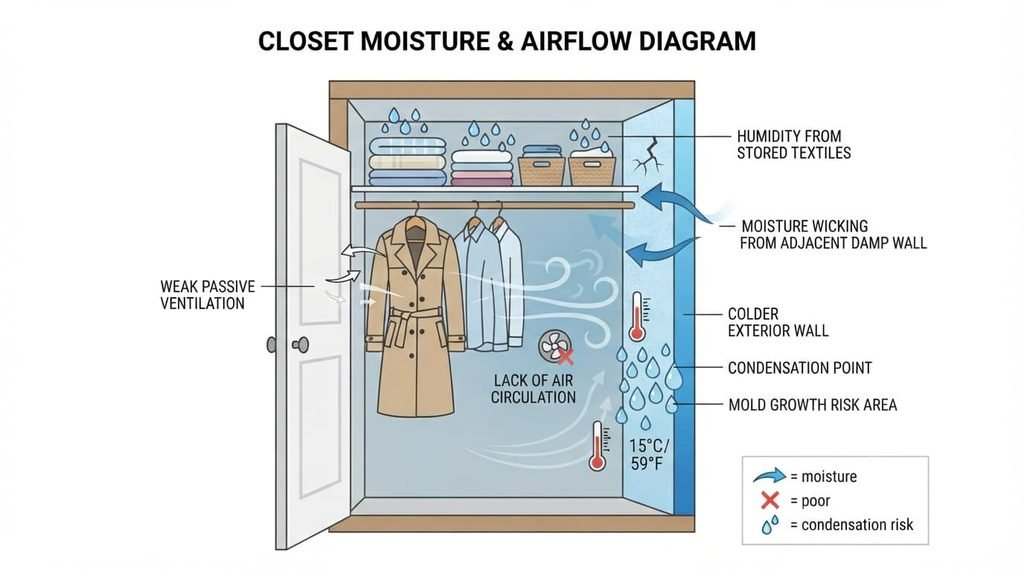
A musty closet smell typically stems from a combination of inadequate air circulation, genuine humidity accumulation, and organic material – stored items, wood, fabric – retaining moisture in an enclosed space with limited airflow to help it dissipate. A walk-in closet’s typically enclosed design, while genuinely useful for storage, can trap humidity considerably more than a more open space would, which compounds with any circulation limitation to produce conditions favourable to the specific organic growth that produces a musty smell.
This matters because “the closet just smells musty” often gets treated as an unavoidable property of enclosed storage spaces generally, when the actual issue is frequently this specific combination of factors, meaning a fix addressing only one – adding a scented product, for instance – may not fully resolve genuine persistent moisture and airflow issues at their actual source.
Confirm which pattern you have
Check whether the smell is genuinely worse during specific seasons or weather conditions – humid periods specifically – since this points toward a moisture-driven cause more directly than a smell that persists consistently regardless of external humidity conditions.
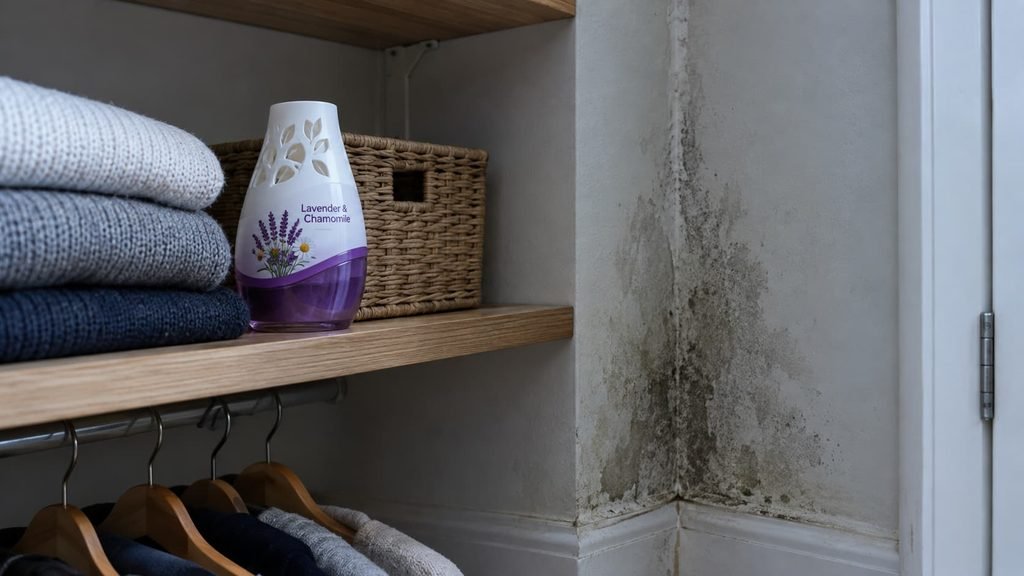
Check for any visible signs of moisture specifically – dampness, discolouration, visible growth on stored items or closet surfaces – since these specific visible signs point toward a genuine moisture source requiring more direct attention than airflow alone might resolve.

The fixes, in order of cost
1. Improve air circulation by keeping the closet door open periodically, or adding a small vent if the closet’s design allows it. This costs relatively little and directly addresses inadequate airflow, one of the most common contributing factors to trapped humidity and the resulting musty smell.
2. Add a moisture-absorbing product specifically designed for enclosed spaces. This is a modest addition to the total cost but directly addresses existing humidity already present in the space, complementing improved airflow rather than replacing the need for it.
3. Ensure stored items are genuinely dry before placing them in the closet, and avoid storing items with residual moisture. This costs nothing beyond the habit itself and directly addresses a contributing moisture source that’s easy to overlook when focusing purely on the closet’s own ventilation.
4. For a closet with a genuine, persistent moisture problem the fixes above don’t resolve, consult a licensed professional about the space’s specific humidity source, since this may indicate a structural moisture issue – a leak, inadequate building ventilation – beyond what closet-level fixes can address. This is a professional consultation, not a DIY project – genuine structural moisture sources need proper assessment before further attempts are likely to succeed.
What isn’t worth doing
Relying entirely on scented products or air fresheners as your complete solution, without addressing genuine airflow or moisture specifically, isn’t worth doing as a complete fix on its own.
Scented products mask the smell without addressing its actual underlying cause, meaning a household relying purely on this approach often experiences the smell returning once the product’s effect fades, since the genuine moisture and airflow conditions producing the smell in the first place remain fully unaddressed.
Fabric-based stored items specifically tend to hold and release moisture differently than harder surfaces do, meaning textile-heavy storage can compound a musty smell more than the closet’s structure alone would explain. Ensuring genuine airflow reaches even densely packed storage areas, not just the closet’s open floor space, helps address this specific compounding factor.

What people get wrong about fixing this
The most common mistake is assuming a musty smell is simply an unavoidable consequence of enclosed storage, when the actual cause is frequently a specific, addressable combination of moisture and airflow factors rather than something inherent to closets generally. Two similar closets in similar homes can vary considerably in this specific issue because of these addressable differences, not because enclosed storage itself is inherently prone to developing this smell.
A second common mistake is addressing the smell only after it’s already noticeably developed, without considering proactive habits that prevent the underlying moisture conditions from accumulating in the first place. Periodically airing out the space and checking for moisture, even before any smell becomes noticeable, produces a considerably more effective long-term outcome than only reacting once the issue has already developed.
What changes if your situation is different
If your closet’s musty smell is genuinely limited to specific humid seasons rather than persisting year-round, prioritise a simpler, targeted fix – a moisture-absorbing product used specifically during that seasonal window – over a more substantial ventilation change, since the actual problem period may not justify additional cost and complexity.
If you’re renting and structural ventilation changes genuinely aren’t available to you, the airflow habit, moisture-absorbing product, and dry-storage habit fixes become your practical ceiling, and a genuinely well-chosen combination of these can meaningfully address most musty smell issues without requiring any structural change to the space at all.

The one thing to check before you commit
If you’re pursuing the licensed professional option specifically, confirm with them whether the moisture source is genuinely isolated to the closet itself or connected to a broader structural issue affecting the surrounding area, since this determines both the scope and cost of any recommended fix.
This matters more for this specific option than for the other fixes above, since those remaining fixes are all fully reversible, low-cost, and require no professional assessment at all, while a structural moisture issue carries genuine cost and complexity worth confirming clearly before any further planning proceeds.
Questions readers keep asking
Are moisture-absorbing products genuinely effective, or mostly a temporary masking solution?
They’re genuinely effective at actually reducing humidity levels specifically, distinct from scented products that only mask smell without addressing moisture – checking a specific product’s stated capacity and replacing it as directed maintains this genuine effectiveness over time.
Can stored items themselves be a source of the musty smell, separate from the closet’s own conditions?
Yes, genuinely – items stored while still slightly damp, or items that have absorbed ambient moisture over time, can contribute to or even be the primary source of a musty smell, making the dry-storage habit covered above a genuinely important, easily overlooked factor.
Can leaving the closet light on genuinely help prevent musty smells through added warmth?
This isn’t a reliable or recommended fix specifically – while warmth can theoretically reduce humidity slightly, relying on a light left on continuously isn’t an efficient or genuinely targeted solution compared to the airflow and moisture-focused fixes covered above, and introduces unnecessary energy use for a marginal, unreliable effect.
When is it worth considering a proper ventilation upgrade instead of the simpler fixes?
If you’ve genuinely tried improving airflow, using moisture-absorbing products, and ensuring dry storage, and the smell persists significantly, that’s the point worth consulting a licensed professional about a more substantial ventilation solution, rather than starting there before trying the simpler, lower-cost fixes first.