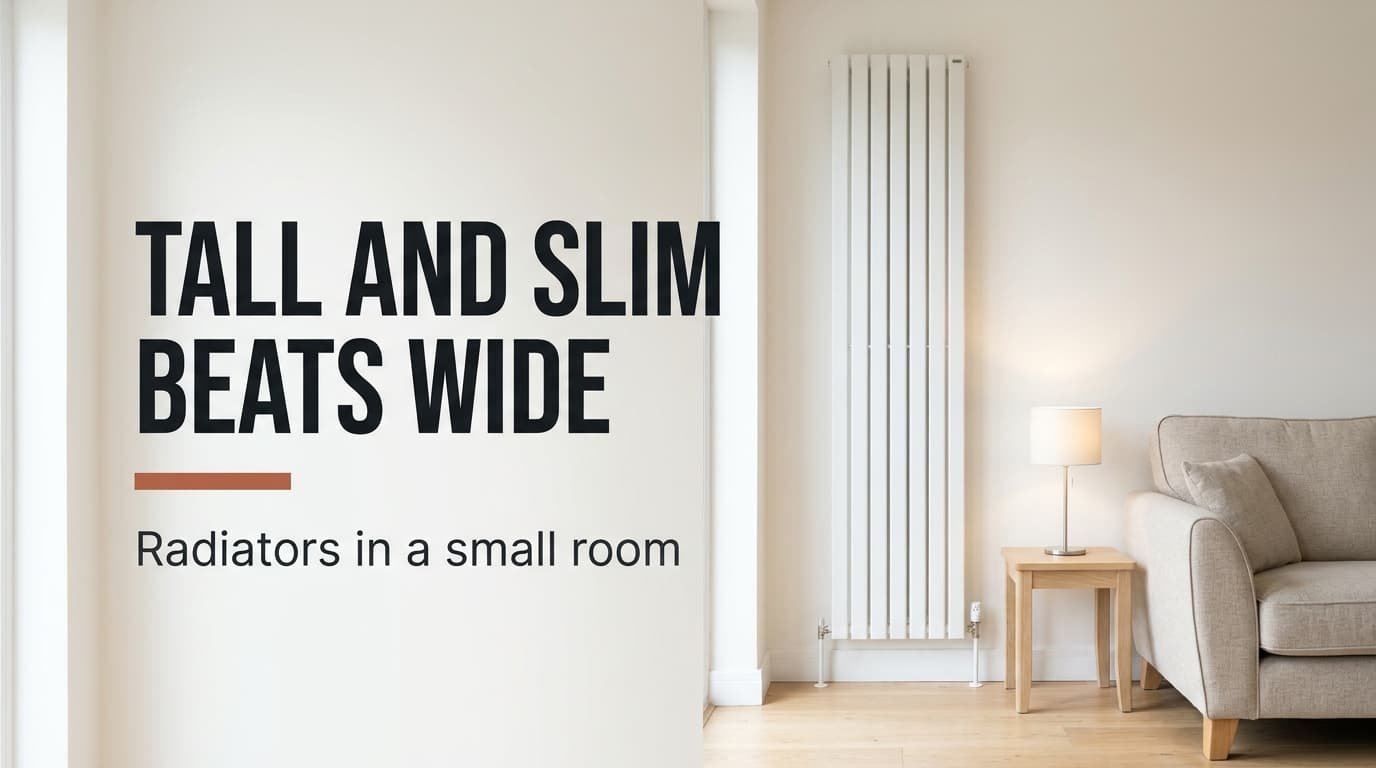
Wide radiators under the window made sense when the glass was thin and the draught ran cold along the floor. Vertical radiators replacing wide ones is now a common sight in Dutch living rooms of modest size. A tall, narrow panel gives about the same warmth from a strip of wall one third as wide. The example room measures 300 × 420 cm under a 2.5 m ceiling, with a 200 cm sofa and a window wall 300 cm long. No brands or prices are mentioned, and the centimetres do the arguing. Treat every figure as an example, then take your own wall’s measurements before deciding anything.
Where the wide radiator came from
Thin single glass chilled the air next to it, and that cold air slid down the pane and spread across the floor. A long, low radiator under the window met that stream at once. Its width matched the glass, and the pipes were laid to suit it.
The habit long outlived the reason for it.
Modern double glazing keeps the inner pane much closer to room temperature, so the cold slide is weaker. The wide radiator still sits under the window, mostly because the pipes are already there.
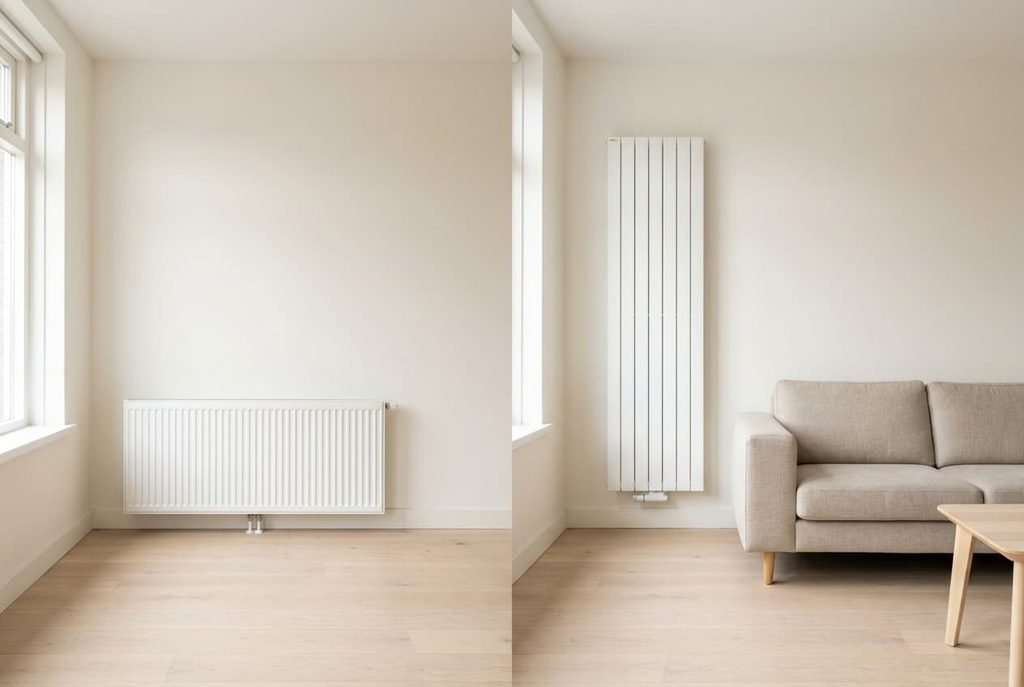
The part that matters is how a radiator gives off heat. For panels of the same type, output follows face area and water temperature, not the outline of the panel. Our wide panel is 60 cm high and 120 cm long, a face of 7,200 cm². A vertical panel 180 cm high by 40 cm across has the same 7,200 cm². At equal water temperature the two give roughly equal warmth, which is why a tall narrow shape can stand in for a wide low one without leaving the room colder.
What changes with vertical radiators replacing wide ones in your living room
Three things change when a vertical panel stands in for a wide one on the 300 cm window wall, and a tape measure shows each of them.
Free wall comes first. The wide panel takes 120 cm and leaves 180 cm. The vertical takes 40 cm and leaves 260 cm, so the free wall grows from 180 cm to 260 cm, a gain of 44%. Measure it from the radiator’s edge to the closest corner or door frame.
Heat density comes second. Our wide panel offers 7,200 ÷ 120 = 60 cm² of face for every centimetre of wall. The vertical offers 7,200 ÷ 40 = 180 cm². That is three times as much, because the vertical spends height where the wide panel spends width. Height costs nothing in a room 250 cm tall.
Dead floor comes third. Nothing can stand within about 15 cm of a radiator without choking its airflow. In front of the wide panel that strip covers 120 × 15 = 1,800 cm². In front of the vertical it covers 40 × 15 = 600 cm². A little over 0.12 m² of floor comes back, which a vacuum cleaner notices.
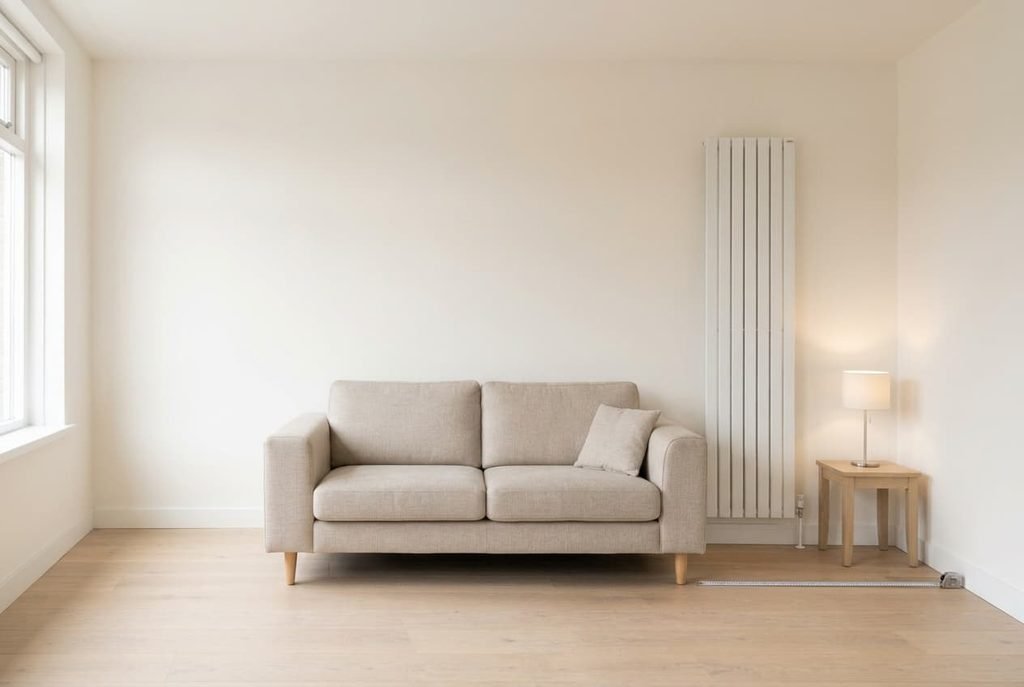
A 200 cm sofa shows the combined effect. Beside the wide panel it needs 200 + 120 = 320 cm of wall, and a wall of 300 cm can’t give that. Beside the vertical panel it needs 240 cm, and 60 cm remains for a side table.
Who vertical radiators suit, and who wide ones still serve
Short walls gain most. A living room in which the sofa and the radiator compete for one wall of 300 cm is where the extra 80 cm decides the layout. A window seat or a low bench under the glass also needs the long, low wall that the wide panel occupies. The change frees exactly the place that plan wants.
Wide panels still serve a long window wall where nothing needs the space. A window of 240 cm with a radiator 120 cm wide under it leaves a clear 120 cm on each side anyway. The vertical shape buys nothing there. Wide panels also suit a room whose old glass still sends a strong cold slide across the floor, since that stream needs meeting along its full width.
A vertical radiator takes a wall that tall furniture wants. A strip of 180 cm is the height of a bookcase, so check what the wall would otherwise hold. The pipes matter too, because connections at the old low position must be moved or adapted by a plumber. In a rented flat the landlord decides, not the tenant.
Ceiling height rarely limits the choice. A vertical panel of 180 cm raised 12 cm from the floor reaches 192 cm, which leaves 58 cm of headroom in a room 250 cm tall.
Is the switch worth making in your room
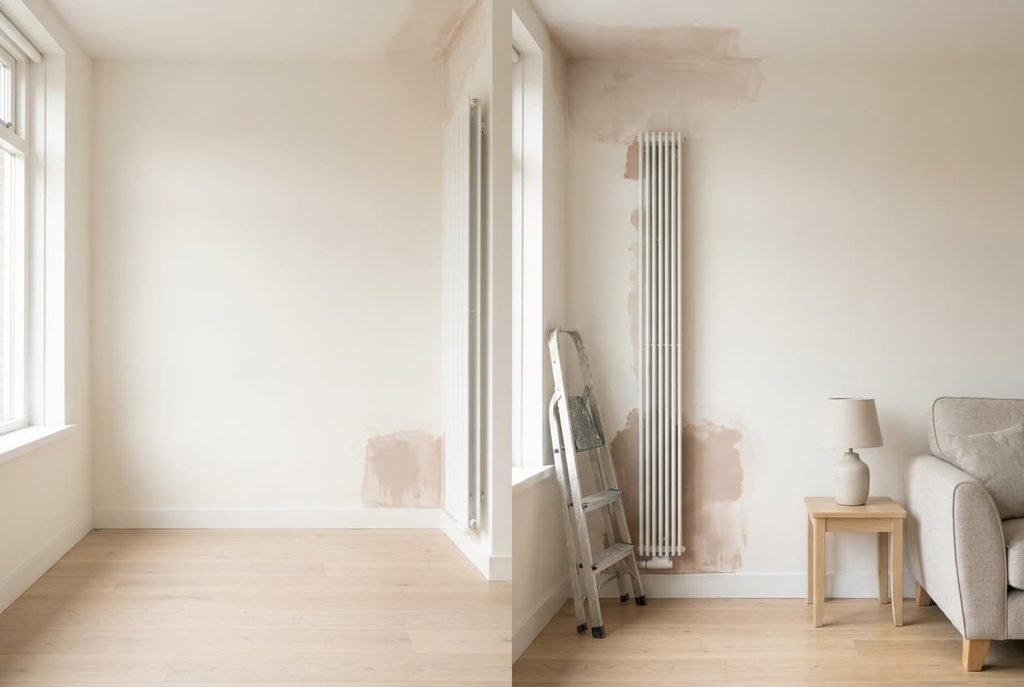
Our verdict: change the radiator only when the wall you gain lets a piece of furniture fit that doesn’t fit now. In our room the answer is yes, because the 200 cm sofa gains a home beside the vertical panel. The warmth stays about equal, the free wall grows by 44%, and 0.12 m² of floor returns. The price is one plumber’s visit and a repaint of the patch where the old brackets sat.
Not every wall benefits from vertical radiators replacing wide ones. If the wide radiator frees no useful space, the swap buys very little. A good panel that works is better kept, and the effort can go elsewhere.
Where the answer feels unclear, count the gain in centimetres. A gain under 40 cm rarely changes where anything stands. A gain of 80 cm, as here, often does. Write the number on the plan and let it decide.
The version that will date fastest
The extreme form of vertical radiators replacing wide ones is a 220 cm designer tower, 25 cm wide, painted to match the wall, with every pipe buried in fresh plaster. Its face is 220 × 25 = 5,500 cm², which is 24% below the 7,200 cm² of the panels above. It needs hotter water to make up the gap, and the pipes can’t be reached again without opening the wall.
That version also reads as a single fashion. A tower in the wall’s own colour hides what it is, and a later owner who wants a different radiator inherits a repair job in the plaster. Treat it as the shape that ages worst.
The gentler route keeps a vertical panel with the same 7,200 cm² face and a standard width, and it leaves the pipes visible. It reverses easily and demands little effort when the next owner wants something else. A tall tower also collects dust on its slim fins, and a 220 cm height needs a stepladder to wipe.
How to try it without committing
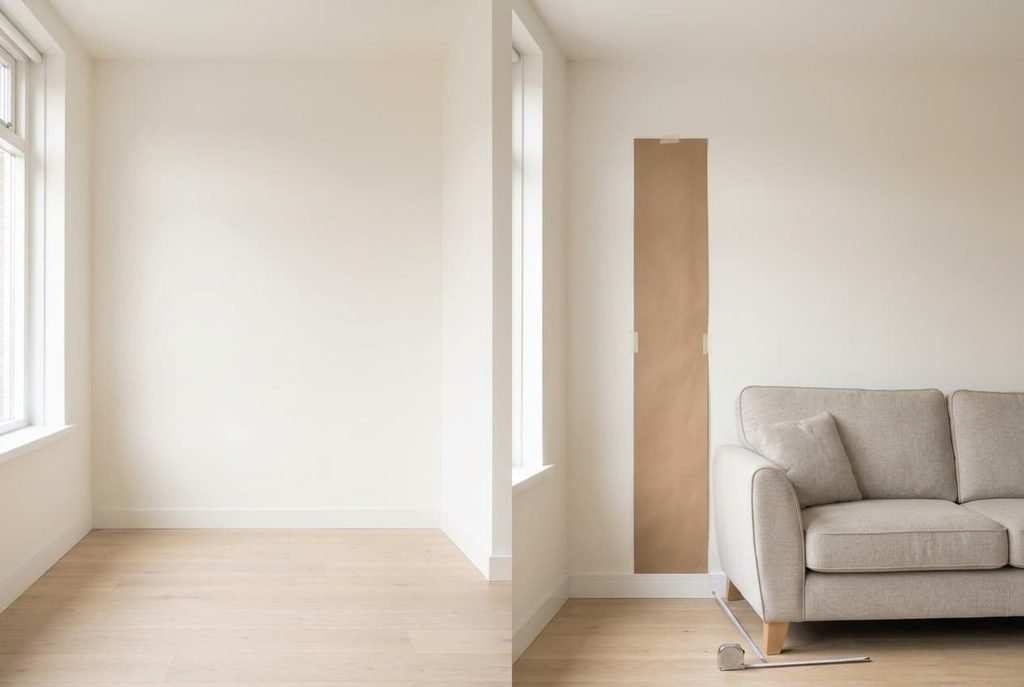
Cut a strip of card 40 cm wide and 180 cm tall, and tape it up where the new panel would hang. Live with the card for a week, and move the sofa to the freed place. Note whether the room feels more open, whether the card blocks a door or a curtain, and where a side table lands.
Check the pipes too. See where the water enters the old radiator, then ask a plumber whether the vertical panel can connect at the same points. A plumber’s answer on the phone costs nothing. It may save a wasted purchase.
Vertical radiators replacing wide ones is a fashion with a real reason behind it. Start with the card and the tape measure. If the freed wall changes where the sofa stands, the switch pays for itself. If nothing moves, the old panel can stay. Keep the measurements on one sheet, since a plumber will ask for the same figures.
Questions readers keep asking
Should I replace a radiator that still works?
Only when the freed space changes how the room works. A working panel has plenty of life left. The plumber’s visit and the new connections both cost effort. If the wall you would gain is under 40 cm, keep the old panel. The effort can go elsewhere.
Does a vertical radiator suit a long, narrow room?
Often, yes. A long room usually has short end walls, where a 40 cm panel leaves room for a sofa or a desk, whereas a wide one eats most of the wall. If the long walls are clear and the ends are empty, a wide panel works just as well.
How long will a vertical radiator last compared with a wide one?
Both are steel panels filled with water. The shape doesn’t change how long they last. Decades are normal with sound pipework. A fashion for the shape could fade, though, which is why a plain design with exposed pipes ages better than a bespoke tower.