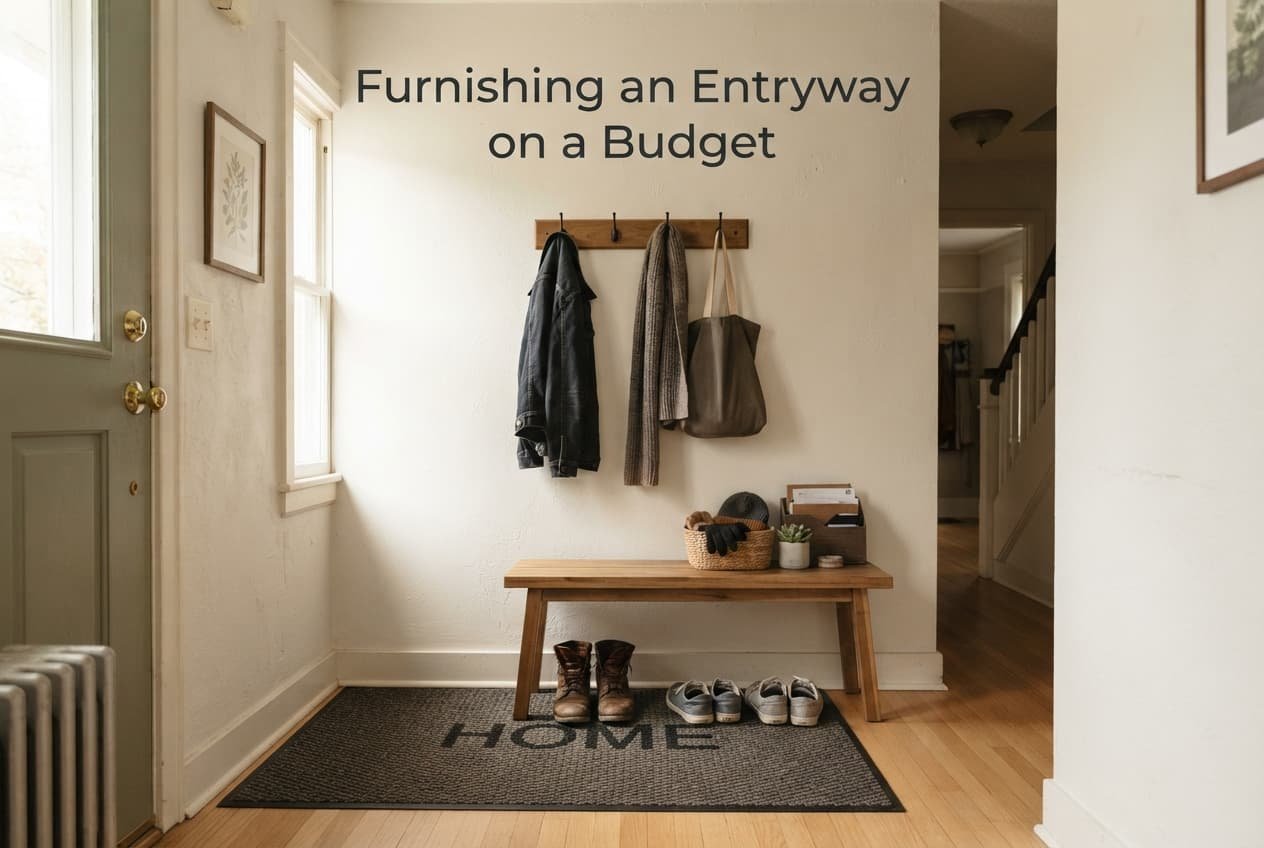
Furnishing an entryway on a tight budget isn’t about finding the cheapest version of every item – it’s about identifying which single element genuinely deserves most of your spending, and which pieces can be genuinely modest without affecting whether the space actually stays organised. An entryway with a limited budget spread evenly across every category often produces a weaker result than one built around a single deliberate investment.
What actually decides this
The deciding factor is which specific element most directly affects whether the space genuinely supports your household’s daily habits, not simply how much visible change any given purchase produces. Storage that’s genuinely convenient to use daily directly determines whether the entryway actually stays organised in a way decorative elements or an elaborate console table simply don’t.
This single distinction should guide nearly every purchase decision below: spend where genuine daily convenience actually depends on it, and treat everything else as a place to keep modest without meaningful compromise to how the space actually functions.
What to prioritise, in order
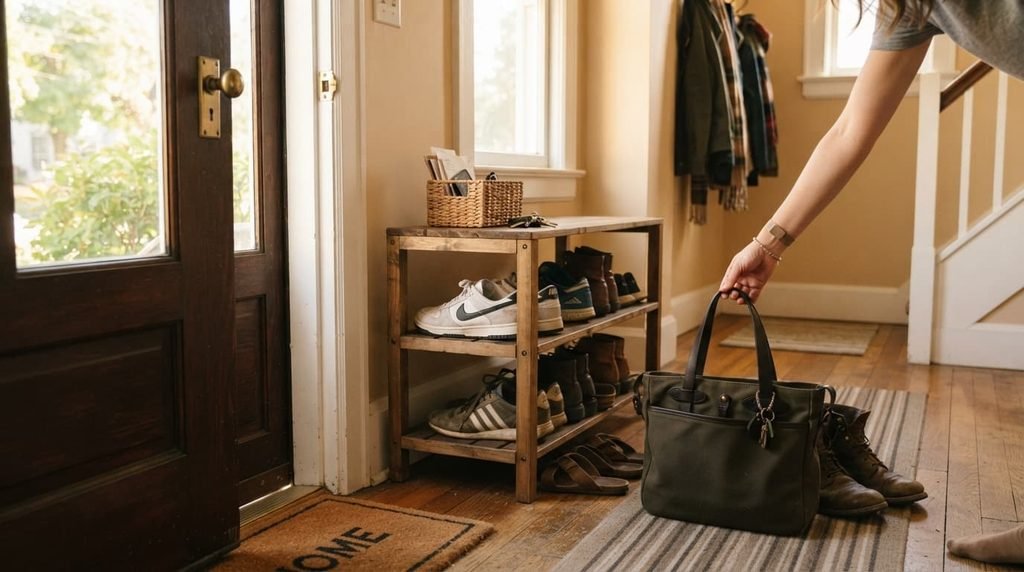
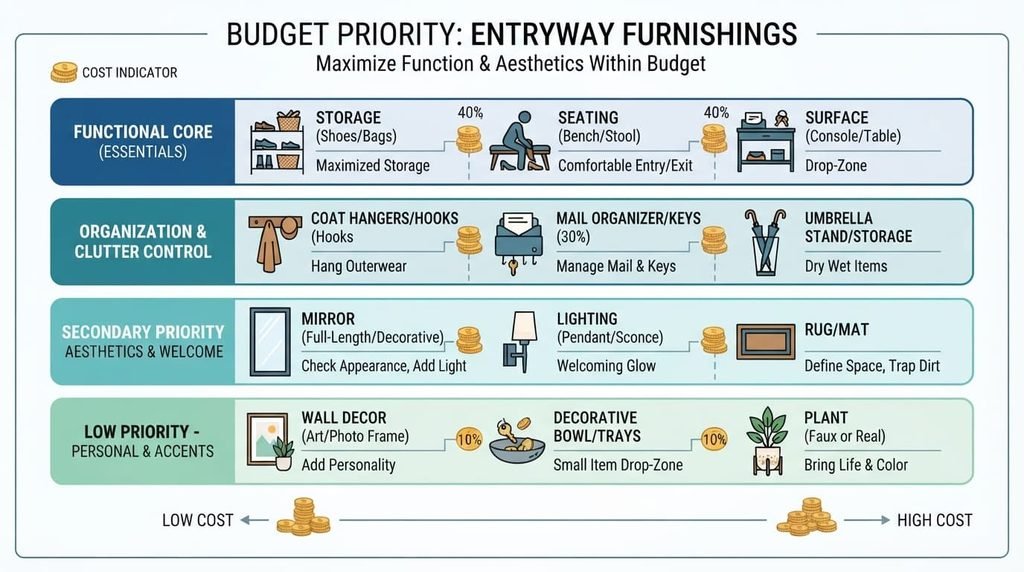
1. Genuinely convenient, low-effort storage for your household’s most frequently dropped items. This deserves the largest share of a limited budget, since storage that’s actually easy to use during a quick daily moment directly determines whether items get put away or simply pile up elsewhere, mattering more than any other single purchase in this space.
2. Adequate lighting for genuine daily function. This is the second-largest justified expense, since seeing clearly to find keys or check your appearance briefly directly affects daily usability in a way decorative lighting choices elsewhere don’t match for this specific purpose.
3. A durable, easy-to-clean flooring solution or mat for the entry point specifically. This matters more than an initially pristine-looking finish, since an entryway experiences genuine daily wear from shoes and weather that a more delicate material struggles to handle well over time.
4. A functional mirror positioned for genuine practical use. A modest addition to the total budget that meaningfully supports the daily habit of a final check before leaving, extending the functional-convenience principle established by storage and lighting.
5. Purely decorative elements – elaborate wall art, ornamental objects with no functional role. These belong last specifically because they carry the least weight in determining whether the space actually stays organised; a modest option performs nearly as well as an expensive one here, making this the easiest category to genuinely economise on.
Where secondhand genuinely makes sense
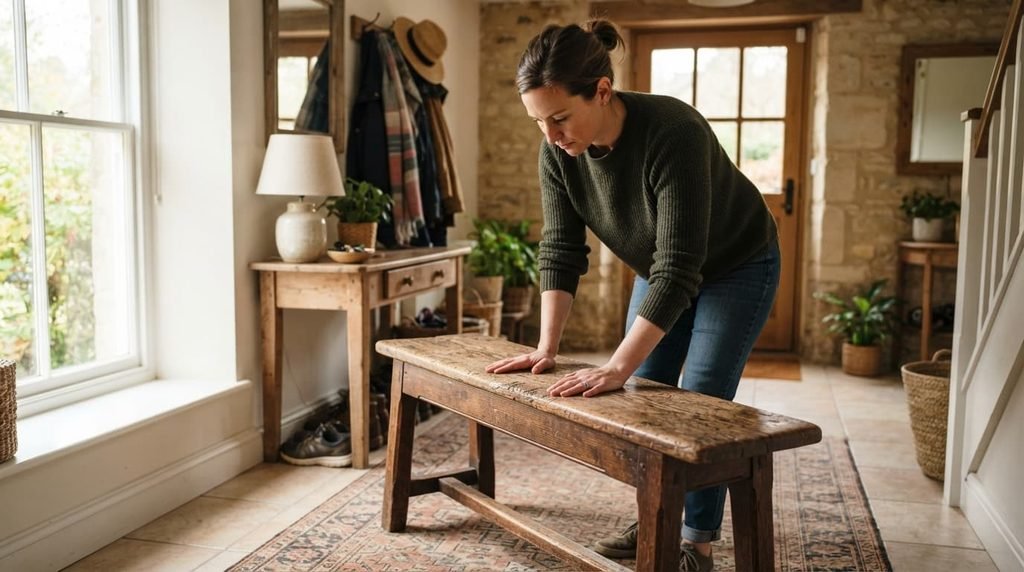
Storage furniture without moving mechanical parts – a simple shelf, a shoe rack, a basic bench – is a genuinely reasonable category to consider secondhand, since well-built frame construction holds up well over time and doesn’t carry particular functional risk beyond basic stability. Checking for structural soundness and any significant wear before committing covers most of the risk this category presents.
A mirror is also a reasonable secondhand category specifically, since a mirror’s functional quality doesn’t meaningfully degrade with age the way some other items do, provided the reflective surface itself remains clear and undamaged. Lighting fixtures are a slightly weaker secondhand candidate, since older fixtures may not offer the same energy efficiency or bulb compatibility as current options, making the potential saving less clearly worthwhile relative to buying new.
What doesn’t matter as much as it’s made out to
An elaborate, matched furniture set – console table, bench, and storage from the same premium collection – is oversold for budget furnishing specifically, and it’s one of the first things entryway guides recommend. A matched premium set often costs considerably more in total than assembling equivalent-quality individual pieces separately, since an entryway’s actual functional needs don’t require every piece to originate from the same expensive collection to look genuinely cohesive and work well together.
An elaborate console table gets far more budget attention than it deserves relative to the storage and lighting priorities above. A beautiful console table with no genuine storage function still results in a cluttered entryway once actual daily use begins, while modest but genuinely convenient storage supports daily organisation considerably better for comparable overall spending.
An easy-to-clean entry mat specifically, positioned right at the door itself, is worth the modest additional cost over a purely decorative option, since an entryway’s genuine daily exposure to dirt and moisture from outside can cause a purely decorative mat to wear or stain considerably sooner than a properly functional option would, making this a case where spending slightly more upfront genuinely saves on more frequent replacement later.
Matching the choice to your situation
If you’re furnishing entirely from scratch, prioritise storage and lighting first and treat everything else as genuinely optional initially – a bare wall costs you nothing functionally, while inadequate storage or poor lighting affects whether the space stays organised from the very beginning.
If you already have furniture but the entryway still feels genuinely cluttered, prioritise the storage convenience change specifically before replacing furniture that’s otherwise functional, since this often addresses the actual barrier to staying organised more directly and affordably than furniture replacement would.
What to walk away from
Any storage solution that requires several steps or genuine effort to actually use during a quick daily moment, chosen purely because it looks tidier when photographed empty, should end your interest immediately regardless of how attractive it appears.
Storage that’s inconvenient during genuine daily use gets bypassed in favour of simply setting items down elsewhere, meaning the modest saving from choosing this option over a more genuinely convenient one doesn’t pay off in actual daily organisation, which is the entire point of this specific purchase category.

The check before you commit
Before finalising any storage purchase, imagine or physically test the exact motion of using it during a typical quick daily moment – arriving home with your hands full, for instance – rather than judging it purely by how it looks when empty and unused.
This single check reveals genuine daily convenience far more reliably than visual appeal does, since storage that looks organised in photographs can still be genuinely inconvenient enough during actual daily use that it goes unused in practice, undermining the entire purpose of the purchase.
Questions readers keep asking
What’s the single most impactful budget purchase for an entryway?
Genuinely convenient, low-effort storage for your household’s most frequently dropped items deserves the largest share of your available budget, since it directly determines whether the space actually stays organised in daily practice.
Is it worth buying a matched furniture set to save money overall?
Not necessarily – matched premium sets often cost more in total than assembling equivalent-quality individual pieces, particularly since an entryway’s actual functional needs don’t require every element to match perfectly to work well together.
Should I prioritise storage or lighting if I can only afford one right now?
Storage, in most cases – even adequate existing lighting doesn’t help much if there’s nowhere genuinely convenient to put items, while a modest amount of natural or existing artificial light combined with genuinely convenient storage still supports the core organisational function reasonably well in the short term.
How can I keep an entryway organised on a tight budget without buying much furniture at all?
Prioritising genuinely convenient storage specifically for your household’s actual daily items, even in a modest form, typically achieves more genuine organisation than an elaborate but inconvenient setup, since the convenience factor matters more than the storage’s visual sophistication.