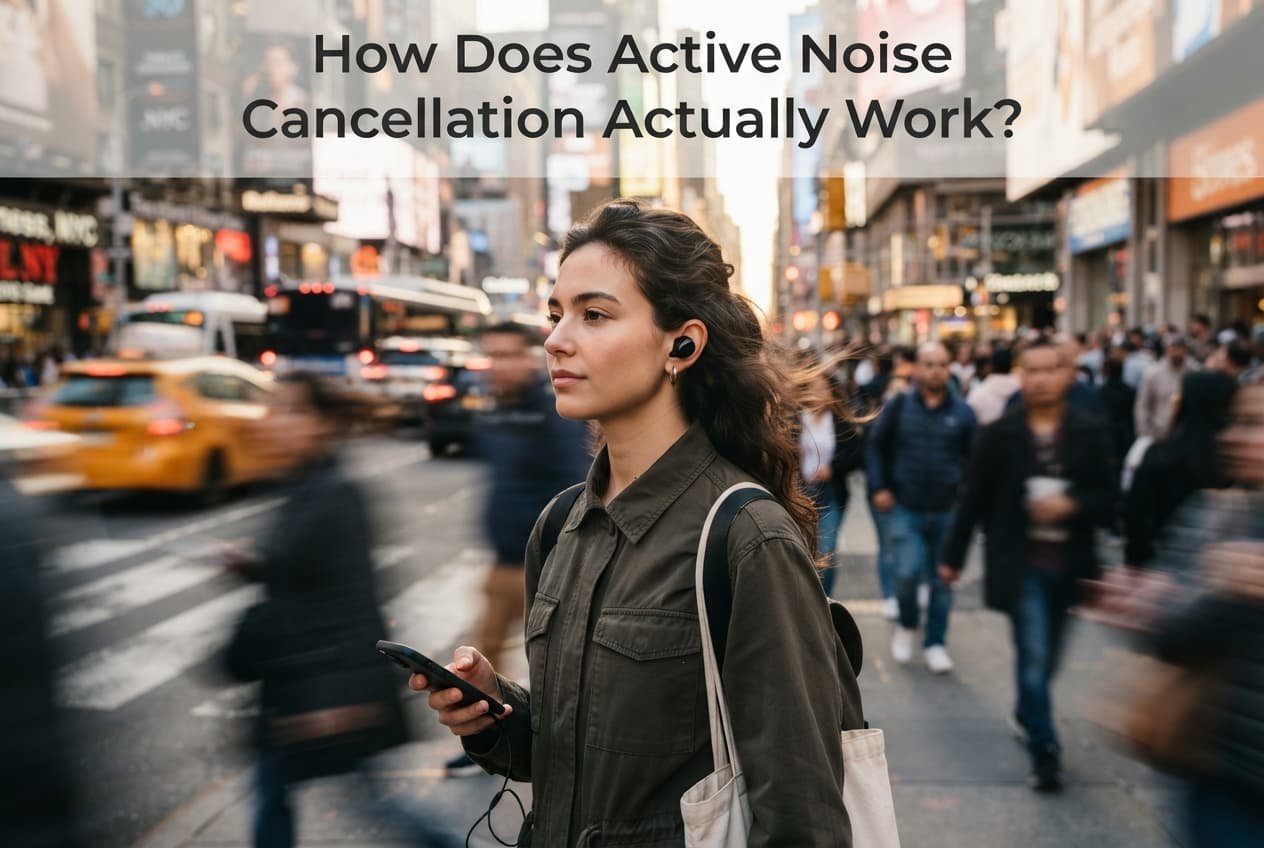
Active noise cancellation isn’t simply a physical seal blocking sound the way earplugs do – it’s an electronic system that genuinely listens to incoming noise and generates an opposing sound wave specifically to cancel it out, which is why noise cancellation performs differently depending on the specific type of sound involved. Understanding this active electronic process explains both why noise cancellation handles some sounds far better than others, and what’s actually happening when you notice that specific pattern.
The short answer, and what it leaves out
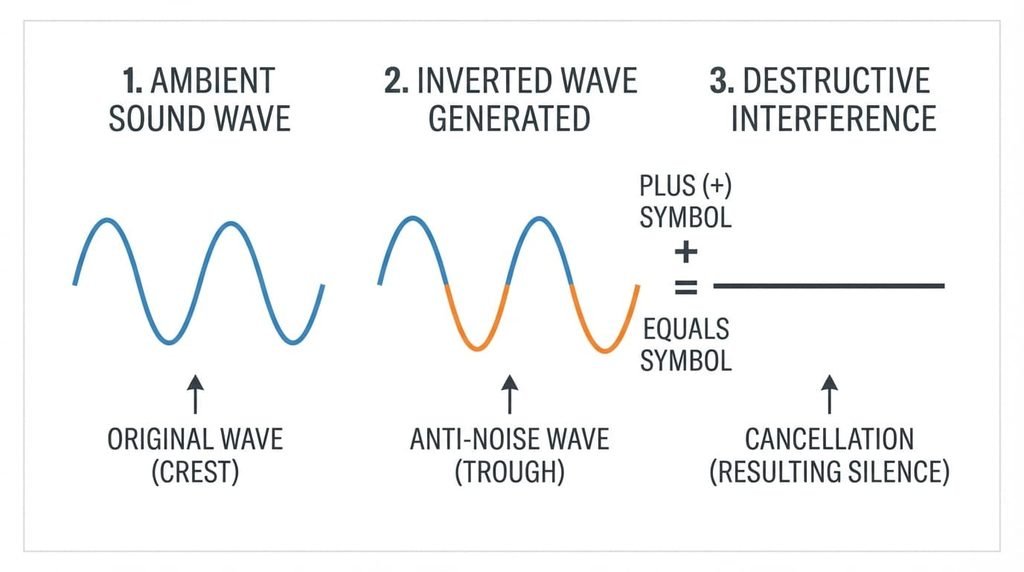
Active noise cancellation works by using tiny built-in microphones to capture incoming ambient sound, then generating an inverted sound wave – one that’s the acoustic opposite of what was captured – which combines with the original sound to cancel much of it out before it reaches your ear.
What that leaves out is why this process works considerably better for some sounds than others – the system needs genuine time to detect and respond to incoming sound, which works well for consistent, predictable noise like an aeroplane engine’s steady hum, but struggles considerably more with sudden, unpredictable sounds that don’t give the system enough time to generate an accurately opposing wave before the original sound has already passed.
How it actually works, step by step
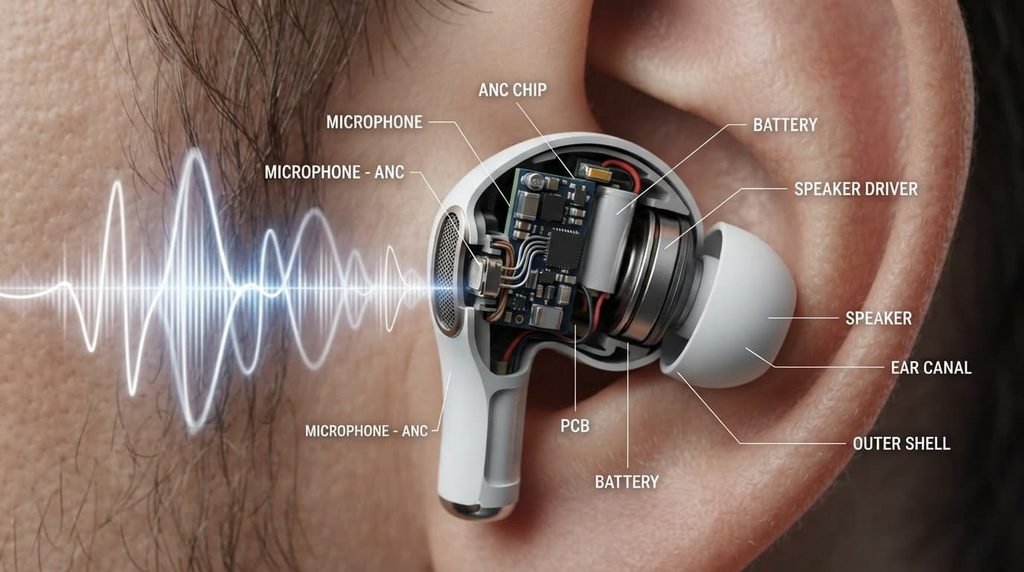
When ambient sound reaches your earbuds or headphones, built-in microphones capture that incoming sound essentially continuously, feeding this information to a dedicated processor specifically built for this rapid analysis.
That processor then calculates and generates a new sound wave that’s precisely inverted relative to the captured ambient noise – where the original sound wave peaks, this generated wave dips correspondingly, and vice versa – timed to combine with the original sound as closely as possible.
When these two waves genuinely combine at your ear, they largely cancel each other out through this direct acoustic opposition, since a sound wave and its precise inverse essentially neutralise one another when they occur together, leaving you hearing considerably less of the original ambient noise than you would without this active process running.
Why some noise cancellation systems perform better than others
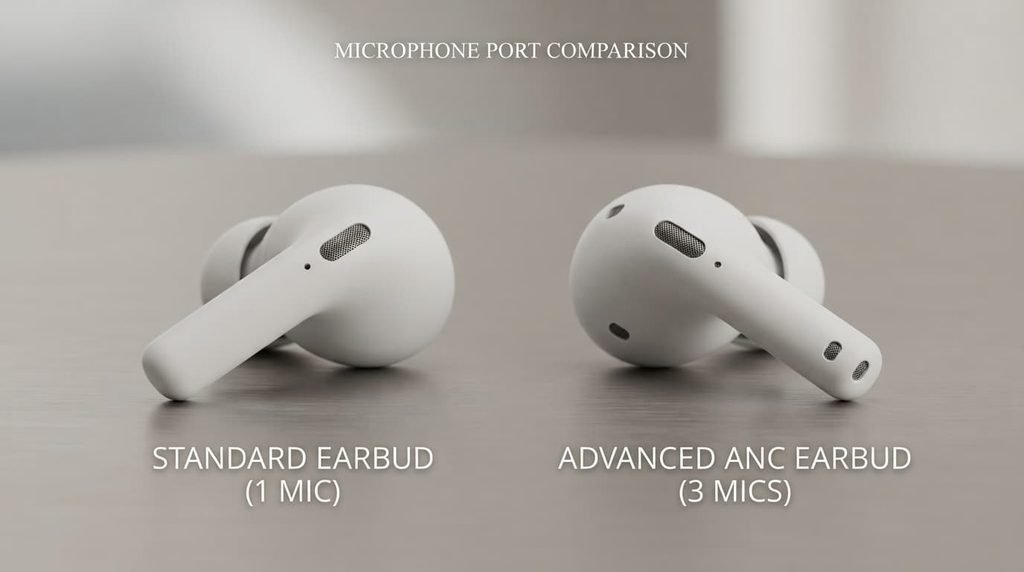
The specific number and placement of microphones a device includes directly affects how accurately it can capture ambient sound before generating its opposing wave. A device with only one or two microphones has genuinely less information to work with than one using several microphones positioned to capture sound from multiple directions, which affects how accurately and quickly the system can respond to your actual specific sound environment.
Processing speed also meaningfully affects performance, since the entire cancellation process depends on generating an opposing wave quickly enough to still combine effectively with the original sound before it’s already passed. A faster processor genuinely produces more accurate, better-timed cancellation than a slower one, even when both devices are technically using the same fundamental active cancellation approach.
The analogy, and where it breaks
Active noise cancellation is sometimes compared to two people saying opposite things simultaneously so loudly that neither statement is actually understood – the cancellation isn’t removing the original sound physically, it’s actively countering it with an equal and opposite response.
The analogy holds for the basic opposing-force principle – both involve an active countering response rather than simply blocking something physically. It breaks because two people talking over each other creates confusing noise, while accurately generated opposing sound waves create genuine silence through precise acoustic cancellation, a considerably cleaner outcome than the analogy’s competing-voices image suggests.
What this does not explain
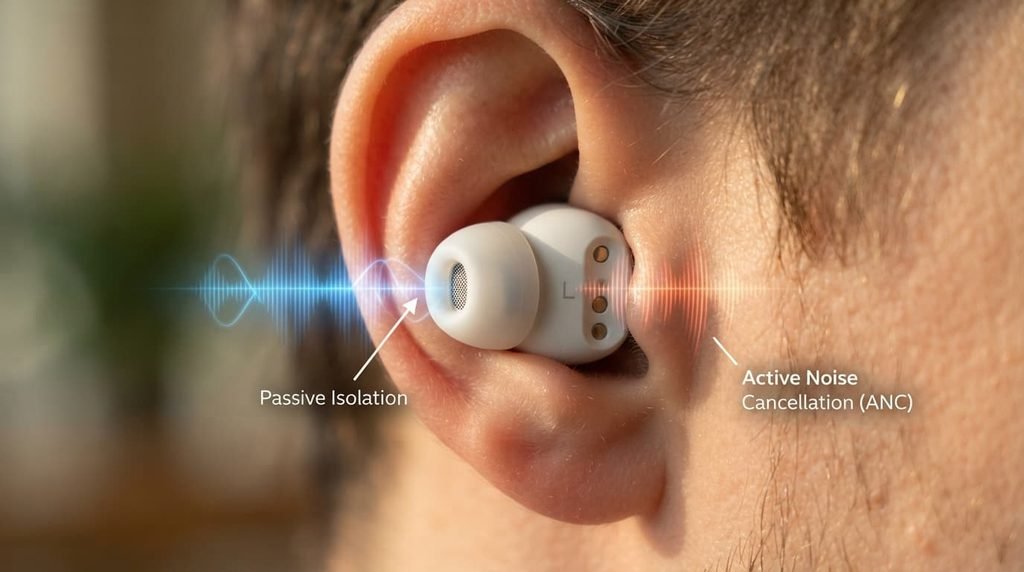
The active-cancellation explanation clarifies why consistent noise gets reduced effectively, but it doesn’t explain or address every noise-reduction factor – physical passive isolation, simply how well your earbuds or headphones seal against or around your ear, also contributes meaningfully to overall noise reduction, working alongside the active electronic process rather than being replaced by it entirely.
It also doesn’t explain why voices specifically often remain more audible through noise cancellation than other ambient sounds, since many systems are deliberately designed with some allowance for voice frequencies to pass through more readily, a deliberate design choice for practical safety and awareness reasons rather than a limitation of the underlying cancellation technology itself.
What people get wrong about it
The belief that noise cancellation creates complete silence regardless of the specific sound environment. This forms because marketing often emphasises dramatic noise reduction, but the technology genuinely performs considerably better against consistent, predictable sounds than against sudden or highly variable noise, meaning the actual experience varies considerably depending on your specific surrounding environment at any given moment.
The belief that stronger noise cancellation is always better regardless of the listening situation. While strong cancellation genuinely helps in loud, consistent environments, it can also reduce your awareness of your immediate surroundings in situations where that awareness genuinely matters, such as walking near traffic, making maximum cancellation strength not universally the ideal setting for every situation.
Where the popular explanation oversimplifies
Advice describing noise cancellation as simply “blocking out sound” glosses over the meaningful difference between this active electronic cancellation process and passive physical sound blocking, treating them as though they’re the same basic mechanism rather than accurately reflecting that active cancellation specifically targets certain sound characteristics electronically, while passive isolation works through simple physical barrier regardless of sound type.
This distinction matters practically: understanding that active cancellation specifically excels with consistent, predictable noise while passive isolation contributes more evenly across different sound types helps explain why your headphones might handle a droning air conditioner very well while handling sudden, sharp sounds considerably less effectively.
Active noise cancellation works by electronically generating an opposing sound wave specifically for incoming noise, not by physically blocking sound the way a barrier does – which is why its effectiveness varies considerably by the specific type of ambient sound involved. Understanding it as an active, continuously adapting electronic process rather than a passive physical block is the detail most explanations skip, and it’s the one that actually explains why performance varies the way it genuinely does.
Questions readers keep asking
Why does noise cancellation seem to work better on a plane than in a busy street?
A plane’s engine noise is genuinely consistent and predictable, which is exactly the type of sound active cancellation handles most effectively, while a busy street’s sudden, varied sounds – horns, voices, footsteps – are considerably harder for the system to accurately anticipate and cancel in the same way.
Does noise cancellation use significantly more battery than regular playback?
Yes, noticeably – the continuous microphone listening and real-time processing active cancellation requires does consume meaningfully more power than standard audio playback alone, which is part of why enabling this feature typically reduces your earbuds’ or headphones’ total battery life somewhat.
Does wearing glasses or a face mask affect how well noise cancellation performs?
It can, to a modest degree specifically for over-ear headphones, since anything disrupting the physical seal around your ear affects the passive isolation component working alongside active cancellation, though this effect is generally less significant for in-ear earbuds where the seal depends less on external factors like glasses frames.
Is it worth using noise cancellation even when I’m not actively listening to anything?
This can genuinely be useful specifically for reducing ambient noise exposure in a loud environment, even without audio playing, though it’s worth being aware of your surroundings and genuine safety considerations before relying on this in situations where awareness of ambient sound actually matters.