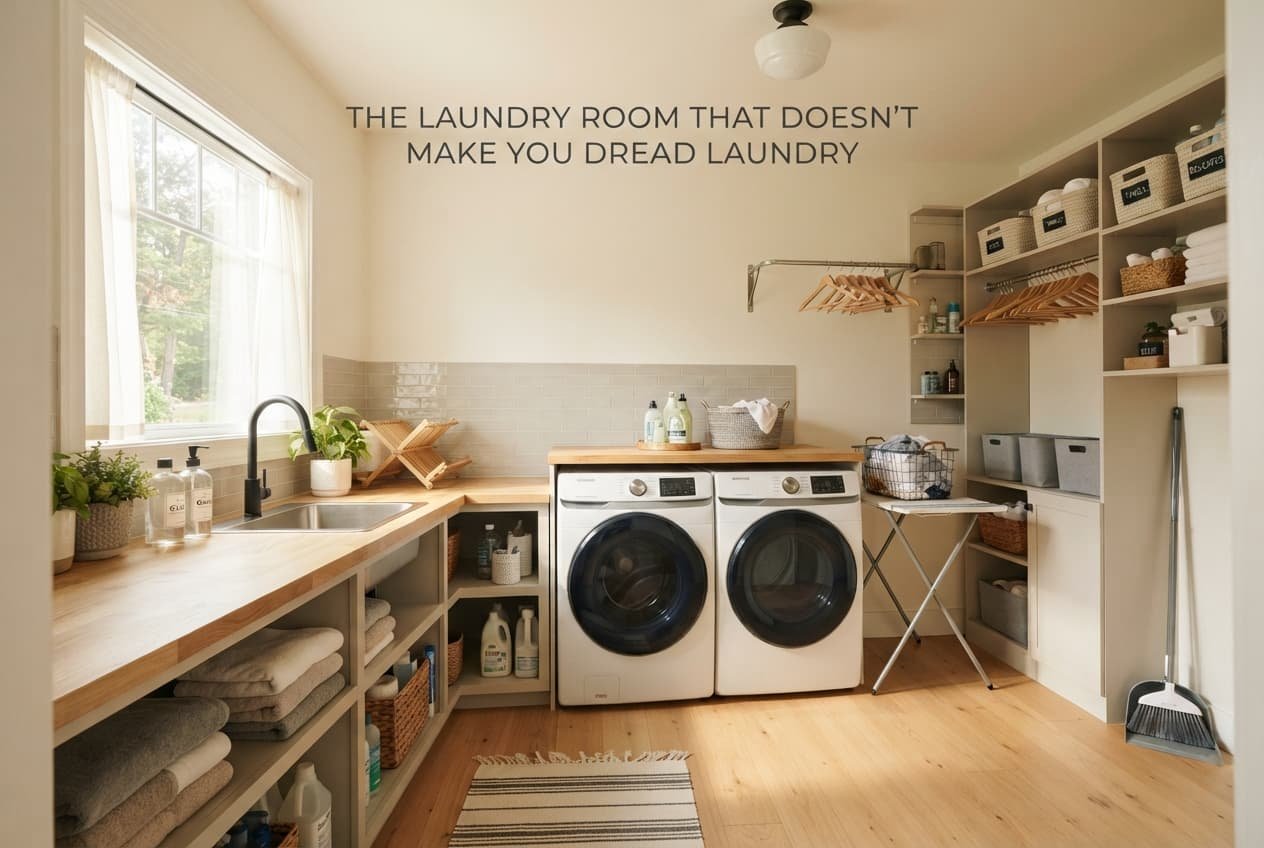
Most laundry rooms fail at their actual job for one predictable reason: they’re treated as pure utility space with zero consideration for the actual experience of standing there repeatedly, sorting, folding, and waiting. The laundry rooms that genuinely make an unavoidable chore feel less burdensome aren’t accidentally pleasant – they’re built around a specific, identifiable set of priorities most utility-first spaces simply skip.
The one decision that shapes this space
The deciding factor is whether the room genuinely reduces the physical friction of the actual laundry workflow, not simply whether it looks tidy when the machines are off. A beautifully styled laundry room that still requires awkward reaching, poor lighting for spotting stains, or inadequate surface space for sorting and folding fails at its actual job regardless of how attractive the tile or cabinetry looks.
This single distinction – genuine workflow efficiency over pure visual presentation – should guide nearly every choice below, more than any specific colour scheme or decorative trend.
Getting the actual workflow genuinely right
Position a genuinely adequate folding or sorting surface at a comfortable height specifically, since bending over a machine top or a surface that’s too low creates repeated physical strain across what’s often a weekly, recurring task.
Ensure genuinely adequate lighting specifically for spotting stains and checking garment care labels, since dim utility lighting, while common in these spaces, actually undermines the practical accuracy the room’s core function depends on.
What the storage is actually doing
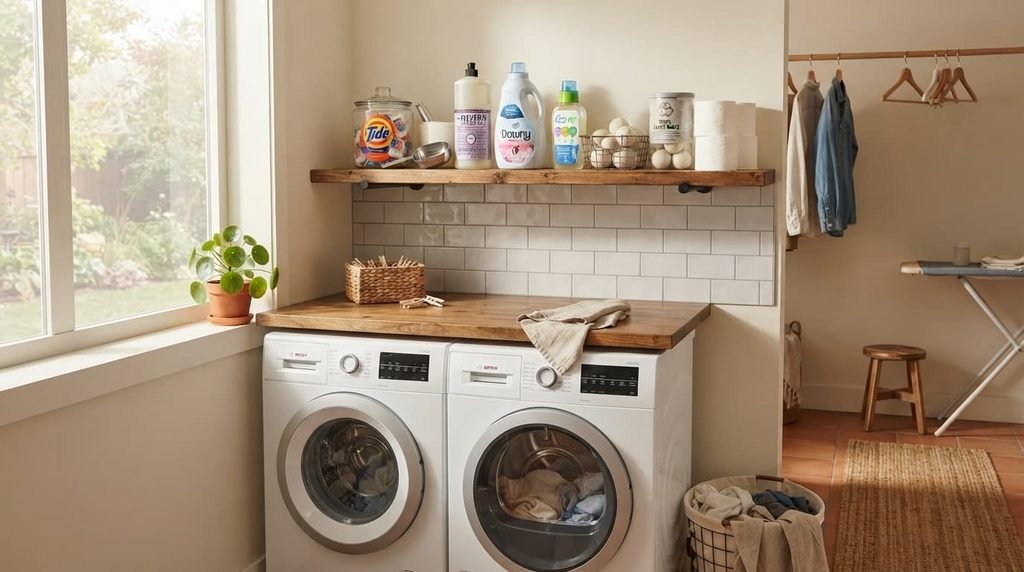
Include genuinely accessible storage specifically for supplies you use every single time – detergent, stain treatment – positioned within easy reach of the machines themselves, since reaching across the room or to a high shelf repeatedly adds unnecessary friction to an already repetitive task.
Consider a genuinely designated space for items awaiting mending or requiring special care specifically, since without this, these items tend to accumulate in an unofficial pile that becomes a source of ongoing visual and mental clutter.
Reducing the mental friction, not just the physical friction
Consider a genuinely simple system for tracking what’s actually in progress – a load currently washing, one waiting to be folded – since laundry’s multi-stage nature means items can genuinely get forgotten mid-process without some visual or systematic reminder of where things currently stand.
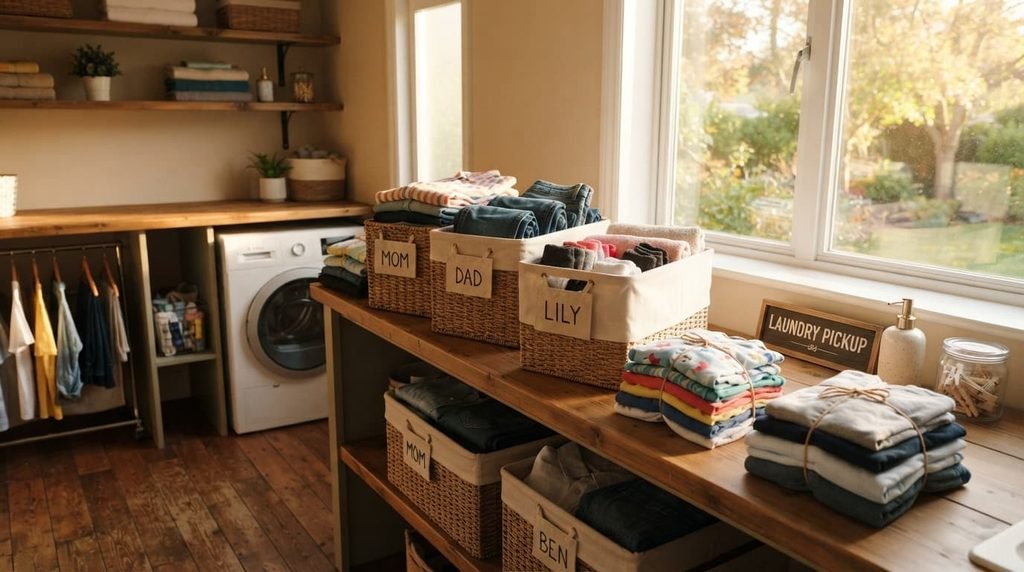
Address the transition from clean laundry to actually put away specifically, since this final step is where many households genuinely struggle most, with folded laundry accumulating in the laundry room itself rather than making it to its intended destination. A designated basket or shelf specifically for each household member’s items can meaningfully ease this particular transition.
Building genuinely efficient habits around the space
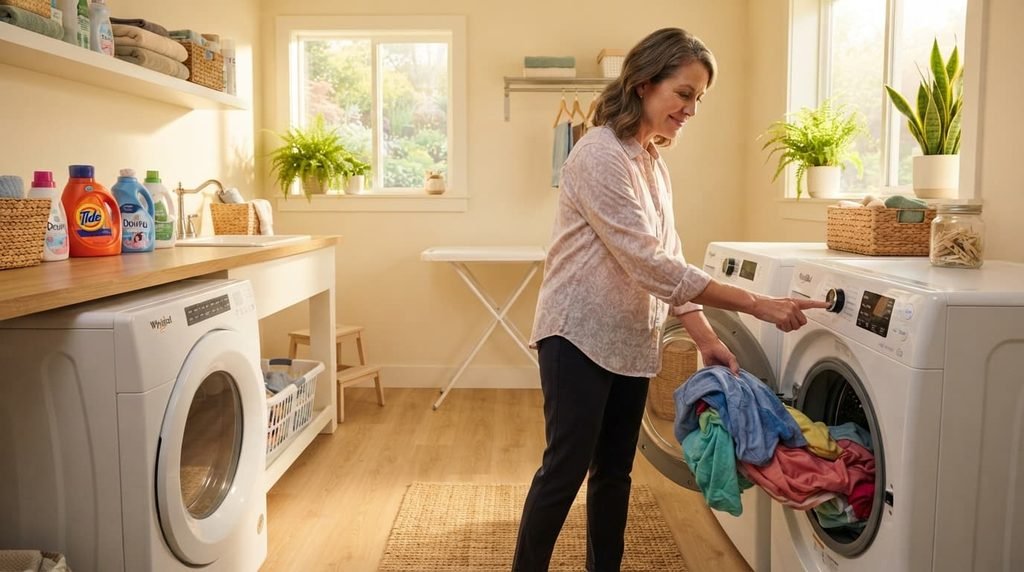
Establish a consistent, realistic routine for actually using the space regularly, rather than letting laundry accumulate until it becomes a genuinely overwhelming task, since a well-designed room still requires this behavioural consistency to deliver its full genuine benefit.
Consider what would make you personally more likely to actually start a load promptly rather than postponing – accessible supplies, adequate lighting, a pleasant enough space to spend a few minutes in – since these small environmental factors genuinely influence whether a chore gets started promptly or delayed repeatedly.
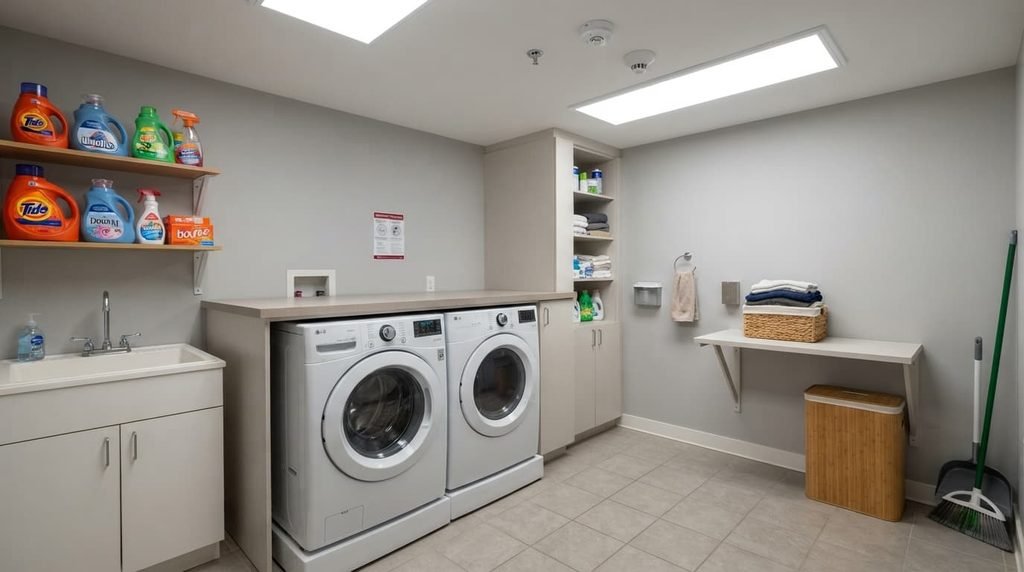
What changes if you’re dealing with limited natural light
If your laundry space genuinely lacks natural light entirely, prioritise artificial lighting quality even more heavily than the general guidance above suggests, since this space’s practical lighting needs don’t diminish simply because natural light isn’t genuinely available as a supplement.
Consider genuinely brighter, more colour-accurate artificial lighting specifically for a windowless laundry space, since accurately judging stain removal and garment condition depends on lighting quality regardless of whether that light comes from a window or a fixture.
What isn’t worth prioritising here
An elaborate, highly coordinated decorative scheme isn’t worth prioritising over the workflow and lighting foundation above, despite how commonly this gets recommended for laundry room styling specifically.
A beautifully coordinated room that overlooks genuine workflow efficiency still leaves the actual chore feeling just as burdensome, since visual coordination alone doesn’t address what actually determines whether the space functions well for its genuine repeated purpose.
Matching the approach to your situation
If you’re genuinely doing laundry for a larger household regularly, prioritise sorting and folding surface area considerably more heavily, since your actual volume benefits more from this workflow capacity than a smaller household’s more modest, occasional laundry pattern requires.
If your laundry space is genuinely small or shared with another function, prioritise efficient, multi-purpose storage solutions specifically, since a compact space benefits more from this flexibility than from dedicating limited square footage purely to laundry-specific styling.
Considering ventilation and moisture specifically
Confirm your laundry space genuinely has adequate ventilation specifically, since moisture from washing and drying accumulates in ways that can affect both the room’s materials and general air quality if genuinely inadequate airflow isn’t addressed directly.
Choose materials and finishes genuinely suited to a consistently humid environment specifically, since materials selected purely for appearance without considering this practical condition can deteriorate considerably faster than genuinely appropriate alternatives would.
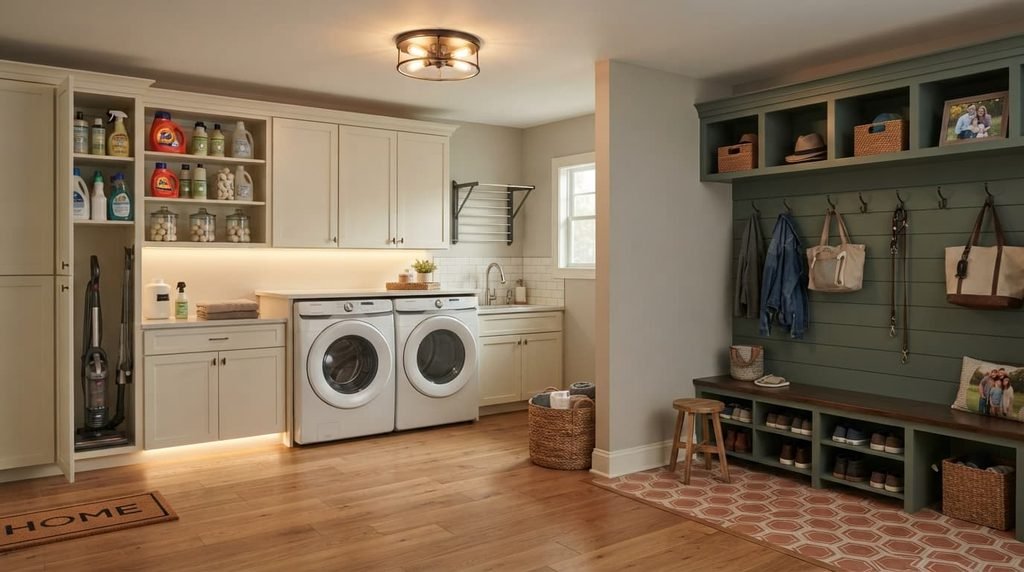
What changes for a laundry space shared with storage or a mudroom function
If your laundry area genuinely doubles as storage or a mudroom transition space, prioritise clear zoning between these different functions specifically, since an undifferentiated combined space tends to accumulate clutter from both functions rather than serving either one particularly well.
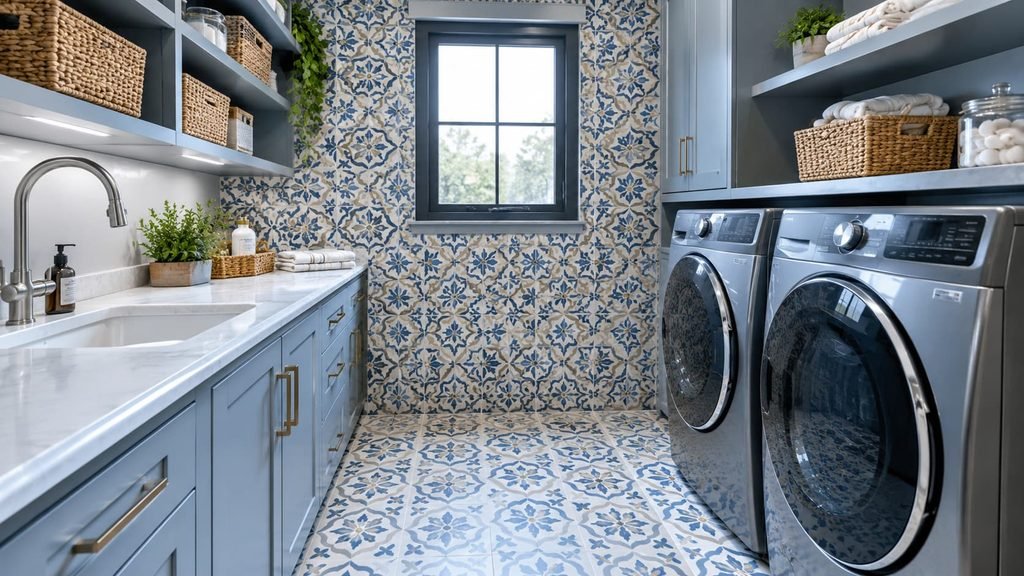
What people get wrong when designing this space
The most common mistake is prioritising decorative wallpaper or elaborate tile purely for visual impact, in a room where genuine workflow efficiency actually determines daily satisfaction considerably more than appearance does. A visually striking laundry room that still involves awkward reaching or poor stain-checking lighting still results in a genuinely frustrating daily experience regardless of how attractive the finishes are.
A second common mistake is underestimating how much genuine storage capacity a laundry room actually requires, resulting in supplies and mending items spilling into makeshift, ad hoc storage that undermines the room’s intended tidiness almost immediately after initial setup.
Questions readers keep asking
What’s the single most overlooked detail in laundry room design?
Adequate lighting specifically tends to be the most overlooked detail – many laundry rooms have reasonable storage and workflow considerations individually, but dim, purely functional lighting undermines the room’s practical accuracy for tasks like stain-checking regardless of how well everything else is arranged.
Is it worth investing in built-in cabinetry for a laundry room, or are freestanding storage solutions sufficient?
Freestanding solutions can genuinely serve the same functional purpose as built-in cabinetry, provided they offer comparable accessibility and capacity, making this more a matter of budget and specific space constraints than a genuine functional requirement for built-in options specifically.
Is it worth adding a comfortable seat or stool to a laundry room specifically?
For households genuinely spending extended time on folding or waiting between cycles, a comfortable seating option can meaningfully ease the physical experience of these longer periods, though this remains a genuinely optional addition rather than a core functional requirement the way adequate lighting and workflow surfaces are.
How can I make a small laundry space feel less cramped and unpleasant to use?
Prioritising genuine lighting quality and efficient, accessible storage within the available footprint typically improves the actual experience of a small laundry space more than attempting elaborate styling that a compact area often can’t comfortably accommodate anyway.