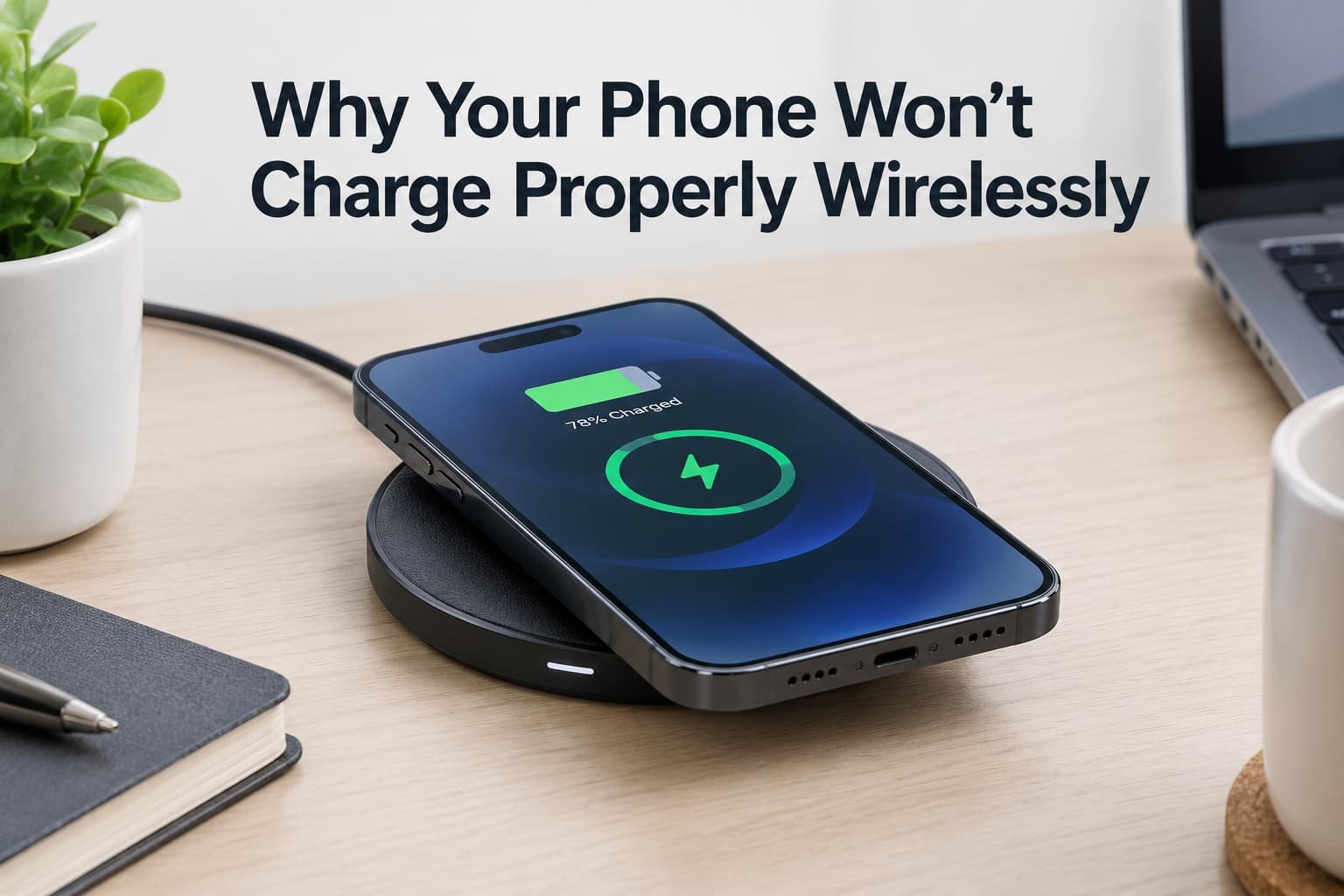
A phone that genuinely charges inconsistently or refuses to charge at all on a wireless pad usually isn’t a single mysterious fault at all – it’s typically one of a small number of specific, checkable causes distinct to how wireless charging actually transfers power, each requiring a genuinely different, specific fix. Understanding which category applies to your specific situation determines whether the fix takes seconds or requires a more involved change.
What is actually happening
Wireless charging works through genuinely precise electromagnetic coil alignment between your phone and the charging pad, meaning power transfer depends on considerably more precise physical positioning than a simple cable connection ever required. This specific mechanism means charging inconsistency can stem from factors that have nothing to do with your phone’s actual battery health or the charger’s fundamental functionality.
Distinguishing between these categories matters because “my phone won’t charge properly” caused by simple misalignment requires an entirely different response than the same symptom caused by a case interfering with the connection, which no repositioning alone will actually resolve.
Confirm which pattern you have
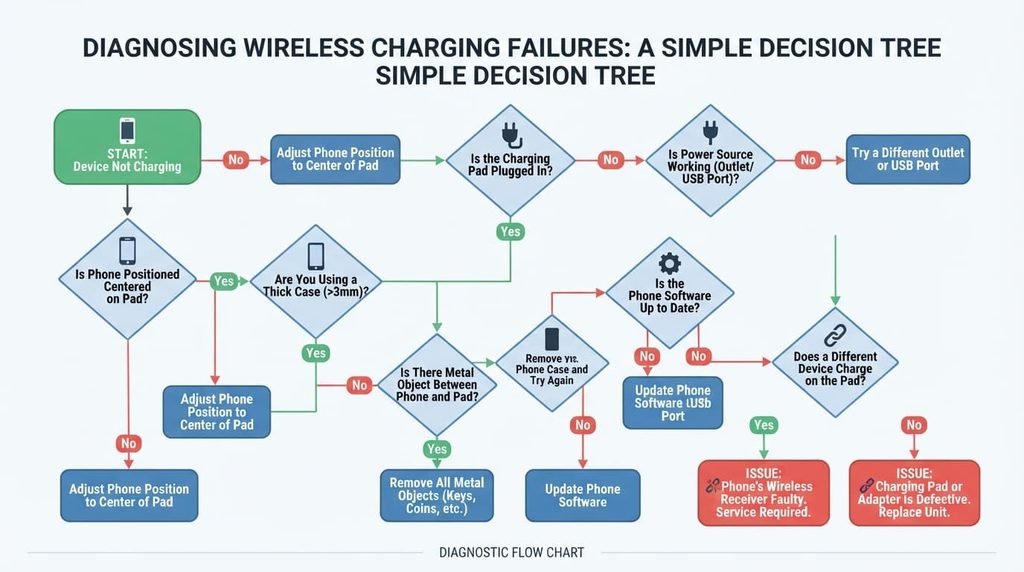
Check whether charging works when your phone is positioned in a specific, particular spot on the pad versus failing across the entire pad surface, since this distinguishes a genuine alignment issue from a broader charger or phone-side problem.
Check whether removing your phone’s case entirely changes the charging behaviour, since this helps isolate whether a case is genuinely interfering with the connection versus the issue being unrelated to the case at all.
The causes, diagnosed
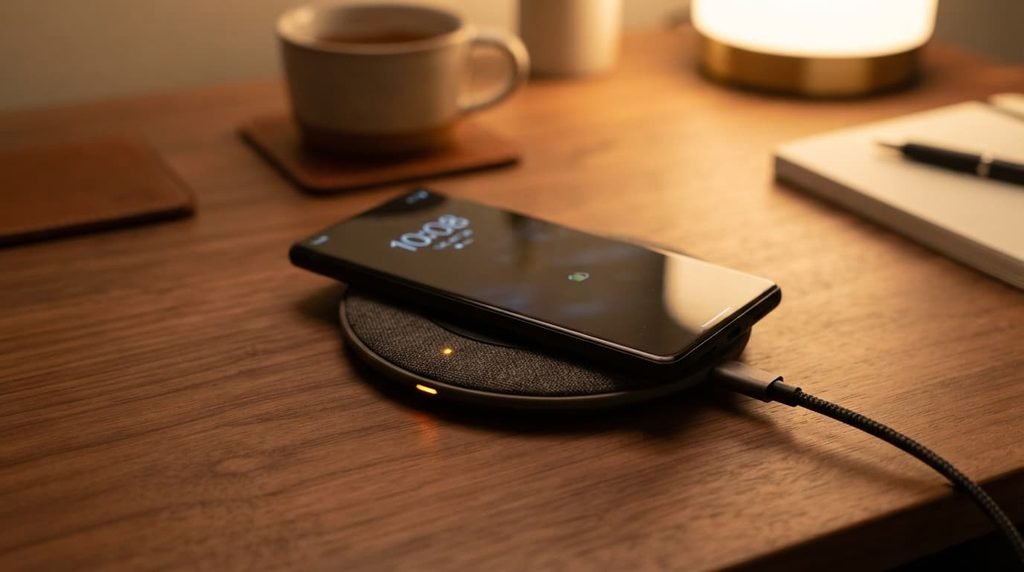
“Charging works only when my phone is positioned in one very specific spot, and even a slight shift stops it.” This points to a genuine coil alignment issue specifically, since wireless charging requires your phone’s internal coil to align closely with the pad’s own coil, and even minor misalignment can prevent power transfer entirely. The fix: check your own specific phone and charger’s stated alignment guidance carefully, since some pads include visual markers or genuinely wider effective charging areas that make positioning less finicky than others.
“Charging works inconsistently or not at all specifically when my phone has its case on, but works reliably with the case removed.” This points to your specific case material or thickness genuinely interfering with the wireless connection, since some case materials or excessive thickness can meaningfully weaken the electromagnetic connection between phone and pad. The fix: check whether your specific case is genuinely rated as wireless-charging-compatible, since not all cases, particularly those with metal components, are actually designed to work with this technology.
“Charging is slow or intermittent, and I notice the charging pad genuinely feels warm during use.” This points to inefficient power transfer specifically, often due to alignment or interference issues generating excess heat as a byproduct of that inefficiency, rather than reflecting a fundamental charger or phone malfunction. The fix: confirm proper alignment and remove any interfering case, since resolving the underlying inefficiency typically also resolves the associated warmth and charging speed issues together.
“Charging stops working specifically after I place other items – a wallet, cards with magnetic strips – on or near the charging pad alongside my phone.” This points to genuine interference from nearby metallic or magnetic objects, since these can disrupt the electromagnetic connection wireless charging depends on, entirely separate from any issue with your phone or the pad itself. The fix: keep the charging area genuinely clear of any other items specifically during charging, since even objects not directly on the coil area can sometimes introduce enough interference to disrupt reliable power transfer.
What people get wrong about wireless charging reliability
The most common misconception is assuming all wireless charging issues stem from the charger’s own hardware specifically, when a genuinely significant portion of these issues actually trace back to alignment, case interference, or nearby objects instead, factors entirely separate from the charging pad’s actual functioning correctly.
A second common misconception is assuming a charging pad experiencing inconsistent performance is definitely failing and needs replacement, when many inconsistency patterns are genuinely addressable through the specific causes covered above, rather than indicating actual hardware failure requiring replacement.
What isn’t worth doing
Immediately assuming your phone’s battery or the charging pad itself is fundamentally broken, without first identifying which specific cause above actually applies to your situation, isn’t worth the expense this assumption leads to.
Many common wireless charging issues – alignment, case interference – are genuinely resolvable without any replacement at all, meaning a new charger or phone repair often doesn’t address an issue that was never actually about fundamental hardware failure in the first place.
When this points to something more serious
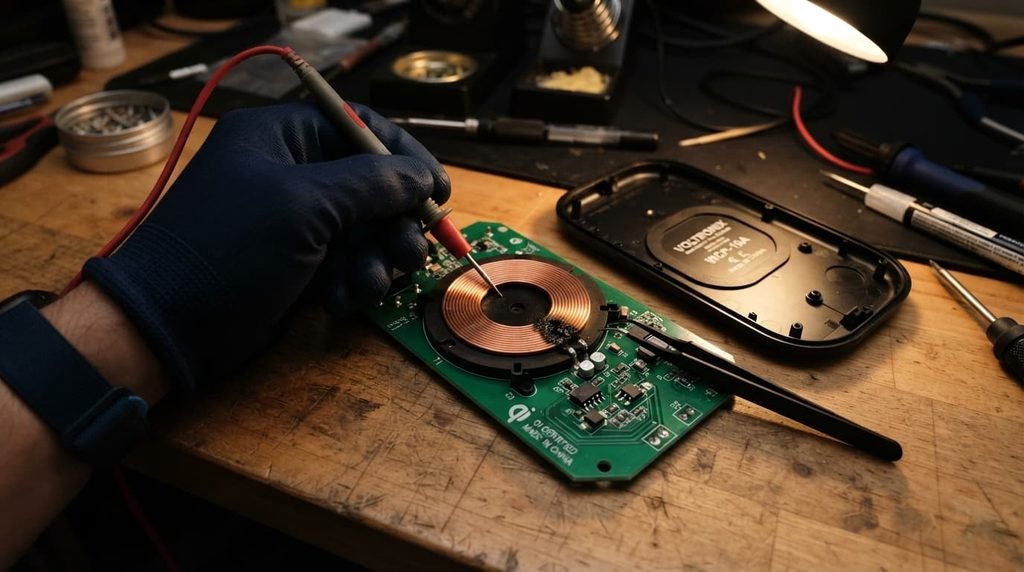
If you’ve genuinely confirmed proper alignment, removed any interfering case, and charging still fails to work reliably, this points toward a genuine hardware fault – either in your phone’s charging coil or the pad itself – that these standard troubleshooting steps won’t resolve.
This genuinely matters because a genuine hardware fault, as distinct from the addressable causes covered above, typically requires professional diagnosis to determine whether the issue lies with your specific phone or the charging pad itself, rather than any further repositioning or case adjustment ever meaningfully resolving it.
How to prevent this from recurring
Establish a genuinely consistent charging position habit specifically, placing your phone the exact same way each and every time rather than positioning it differently on each separate occasion, since this genuine consistency directly reduces the likelihood of alignment-related charging failures becoming a recurring, ongoing frustration.
Keep your charging area genuinely clear of other items as an ongoing habit, rather than only clearing it when charging problems already occur, since this proactive habit prevents a meaningful portion of the interference-related issues covered above before they actually disrupt your charging.
Does the charging pad’s own specific power output rating genuinely matter for charging speed?
Yes, quite meaningfully – a charging pad’s stated power output, combined with your own specific phone’s own charging capability, together genuinely determine your actual realistic charging speed, making it genuinely worth confirming both figures align reasonably well if charging speed specifically matters to your own particular use case.
Questions readers keep asking
Does wireless charging genuinely take longer than cable charging even when everything is working correctly?
Yes, quite generally – wireless charging is typically somewhat less efficient than a direct cable connection even under genuinely ideal conditions, making this a normal characteristic of the technology rather than a sign something is genuinely wrong with your specific setup.
Is it normal for a wireless charging pad to feel warm during genuinely normal operation?
Some genuine warmth during active charging is entirely normal, though a pad becoming notably hot specifically alongside charging difficulties can genuinely indicate the inefficiency issues covered above, worth addressing directly through proper alignment rather than simply accepted as unavoidable or normal.
Can using a wireless charger regularly genuinely affect my phone’s long-term battery health?
Genuine battery degradation genuinely occurs with any charging method over time regardless, and wireless charging’s mild additional heat generation may contribute marginally to this, though this effect is generally modest enough that most people genuinely needn’t avoid wireless charging purely for this specific concern alone.