Ranking water leak sensor features starts with one question: will an alert reach you when you’re out of the flat? The rest of the box comes second, because a sensor nobody hears might as well be switched off. Our example is Maya, a tenant in Manchester who leaves home for nine hours each working day, and her sink cupboard measures 0.6 by 0.5 m. This guide ranks four features in order, flags the feature that few buyers ever test and names the claims that promise too much. Every figure here is invented for one cupboard, so measure your own.
What Decides the Water Leak Sensor Features You Need
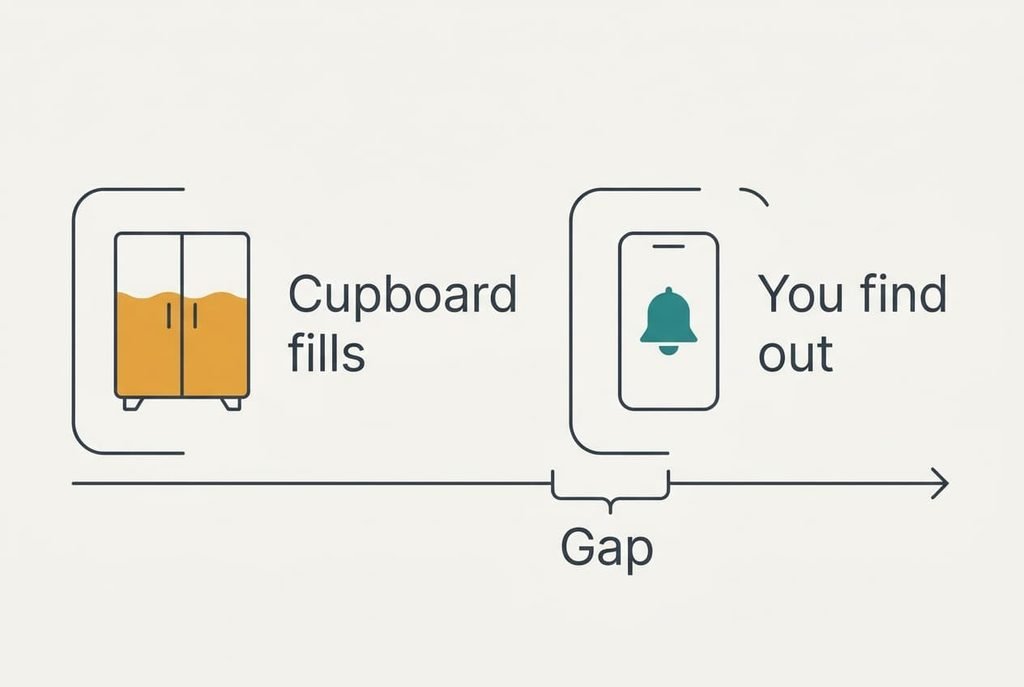
Start with a race between two clocks. The first is how long the cupboard takes to fill. A floor of 0.6 × 0.5 m with a lip of 5 cm holds 15 L before water reaches the door. A hose that lets go at 1 L a minute fills it in 15 minutes. Slow dripping at 0.3 L an hour needs about 50 hours. The second clock is how long you take to find out.
When Maya is out, nobody is home to hear a siren, so that clock keeps running until she opens the door at 18:00. A sensor helps only as far as its alert can travel, because a warning that stops at the cupboard door serves a person standing beside it and nobody else.
A phone alert closes that gap, and a siren in an empty flat doesn’t.
Compare the two clocks for your own flat. Note the hours you’re usually away and the volume of your cupboard. If the fill time is shorter than your absence, alert reach is the first feature to judge, and the rest follow from it.
Four Features of a Leak Sensor Worth Ranking
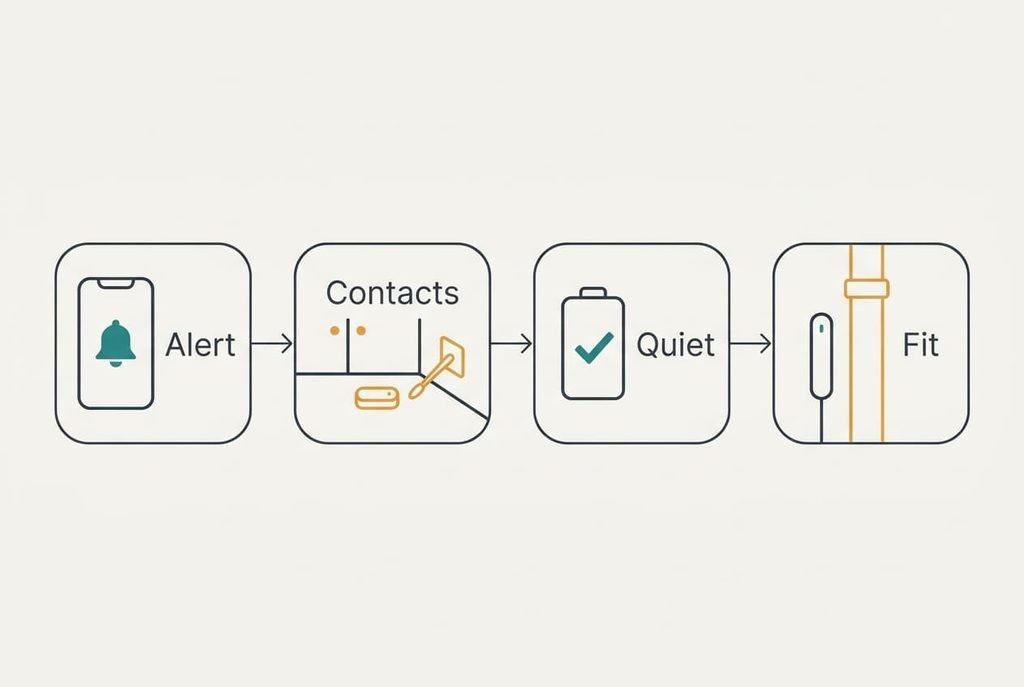
1. Where the alert goes. A sensor can sound a siren or message your phone, and some do both. For Maya, a phone alert shrinks nine hours of unnoticed water to the minutes it takes to read a message and ring a neighbour. To judge it, check that the listing names a phone alert and that setup links the sensor to your Wi-Fi. Then test it with the phone on mobile data. A siren-only model leaves an empty flat to flood quietly, and that is the single costliest mistake on this list.
2. Where the wet contacts sit. Some models sense through their own base, while others use a cable with a probe at the end. A base lying on the cupboard floor reacts only once water reaches it, whereas a probe can go to the lowest corner beside the hose. Lay the sensor where a leak would run, with the contacts touching the floor. A sensor on a raised shelf stays dry until the water is 5 cm deep. That is already 15 L, and the damage is done.
3. Whether it warns you when it goes quiet. Hardly anyone tests this one. A sensor that has lost contact or run out of battery reads just like a dry cupboard. Maya could trust a dead device for months. Look for a stated low-battery notice and a loss-of-contact notice, plus a last-seen time inside the app. If the listing says nothing about either, assume the model can’t do it.
4. Whether it fits a rented cupboard. A tenant can’t drill holes, so the sensor must stand free, and its battery should change without tools. Check the space between the trap and the cupboard wall with a ruler. A body about 6 cm wide leaves room beside the pipes. One that won’t fit ends up on a shelf, where it’s too high to help.
Specs on the Box That Promise Too Much
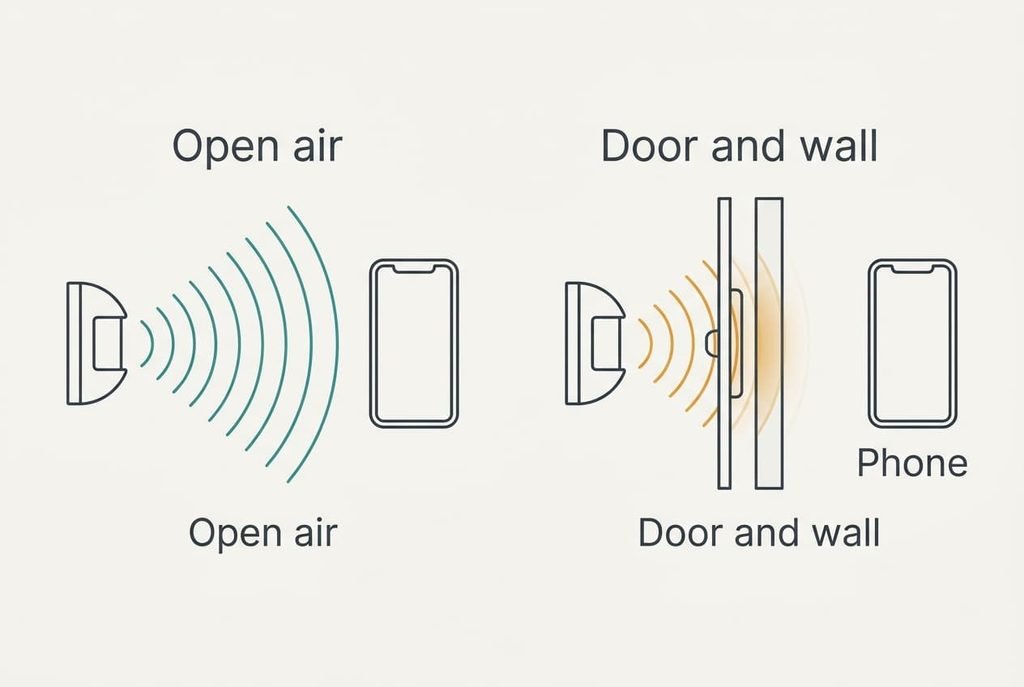
The packaging shouts about a long quoted radio range, and it deserves less weight than it gets. The figure comes from a test outdoors with an unobstructed view. Maya’s signal must cross a cupboard door and then a kitchen unit and a wall, so the printed range says nothing about her route. Makers promote it because one large figure sells well.
A deep waterproof rating gets the same treatment. Under a sink the sensor meets a puddle a few millimetres deep, and a rating built for a swimming pool adds no protection. A loud siren figure sells too, yet in Maya’s empty flat nobody hears it.
Judge range by testing in your own flat. Place the sensor in the cupboard and close the door. Touch the contacts with a wet towel. If the alert arrives on your phone, the model has passed. No promise on the packaging can improve on that result.
Three Readers and the Features That Move for Each
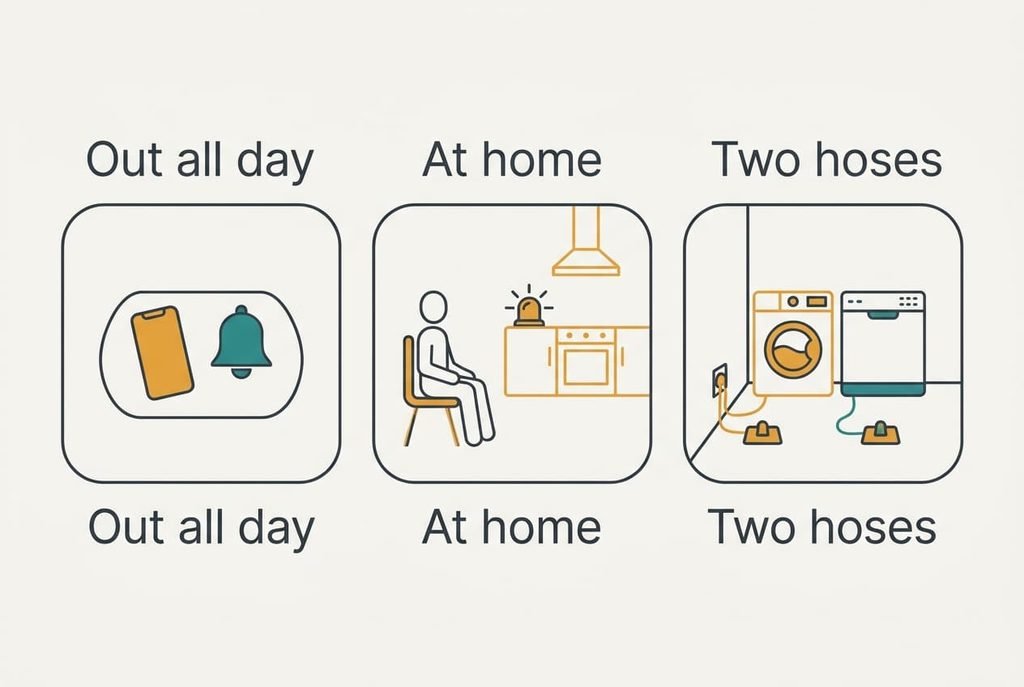
Maya is out nine hours, so the first three features all rise. Where the alert goes and a loss-of-contact notice matter most, since nobody is there to hear or notice anything.
Tom works from home and sits two rooms away. A loud siren could be enough for him. He can put more weight on where the wet contacts sit, because he’ll catch a leak early if the sensor finds it early.
Sam shares a flat where the washing machine and dishwasher stand along one wall. A single sensor can’t cover both hoses. The position feature climbs for Sam, and so does the number of sensors one app can run. If you read water leak sensor features against a profile like these, find the two features that move for your household and spend your attention there.
When to Walk Away From a Sensor
Walk away when the listing doesn’t say where the alert goes. Walk away as well from a sensor that can’t tell you it has lost contact or that its battery is low. A quiet failure is worse than having no sensor, since it gives you confidence you haven’t earned. The water leak sensor features that fail silently are the ones that hurt you later.
Leave a model alone if its battery needs a screwdriver and a rented cupboard has no spare place to put the tool. Skip any sensor whose setup demands drilling, since your deposit matters more than a bracket.
Be wary of a bundle that adds a hub plus a siren and extra sensors you won’t place. Extra parts raise the number of things that can lose contact, and each one needs its own battery. A sensor you can’t service in a minute tends to be forgotten behind the bottles.
A Two Minute Check Before You Rely on It
Dip a paper towel in a saucer of water and touch it to the contacts. Time how long the alert takes to reach a phone that’s off the home Wi-Fi. Note the figure on a sticky label inside the cupboard door. Expect a few seconds, and repeat the test from another room if it takes longer. Then take the battery out, or switch off the hub, and see whether the app reports a lost connection by the next day. A sensor that stays silent after that test has just shown you its worst habit.
If either test fails, return the sensor while you still can.
Test water leak sensor features once a season. Batteries fade, and routers change. Keep the saucer and the towel in the same cupboard so the check takes two minutes. Put a reminder in your calendar for the first day of each season. Mark the test date on that label, so a long gap shows up at once.
Questions Readers Keep Asking
Does a sensor need a deep waterproof rating?
Rarely. A cupboard sensor meets a shallow puddle, not a flood, so the rating on the box matters little here. Check instead that its contacts sit close to the floor and that the case wipes dry after a test. A model built for far deeper water costs you more without protecting the cupboard any better.
Is it worth paying more for one that shuts the water off?
Only if the flat has a valve you’re allowed to fit and you’re often away. A shut-off unit stops the flow itself, so it suits Maya’s nine hours, while a plain alert needs you to act. Most tenants can’t alter pipes, so the lower-cost alert plus a neighbour with a key is the usual answer.
How soon will I regret a cheap sensor?
You’ll regret it the day it goes quiet without telling you. Battery life varies, and a model without a low-battery notice leaves you guessing. Choose by the notice, not the price. A model that warns you about its own battery gets replaced early and cheaply, whereas a silent one gets replaced only after the damage.