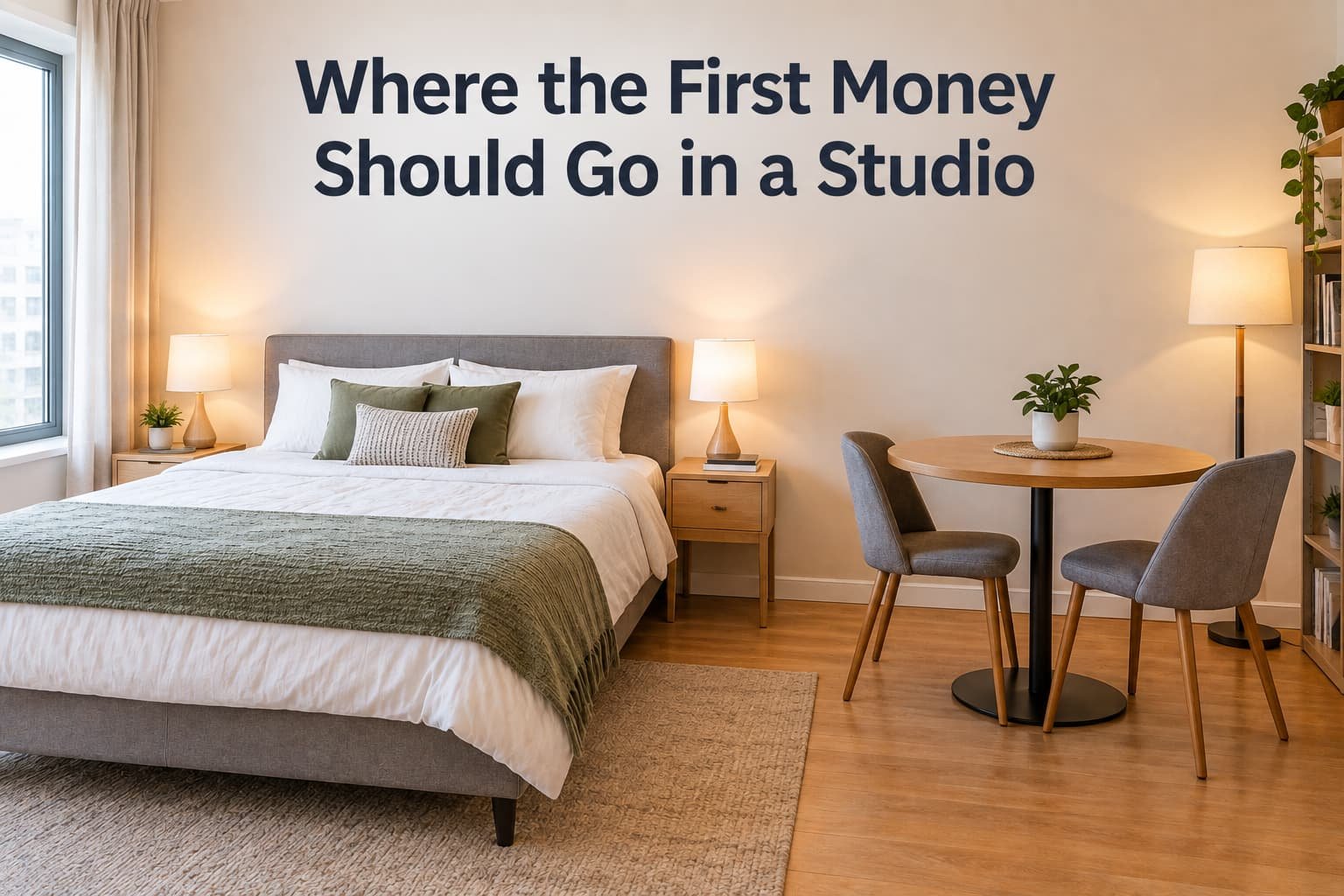
A studio punishes bad purchases faster than any other home. There is no spare room to hide a wrong sofa in, and everything you buy is in view of everything else. That makes the order of buying matter more than the total you spend. Spend first on the things you use every day and cannot avoid seeing, and leave anything that only decorates for later.
What the studio punishes first
In a one-room home, three things go wrong quickly. A bad bed ruins your nights and sits in the middle of your living space all day. Poor light makes the whole room feel flat and small. And open clutter has nowhere to retreat to, so a few loose belongings read as a mess.
Those three problems point to the first purchases: sleep, light and closed storage. Almost everything else can wait a month.
The order that works
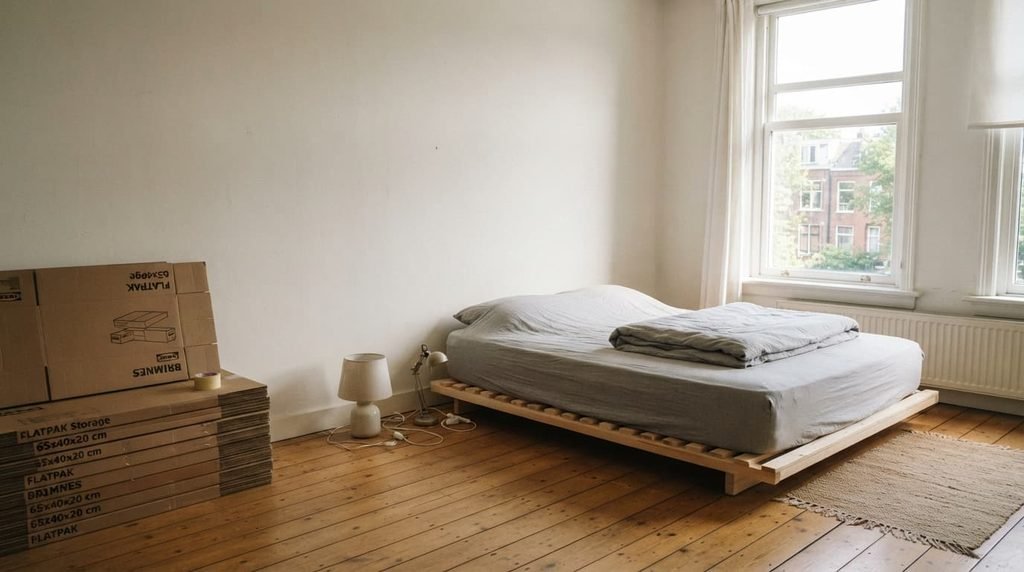
1. A mattress you can sleep on. This is the one place not to economise. A studio forces you to look at your bed all day, and you spend a third of your life on it. Choose the best mattress you can afford, with a simple frame or base, and delay anything fancier.
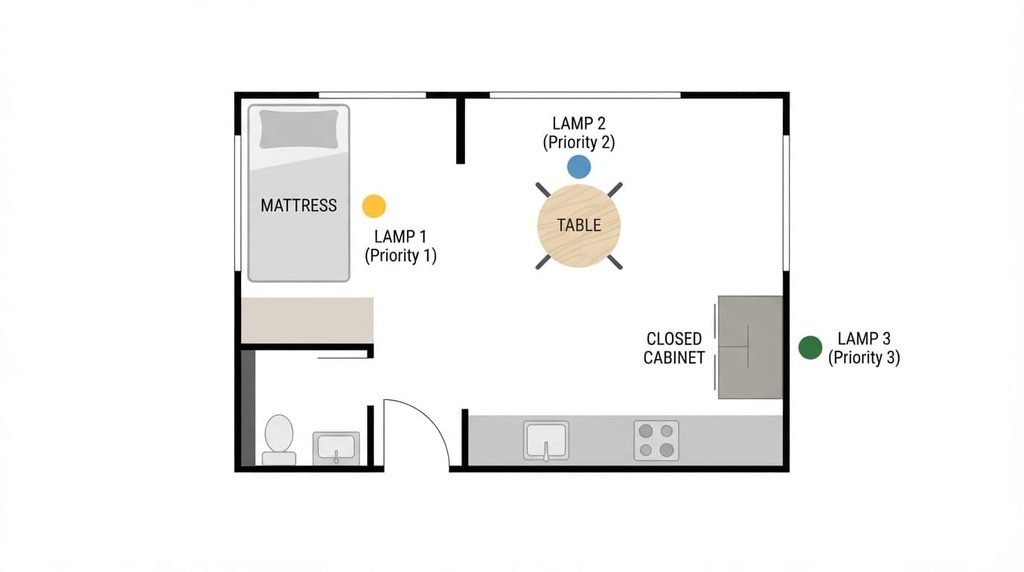
2. Three lamps in place of one ceiling light. Lamps are cheap, and they change the room more than almost anything else you can buy. One by the bed, one by the sofa and one at the table give each part of the room its own light, and you can switch the unused parts off.
3. Storage that closes. Boxes under the bed, a cupboard with doors and a row of hooks do more for a studio than a prettier shelf. Anything you can put behind a door stops adding to the visual noise of a single room.
4. A table that does two jobs. A table that serves for meals and for work saves the space of two pieces. Choose one that fits the room with the chairs pulled out, not just with them tucked in.
5. Curtains hung high. Curtains fitted close to the ceiling make the windows and the room look taller, give you control of daylight and privacy, and cost much less than most furniture.
6. Seating that suits how you actually use it. If you mostly sit with the laptop, a comfortable chair may be a better first seat than a full sofa.
7. Decoration last. Pictures, plants, cushions and rugs are the finishing layer. They matter, but a studio with good sleep, light and storage looks considered even with bare walls.
A first month, week by week
Spreading the spending over a month lets you learn what the room needs before you commit.
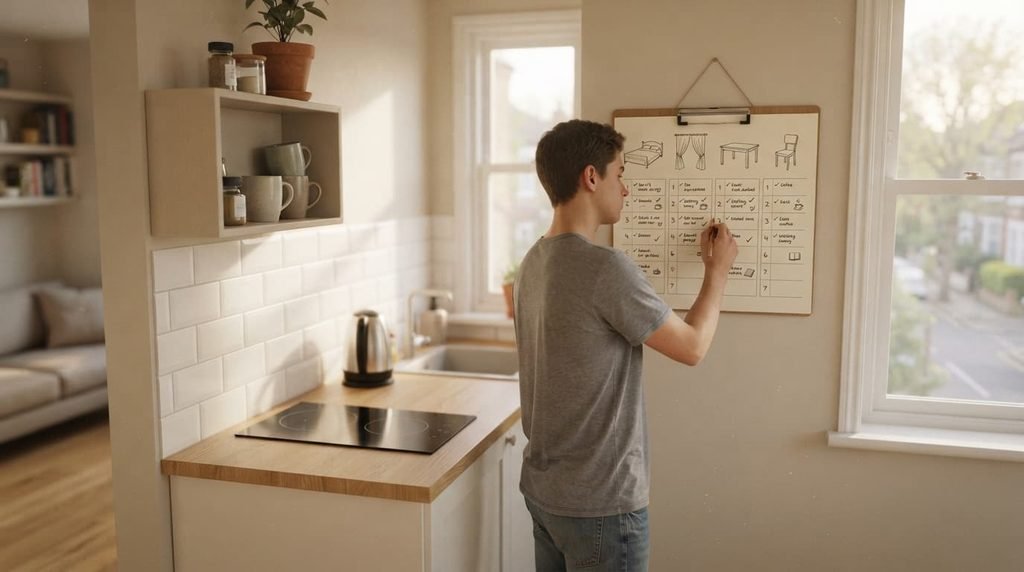
In the first week, buy the mattress and base, and one lamp. In the second, add the curtains and the closed storage. In the third, find the table. In the fourth, decide on seating based on what you have found yourself using. After that, take your time with decoration.
If you can only afford one thing this month
Buy the mattress. If that is already sorted, buy two lamps. A decent night’s sleep and a room with two sources of light make the studio livable, and every other piece is something you can borrow, improvise or wait for. A box can be a bedside table for a month, and a suitcase can be storage, but nothing improvises a good night’s sleep.
Where secondhand makes sense, and where it does not
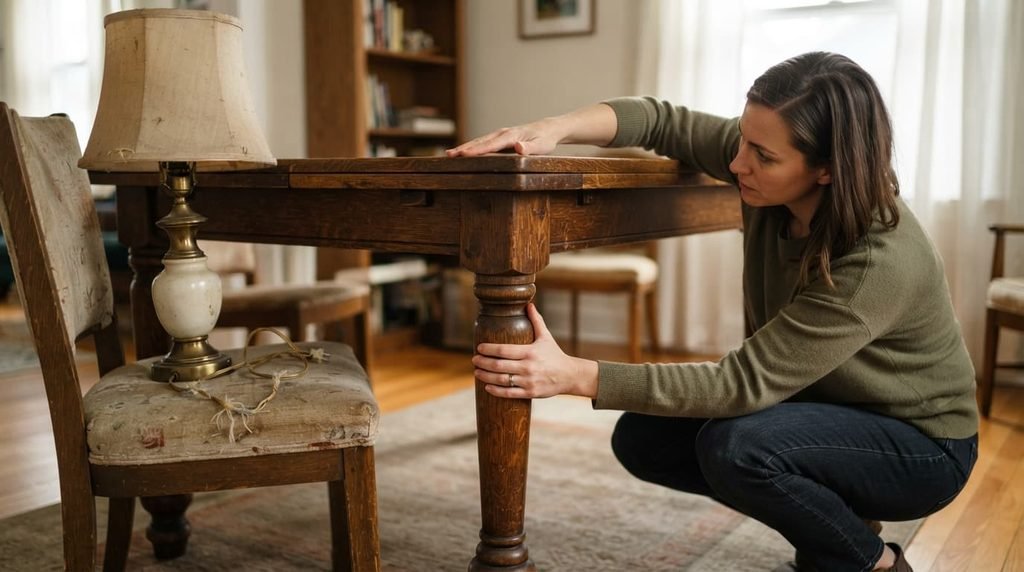
Solid wood tables, chairs and shelves are good secondhand buys, because well-made pieces last for decades and are often better built than new budget ones. Check for stability and for wobble, and look underneath for damage.
Be careful with lamps. If you buy one secondhand, check the cable and the plug, and do not use one with fraying or damaged wiring. Have a licensed electrician look at anything that needs rewiring, and do not do it yourself.
Do not buy mattresses secondhand, and think twice about upholstered furniture of unknown history. They can carry hygiene problems and pests that you will not see until they are in your home.
What people get wrong
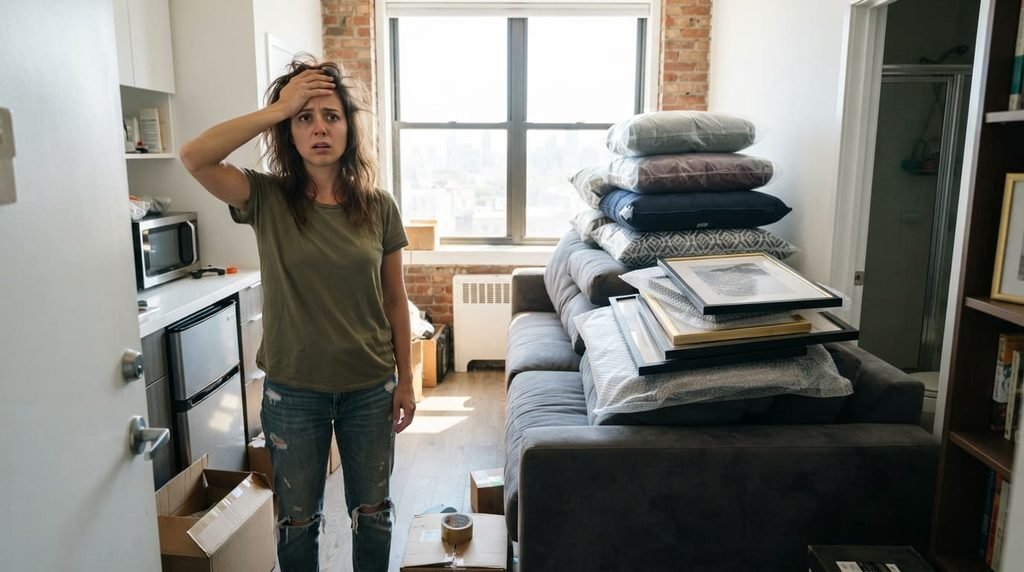
The most common mistake is buying everything at once, before living in the space. A studio changes your habits, and the pieces that looked essential on day one often turn out to be unnecessary by week three.
The second is choosing by photographs. A sofa that looks compact in a showroom photograph can take over a studio, so choose by measurements, and mark each piece’s footprint on the floor before you buy it.
The third is spending on decoration first. Pictures and cushions are enjoyable to buy and easy to justify, but they do not fix poor sleep, flat light or a cluttered floor, and in a studio those problems cannot hide behind decoration.
What can wait
Large rugs, wall art, a coffee table and extra seating can all wait. Most studios feel finished with far fewer pieces than people expect, and every item you delay is one you can choose better once you know the room.
What to walk away from
Any large piece you have not measured against the front door, the stairs and your floor plan.
A studio leaves no room for mistakes. A sofa that does not fit through the door is a very expensive problem, and a table that blocks the only path across the room is not a bargain at any price. Measure the piece, the route it must take and the space it will occupy before you pay.
The two-week check
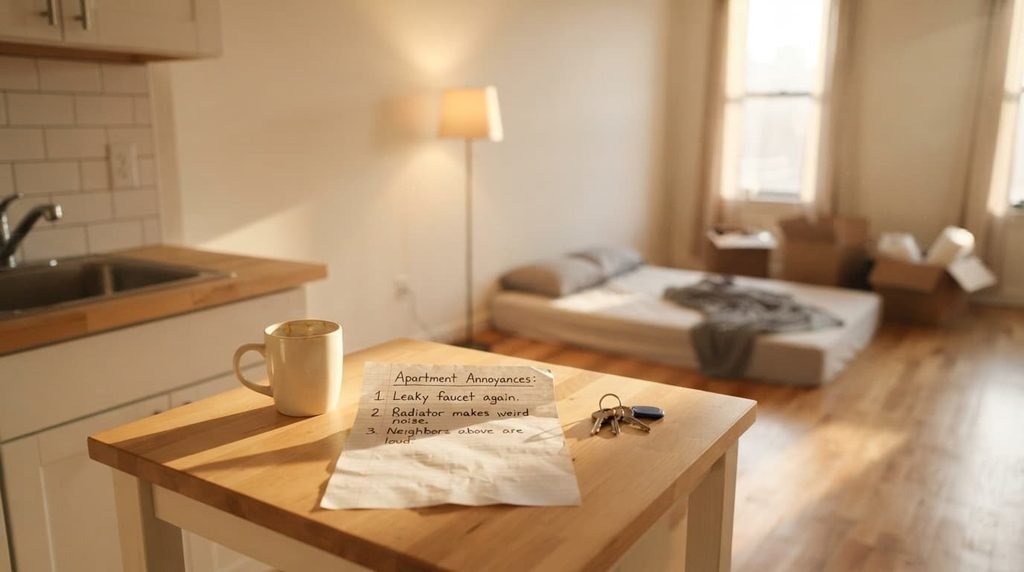
Before you spend a significant amount, live in the nearly empty studio for two weeks and keep a list. Each day, write down what annoyed you: nowhere to put keys, no light by the sofa, a view of the bed from the table. Then buy only for the items on the list. This one habit prevents most of the wrong purchases, because it replaces guessing with evidence. A list such as “no light by the sofa, nowhere to put keys, a view of the bed from the table” gives you three purchases that will each solve a real daily annoyance.
Questions readers keep asking
Should I buy a sofa bed to save the cost of a separate bed and sofa?
Only if the bed will be used mainly for guests. For nightly sleep, a thin sofa bed mattress tends to disappoint, and a proper mattress is the better first purchase.
What is the single best first purchase?
The mattress. It affects your nights and your whole living space, and it is the piece you can least afford to get wrong.
Is it worth buying matching furniture?
Not at first. Matching sets are sized for bigger rooms and commit you to every piece at once. A studio looks better when pieces are chosen one at a time for the room.
How much storage is enough?
Enough that nothing you own lives on the floor or on open surfaces by default. If a surface is always clear, you have enough.
Is renting furniture worth considering?
For a short stay, it can be. Over a year or more, buying secondhand usually costs less in total, so compare the full cost for the time you expect to stay, and check what happens if you extend.