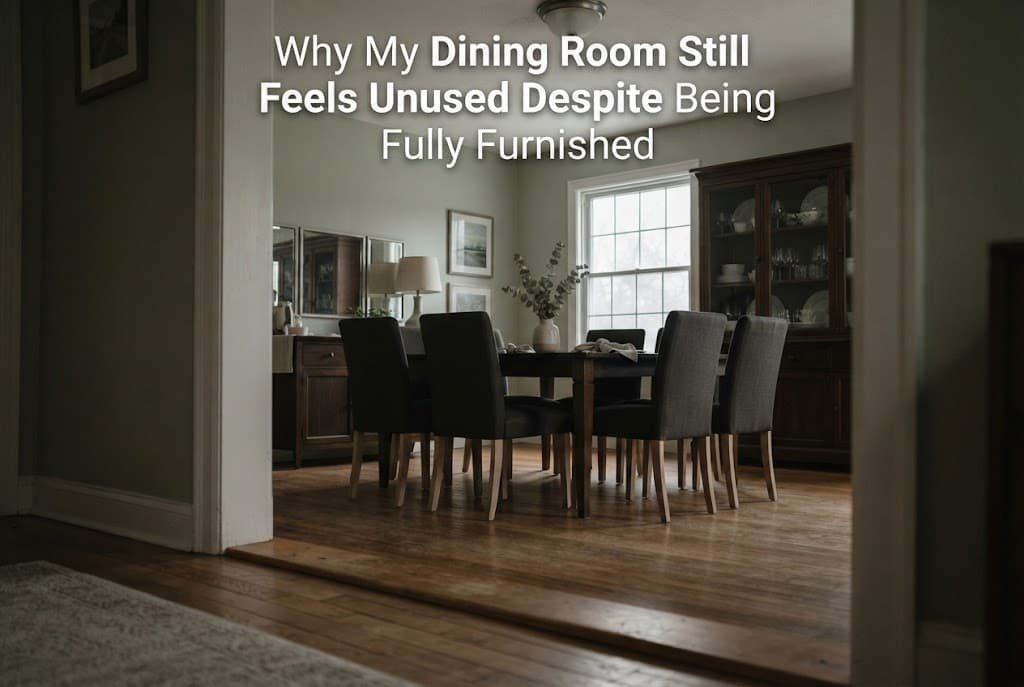
A dining room that still feels genuinely unused despite being entirely fully furnished usually isn’t missing more purchases at all – it’s missing the specific conditions that actually make someone genuinely choose to sit there regularly, which is a fundamentally different problem than simply not having furnished it well enough. The room isn’t failing because your taste or budget is wrong; it’s failing because a specific usability barrier remains unaddressed, and no amount of additional furniture fixes a barrier problem by adding more objects to the space.
What actually decides this
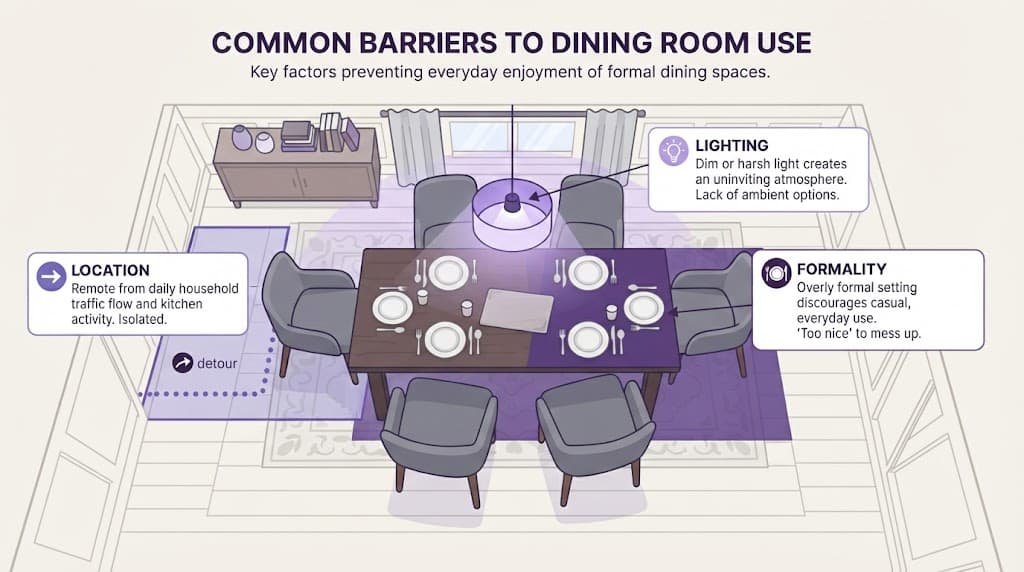
The deciding factor is whether the room has actually removed the specific friction that was preventing use in the first place, not simply whether it contains attractive, complete furniture. A dining room can contain a genuinely well-chosen table and comfortable chairs while still going unused if the actual barrier – poor evening lighting, an inconvenient location relative to daily traffic, a formal atmosphere that discourages casual use – remains fully present alongside the furniture.
This distinction matters because most advice for an unused dining room focuses on furniture quality and completeness, while the actual fault is frequently a lighting, location, or atmosphere barrier that better furniture alone doesn’t resolve, regardless of how comfortable that furniture technically is.
This is why two dining rooms with genuinely similar furniture quality can end up used completely differently. The room where the actual barrier was identified and addressed becomes a place the household actually gathers regularly; the room where furniture was purchased and completed without addressing the underlying barrier stays visually finished but functionally identical to before, since the reason it went unused originally was never actually about the furniture itself.
The causes, diagnosed
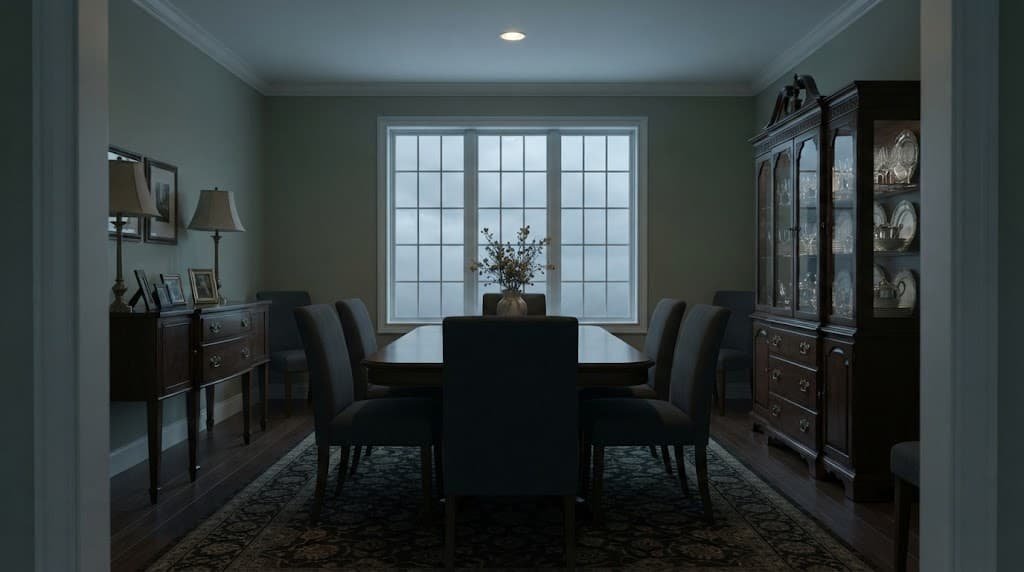
“The furniture is genuinely comfortable, but the room feels too dark or too formal to use casually.” This points to an unaddressed lighting or atmosphere barrier rather than a furniture problem specifically – even genuinely comfortable seating goes unused if the room’s lighting or overall feel discourages the relaxed, everyday use that actually gets a dining room used regularly. The fix: address the specific atmosphere barrier directly – warmer, layered lighting, some textile softness – since this is what actually determines usability, independent of furniture quality.
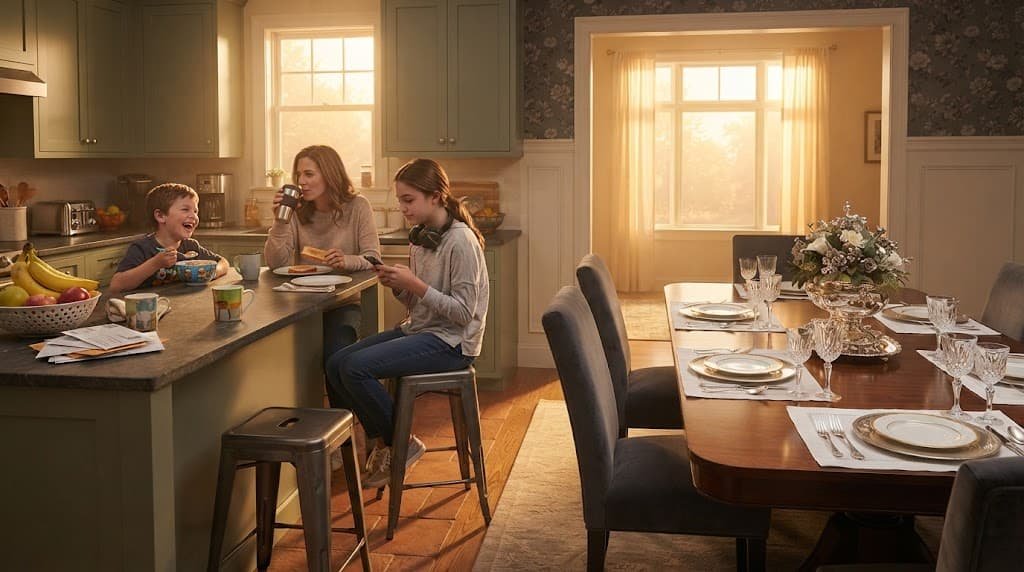
“The dining room is technically separate from where the household naturally spends time, so it gets forgotten.” This points to a location or traffic-flow barrier rather than insufficient furniture – a dining room positioned away from the household’s natural daily movement pattern requires a deliberate decision to go use it, which discourages the spontaneous, casual use most dining rooms actually benefit from. The fix: identify what specifically pulls household members away from the dining room during typical moments – a more convenient eating spot elsewhere, a more comfortable seating area nearby – and address that competing pull directly, rather than assuming the dining room itself needs more furniture to compete.
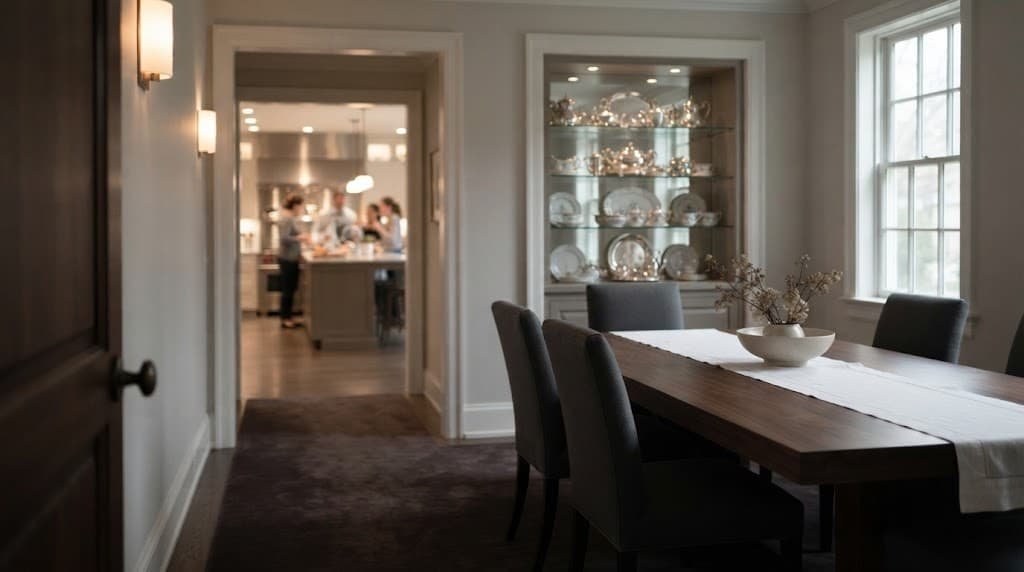
“The room works fine for hosting, but we never eat there for regular daily meals.” This points to a genuine mismatch between the room’s current setup and the household’s actual daily eating pattern, rather than a furniture deficiency – a dining room styled and equipped purely for occasional formal hosting doesn’t naturally invite everyday use unless something about its setup specifically supports that pattern too. The fix: adjust the room’s lighting flexibility and material choices specifically to support both formal and everyday use, rather than leaving it optimised only for the occasional hosting scenario.
Where the internet gets the blame wrong
The internet blames “not enough furniture” or “the wrong furniture style” for unused dining rooms far more often than genuine usability barriers actually deserve that blame, and I’d defend this as a genuine misdiagnosis, not just a matter of opinion.
A dining room with modest, even incomplete furniture but genuinely addressed lighting and location barriers frequently gets used more than a fully furnished room sitting in conditions that remain genuinely uninviting or inconvenient, because the actual mechanism is barrier removal, not furniture completeness. Advice to simply “add more furniture” or “upgrade the style” without addressing the specific barrier often leaves the actual fault untouched while producing a more complete-looking but equally unused space.
Matching the fix to your cause
If your diagnosis points to a lighting or atmosphere barrier specifically, prioritise addressing that exact barrier – warmer lighting, some textile softness – before considering any further furniture purchases, since this is what actually determines whether the existing furniture becomes genuinely usable.
If your diagnosis points to a location or competing-pull barrier, prioritise identifying and addressing whatever specifically draws household members elsewhere during typical moments, since this is often more about habit and competing convenience than about the dining room’s own furnishing at all.
If your diagnosis points to a formal-versus-everyday mismatch, prioritise adjusting the room’s lighting flexibility and material softness specifically, since this directly addresses the actual gap between how the room is currently set up and how the household actually wants to use it daily.
What changes if you’ve already tried the obvious fixes
If you’ve already added or upgraded furniture and the room still goes unused, revisit the lighting, location, and formality questions specifically – the fault may never have been furniture completeness at all, and continuing to add furniture past this point rarely resolves a barrier problem rooted somewhere else entirely.
If you’ve already addressed one barrier and the room still feels underused, check whether a second, separate barrier is also present – a dining room can have both a lighting problem and a location problem simultaneously, and resolving only one doesn’t guarantee the space becomes genuinely usable if the other remains fully unaddressed.
Questions readers keep asking
Does having complete, matching furniture usually solve an unused dining room problem?
Not necessarily at all – furniture completeness genuinely matters considerably less than whether the actual barrier preventing use, whether it’s lighting, location, or a formal-versus-everyday mismatch, has been genuinely addressed. A fully furnished room sitting in an uninviting or inconvenient setting still tends to go entirely unused regardless of the furniture’s own individual quality.
How do I know which specific barrier is actually preventing me from using my dining room?
Pay close attention to what you or your household members actually genuinely do instead of using the dining room during moments you technically could – if it’s discomfort or dimness, that points to a lighting or atmosphere barrier; if it’s simply eating somewhere more convenient, that points to a location barrier.
Is it my taste that’s the problem, or something else?
Almost always something else – specifically an unaddressed lighting, location, or formality barrier, all of which are measurable, fixable conditions rather than a matter of personal taste. Diagnosing the actual barrier typically resolves the underused feeling without requiring any change in furniture style preference at all.
How many weeks should I wait after addressing a barrier before deciding whether it actually worked?
Roughly two to three full weeks is usually enough to establish whether a genuine habit is actually forming, since a single comfortable use or two might simply reflect unusual circumstances rather than the barrier being genuinely and permanently resolved. If the room still genuinely feels forced or infrequently used after that specific period, revisiting the original diagnosis rather than simply assuming more time alone will eventually fix it is the considerably more productive next step to take.
Where the internet’s misdiagnosis persists
This misdiagnosis persists partly because purchasing new furniture is the easiest, most immediately satisfying advice to act on, regardless of whether it actually addresses the room’s specific barrier. Diagnosing a lighting, location, or formality problem requires honest observation of your own household’s actual behaviour and reasons for avoiding the space, which takes more deliberate reflection than simply browsing for an attractive new chair – but the quicker advice only helps when furniture genuinely was the problem, which the causes above suggest is less often true than the volume of furniture-focused advice would imply.