A dining room that’s genuinely too dark for evening use usually isn’t lacking light fixtures entirely at all – it’s lacking the specific combination of light sources, colour temperature, and positioning that actually addresses evening-specific darkness, which is a fundamentally different problem than simply having no lighting whatsoever. Understanding which specific factor is actually driving the darkness determines whether the fix genuinely takes minutes or requires a more involved change.
What is actually happening
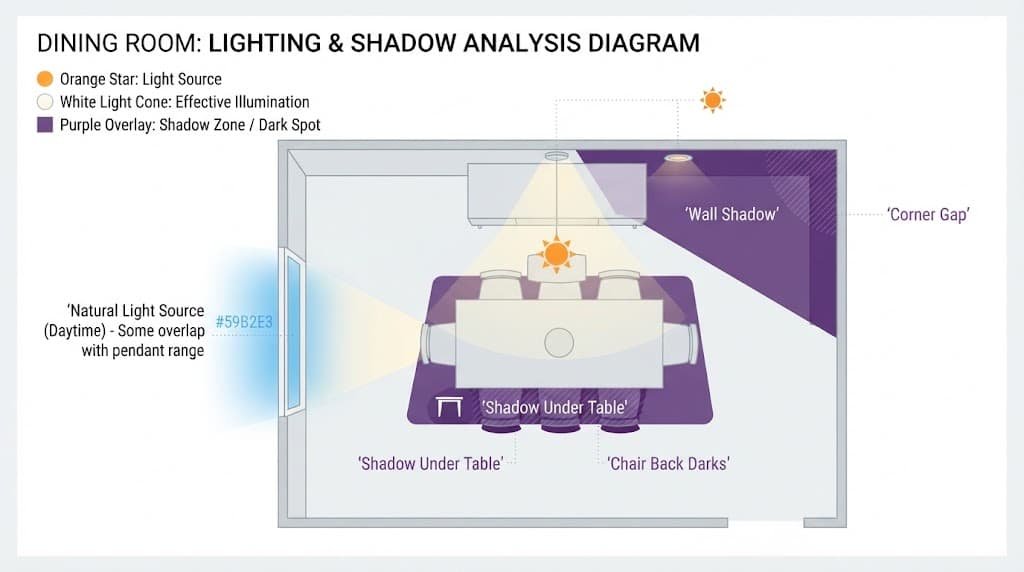
Evening darkness in a dining room typically stems from a combination of insufficient light source count, poor colour temperature choice, or fixtures positioned to leave the actual dining area in shadow despite technically lighting the room. A single central fixture that genuinely adequately lights the room’s general floor area can still leave the table itself relatively dim if its exact position or overall brightness wasn’t specifically calibrated for that precise spot.
This genuinely matters because “the room is too dark” often gets treated as a single simple problem requiring a single simple fix, when the actual cause is frequently a combination of these factors working together, meaning a fix addressing only one specific isolated factor – adding a brighter bulb, for instance – may not fully resolve genuine evening darkness entirely on its own.
Wall and general surface colour also genuinely compound this problem specifically, since darker walls and flooring absorb considerably more light than reflective, genuinely lighter surfaces do, meaning two separate rooms with identical fixtures can feel meaningfully different in actual evening brightness depending on exactly what they’re finished in. This is genuinely worth being aware of before simply assuming additional lighting alone will fully resolve genuine darkness, since surface absorption can genuinely remain a contributing factor even once the fixtures themselves have been properly addressed elsewhere.
Confirm which pattern you have
Check carefully and specifically whether the darkness is uniform across the entire whole room, or concentrated specifically over the table itself while the rest of the room seems genuinely adequately lit – this important distinction determines whether you need a room-wide fix or a targeted fix aimed specifically at the table area alone.
Check carefully whether the room feels genuinely adequately bright during the day but genuinely dark only in the evening specifically – this important pattern points toward the issue being about artificial lighting quality and quantity specifically, rather than the room’s overall light-reflecting surfaces or general colour palette.
The fixes, in order of cost
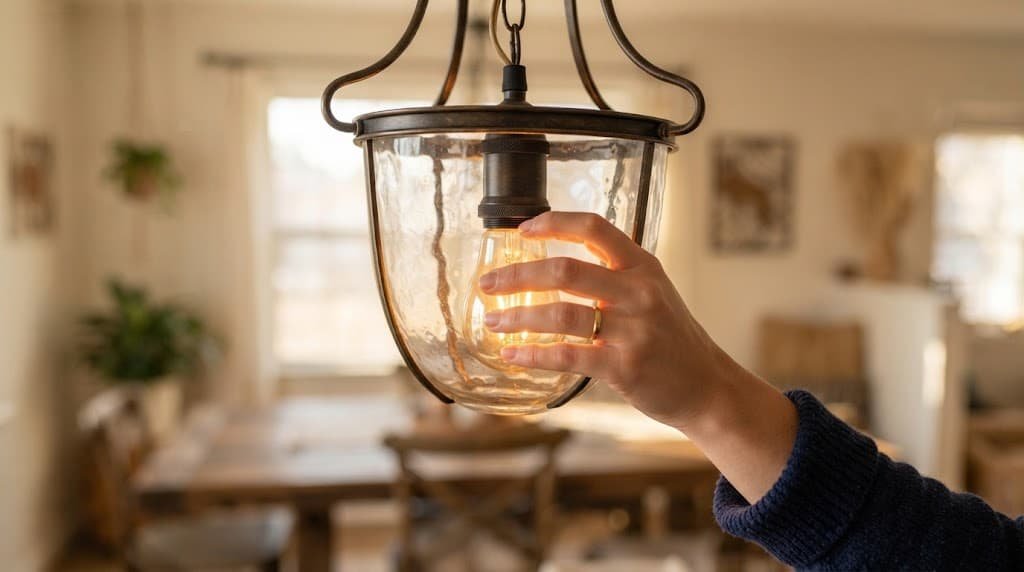
1. Switch carefully to warmer, higher-output bulbs in your existing fixtures, matched precisely to the fixture’s actual rated wattage capacity. This genuinely costs relatively very little and directly addresses insufficient brightness or overly cool, dim-feeling light, without requiring any new fixture or structural change whatsoever at all.
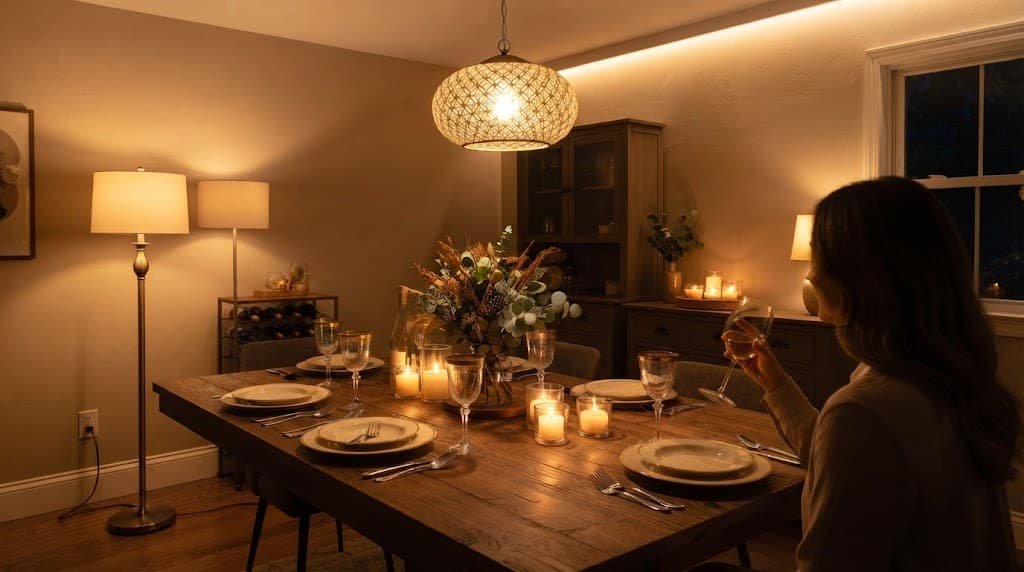
2. Add a genuine plug-in table lamp or floor lamp near the dining area itself, positioned to specifically supplement the table’s own lighting. This is a genuinely modest addition to the total overall cost but meaningfully adds a second light source exactly where evening darkness is most genuinely noticeable, without requiring any electrical work at all since it simply plugs directly into an existing outlet.
3. Reposition carefully an existing movable fixture, such as a floor lamp or a plug-in pendant, closer to the actual table itself if it’s currently positioned to light the room generally rather than the table specifically. This genuinely costs nothing at all beyond the effort of physically moving it, and directly addresses a targeted table-darkness problem if your own diagnosis points specifically to this exact pattern.
4. For a genuinely more substantial fix requiring a new hardwired fixture or additional electrical outlets, consult a licensed electrician about the specific desired change, if the fixes above don’t provide sufficient evening brightness for your particular needs. This is genuinely a professional consultation, not a DIY project of any kind – any new wiring or hardwired fixture installation needs proper, thorough assessment and genuinely qualified installation before being considered any further.
What isn’t worth doing
Relying entirely on a single very bright bulb in just one existing fixture, hoping raw brightness alone genuinely solves evening darkness, isn’t worth doing without also carefully addressing colour temperature and light source positioning.
A single overly bright but poorly positioned or cold-toned light source can genuinely make a room technically brighter while still feeling uncomfortably dim or harsh for an evening meal specifically, since raw brightness alone doesn’t address the warmth and positioning factors that actually determine whether a space genuinely feels well-lit for that particular intended use.
What changes if your situation is different
If your dining room’s darkness is genuinely limited to just a specific few hours right after sunset, rather than persisting throughout the entire evening, prioritise a simpler, targeted fix – a single well-positioned lamp – over a more substantial fixture change, since the actual problem window may not genuinely justify the additional cost and complexity involved.
If you’re genuinely renting and electrical changes genuinely aren’t available to you at all, the bulb-switching and plug-in lamp options become your practical ceiling, and a genuinely well-chosen combination of these two specific fixes can meaningfully address most evening darkness without requiring any hardwired change to the space whatsoever.

The one thing to check before you commit
If you’re specifically pursuing the licensed-electrician option, confirm carefully with them whether your home’s existing electrical capacity can genuinely support the specific new fixture or outlet you’re actually considering, since this determines both real feasibility and genuine cost in ways that simply aren’t visible from looking at the existing wiring yourself.
This particular check matters considerably more for this specific option than for the other fixes above, since those remaining fixes are all fully reversible, genuinely low-cost, and require no electrical qualification whatsoever, while a new hardwired addition genuinely carries real cost and complexity worth confirming clearly before any further planning genuinely proceeds.
Questions readers keep asking
Is switching to warmer bulbs really enough to fix a dark-feeling dining room?
For many rooms, genuinely yes, at least partially so – colour temperature significantly affects how bright a space genuinely feels even at the exact same raw brightness level, and switching to warmer, higher-output bulbs in existing fixtures is often the single most cost-effective first step genuinely worth trying.
Do I need an electrician for a simple plug-in lamp?
No, genuinely not – a plug-in table or floor lamp uses your existing electrical outlets exactly as originally designed and requires no professional installation whatsoever, making it genuinely one of the most accessible fixes on this entire list for addressing targeted evening darkness.
When is it worth considering a new hardwired fixture instead of the simpler fixes?
If you’ve genuinely tried bulb changes and added plug-in lighting and the room still doesn’t achieve adequate evening brightness for your specific needs, that’s the point worth consulting a licensed electrician about a more substantial fixture, rather than starting there before trying the simpler, lower-cost fixes first.
Does mirror placement genuinely help with a dark dining room in the evening?
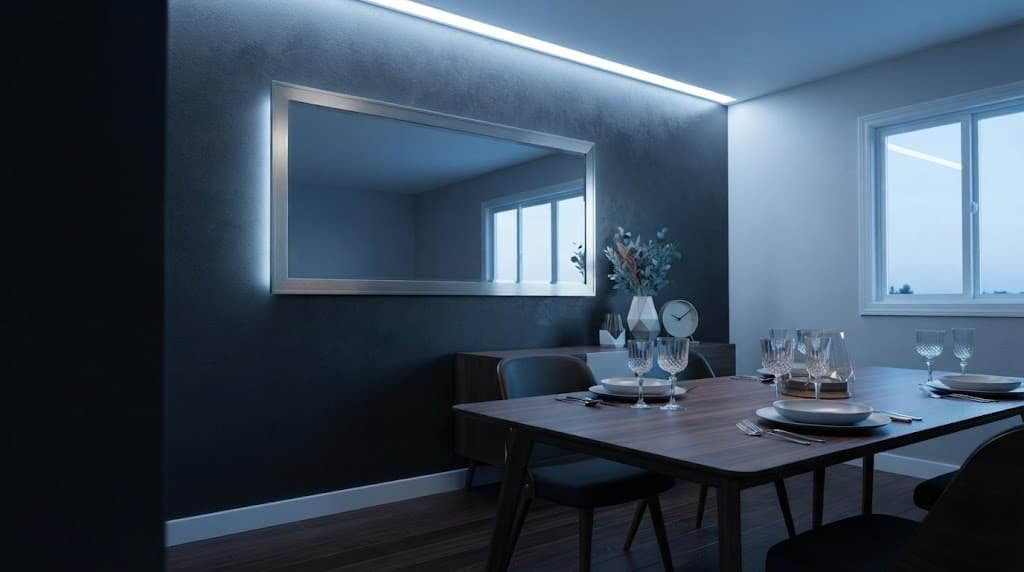
Yes, genuinely to a meaningful degree specifically for artificial light in the evening, since a mirror carefully positioned to reflect an existing light source can noticeably amplify how bright a room genuinely feels without adding any new fixture whatsoever. This particular fix works alongside the other fixes rather than replacing them entirely, since a mirror only genuinely reflects light that’s already present in the room rather than generating any additional brightness of its own accord.
What isn’t the actual cause, even though it looks related
A dining room that felt genuinely adequately bright when the home was originally furnished but has gradually felt darker since then is worth checking for a simpler explanation before assuming a fixture problem genuinely exists: bulbs genuinely do dim gradually with age well before fully failing entirely, and simply replacing ageing bulbs with fresh ones of the exact same original specification often resolves this specific gradual-darkening pattern without requiring any other additional change at all.