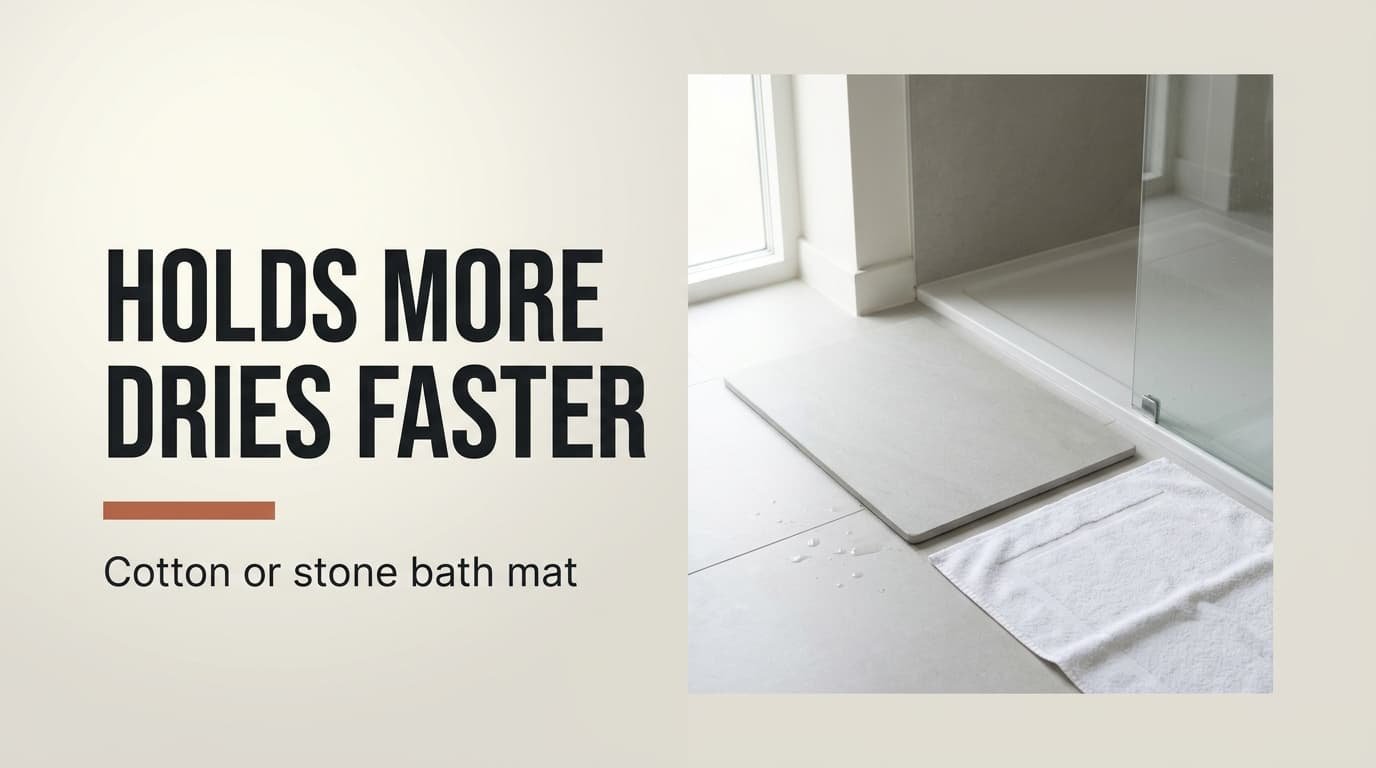
A bath mat exists to meet your wet feet and send the water somewhere useful. A cotton bath mat or stone bath mat can both do that. They go about it in opposite ways. One soaks up plenty and dries slowly. The other holds little and is ready again in minutes. The better choice depends on how many people step out of the shower in a row. This guide tests both in a flat in Groningen. The bathroom runs 240 cm by 180 cm and has a 90 cm walk-in shower. Four people shower there between 06:45 and 08:00.
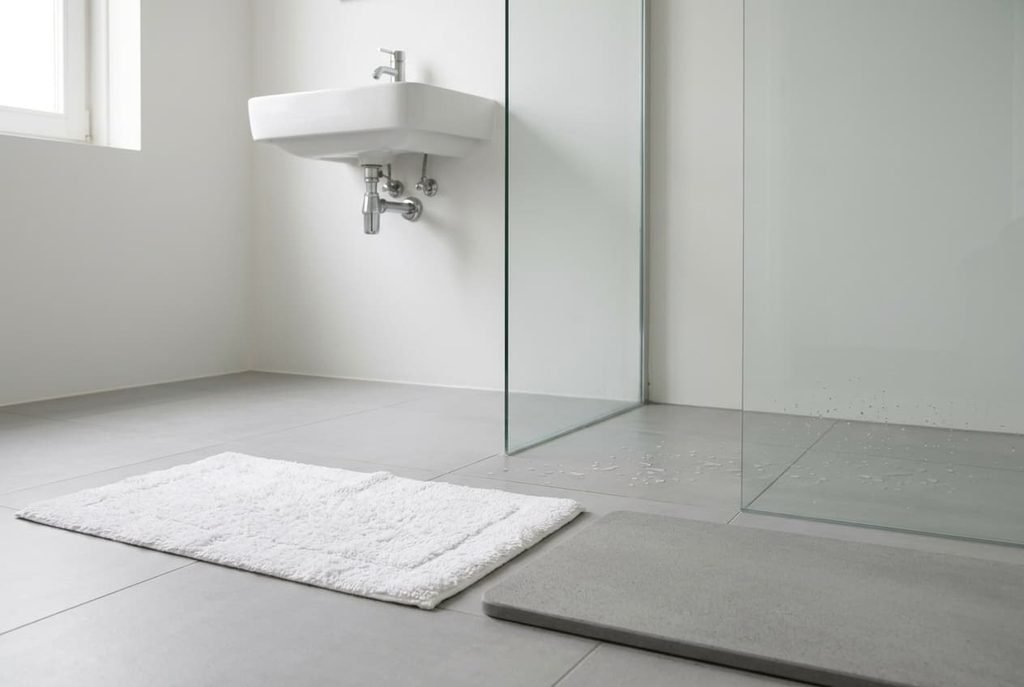
Cotton Bath Mat or Stone Bath Mat: What Actually Decides It
Treat the mat as a small tank that fills and empties. Each person leaves roughly 120 ml of water behind on stepping out, about half a mug. Four people therefore leave 480 ml over the morning. What matters is whether the mat can hold that water and how soon it can take more. Dripping isn’t the only source, because the damp towel in your hand adds some more, so these figures are rounded up.
A towelling mat of 50 × 80 cm holds about 600 ml before it drips, which is five exits’ worth. A flat stone mat of about 39 × 59 cm holds around 150 ml, which is little more than one. Capacity alone points to cotton. The stone mat pulls its water into fine pores and lets it evaporate. It is ready again within about four minutes, whereas a cotton mat stays wet for hours.
Recovery time decides the choice more than capacity does, because the water arrives in bursts. A mat that is empty again before the next person arrives never needs a large tank. Measure yours by pouring water on slowly and stopping at the first drip.
The first drip is the number that matters, so trust it over any label.
Cotton or Stone: How a Bath Mat Compares, Row by Row
Here is the cotton bath mat or stone bath mat comparison on seven points that matter in a small bathroom. Each figure comes from the sums above or from ordinary mats. Confirm them using a ruler and a measuring jug before you buy. Read the table row by row and note which rows you care about, since some rarely matter in a household that showers in single file.
| Point | Cotton mat | Stone mat |
|---|---|---|
| Water held | about 600 ml before it drips | about 150 ml before it drips |
| Dry after use | 8 to 10 hours on a rail, longer flat on the floor | 3 to 5 minutes, even on the floor |
| Washing | machine wash, weekly | brush and fine sandpaper, monthly |
| Underfoot | soft and warm on cold tile | hard and cool, with no give |
| Thickness | about 15 mm of pile | about 9 mm, nearly flat |
| Footprint | 0.40 m² at 50 × 80 cm | 0.23 m² at 39 × 59 cm |
| If dropped | no harm done | an edge can chip or crack |
Drying time is the row that surprises. The stone mat holds only a quarter of the water and still serves more people in a morning. Readiness, not size, sets the number of exits it can handle.
Cotton Bath Mat: Where It Wins
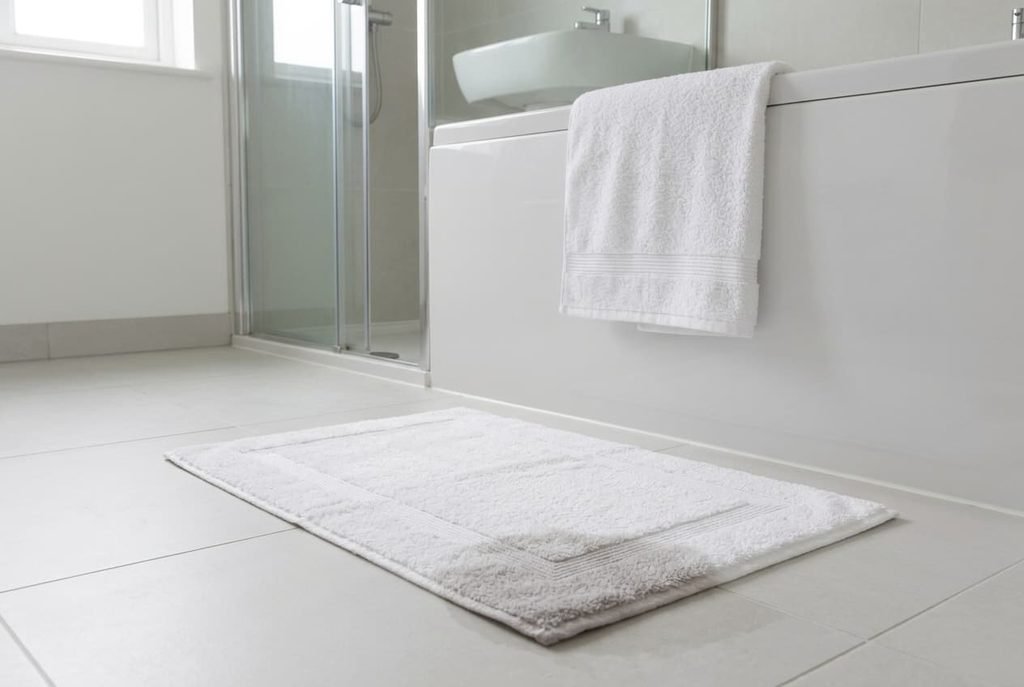
Cotton takes the load when feet arrive in quick succession. The 600 ml tank absorbs the two children’s showers at 07:15 and 07:20, a combined 240 ml, with room to spare. You’ll hardly notice the water. Soft pile also feels warm on tile first thing, and a mat of 15 mm lifts the feet a little off a cold floor.
The price is the drying time. Hung over the bath edge, a wet cotton mat needs 8 to 10 hours. Left on the floor it needs 12 or more. It is still damp at bedtime and starts the next morning with water already in it. A musty smell follows once the damp has sat for a few days. Washing weekly at 60 °C keeps it fresh. A second mat in rotation solves the dampness. One hangs and dries while the other works. A 50 × 80 cm mat also covers 0.4 m² of a floor that totals 4.3 m². That is just under a tenth of the room’s floor area.
Stone Mat: Where It Wins
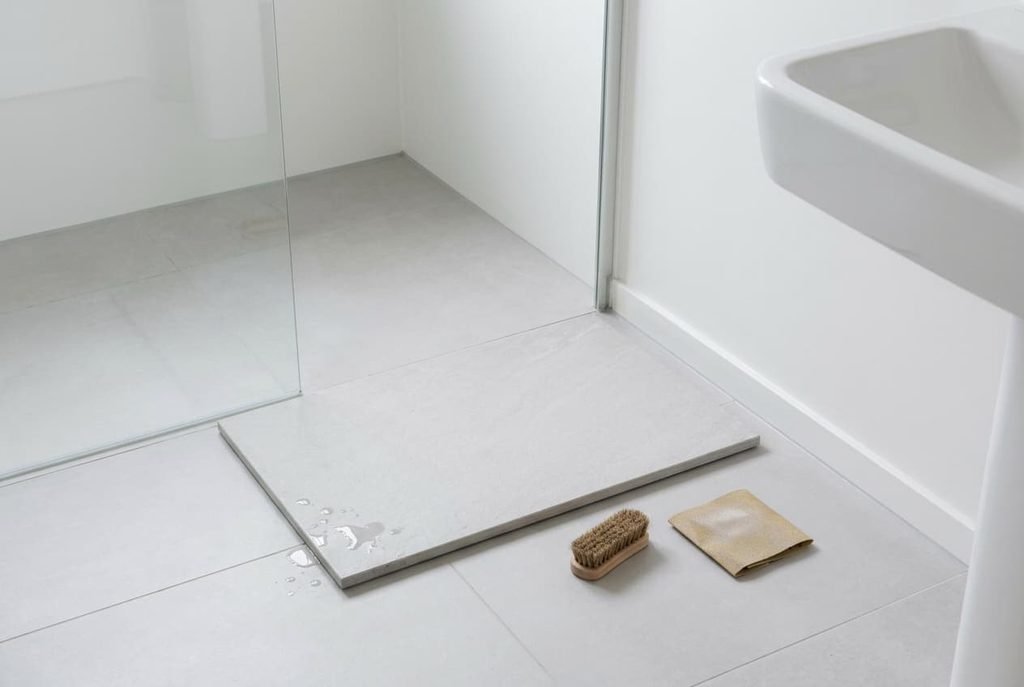
A stone mat suits a household that showers in single file. At 9 mm it lies almost flat, so a door can clear it, and its 0.23 m² footprint takes little room. After each exit it is back to dry in about four minutes. The showers at 07:05, 07:20 and 07:40 each find an empty mat. Nothing needs washing in the machine, and nothing stays damp overnight. Because it dries fast, it also avoids the sour smell that a damp towelling mat picks up after a week.
The limits are plain. It holds 150 ml. Two people stepping out within five minutes of each other leave 240 ml, and about 90 ml reaches the tiles. It feels hard and cool under bare feet, which some people dislike on winter mornings. A fall to the floor can chip an edge. Once a month, rub the surface with fine sandpaper or a stiff brush to open the pores again. With that care a stone mat lasts for years without changing how it behaves.
Soap film is the one enemy of a stone mat.
The Third Option Is a Towel You Already Own
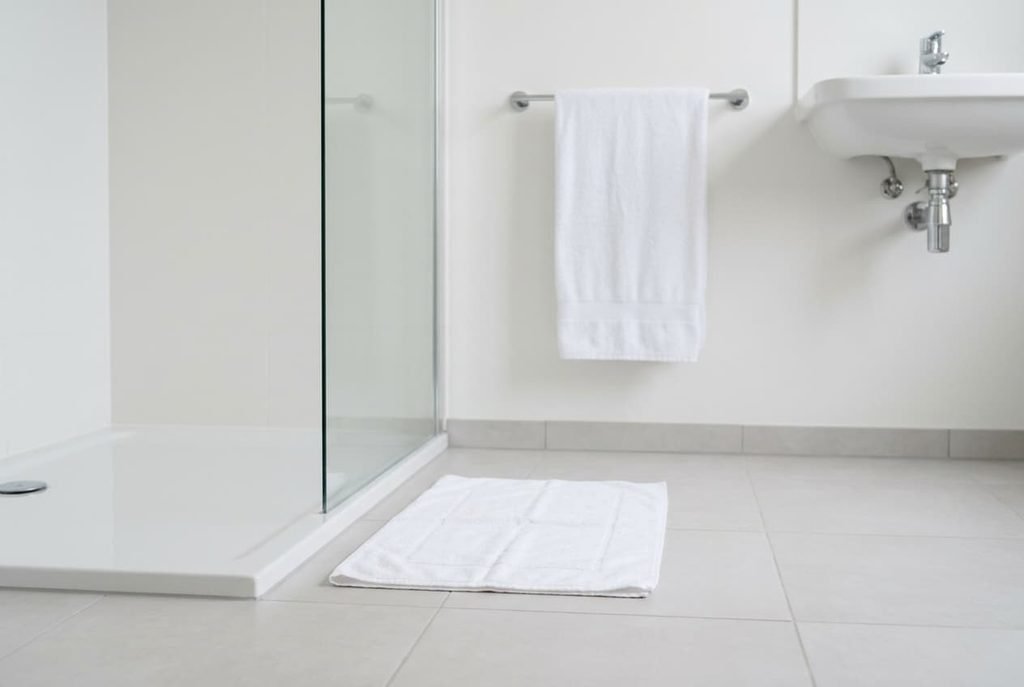
A folded bath towel of 70 × 140 cm covers 0.98 m². That is more than twice the area of either mat, and it holds even more water than the cotton mat. There’s no charge, and the washing machine takes it with the rest of the laundry. A cotton bath mat or stone bath mat costs money, whereas the towel is already in the cupboard. Lay it down when you step out. Hang it on the rail afterwards so it dries in about three hours, faster than a thick mat can. Fold it once on wide tile. It then lies flat over the wet strip in front of the shower.
The catch is the habit. The towel must go back on a hook after every use, or it becomes a wet pile on the floor by evening. In a household that already finds towels on the floor, a towel won’t stay on the rail. Where the habit holds, no mat is needed.
Which One to Pick
If the showers come at least ten minutes apart, choose the stone mat. Four exits of 120 ml each never overload a 150 ml mat that dries in four minutes, and nothing stays damp for the evening. Time the gaps on a normal morning before you decide, since people overestimate how far apart they shower.
If two people step out within five minutes of each other, choose the cotton mat. The 240 ml from two back-to-back showers fits easily inside 600 ml, and a spare mat keeps the rotation dry. In our flat the children’s showers at 07:15 and 07:20 make this the right answer, and the adults’ later showers would suit either mat.
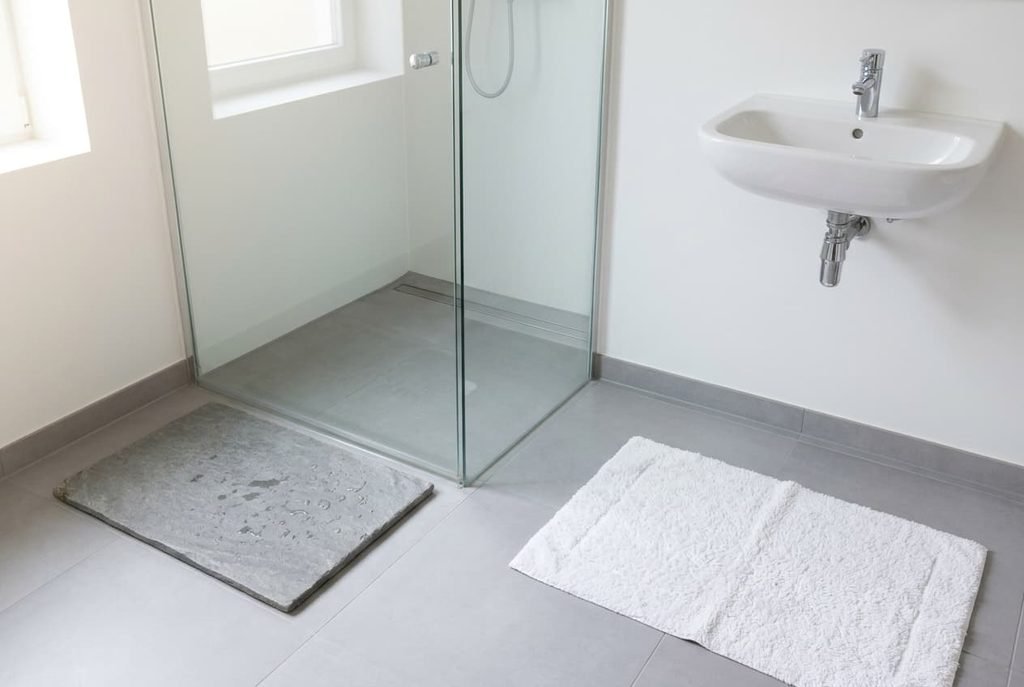
A bathroom where both cases happen can hold a stone mat by the shower and a cotton mat beside the basin. Between them they cover the single file and the rush. Whichever you choose, hang the cotton one when you’ve finished with it. Brush the stone one monthly. A cotton bath mat or stone bath mat justifies its place only if it’s ready for the next person.
Questions Readers Keep Asking
Which lasts longer?
Stone usually outlasts cotton if it isn’t dropped, since cleaning only means brushing the surface. Cotton wears slowly with washing and needs replacing sooner. Once a stone mat chips it can’t be repaired, whereas a thin cotton mat is simply replaced.
How often should each be cleaned?
Wash a cotton mat weekly at 60 °C, and wash it sooner if it has stayed damp. Rub a stone mat with fine sandpaper or a stiff brush once a month. Skipping either job slows drying, and a slow mat is what lets water reach the floor.
Which suits a family with young children?
Cotton, usually, because children leave puddles in quick succession and a 600 ml tank copes. Keep a second mat so one can dry. A stone mat works only if each child waits a few minutes, which is rare in a busy morning.