The old sofa left a room you could cross without thinking. The new one fills the corner, and the same floor now seems to have lost a third of its size. When a living room feels smaller since the corner sofa arrived, that’s rarely proof that the sofa is simply too big. Three separate faults tend to hide behind that feeling, and each has a separate cure. Here come the mechanism and a phone test. Next are three faults, each with remedies from free to bought. The last two sections cover prevention and one fix that isn’t worth the effort.
Why a living room feels smaller since the corner sofa arrived: the mechanism
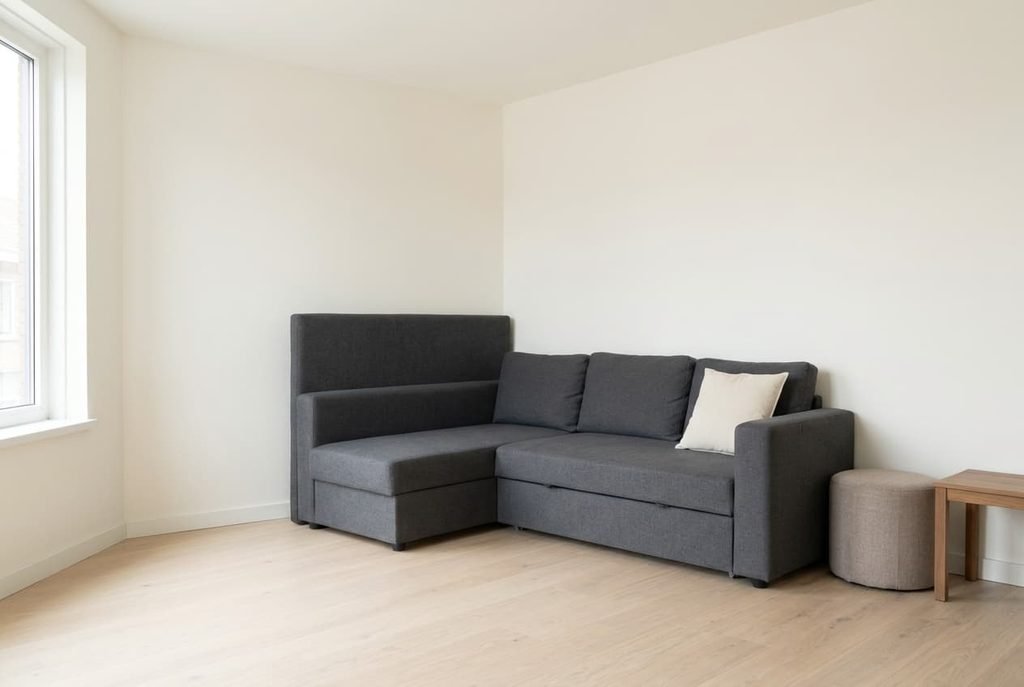
Space seems generous when your eye can run along the walls and across the floor without being stopped. A corner sofa stops the eye twice, because it claims two walls at once. Take a living room of 380 by 450 cm, which is 17.1 m² with a perimeter of 1,660 cm. The old three-seater, 210 by 90 cm, used 210 cm of wall and 1.89 m² of floor. The corner sofa runs 280 cm along one wall and returns 200 cm along the next, at 90 cm deep. It uses 480 cm of wall and 3.51 m² of floor.
That’s 29% of the perimeter, up from 13%, and 21% of the floor, up from 11%. The back also rises to about 85 cm along both walls, so nothing sits low enough to see past it.
Owners usually respond with the assumption that the sofa is too big, and the plan to send it back. That mistake costs them a good sofa. A 3.51 m² footprint fits a 17.1 m² room well enough. The feeling comes from where the arms of the L point, how dark the mass looks and what the eye lands on first.
Size is the cause only when the numbers say so.
Why the room feels smaller since a corner sofa arrived: a quick visual test
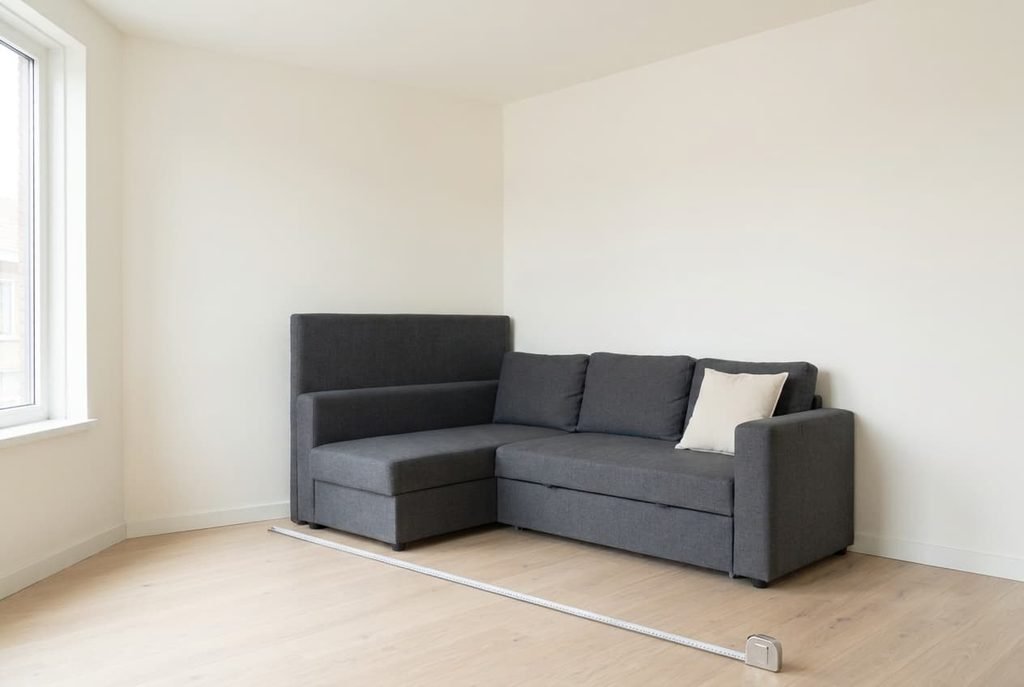
From the doorway, shoot one photo, camera held 150 cm up. Then run three tests, which take about ten minutes in all.
The first is wall share. Add the two sofa lengths together and divide by the room’s perimeter. Anything above 25% earns a point. The second is the clear route. Measure the narrowest gap between sofa and opposite wall, or door. Below 100 cm earns a point. The third is contrast. Narrow your eyes at the picture and ask which block is darkest. If it’s the sofa by a wide margin, that earns a point.
Now add up the points. A score of two or three means the sofa’s setup is doing the shrinking. A single point means one small adjustment will do, and zero means the room is probably fine and the feeling has another source. In our model all three tests fail: the share is 29%, the gap is 100 cm and the charcoal fabric is far darker than the walls.
Three faults behind a corner sofa that shrinks the room
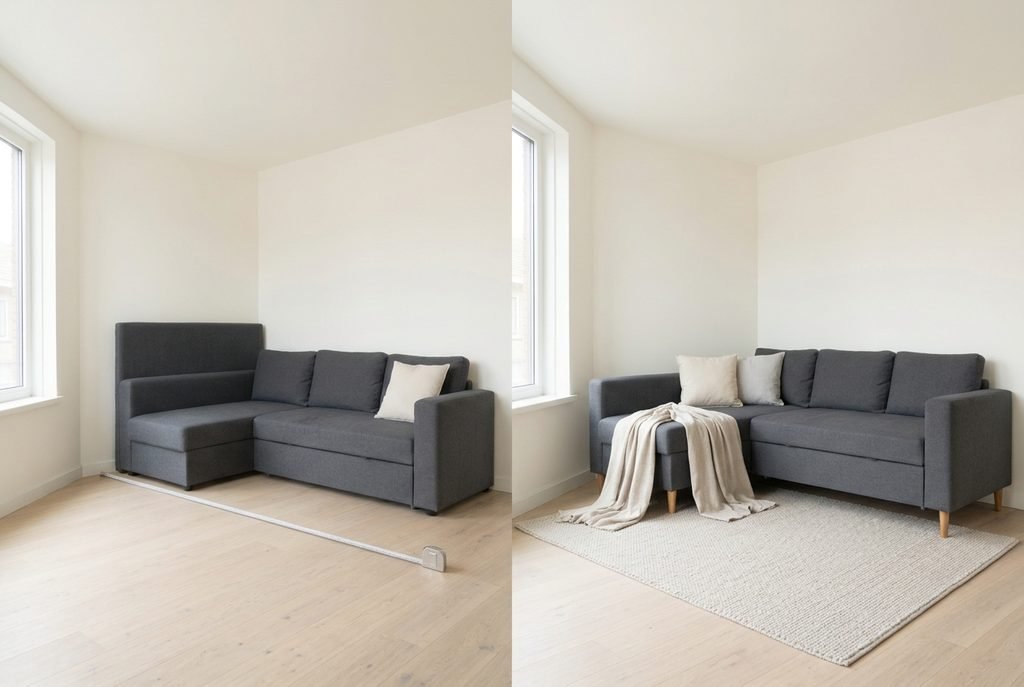
A wall of sofa along two sides, which makes this a scale fault. The cause is the 29% perimeter share: the sofa fences two walls, so the room loses its edges. Whenever a room feels smaller since the corner sofa arrived, check this fault first. For free, take out the pouf. Take the side table out as well; both crowd the corner and return about 0.5 m² of floor, or 3% of the area. Rearranging comes next. Turn the L so the 280 cm leg runs along the 450 cm wall and the 200 cm leg on the 380 cm side. The gap beside the door end grows from 100 to 170 cm. If the sofa still looks heavy, buy a set of 15 cm legs. Light then reaches the floor under the full run, so a strip of floor stays visible. The outlay is one set of legs, and the gain is modest but real.
One dark block in a pale room, which makes this a contrast fault. Assume the charcoal fabric reflects about 10% of the light striking it and the walls reflect 70%. A 3.51 m² block at that gap pulls the eye and makes the nearby floor feel tighter. Free first: lay a light throw over the chaise end so it covers a third of the seat. Rearrange by moving the darkest cushions into the corner and putting lighter ones at the open end, which softens the edge you meet on entering. Buying comes last: a pale rug of about 2 by 3 m, set so the front legs rest on it. Its pale edge breaks the dark outline.
A chaise end that points at the door, which makes this a focal and placement fault. The chaise projects 200 cm into the room from the wall, so its end is what you notice first and it pins the walking route to 100 cm. The cause is aim: the sofa’s strongest line points at traffic and not at the window or the wall you sit facing. Free: shift the floor lamp from the chaise end to the corner, so the light pulls the eye there. Rearranging comes second. Hang one picture at 150 cm above the corner. Buy last: a 160 cm leaning mirror on the long wall, which sends the eye past the chaise to the window. Each of these moves attention off the chaise end.
What to measure before the next sofa goes in
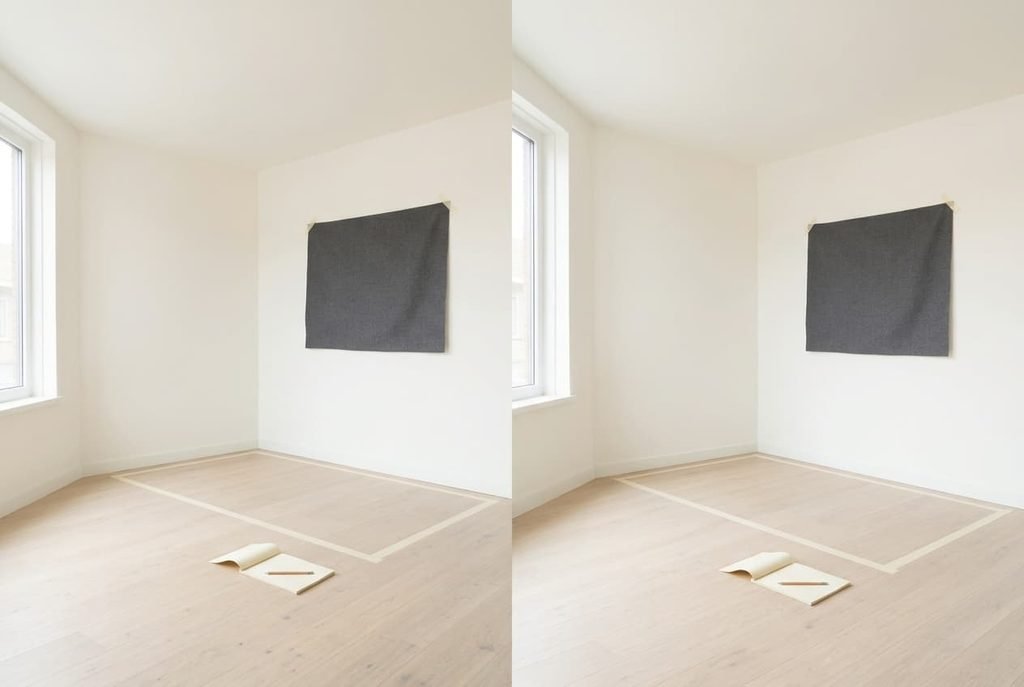
Run the numbers before the sofa is delivered. Outline it on the floor with painter’s tape and live with the tape for a day. Add the wall lengths it takes and divide by the perimeter, keeping the result under 25%. Then measure the narrowest gap to the door and keep it at 100 cm or more, preferably 120. Ask for a fabric sample and tape it to the wall in daylight, because a swatch that looks mid-grey in a shop can look far darker beside your paint. Take a before photo and an after photo from one position. Jot down those three figures where the delivery paperwork lives, so you can find them at the next purchase.
Whenever it feels smaller since the corner sofa arrived, a measurement nobody took is usually behind it.
The fix that isn’t worth doing
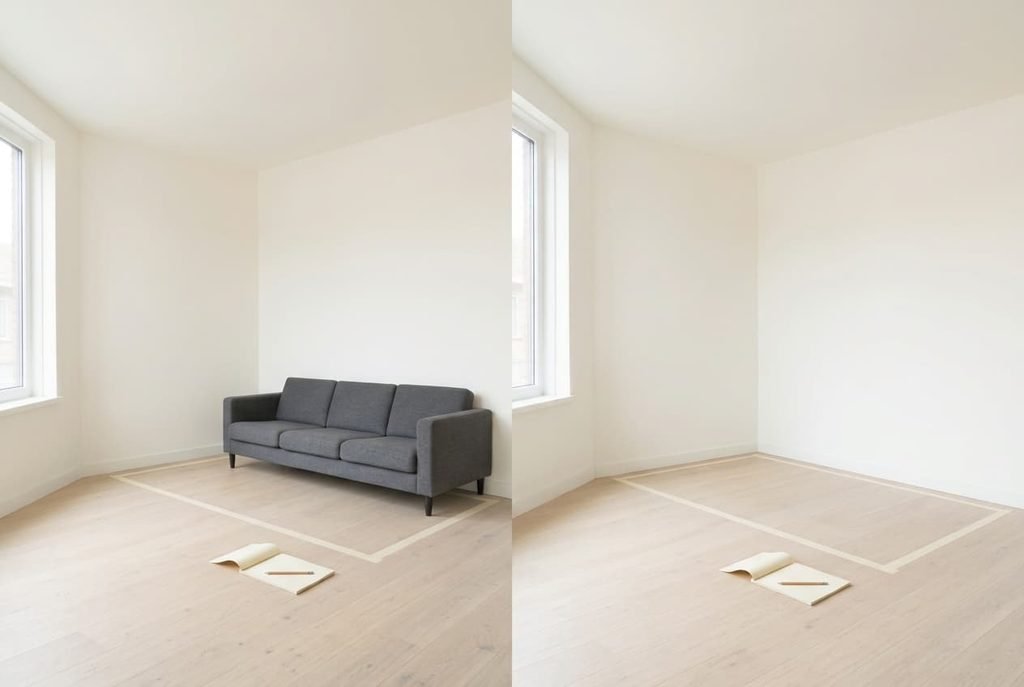
Swapping the corner sofa for a smaller straight one is the move that costs the most and returns the least. A new three-seater at 210 by 90 cm would give back 1.6 m² of floor. The fault lines would remain: a dark mass, a chaise-shaped hole where the seating used to be and a gap that nobody measured. You’d also pay for delivery twice and lose the comfort that made you buy the corner sofa. The room would feel better for about a month. Then the same feelings would return with the next piece of furniture.
A second tempting move is to buy lighter cushion covers for the whole sofa. That helps with the contrast fault only. The 29% share stays as it was, and the chaise still points at the door, so count it as a small extra and not a cure.
The cheaper route is to treat the setup first. Turn the L. Lighten the edge, then aim the chaise at the window. After all three changes, count the points again with the same photo spot and the same tape measure. If the score has dropped to zero or one, the sofa stays. The feeling goes. If it still feels smaller since the corner sofa arrived, the sofa really is too long for the room, and the gap figure will tell you by how much. That number is also the brief for choosing its replacement, which will cost the same as before but now comes with measurements instead of a hunch.
Questions readers keep asking
What causes a room to feel smaller after a corner sofa arrives?
Usually three things at once: the sofa claims two walls, its dark mass pulls the eye and its chaise end points at the walkway. Its size counts for less than it seems. Measure the wall share first, then the gap, then the contrast.
Is there a quick fix that works on the same day?
Yes. Take the pouf and side table out of the corner, throw a light cover over the chaise end and shift the floor lamp to the corner. Together these take about ten minutes and cost nothing, and they change what the eye lands on first.
Can I fix it without renovation or a new sofa?
In most rooms, yes. Turning the sofa changes the picture. A pale rug and taller legs do too, and building work isn’t needed anywhere. If the gap to the door stays under 100 cm after turning, the sofa is too long for the room.