Most flats keep their papers in a drawer and a carrier bag, and neither gets sorted. A small shelf of binders fixes that for far less money and floor space than a cabinet. What a home paperwork station needs first is a place where each sheet lands the day it arrives. Below, a couple in a Groningen flat get six folders. Every size is worked out in sheets and centimetres, then bought in the order that stops the pile from coming back. Every figure is a working assumption that your own flat can overwrite.
What a Home Paperwork Station Needs First
Start with volume, because it sets the size of everything else. Take a couple who sort their papers into six groups, with one folder for each group. Assume each group gains 80 sheets a year. That makes 480 sheets in total, and at about 0.1 mm a sheet the stack grows by 4.8 cm every year.
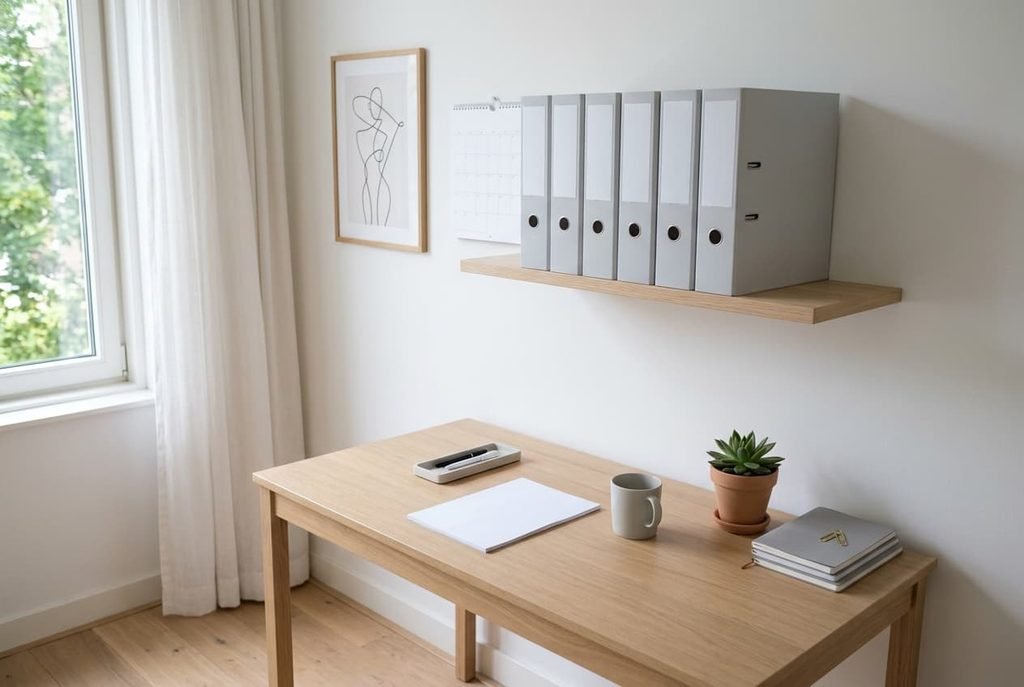
A lever-arch binder with a 5 cm spine leaves about 4 cm for paper. That’s 400 sheets, which is five years of one group before the binder is full. Six binders stand 30 cm wide on a shelf. The shelf is the whole footprint of the station, and it replaces the drawer and the carrier bag.
Rules for how long each paper matters differ by type, so ask the body that issued the document before choosing what to throw away.
Six groups is a deliberate cap. Fewer folders mix unrelated papers, and more folders spill past the 30 cm shelf. The number suits the usual mix a couple receives without padding.
The sheet count also tells you what not to buy. A station sized for 480 sheets a year doesn’t need a cabinet or a scanner, and the later sections return to that point.
Five Items for a Home Paperwork Station, First to Last
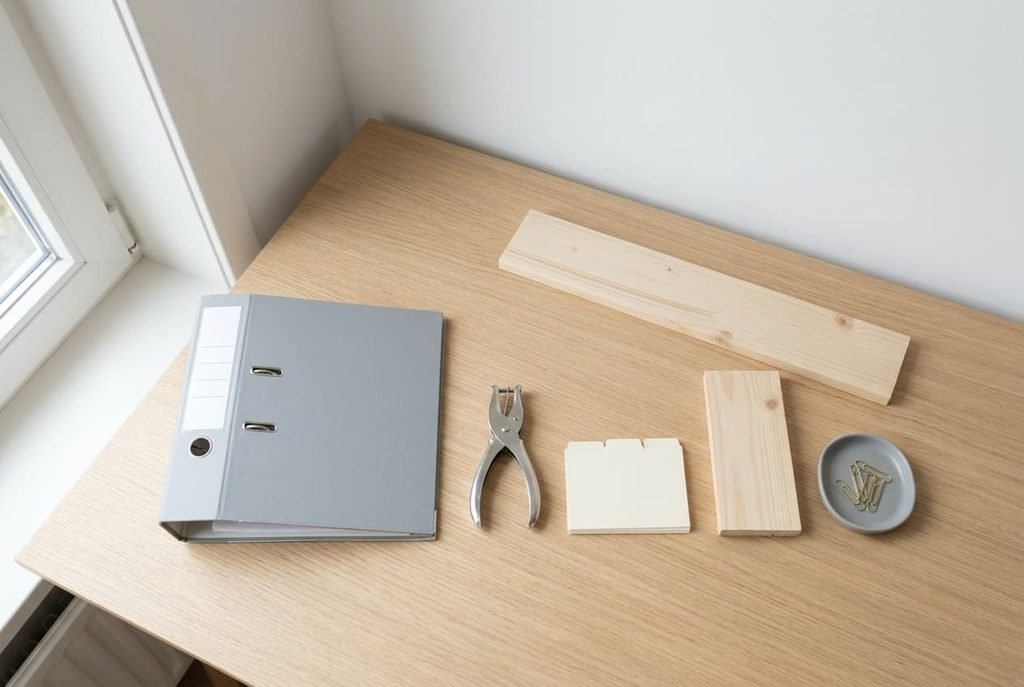
Each entry carries a size and a reason for its position in the buying order. Its tier then shows how much to spend relative to the other four. The entries run in buying order, with the purchases that are costliest to get wrong at the top.
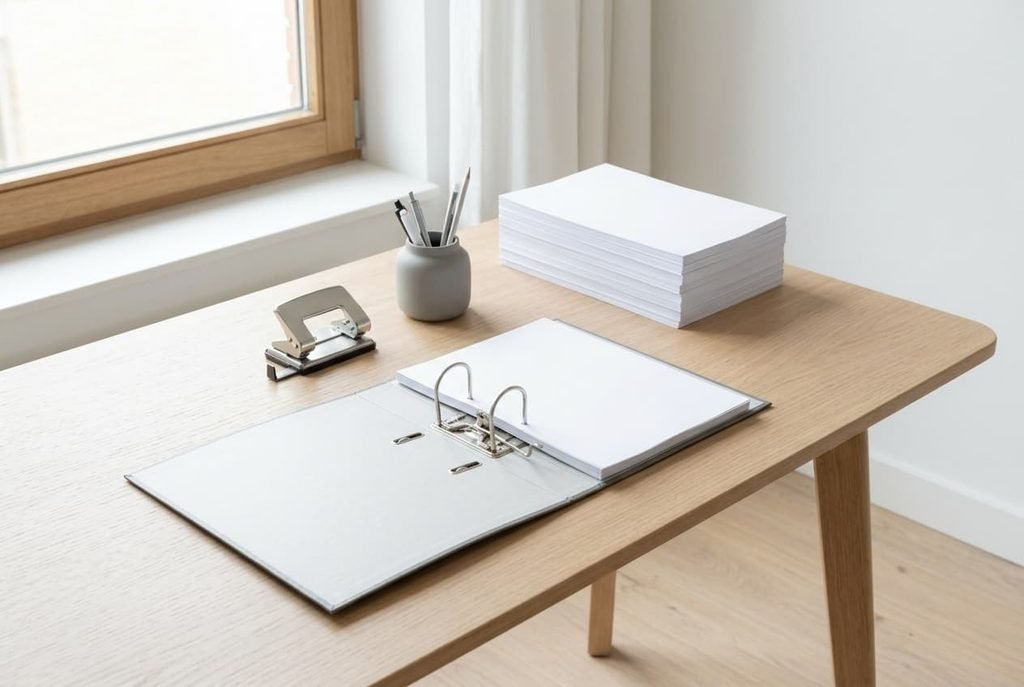
1. Six lever-arch binders with a 5 cm spine are bought first, because every other item either holds them or feeds them. Tier: BUY ONCE. A rigid board cover with a metal-edged spine and a mechanism riveted through the board stays square for years. Write the group name on the spine in large letters before it goes on the shelf. Open one flat and give the rings a shake. A loose mechanism is the usual fault, and thin card covers split along the spine.
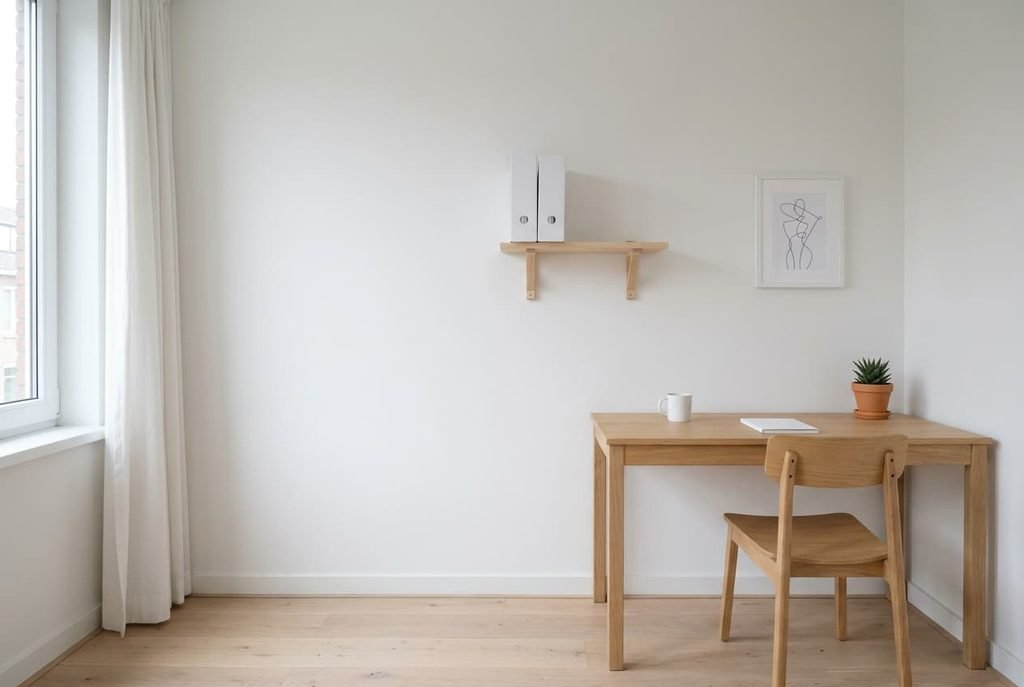
2. A shelf strip 30 cm wide and at least 30 cm deep is the next purchase. Six full binders hold about 12 kg of paper, and with their covers the load comes to about 15 kg. Tier: MID. A solid board 18 mm thick with a support under the back edge stays level. A thin board sags in the middle within a year. Fix it at about 120 cm so the spines sit at eye level.
3. A two-hole punch with a 30-sheet capacity follows. The holes sit 8 cm apart, matching the binder rings. A punch that takes only 10 sheets forces three squeezes for one batch. Tier: MID. A metal body with a guide rail that locks keeps every hole in line, while a plastic body lets the rail wander. Punch ten sheets at once and hold the stack up to the light to see whether the holes agree.
4. One set of five-tab dividers per binder comes after that. Tier: BUY CHEAP. Card with a reinforced punched edge survives the rings, but thin card tears at the holes. Bend one tab in the shop, because the tab is the weak spot. Five tabs give each binder five sub-topics, which is plenty for 400 sheets.
5. The last entry is a two-tier letter tray measuring 26 × 34 cm. Tier: BUY CHEAP. A tray formed in one piece has no joints to snap, though a bargain model warps under a stack of post. Hold this purchase until the other four are in place.
Why the Letter Tray Is the Item to Scale Down
The tray looks harmless, but it claims 26 × 34 cm of desk, which is 884 cm². It also invites a fresh pile, and a pile is exactly what the station exists to end.
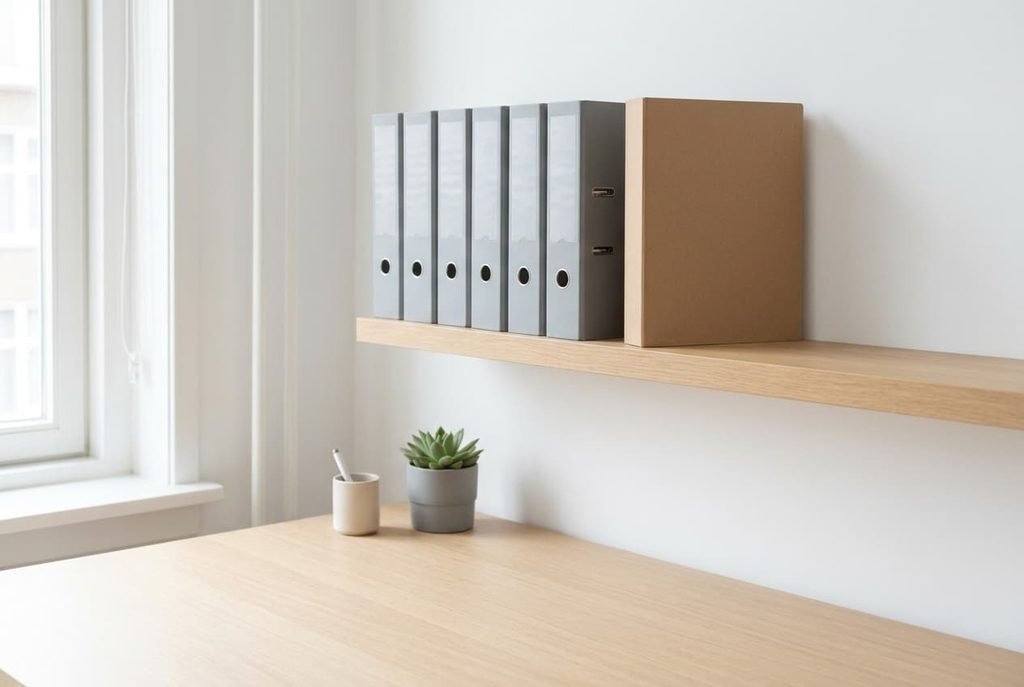
One A4 wallet folder serves the same purpose in about 1 cm of thickness. Stand it upright at the right-hand end of the shelf and drop the day’s post into it for a weekly sort. The shelf stays the only surface in play, and the desk is free again.
The wallet holds about 20 sheets before it bulges. At 9 sheets a week that is a little over two weeks of post, which is longer than any pile should sit.
Once the binders and punch are bought, the home paperwork station needs first of all a clear stretch of shelf, not more desk. Every extra tray or box takes space that the six binders need, and a small flat has none to give away.
If the post bothers you less than the pile does, drop the wallet as well and use the top of the shelf.
Habits That Keep the Station Small
A home paperwork station needs first a fixed day, because the items only work when somebody files. Pick one weekly slot and keep it to 10 minutes. Do it while the post is still on the table and the envelopes are open. Schedule it just before a regular event such as the evening meal. That gives it a natural end.
The sums make that realistic. About 9 sheets a week reach the station, since 480 divided by 52 gives 9.2. Punching them takes under a minute at 30 sheets a squeeze. Sorting nine sheets into six folders adds a few minutes, and nothing in the routine needs a second person.
Once a year, pull the oldest sheets from each binder before the new year’s papers go in. The 4 cm of usable depth fills at the five-year mark, and that’s the signal to clear it. Keep any original you can’t replace, and cut up anything with account details before the rest goes in the recycling. You’ll finish the clear-out in an afternoon, because each binder holds only one group.
What to Skip
Skip the four-drawer filing cabinet, which is 130 cm high and claims about 0.29 m² of floor for paper that fits on a 30 cm shelf. Its base measures 47 × 62 cm. The laminator and the label printer can stay in the shop as well, because handwritten tabs do the same work with no extra step.
No app or subscription that promises to organise your papers is worth adding, because a shelf has nothing to log into. Leave a second shelf of binders alone until the first is full. Clear plastic sleeves for every page are also out, since each sleeve adds thickness to a stack that has only 4 cm to give. Never buy a binder for a group you haven’t started, since an empty binder turns into the next drawer of loose paper.
Everything on this list falls outside what a home paperwork station needs first, and most of it never earns a place. Six binders and a shelf with a punch will handle about five years of a couple’s post. Count one month of your own post first, and order the binders only after that count. Then put the weekly slot in the calendar before you order anything. The best shelf in the world can’t file by itself.
Questions Readers Keep Asking
How many pieces do I really need?
Four items cover a couple once a wallet folder replaces the letter tray. Add extra binders only when a new group of papers starts. Counting the sheets each group gains in a year tells you the number of binders before you buy anything.
Which should I buy first, and how long does setup take?
Buy the binders first and the shelf second, since the shelf only makes sense once the binders fix its width. Setup takes about an hour: mount the shelf, punch the backlog in batches of 30 sheets, and slide in the dividers.
How do I judge a binder before buying?
Open it flat and press the rings together. A good mechanism stays aligned, and the board cover keeps its corners. Pick one up by the spine when it’s full, since a weak cover bends or tears at the hinge under the weight of 400 sheets.