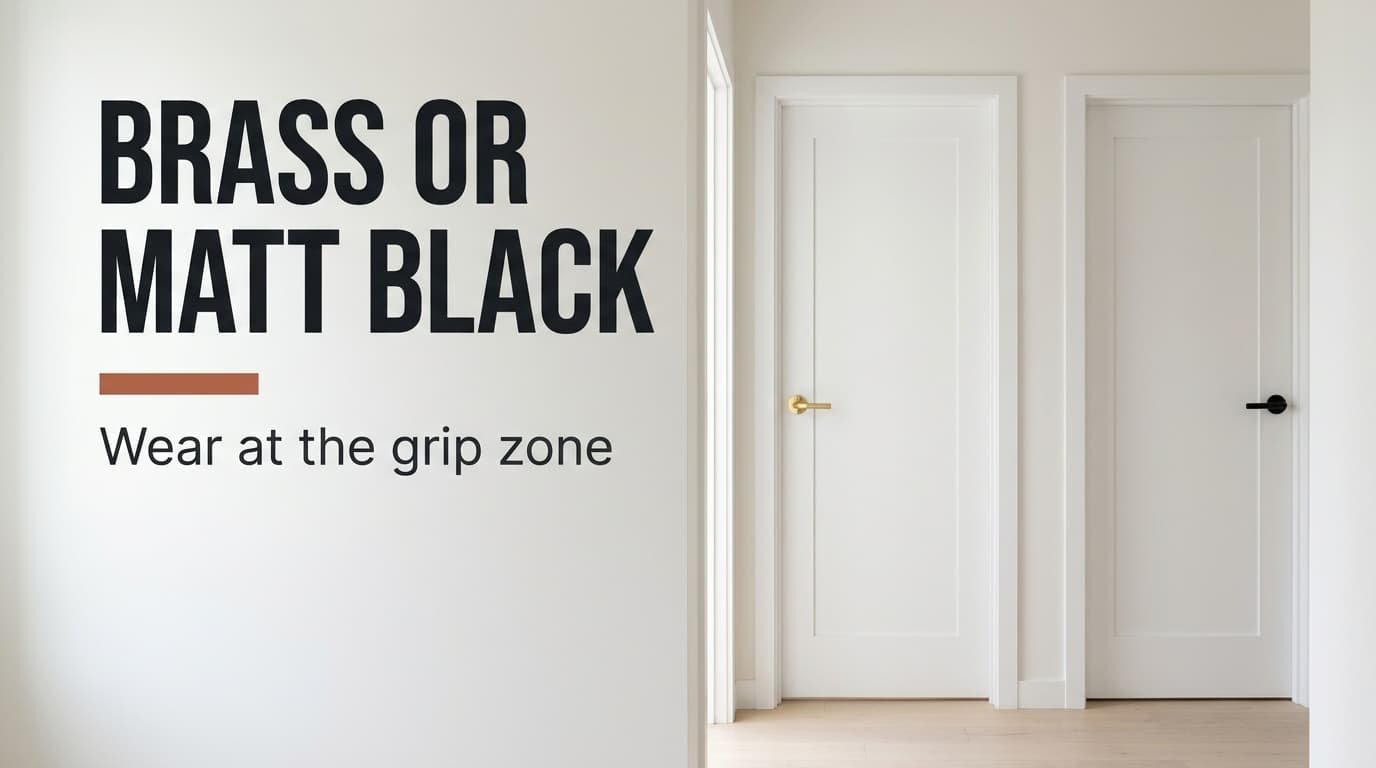
Nine interior doors mean eighteen levers. The finish you pick for one is the finish you live with on all of them. Matt black door handles look sharp on a white door the day they go up. Brass looks warm from the start and keeps changing for years. Below, the two finishes are weighed on wear and on upkeep, using a single row house with nine doors so that every figure sits in one place. Each sum rests on a stated assumption, and you can swap in your own door count before you buy anything. All sizes are in centimetres, the unit a Dutch shop will quote.
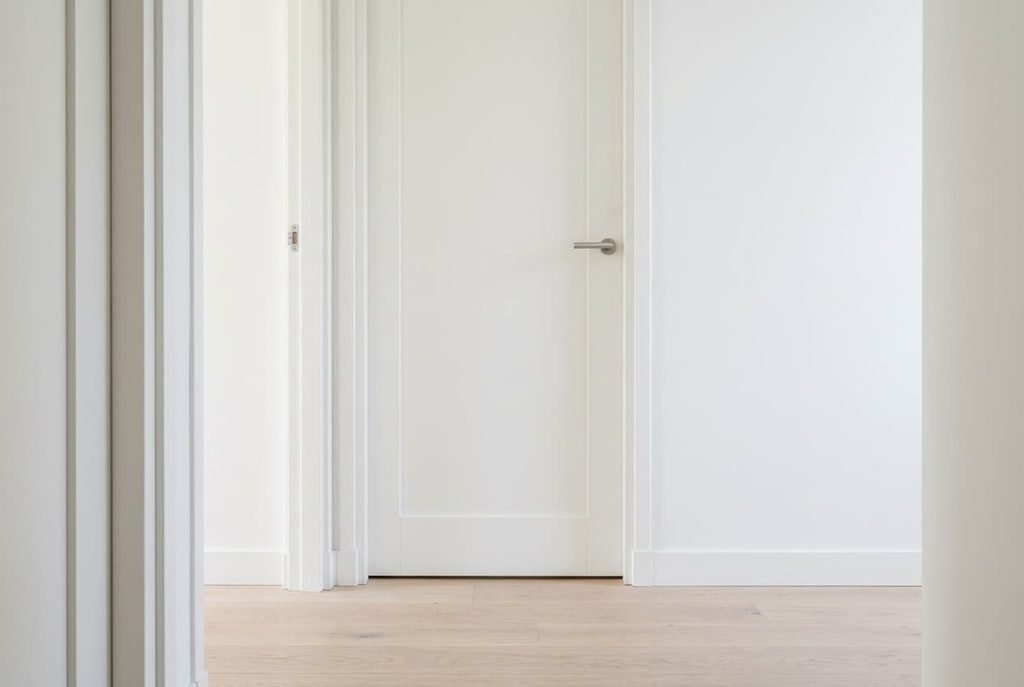
What a Door Handle Finish Has to Survive
Start with how hands treat a door. Take a family of four living in a Utrecht terraced house that has nine interior doors. Door counts vary. Treat the numbers as working figures. Assume three busy doors that carry most of the traffic are opened 40 times a day each. Six quiet doors are opened 10 times a day each. That gives 3 × 40 + 6 × 10 = 180 openings a day, or 65,700 touches a year.
Each opening touches one lever. Assume traffic splits evenly between the two sides of a door. A busy-door lever then takes about 7,300 touches a year, and a quiet-door lever takes 1,825. A typical lever is about 12 cm long. Doors that open onto the hall get used far more than those behind a bedroom. Nearly all contact lands on the 3 cm where thumb and palm rest, a quarter of the length.
That quarter decides the whole comparison.
A finish can look perfect over the other 9 cm for decades and still fail where it matters. Matt black door handles and brass are both judged on that one patch, because it’s where a finish either wears in or wears off. It also means the busiest doors, not the average one, set how soon the whole set looks tired.
Brass and Matt Black Side by Side
The rows cover what you see on day one and what a repair involves later. Every cell uses the same house and the same grip zone. Read down each column first and across second, because a finish that wins one row can lose the next.
| Point | Brass | Matt black |
|---|---|---|
| Look on a white door | warm, yellow-gold glow that suits wood frames | flat, high contrast that suits pale frames |
| Where wear shows | grip zone polishes or darkens | grip zone turns glossy or thin |
| Fingerprints | clear on polished metal, hidden by darker patina | pale, oily marks every day |
| Weekly wipe of 18 levers | about 90 seconds | about 90 seconds |
| Repair after wear | repolish, or relacquer if it was lacquered | recoat the lever or replace it |
| Matching between batches | tone can shift | sheen can shift |
| Ten-year trend | richer colour | patchy at busy doors |
Wiping 18 levers at roughly 5 seconds each takes 90 seconds a week, which comes to 78 minutes over a year and is identical for both finishes. What differs is what the cloth reveals, and matt black door handles reveal more on a busy door than brass does, because pale marks on a dark coat catch the light.
Where Matt Black Door Handles Hold Their Look
Matt black does its best work on doors that few people touch. A quiet-door lever sees 1,825 touches a year, a quarter of the busy-door figure. Over ten years that adds up to 18,250 touches on a single lever. A decent coating should usually cope with that without a visible patch.
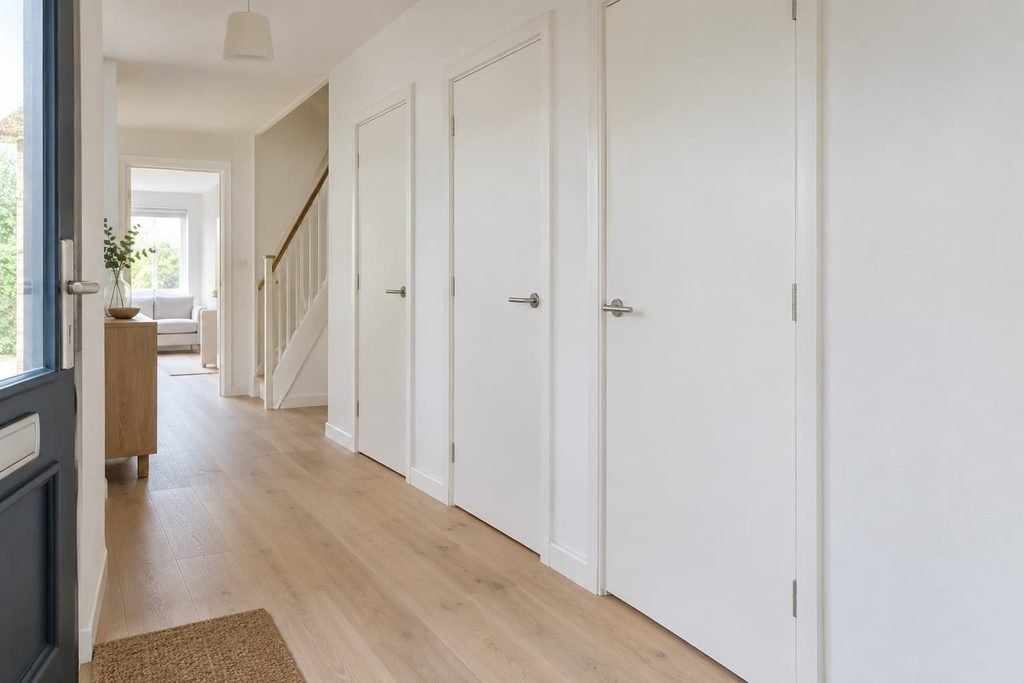
The look is the second argument. Against a white door and a white frame, a black lever draws one clean line. It pairs well with dark window frames or black hinges. In a narrow hallway with six doors in a row, that repeated line makes the doors read as one calm run.
The weak point is marks. Matt surfaces hold skin oil, and a pale fingerprint on black is easier to spot than on most metals. A weekly wipe with a soft cloth that’s barely wet clears it. Strong cleaners dull the finish and should stay in the cupboard. Wipes can also add wear of their own on a busy door, which is why black suits the quiet end of the house.
Where Brass Wears Better Than Black on Door Handles
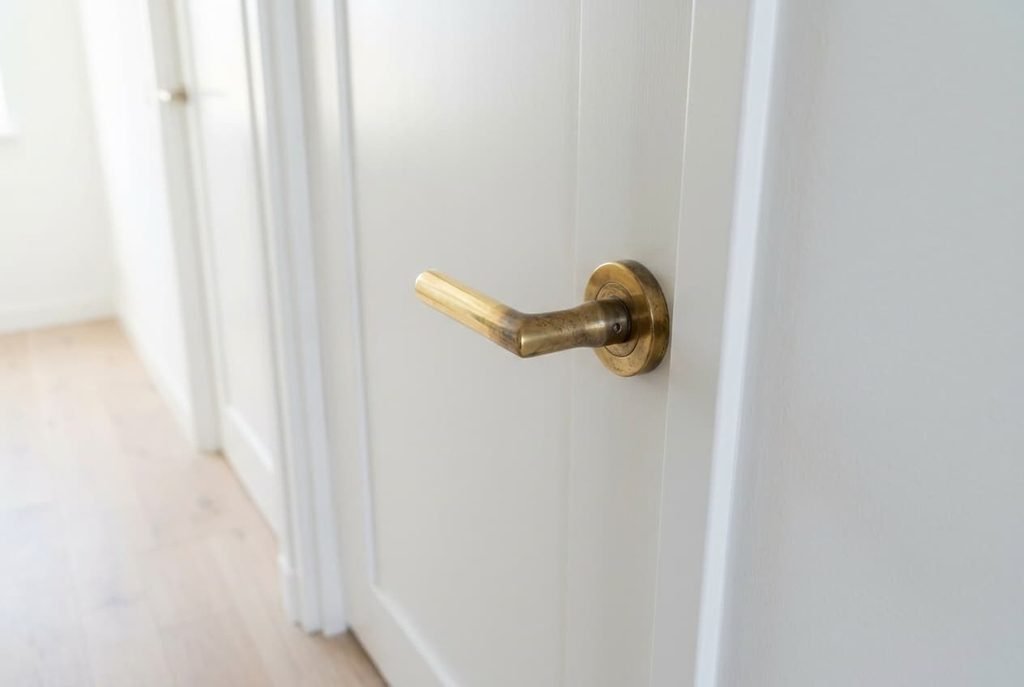
A busy-door lever takes 7,300 touches a year, which is 73,000 over ten years on one 3 cm zone. Solid brass is better placed to cope with that than a coating, because it’s the same metal all the way through. Wear polishes the grip zone bright. The rest of the lever slowly darkens, and many people like that contrast.
Lacquer changes the picture. A clear coat on brass protects it at first. It then wears through at the grip zone and lets the bare metal darken in patches. If you want even ageing, ask whether the handle is solid and unlacquered, since a lacquered one follows the same replacement logic as a black coating.
Where a black coating wears, it thins to the grey of the metal beneath. Where solid brass wears, it stays brass. On the busy doors that difference shows first, often within a few years of daily use. It’s the difference visitors notice when they walk through the house.
The Third Option Is the Handle You Already Have
Before ordering 18 levers, look at the ones on the doors now. A lever that droops or rattles usually has a loose fixing. The repair takes one screwdriver and about two minutes per door. Nine doors cost about 18 minutes, far less than the time spent choosing a finish.
A second route is to change only the busy doors. Three doors mean 6 levers instead of 18, one third of the job, and the quiet doors keep their current look. The risk is a visible mismatch in a hallway where all nine doors can be seen together. Check the sightlines from the front door before you commit.
Whatever you decide, retighten every fixing screw and clean the grip zone first, because a worn-looking handle is often just a loose, greasy one. Plenty of households stop there and find the problem gone, and the question of matt black door handles never arises.
Which Finish Suits Which Household
Two branches cover most terraced houses.
If your busiest doors open about 40 times a day and you want a finish that ages instead of failing, choose brass, and pick solid metal without lacquer. It’s brass all the way through. Wear polishes it, and the grip zone stays attractive for the full ten years of 73,000 touches.
If most doors open about 10 times a day and your doors and frames are white or pale, choose matt black. The quiet-door figure of 18,250 touches over ten years is a load a decent coating should cope with, and the repeated dark line looks calm in a narrow hall. Hold a sample lever against a white door in daylight before you order.
You’ll get a better answer if you count your own openings on one normal weekday before ordering. Put the three busiest doors first, since they set the wear for the whole house. Buy every lever in a single order, because batches can differ slightly in tone. Check one thing in the shop: ask whether the lever is solid metal or a thin plating, since plating can wear through at the grip zone.
Questions Readers Keep Asking
Which finish lasts longer?
Solid brass lasts longer at the grip zone, because wear polishes the metal instead of exposing a different colour. A matt black coating can last many years on quiet doors, though it thins first where hands land. Lacquered brass behaves more like a coating than like solid metal.
How do I keep either one clean?
Wipe the levers weekly with a soft cloth that’s barely wet, then dry them. Skip abrasive pads and strong cleaners on black, since they dull the finish. On brass, avoid polish if the handle is lacquered, because it won’t reach the metal and can leave streaks.
Which suits a family hallway with three children?
Children make hall doors the busiest, with up to 40 openings a day in our example. Brass handles that load better there. Keep matt black for bedrooms and cupboards where traffic is light. If a mix bothers you, repeat one finish across all the doors in view from the hallway.