Which tool decides whether a cake comes out right? The scale, by a distance, which is why a baking corner at home should start with it. Five purchases cover a weekly cake plus biscuits and buns, and the sequence of purchases matters more than any label. We use a Rotterdam flat with 60 by 40 cm of free worktop and a single shelf that is 40 cm across by 30 cm deep, for a baker who cooks for two. Nothing here needs a mixer or a special tin, and you should measure your own worktop before you trust these sizes.
A Baking Corner at Home Starts With What You Bake
Before any shopping, list the bakes you expect to repeat. Ours are a loaf cake and a tray of biscuits. Each one dictates a tool, since the cake needs a tin and the biscuits need a flat tray. Every recipe needs weighed ingredients and a bowl big enough to stir in.
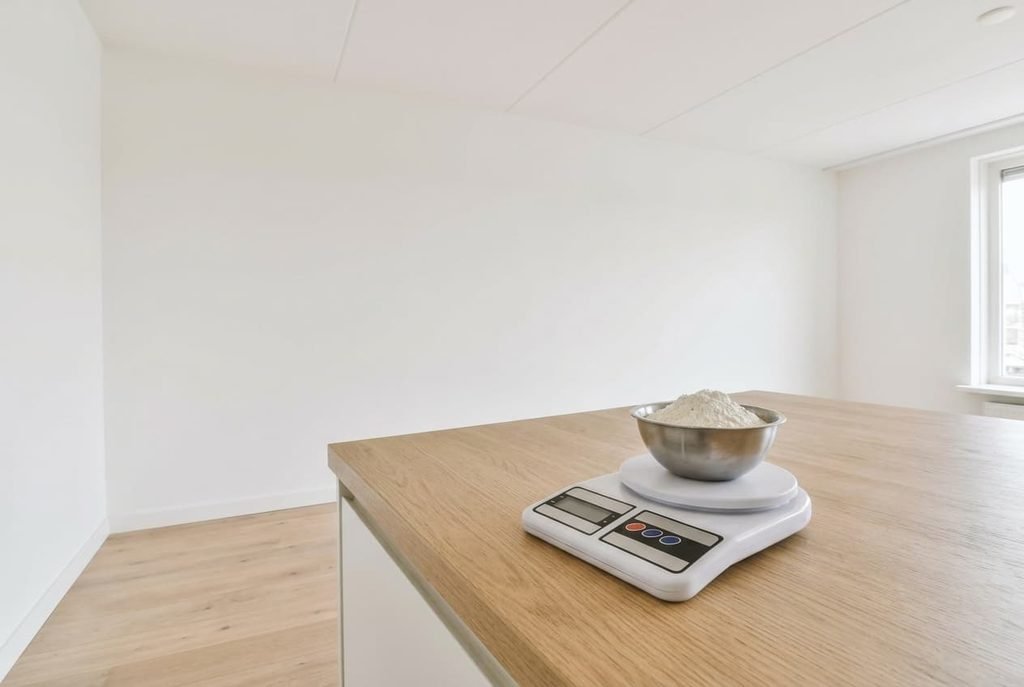
Weighing matters more than it sounds. A 250 ml measure of flour can weigh anywhere from about 120 g to 150 g, depending on how it was scooped. That spread is 30 g, or 25% of the smaller figure. A cake that expects 120 g and receives 150 g comes out dry and heavy. A scale turns that guesswork into a figure you can repeat each week, which is why it leads the list.
Weighing earns its place first.
A second reason is waste. A failed cake throws away flour and butter together, and a scale that prevents half of a year’s failures repays itself in ingredients.
Space matters too. Our shelf takes the tin and tray flat. The bowl and rack sit beside them. Our oven takes trays up to 40 cm across, so none may pass 38 cm. Anything beyond the shelf’s capacity ends up on the worktop all week, where it collects flour.
Five Purchases for a Home Baking Corner, Dearest Mistake First
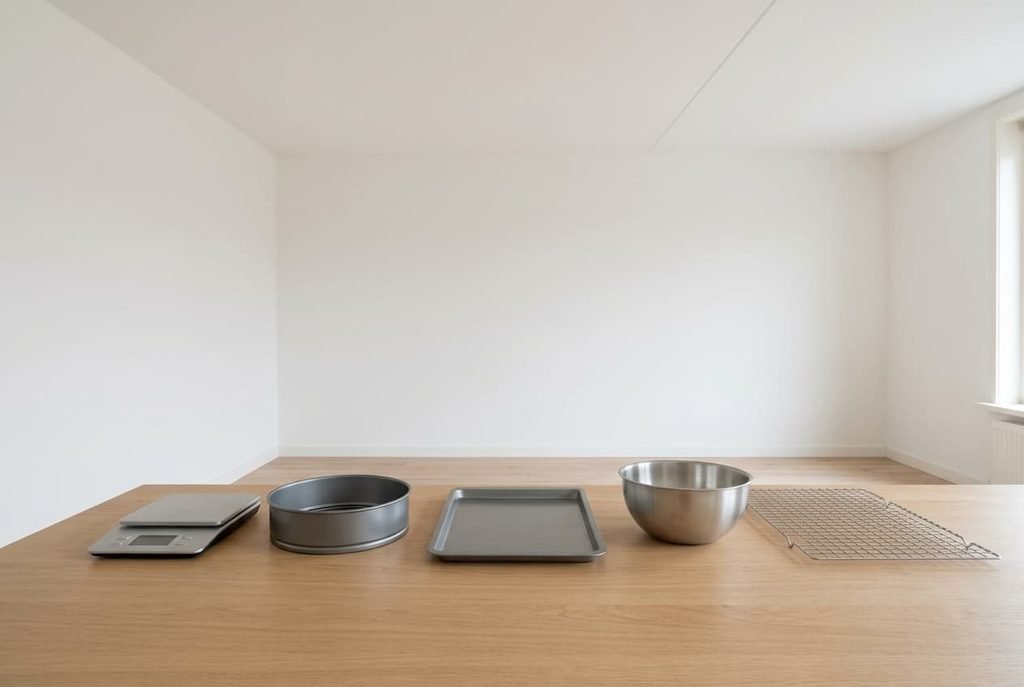
1. A digital scale with a flat platform and 1 g steps comes first. Tier: BUY MID. A scale that reads in 1 g steps catches the 30 g spread above, whereas one that reads in 5 g steps hides it. Sensors under the platform keep readings steady when you pour off-centre. Test it with a 1 litre bottle of water, which weighs about 1 kg. A reading that drifts by more than a few grams needs returning.
2. A 20 cm loose-based steel tin comes second, for the weekly cake. Tier: BUY ONCE. A heavier steel wall stays flat in the oven, whereas a thin one bows and tips the batter to one side. The loose base lets you lift a finished cake out without turning it over, which spares a soft crumb. Press the base with a thumb and look along the seam. A visible gap lets batter leak, and a gap that widens with pressure means a poor join.
3. Third place goes to a flat steel tray of 35 by 25 cm, for biscuits. Tier: BUY MID. Thicker sheet steel resists the buckling that makes a thin tray pop and tilt in a hot oven. Lay it on the worktop and spin it with a finger. A tray that rocks on the counter will warp in your oven too. A rolled edge adds stiffness and gives you something to grip with an oven glove.
4. Fourth in line is a mixing bowl, 24 cm across. Tier: BUY CHEAP. A plain steel bowl with a rolled rim costs little and lasts until it’s dropped. A wide, flat base keeps it steady while you stir. Run a thumb round the rim to check for a sharp edge, because a burr catches cloth and skin alike.
5. Last comes a wire cooling rack of 30 by 25 cm. Tier: BUY CHEAP. Welded joints hold a hot tin without bending. Check that the wires sit level and the feet are even, since a wobbling rack drops a warm cake. A fine wire spacing also stops biscuits from slipping through.
Why the Cooling Rack Is the Item to Scale Down
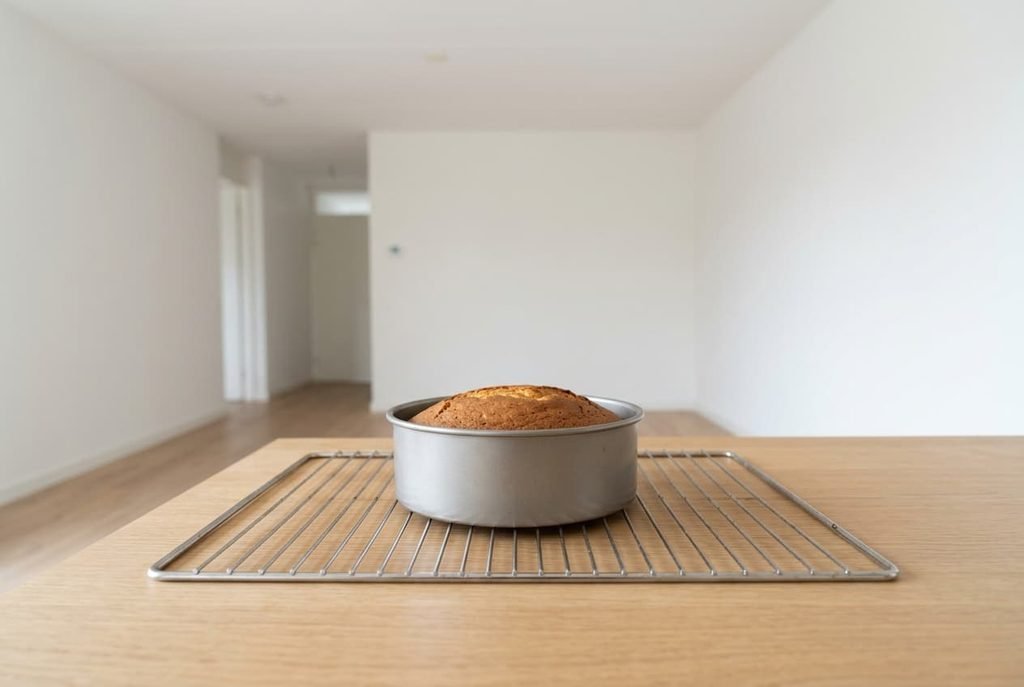
Of all the tools for a baking corner at home, the rack is the piece that goes first. The oven’s own wire shelf already does the rack’s job, and it’s far bigger at about 45 by 37 cm. Slide the tin or tray onto a cold shelf after taking it out, leave it for twenty minutes and you get the same result.
The rack also takes space. At 30 by 25 cm it covers 750 cm² of a worktop whose free area is only 2,400 cm², which is 31% of it. That space is better used for stirring or rolling.
Its one limit is capacity, and you should know it before you decide. The oven shelf copes with one or two bakes at a time. When you bake twenty biscuits and a loaf together, a second surface helps, because a single oven shelf can’t hold them all cool. A plain cloth under a spare tin does the job.
Use the oven shelf for six bakes. If the cakes come out well each time, skip the rack. The saved money then goes towards a better scale.
Habits That Keep the Tools Flat and Clean
A baking corner at home holds its value while the tools stay flat and clean. Give a hot tin ten minutes before it meets any water, since cold on hot metal can bend the wall. Never soak the scale, since moisture reaches the circuits under the platform.
Dry tools last longer than wet ones.
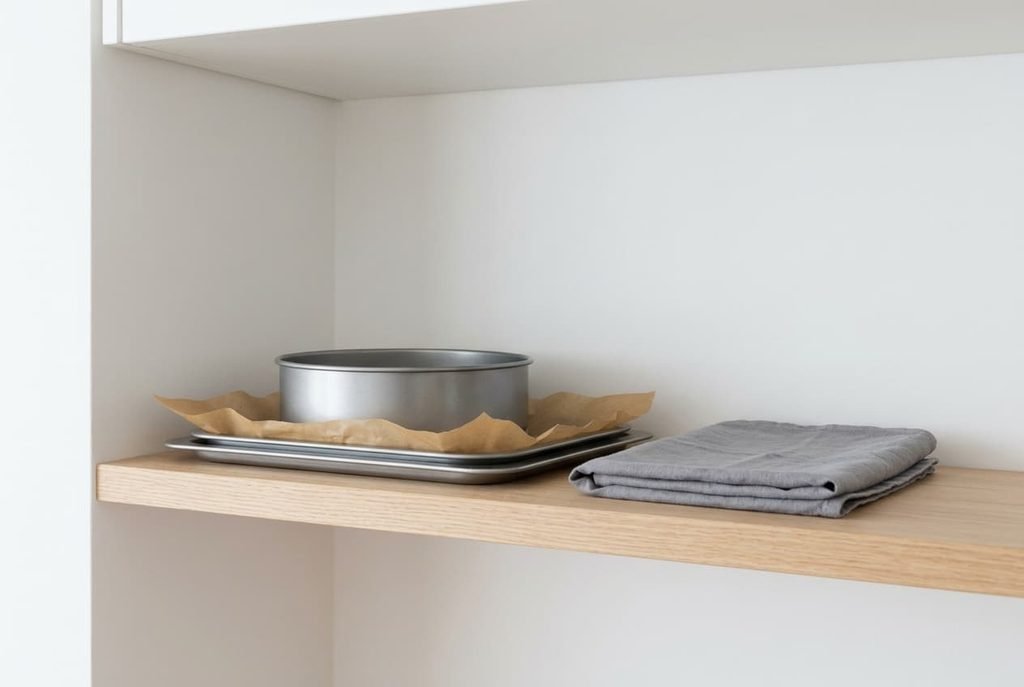
Wipe the platform with a barely wet cloth, then dry it. Wash the tin and tray using a soft sponge, and dry them at once, because steel left wet shows spots within a day. Stack the tray under the tin with a layer of baking paper between them, so the surfaces never rub. Store the bowl upside down on the shelf.
Hang the oven shelf back in its slot after every bake, so it doesn’t warp from lying against a hot door. Once a month, check the scale again with the bottle of water. A fresh battery often cures a slow drift, and that is cheaper than a new scale.
What to Skip Until You Bake Weekly
Hold off on a stand mixer and a rolling pin set until you have baked every week for two months. A mixer of 5 kg takes the whole shelf by itself, and it solves a problem you won’t have until you bake bread.
Silicone shapes and piping sets fall into the same group, as does any gadget that needs its own cupboard. They need storage that a first corner lacks, and they replace nothing the five basics can’t already do.
Use a wooden spoon and a clean bottle in the meantime. A bottle rolls dough well enough for a month of biscuits. Bread tins and loaf liners can wait too, since a plain tray carries a free-form loaf without fuss.
Bake from your list for two months, then see which gap appears. Jot each gap down when it appears, so the next purchase answers a real problem. The five tools above cover weekly baking, and anything beyond them should answer a problem you’ve felt twice. If the shelf stays tidy and the worktop stays clear, then your baking corner at home is the right size, and you can add the next piece when a recipe actually asks for it, instead of when a shop window suggests it.
Questions Readers Keep Asking
How many pieces does a first baking corner need?
Five cover weekly baking, from the scale to the rack. The rack can wait, because your oven shelf stands in for it. Four tools fit one shelf with room to spare, so extras only crowd the corner and make the worktop harder to clear.
In what order should I buy them?
Start with the scale, since it improves every recipe, then the tin for your first cake. The tray follows once you bake biscuits or buns, and the bowl comes whenever your mixing outgrows a saucepan. Add the rack at the end, but only if the oven shelf proves too small.
How do I judge quality in the shop?
Check that each base sits flat and the joints are welded. The rims should feel smooth. Test the scale with a 1 litre bottle of water and watch the reading settle. A good steel tin feels heavier than a thin one, and it doesn’t flex when you press the wall.