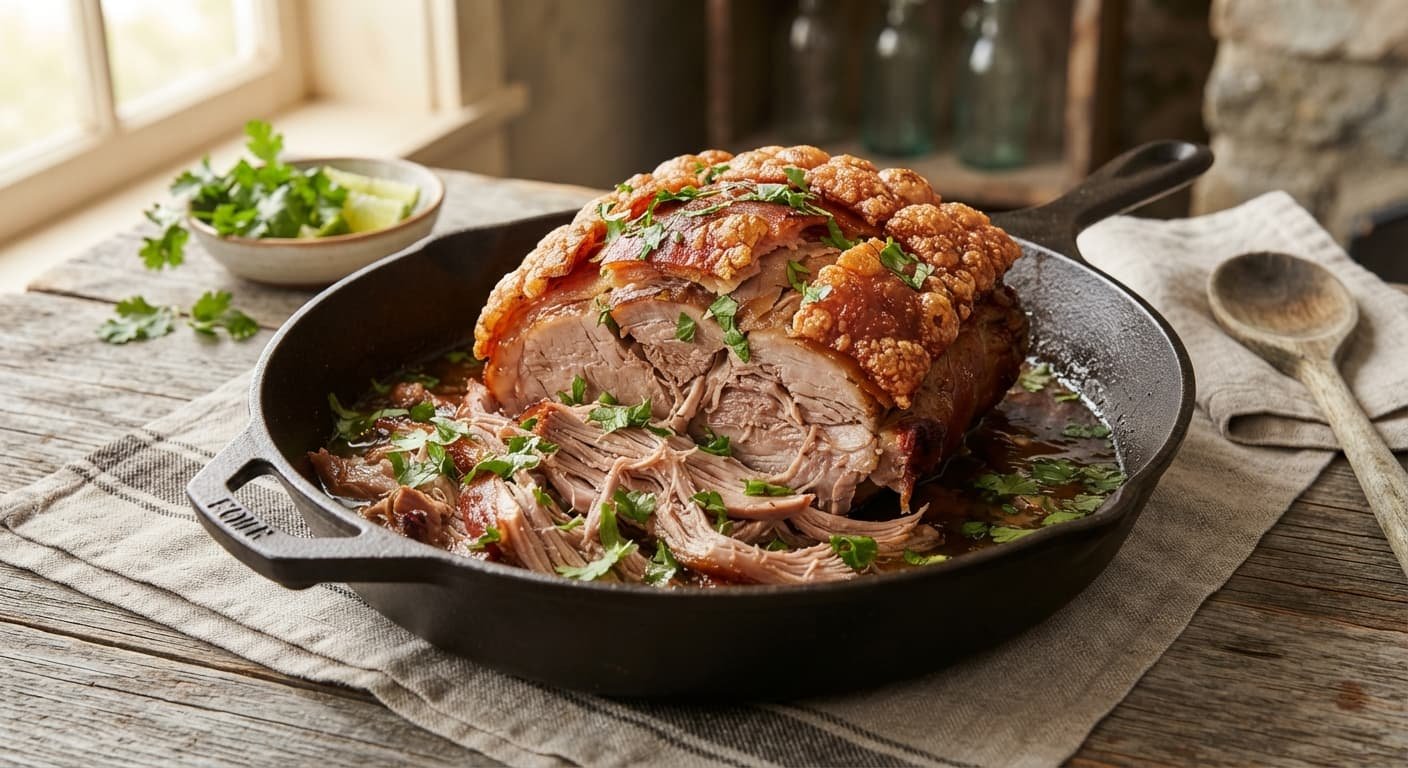
Press a knife into the skin of a properly finished pernil and it shatters rather than gives — a thin, brittle layer of cracklings sitting directly on top of meat so soft it barely needs the knife at all. That contrast, glass-brittle skin over meat that pulls apart with a fork, is the whole point of Pernil Slow-Roasted Pork with Sofrito, and it’s the reason this dish takes the better part of a day rather than an hour or two.
This isn’t a fusion or an invented pairing. Pernil is one of Puerto Rico’s most recognizable dishes, a bone-in, skin-on pork shoulder rubbed deep with sofrito — the garlic, pepper, onion, and cilantro base that underlies much of Puerto Rican cooking — then roasted low and slow until the meat falls off the bone and the skin crisps into cueritos, the crackling pieces people fight over at the table.
Why Pernil Slow-Roasted Pork with Sofrito Takes Time
This pernil needs about 6 to 7 hours, most of it hands-off. The pork spends the first several hours covered at low heat so connective tissue breaks down into gelatin, then finishes uncovered at high heat so the skin can dry out and crisp separately from the meat underneath.
A pork shoulder is full of tough connective tissue that only becomes tender through long, slow heat — rush it, and the meat stays chewy no matter how flavorful the marinade. The skin works on an entirely different timeline: it needs to lose moisture and render its fat at high heat near the very end, which is why pernil is covered for most of its cook and only uncovered in the final stretch. Trying to crisp the skin from the start just steams it instead, since the covered pan traps too much moisture for anything to actually crackle.
Ingredients
This serves 6 to 8.
For the Sofrito Marinade
- 1 cup sofrito (store-bought or homemade)
- 2 tablespoons dried oregano
- 1 tablespoon ground cumin
- 1 tablespoon garlic powder
- 1 tablespoon salt
- 1 teaspoon black pepper
- 1/4 cup olive oil
For the Pork
- 1 bone-in, skin-on pork shoulder, 6 to 8 lbs (about 3 to 3.5kg)
- 8 garlic cloves, sliced into slivers
- 1 cup water, for the roasting pan
- Fresh cilantro, chopped, for serving
How to Make Slow-Roasted Pernil with Sofrito
- Combine the sofrito, oregano, cumin, garlic powder, salt, pepper, and olive oil in a bowl to make the marinade.
- Using a paring knife, cut small, deep slits all over the meat (avoiding the skin) and push a sliver of garlic into each one.
- Rub the marinade thoroughly over the meat, working it into the slits, but keep the skin itself as dry as possible. Cover and refrigerate for at least 4 hours, or overnight for deeper flavor.
- Remove the pork from the refrigerator 30 minutes before cooking. Preheat the oven to 325°F (165°C).
- Place the pork skin-side up in a roasting pan and pour the water into the bottom of the pan, not over the meat. Cover tightly with foil.
- Roast covered for 4 to 5 hours, until the meat is fork-tender and pulls easily from the bone.
- Remove the foil, pat the skin dry with paper towels, and raise the oven temperature to 425°F (220°C). Roast uncovered for 30 to 45 minutes, watching closely, until the skin is deeply browned and crackling.
- Let the pork rest for 15 to 20 minutes before shredding. Separate the crispy skin, break it into pieces, and serve alongside the meat with fresh cilantro scattered on top.
Good vs. Excellent: The Details That Matter
A good pernil still tastes wonderful. An excellent one comes down to patience at a few specific moments.
- Keep the skin dry during marinating. Marinade that pools on the skin steams it during the covered roast, which works against getting a crisp finish later.
- Marinate overnight when possible. A few hours flavors the surface; a full night lets the sofrito reach deeper into the meat through those garlic slits.
- Don’t rush the covered stage. Fork-tender is the real marker, not the clock. A slightly larger shoulder may need an extra hour before it pulls apart easily.
- Watch the skin closely during the final blast of heat. The gap between perfectly crackling and burnt is narrow at 425°F, so check every 10 minutes rather than walking away.
Common Mistakes and How to Fix Them
Skin stayed soft instead of crackling: this almost always traces back to moisture, either marinade left on the skin or too little time uncovered at high heat. Pat the skin thoroughly dry before the final roasting stage, and give it the full 30 to 45 minutes if it isn’t crisping on schedule. If it still hasn’t crackled after that window, raise the heat slightly for the last 5 minutes rather than extending the time indefinitely, since skin left too long at high heat can go from perfectly crisp to burnt fast.
Meat came out tough despite the long cook: the covered stage likely ended too early. Pernil doesn’t work on a strict schedule the way a steak does — if it resists pulling apart with a fork, it needs more time covered, regardless of how many hours have already passed. A larger or colder-than-expected cut of pork can easily need an extra hour, and there’s no real downside to giving it that time.
Flavor tastes only on the surface: the meat probably wasn’t slit deeply enough, or didn’t marinate long enough for the sofrito to work its way in. Cut the slits deeper next time and lean toward the longer end of the marinating window, since an overnight rest makes a noticeably bigger difference here than most marinades typically do.
Variations and Substitutions
A pork leg (fresh ham) can be used in place of shoulder for a leaner result, though it needs closer watching since it dries out more easily than the fattier shoulder cut. Boneless pork shoulder works if bone-in isn’t available, though the cooking time may run slightly shorter since heat penetrates more evenly without the bone.
Homemade sofrito, blended fresh from onion, garlic, bell pepper, and cilantro, gives a brighter flavor than most jarred versions if there’s time to make it. For extra tang, a splash of citrus juice added to the marinade brightens the richness of the pork nicely.
Serving and Pairing
Pernil is traditionally served with rice and pigeon peas alongside a simple potato salad, and that pairing still holds up well here. Warm tortillas or crusty bread also work for anyone assembling sandwiches from the leftovers. A squeeze of lime and extra cilantro at the table brightens each plate without needing anything more elaborate. This sofrito-rubbed pernil also makes excellent sandwiches the next day, piled onto crusty bread with a little of the reserved crackling.
Storage and Reheating
Store the shredded meat and crispy skin separately in airtight containers in the refrigerator for up to 4 days. Reheat the meat gently, covered, in a low oven or with a splash of stock to keep it from drying out; the skin is best re-crisped separately under a broiler for a minute or two rather than reheated alongside the meat. This dish freezes well for up to 3 months, though the skin loses its crispness once thawed and is best eaten fresh.
Nutritional Information
Values below are estimates per serving and will vary depending on exact brands and quantities used.
| Calories | 450 kcal |
| Protein | 38 g |
| Carbohydrates | 3 g |
| Fat | 33 g |
| Fiber | 1 g |
What Stays With You
This recipe was tested and refined in the bebup.org kitchen, with particular attention paid to the timing of the uncovered stage before publishing, since that’s where most of the risk in this dish actually lives.
What lingers after Pernil Slow-Roasted Pork with Sofrito isn’t just the meal itself, but that first crack of the knife through skin gone brittle after hours of patient, unhurried heat. It’s proof that some of the best textures in cooking come from letting two parts of the same piece of meat finish on completely different timelines, rather than forcing them to cook as one.
Pernil Slow-Roasted Pork with Sofrito
Ingredients
Method
- Combine the sofrito, oregano, cumin, garlic powder, salt, pepper, and olive oil to make the marinade.
- Cut small, deep slits all over the meat (avoiding the skin) and push a sliver of garlic into each one.
- Rub the marinade thoroughly over the meat, keeping the skin dry. Cover and refrigerate at least 4 hours, or overnight.
- Remove the pork 30 minutes before cooking. Preheat the oven to 325°F (165°C).
- Place the pork skin-side up in a roasting pan, pour water into the bottom of the pan, and cover tightly with foil.
- Roast covered for 4 to 5 hours, until fork-tender.
- Remove the foil, pat the skin dry, and raise the oven to 425°F (220°C). Roast uncovered 30 to 45 minutes until the skin is deeply browned and crackling.
- Rest 15 to 20 minutes before shredding. Separate the crispy skin and serve alongside the meat with cilantro.