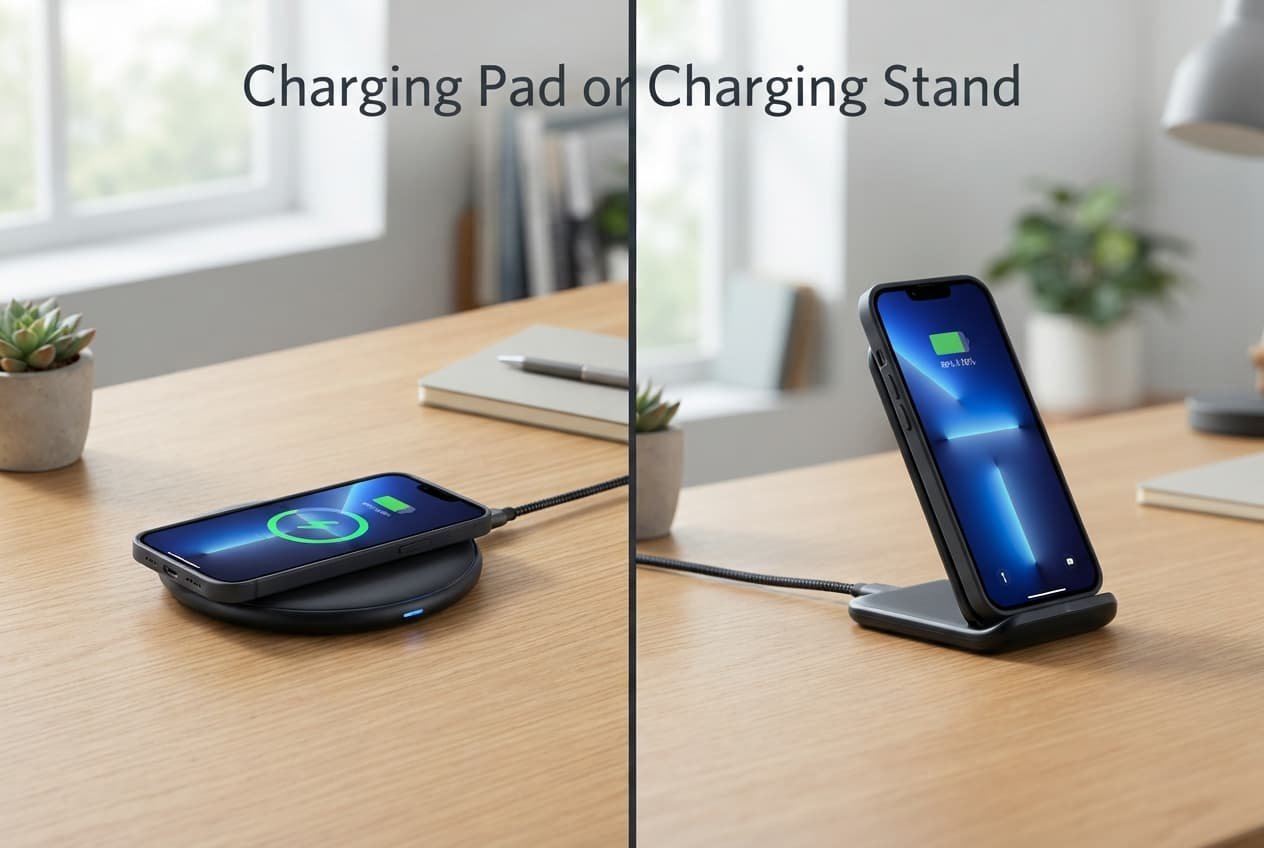
The right choice genuinely isn’t decided by which one looks more impressive sitting on a desk – it’s decided by whether you genuinely value being able to view your phone’s screen while it charges, or simply want the most compact, minimal charging footprint genuinely possible. A flat pad and an upright stand solve genuinely different practical needs, and choosing based on trend alone misses what actually determines which one serves your particular daily use better.
The one property that decides it
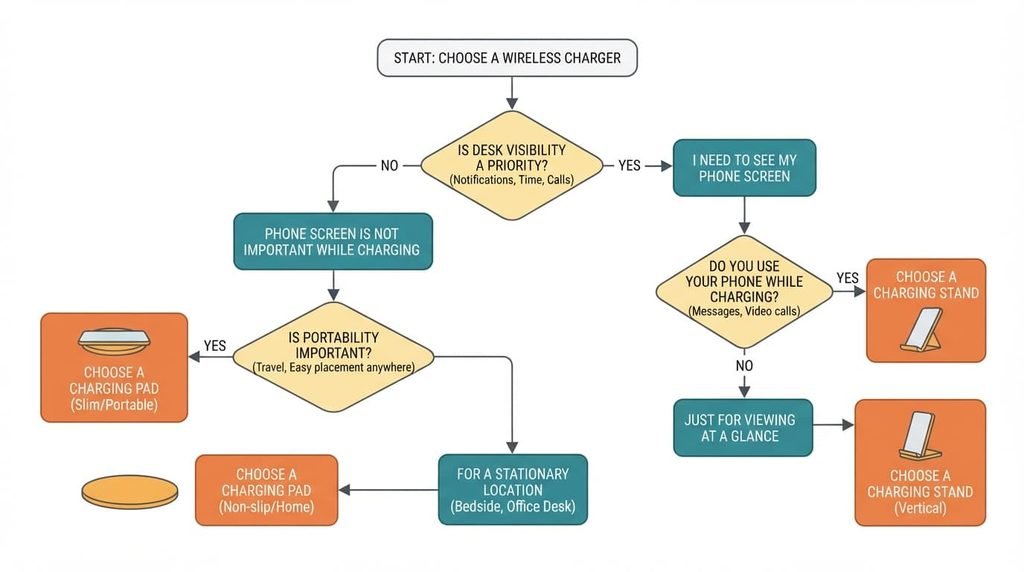
The deciding factor is whether you genuinely want to view your phone’s screen and interact with it while charging, not simply which format looks more modern. A charging stand holds your phone upright, keeping the screen genuinely visible and usable for notifications or video calls during charging, while a flat pad prioritises a minimal, low-profile footprint without this viewing angle.
This genuinely matters because your actual daily habit – checking notifications or watching content while charging versus simply wanting your phone charged and out of the way – together determines which format’s core characteristic genuinely serves you better, rather than either option being universally superior regardless of your own specific use pattern.
Head to head
| Charging Pad | Charging Stand | |
|---|---|---|
| Screen easy to see | Limited | Genuinely clear |
| Desk footprint | Lower profile | Takes more vertical space |
| Easy to align | More precise | Often more forgiving |
| Suits video calls while charging | Less convenient | Genuinely convenient |
| Easy to travel with | Often more compact | Bulkier to transport |
| Stability on uneven surfaces | Generally stable | Can be less stable |
The single row that surprises people most is positioning precision specifically. Many genuinely assume a stand’s more complex shape requires more careful positioning than a simple flat pad, but a stand’s dedicated resting groove often actually provides considerably more forgiving, consistent alignment than a flat pad’s manual positioning genuinely requires each and every time.
Where a pad wins
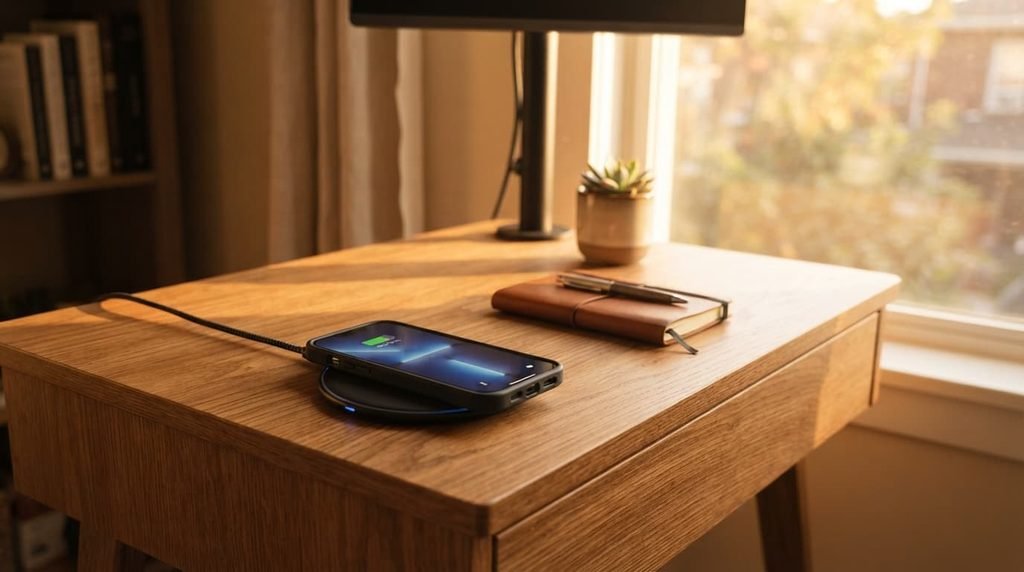
Anyone who genuinely prioritises a minimal, genuinely low-profile desk footprint benefits from a pad’s flat design, since this directly addresses a desire for the charger to remain unobtrusive when not actively being looked at, in a way a stand’s more prominent upright presence doesn’t match as discreetly. The unglamorous reason: a pad is also typically easier to pack and transport, which matters more than it might initially seem for anyone who travels regularly and wants a genuinely compact charging accessory to bring along.
Anyone genuinely sharing a small, limited desk with other equipment also benefits from a pad’s minimal footprint in a related way, since a flat surface leaves considerably more available room for other items than a stand’s upright, space-consuming presence would allow within the same limited desk area.
Where a stand wins
Anyone who genuinely wants to view notifications or take genuine video calls while their phone charges benefits from a stand’s upright viewing angle, since this directly addresses a desire for continued screen usability during charging in a way a flat pad’s face-up or face-down positioning doesn’t provide as conveniently. The unglamorous reason: a stand’s dedicated resting groove also often provides more consistently reliable alignment, which matters more than it might initially seem for anyone who’s experienced a flat pad’s charging inconsistency from imprecise manual positioning.
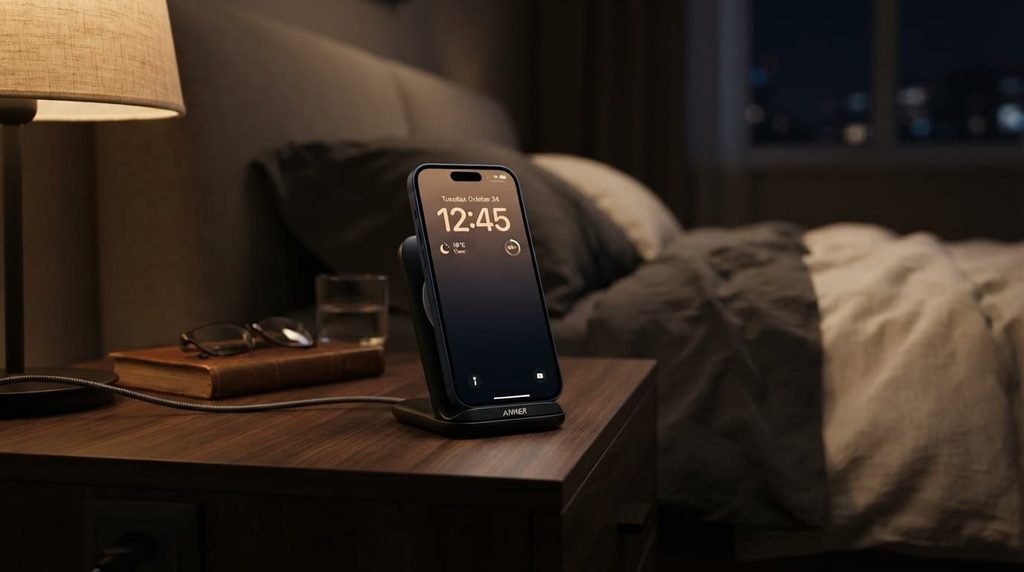
Anyone genuinely using their phone as a bedside display overnight also genuinely benefits from a stand’s upright angle in a related way, since this positioning keeps the time and any overnight notifications genuinely visible without needing to physically pick up the phone during the night to check.

When neither is right
Choosing based purely on which format is currently more popular in product photography, without genuinely considering your own actual charging habits and desk space, is worth ruling out regardless of which option you’d otherwise prefer.
A stand purchased purely for its visual appeal, in a household genuinely prioritising minimal desk clutter, sacrifices the compact footprint a pad would have comfortably provided, while a pad chosen despite a genuine daily habit of using the phone during charging misses the specific convenience a stand would have addressed.
How to decide in thirty seconds
If you genuinely prioritise a minimal desk footprint and portability, choose a pad. Its flat, compact design directly addresses this specific priority in a way a stand’s bulkier presence doesn’t match.
If you genuinely want to view your screen or take calls while charging, choose a stand. Its upright viewing angle directly addresses this specific need in a way a pad’s flat positioning doesn’t provide.
What changes the answer later
Your actual daily habit genuinely changing – finding yourself wanting to check notifications during charging considerably more than previously, for instance – is worth reconsidering the choice at, since this specific shift favours a stand’s viewing convenience more than your previous pattern required.
Your genuine desk space or portability needs changing – moving to a considerably more compact workspace, for instance – is also worth reconsidering the choice at, since this shift favours a pad’s minimal footprint over a stand’s bulkier presence.
What people get wrong when choosing between them
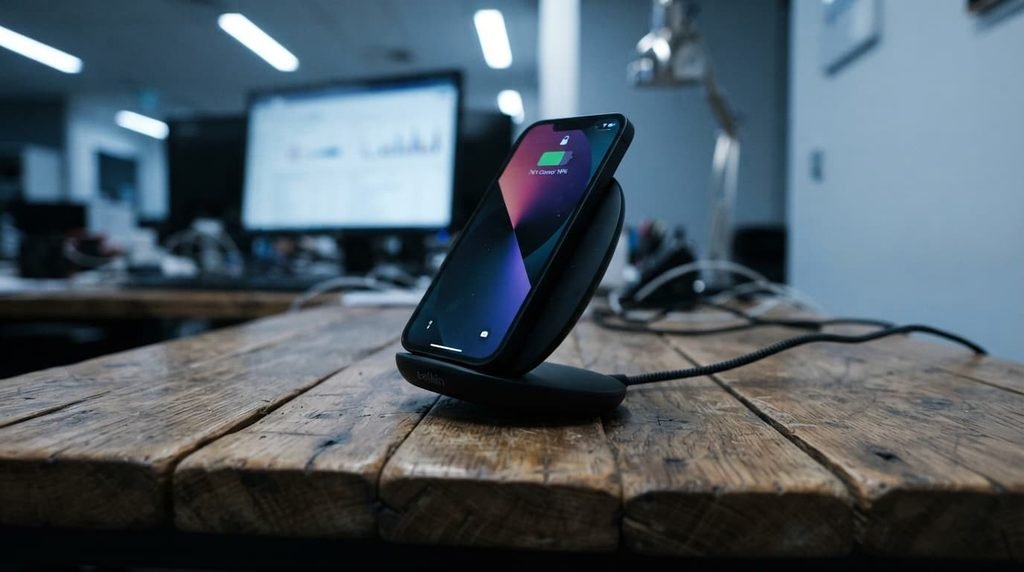
The single most common mistake is assuming a stand is automatically the more “premium” or objectively superior choice, treating this as a straightforward upgrade rather than a genuine trade-off between two different priorities. A flat pad genuinely isn’t an inferior compromise at all – it genuinely serves minimal-footprint and portability priorities considerably better than a stand structurally ever can, regardless of how visually striking a particular stand design might genuinely be.
A second genuinely common mistake is not confirming a stand’s genuine stability on your own specific desk surface before committing, resulting in a stand that wobbles or tips more easily than genuinely expected on an uneven or textured surface, undermining the very reliability benefit that made the stand appealing in the first place entirely.
What changes if you’re genuinely setting this up as a bedside charger
If you’re genuinely choosing a charger specifically for bedside use, prioritise a stand’s upright viewing angle even more heavily than the general guidance above genuinely suggests, since checking the time or notifications during the night benefits considerably more from a stand’s convenient angle than a flat pad’s less immediately visible positioning genuinely provides overall.
Questions readers keep asking
Do charging stands genuinely charge phones as reliably as flat pads?
Yes, quite generally – modern charging stands are genuinely designed to provide reliable charging fully comparable to flat pads, often with the alignment benefit covered above, making reliability a non-issue for most genuinely well-made stands quite specifically indeed.
Is it worth owning both a pad and a stand for different specific situations?
For some households genuinely, yes – keeping a stand for a desk where screen visibility genuinely matters, alongside a pad for travel or a more minimal secondary location, can serve varied needs considerably better than committing entirely to one single format used absolutely everywhere.
Does a charging stand genuinely take up meaningfully more total desk space than a pad?
Somewhat, yes genuinely – a stand’s vertical design means it typically occupies more overall space than a pad’s flat footprint does, though this difference is often modest enough that it only meaningfully matters in genuinely space-constrained desk situations quite specifically.