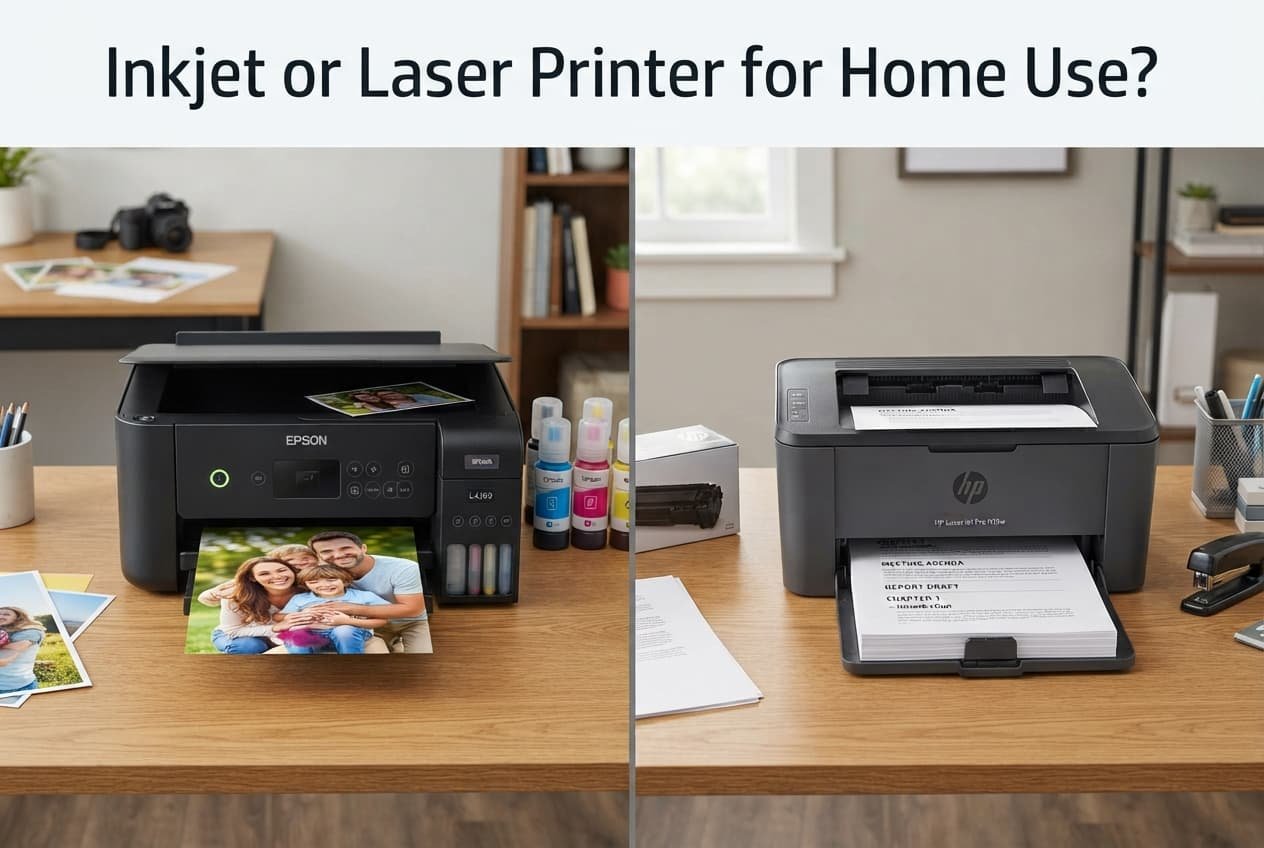
The right choice isn’t decided by which one sounds more advanced or professional – it’s decided by what you actually print most often and how frequently you genuinely use your printer, since these two factors determine which technology’s specific strengths actually align with your real household needs. An inkjet and a laser printer solve genuinely different priorities, and defaulting to whichever seems more impressive misses what actually determines which one serves your particular situation better.
The one property that decides it
The deciding factor is the genuine balance between your typical print content – photos versus text documents – and how consistently you actually use the printer, not simply which technology sounds more current. Inkjet printers genuinely and consistently excel at photo-quality colour printing, while laser printers prioritise fast, genuinely reliable text printing and considerably better tolerance for infrequent use without the ink-drying issues inkjets can develop.
This genuinely matters because your actual typical printing content and genuine use frequency together determine which technology’s core strengths align with your own real situation, rather than either technology being universally superior regardless of your specific household pattern and actual needs.
Head to head
| Inkjet | Laser | |
|---|---|---|
| Photo print quality | Generally superior | Generally more limited |
| Text print speed | Slower | Generally faster |
| Handles rare use well | Lower | Considerably higher |
| Typical upfront cost | Often lower | Often higher |
| Cost per page for text | Often higher | Often lower |
| Physical footprint | Often smaller | Often larger |
The single row that surprises most people most is tolerance for infrequent use specifically. Many assume the choice is purely about print quality, but for households that print only occasionally, an inkjet’s tendency to develop dried-ink issues between uses can become a more practically significant factor than either technology’s actual print quality difference.
Where inkjet wins
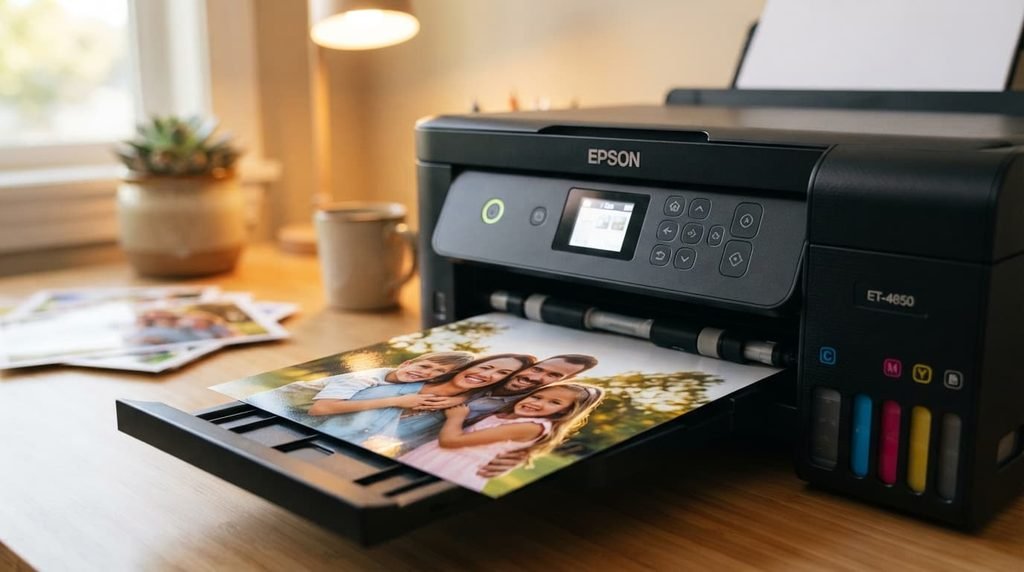
Anyone who genuinely prints photos regularly – family pictures, creative projects – benefits from an inkjet’s typically superior photo reproduction quality, since this directly addresses a specific content type laser printers structurally handle less convincingly regardless of how advanced the laser model is. The unglamorous reason: inkjet printers also tend to have a smaller physical footprint, which matters more than it might initially seem for a household with genuinely limited desk or storage space available.
Anyone who genuinely values lower upfront cost specifically also benefits from this same advantage in a related way, since inkjet printers are frequently priced considerably lower at purchase than comparable laser models, making the initial investment more accessible even before considering ongoing per-page costs.
Anyone genuinely printing a mix of photos and casual documents, rather than exclusively one content type, also benefits from inkjet’s broader versatility across both categories, since a single inkjet printer handles this mixed use pattern more comfortably than a laser printer’s more text-optimised technology typically manages for genuinely varied everyday household printing needs.
Where laser wins
Anyone who genuinely prints primarily text documents, and does so frequently enough to avoid inkjet’s disuse-related issues, benefits from laser’s faster, more consistently reliable text output, since this directly addresses the practical demands of regular document printing in a way inkjet’s photo-optimised technology doesn’t match as efficiently for this specific use case. The unglamorous reason: laser printers also tend to have a considerably lower cost per printed page for text specifically, which matters more than it might initially seem for a household printing a genuinely high volume of text documents regularly.
Anyone genuinely valuing consistent, predictable output quality across a large volume of pages also benefits from laser’s more stable technology in a related way, since laser printing doesn’t depend on liquid ink behaving consistently the way inkjet does, producing more uniform results across a large, genuinely demanding print run.
Anyone sharing a printer across multiple household members or a small home office setup also benefits from laser’s typically faster output speed in a related way, since faster printing reduces genuine waiting time when several people rely on the same shared device throughout a typical busy day.

When neither is right
Assuming every household’s printing needs are similar enough to default to whichever technology is currently more popular, without genuinely considering your own actual print content and frequency, is worth ruling out regardless of which option you’d otherwise lean toward.
A household’s own actual balance between photo and text printing, combined with genuine use frequency, genuinely determines which technology’s core strengths actually apply here, meaning a generic recommendation misses this real variation in what different households genuinely need from their printer.
How to decide in thirty seconds
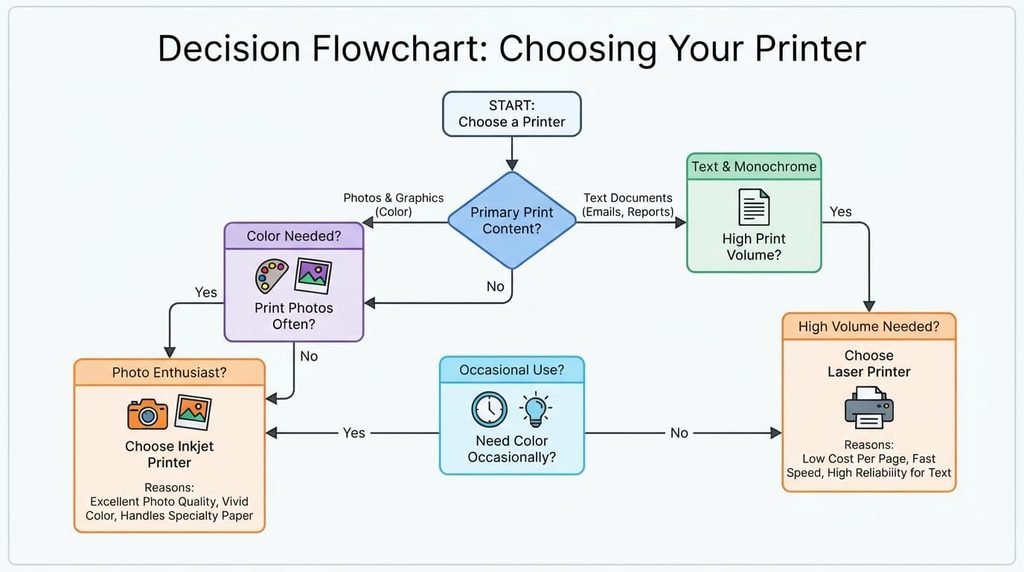
If you genuinely print photos regularly and don’t mind more frequent maintenance, choose inkjet. Its superior photo reproduction directly addresses this specific need in a way laser technology structurally can’t match as convincingly.
If you genuinely print mostly text, frequently enough to avoid disuse issues, choose laser. Its faster, more reliable text output and lower per-page cost directly address this specific need better than inkjet’s photo-optimised technology does.
What changes the answer later
Your household’s actual printing content genuinely shifting – taking up photography as a hobby, for instance – is worth reconsidering the choice at, since a change in what you actually print regularly may shift which technology’s core strengths genuinely align with your needs.
Your printing frequency genuinely changing – working from home considerably more, for instance – is also worth reconsidering the choice at, since increased frequency specifically reduces inkjet’s disuse-related disadvantage, potentially making it a more viable choice than it was under your previous, more occasional use pattern.
What people get wrong when choosing between them
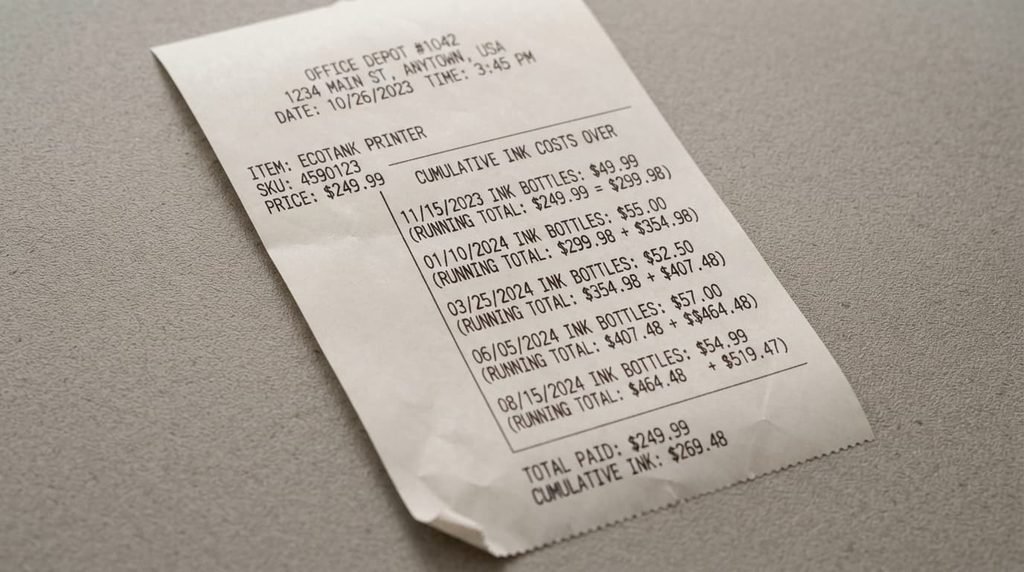
The most common mistake is comparing only upfront printer prices without genuinely accounting for ongoing per-page costs over the printer’s actual expected lifespan. A household printing heavily might find a higher-priced laser printer genuinely cheaper overall once cumulative per-page costs are properly factored in, despite the less favourable initial price comparison alone.
A second common mistake is assuming print quality is the only meaningful differentiator between these technologies, when genuine use frequency and reliability under infrequent use often matter more practically for many households than the print quality difference alone would suggest.
Questions readers keep asking
Can a laser printer genuinely produce acceptable photo quality, or is this always a significant limitation?
Laser technology has genuinely improved considerably for colour and photo output, though it typically still doesn’t quite match a dedicated photo-focused inkjet’s quality for genuinely detailed image reproduction specifically, making this worth confirming directly if photo quality specifically matters considerably to your particular use.
Is it worth owning both an inkjet and a laser printer for different specific purposes?
For households with genuinely distinct, regular needs for both high-quality photo printing and frequent text document printing, owning both can genuinely serve each specific purpose considerably better than compromising with a single printer not equally well-suited to both these different content types.
Does laser printing genuinely cost less overall despite a higher upfront price?
For households printing a genuinely high volume of text documents specifically, yes, often quite genuinely – the lower per-page cost can meaningfully offset the higher upfront price over time, though this exact calculation depends considerably on your own actual printing volume rather than being universally true regardless of your specific use pattern.