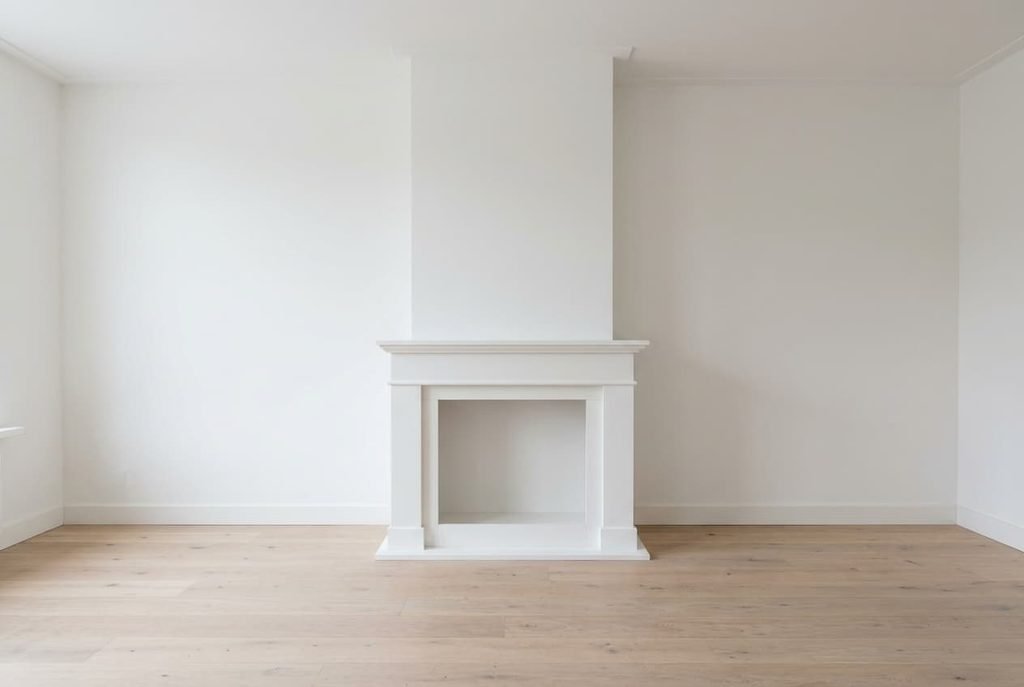
The surround is solid, the wall is freshly painted and nothing is broken, yet visitors walk past the fireplace as if it were a cupboard. Nothing makes a fireplace look like an afterthought faster than a large blank wall above it. The eye compares the surround with the plaster around it and finds a small pale shape under a big empty field. We’ll use a living room in Utrecht measuring 380 by 460 cm, where a decorative surround no longer holds a fire. No product names or costs are given, and each size stands in for yours.
What Makes a Fireplace Look Like an Afterthought
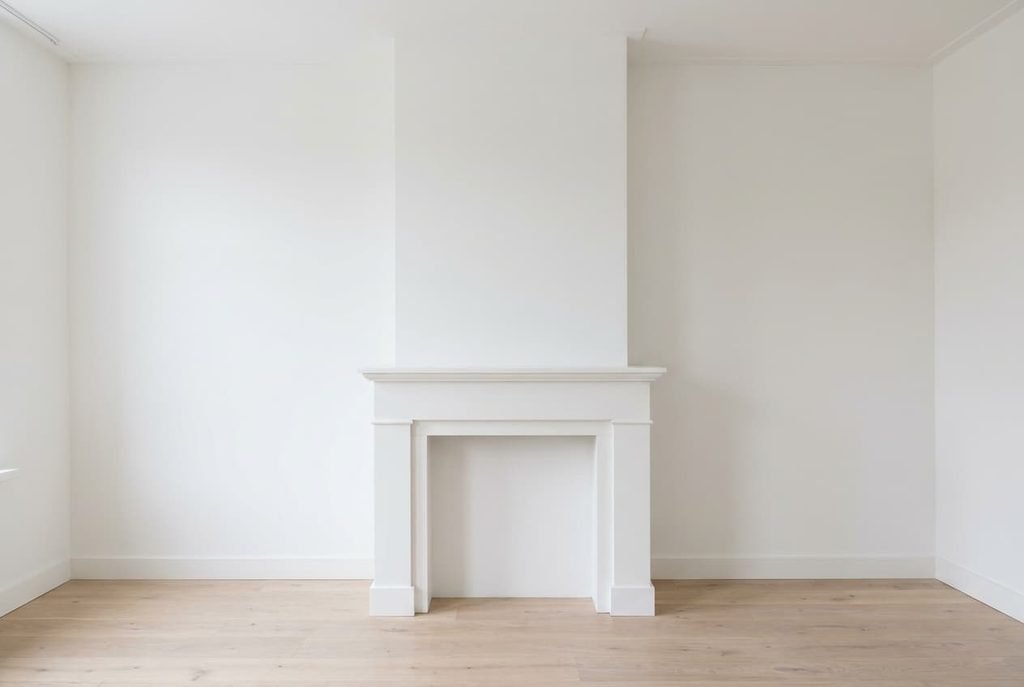
The eye judges a feature by how much of its wall it fills. Our wall runs 360 cm along and 250 cm up, which makes 9.0 m². The surround measures 120 by 100 cm, so it covers 1.2 m², about 13%. Its width fills 120 ÷ 360 = 33% of the wall and its height fills 100 ÷ 250 = 40%.
As a working rule, a group reads as an anchor once its top reaches between 60% and 75% of the wall height, which here means 150 to 188 cm. A target of 160 cm leaves a gap of 160 − 100 = 60 cm. The usual diagnosis blames the size of the surround itself, yet the missing 60 cm sit above it, on bare plaster.
Two more things decide whether anyone looks at the fireplace at all. One is how far its tone differs from the plaster behind it. The other is whether the seating points its way. A white surround on a white wall loses the first, and a sofa aimed at a screen on the next wall loses the second.
A Checklist for a Fireplace That Looks Like It Was Planned
Settle into your regular spot, lamps lit, roughly 3 m from the wall. Each check is quick, and your only kit is a measuring tape and your phone.
1. Compare the tallest item’s height with the wall height by dividing one by the other. Under 55% means the group sits low, and that’s the commonest reason you see a fireplace look like an afterthought.
2. Compare the surround’s width with the wall’s. Under 25% means it’s narrow for its wall. Ours passes at 33%.
3. Take a photo and switch it to greyscale. If the outline of the surround vanishes, tone is the fault, because the camera has stripped out colour and left only light and dark.
4. Glance at the room for three seconds and notice what draws you. A screen or a window ahead of the fireplace means it’s a side feature.
5. Look along the shelf. Items of one height in a straight row read as storage and not as a display.
Our room fails three checks. The height share is 40%. The greyscale photo shows no edge, and the television wins the glance.
Three Faults, in the Order to Fix Them
These three faults make a fireplace look like an afterthought, and each calls for a different cure.
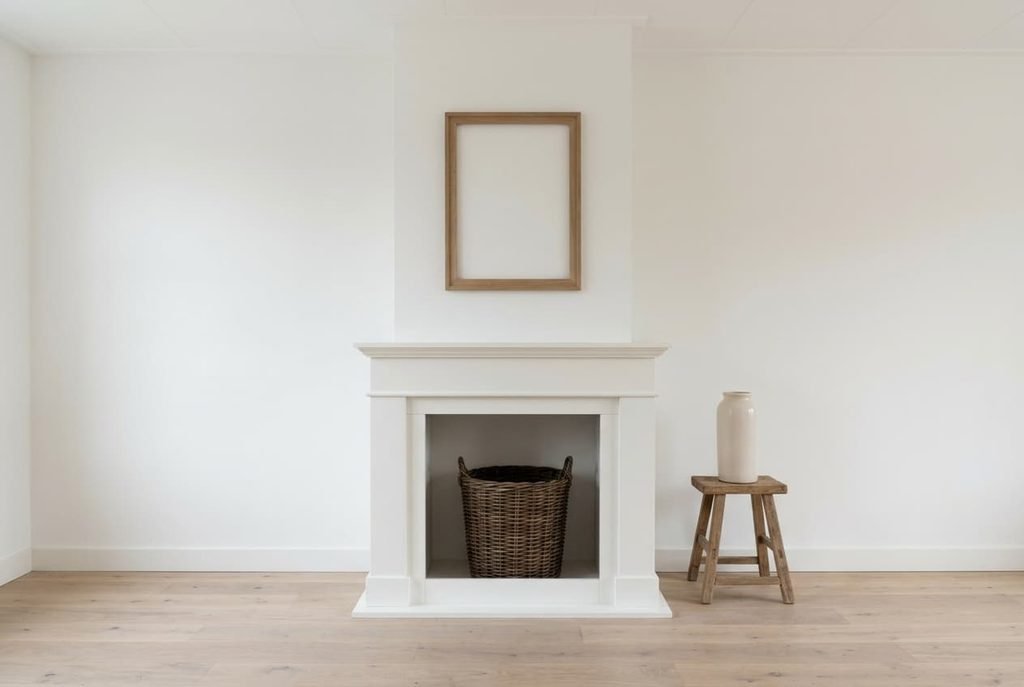
“The fireplace sits low under a big blank wall.” The group tops out at 100 cm, which is 40% of 250 cm, so 150 cm of plaster hangs above it. First, use what you own. A 70 by 50 cm frame hung 10 cm over the shelf reaches 160 cm, which is 64%. The frame must stay centred on the opening, or the group leans. Second, stand the tall vase on a 20 cm stool beside it, so a second vertical joins the first. Nothing is spent on this one. Third, if the frame still looks lost, a mirror 70 cm tall on the same base reaches 180 cm, or 72%. That’s the single purchase in this fault, and it costs a mirror and two fixings.
“The surround melts into the wall.” White meets white, and flat light removes the shadow line under the shelf. First, shift a lamp sideways by 40 cm so its light grazes the surface and draws out the profile of the shelf edge. The effect only shows after dark. Second, fill the opening, which measures 70 by 60 cm, with a dark basket. That turns 4,200 cm² of paleness into a clear frame. Third, paint a panel behind the surround in a deeper tone. Make it 140 cm wide and 160 cm high, which covers 2.24 m² and takes a Saturday plus paint and a roller.
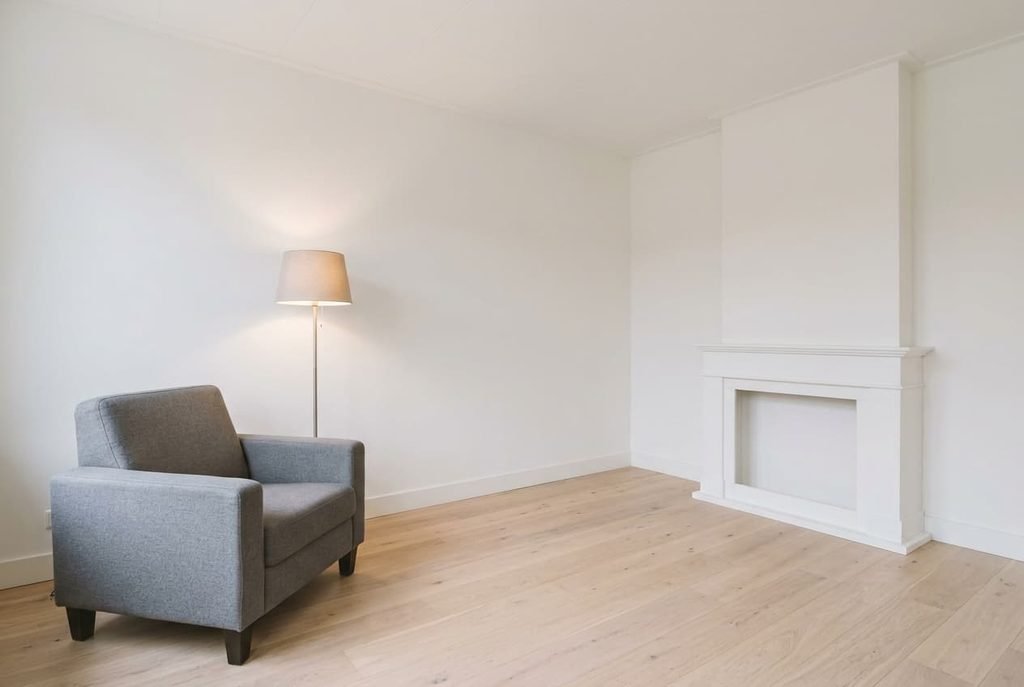
“Nobody ever looks at it.” The sofa faces the television, 90° away from the fireplace, and the shelf carries five items of 25 cm standing in a row. First, rebuild the shelf as a group of three whose heights step from 40 cm down to 15 cm, so the eye climbs. Second, turn the armchair 45° towards the hearth, which gives one seat a view of it. Keep 80 cm of floor clear behind the chair. Third, add a low basket on the hearth, 40 cm wide, as a visible reason to look down. A basket is all it costs, and it holds the glance at floor level for a moment before the eye travels up the wall. Work through the three in that order, and take a fresh photo of the wall after each.
Checks Before You Buy Anything for the Mantel
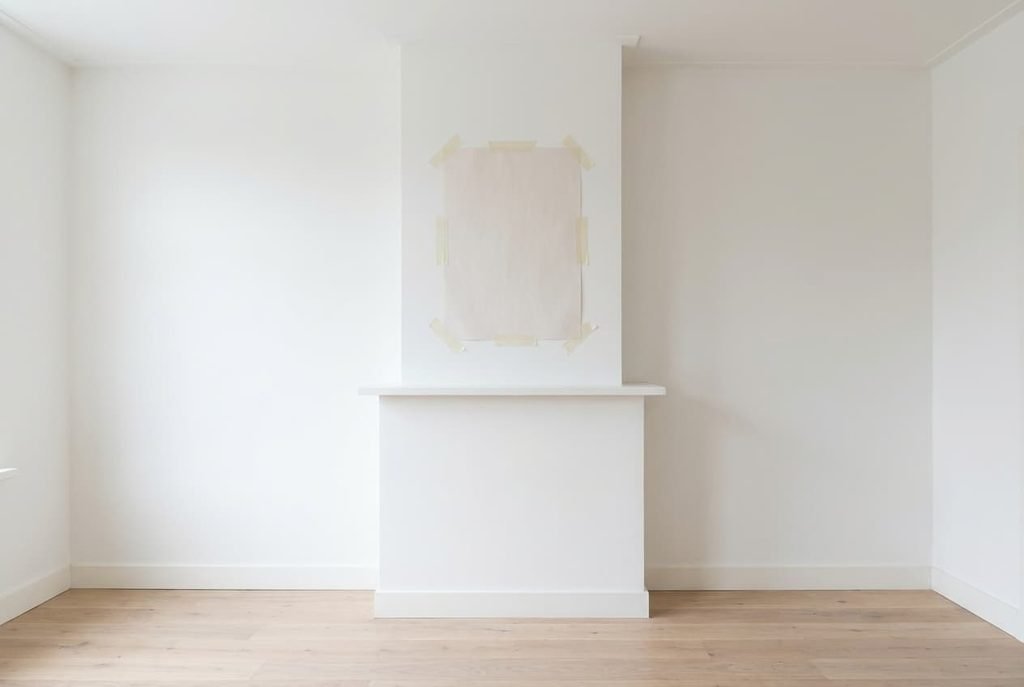
Build a stand-in at full size before you spend. Tape a paper square 70 cm on each side to the wall with its lower edge at 110 cm, and leave it up overnight. Walk into the room as a guest would, and see whether your glance goes there.
Take the greyscale photo while you’re there. A fireplace that looks like an afterthought in colour often shows no edge in grey, and that tells you tone needs work before size does. Write down the wall height, the top of the group and the gap to 160 cm. Those three numbers steer every later purchase, and a shop listing then only has to match them. If the stand-in looks right from the door and again from the sofa, you’ve found your size.
The Fix That Isn’t Worth Doing
Swapping the surround for a bigger one feels like the direct answer. A surround of 160 by 110 cm fills 44% of the width and 44% of the height. That’s still under the 55% mark, so 140 cm of blank wall remains above it. A fitter and a delivery are involved, and the floor needs patching, which makes this the dearest option by far. Bigger also means heavier and deeper. A surround that projects 30 cm instead of 20 takes another 10 cm of floor from the route to the window, and every fixing goes through the plaster.
A wider mantel shelf misses in a similar way. It adds width and leaves the height share exactly where it was.
A bigger piece can’t fill what hangs above it.
Nothing else makes a fireplace look like an afterthought as reliably as a group that stops at 100 cm on a wall of 250 cm. That single gap is cheaper to close than any new surround is to install. Put the frame up and shift the lamp. Then look at the greyscale photo and check where the seating points, since a fireplace behind your back will never feel central. Write down your own wall height and target top before you browse any listing, because the next purchase should start from those numbers and never from someone else’s room photo. Retest at dusk once the frame is up.
Questions Readers Keep Asking
What is the most common cause of this look?
Height. The group stops low and leaves bare wall above it, so the eye reads a small object under a big void. Our group reaches 40% of the wall and needs about 64%. Measure the tallest item against the wall before you blame the surround or the colour.
Is there a quick fix I can try tonight?
Yes. Hang a frame you already own so its top reaches about 160 cm, then shift one lamp sideways by 40 cm. Both take minutes and need no purchase. Look again in the early evening with the lamps lit, since daylight flattens the shadow line.
Can I fix it without renovating?
Almost always. Hanging and turning handle the height and focus faults, and only the tone fault may call for paint. Nothing here touches the fireplace itself, so the surround stays where it is. Try the free steps first and keep the paint for last.