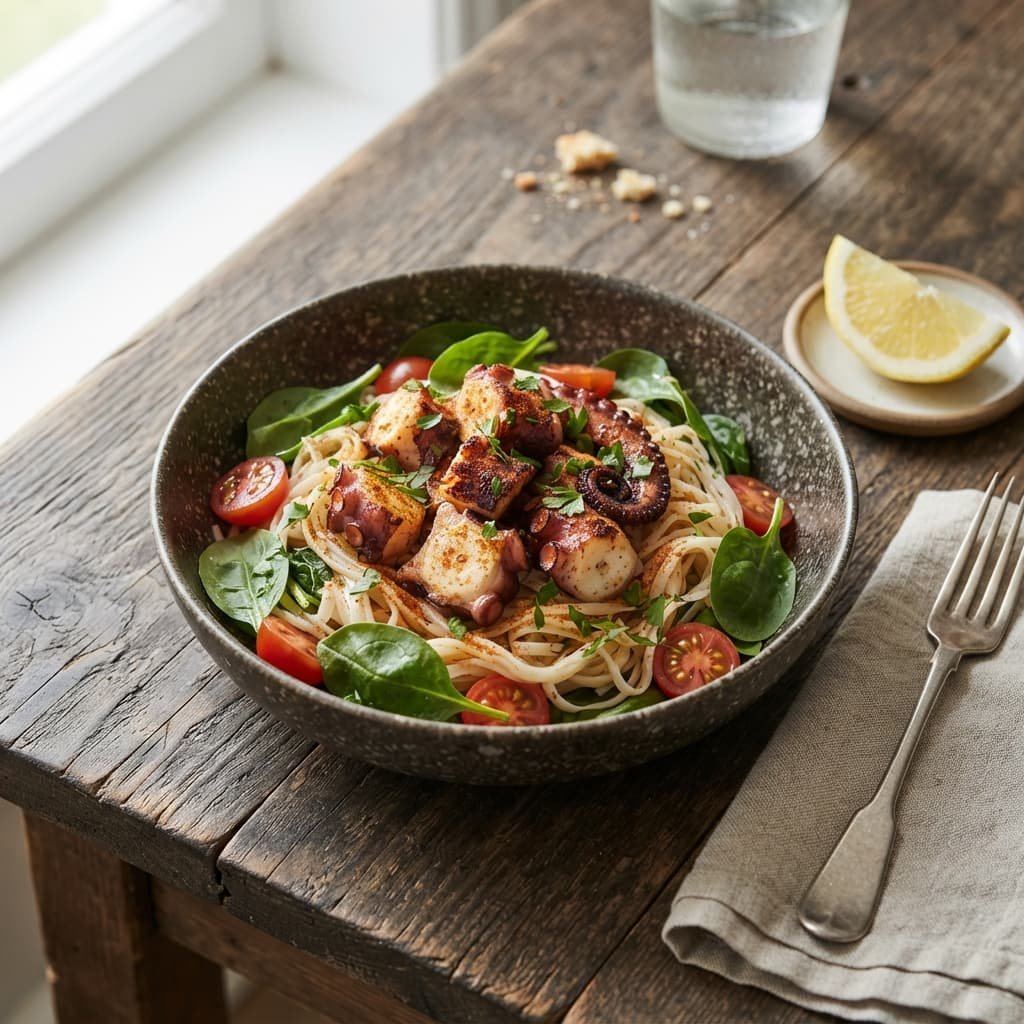
The first time I cooked octopus, I rushed it, and it came out about as tender as a rubber band. I’ll save you the same mistake: this Ras el Hanout Octopus Noodle Bowl only works if you accept up front that the octopus needs a full hour of low, slow simmering before it ever sees a hot pan. There’s no shortcut here, and every recipe that promises one is quietly setting you up for the same chewy disappointment I had.
Ras el hanout is a real North African spice blend, traditionally rubbed onto meat and fish before cooking, and octopus takes to it just as well as any other seafood. Noodle bowls built around tender, quick-seared octopus are common too, especially in coastal Mediterranean and Southeast Asian kitchens where octopus gets simmered until tender, then finished fast in a hot pan. This bowl combines those two real, separate traditions rather than inventing something from scratch, and the result tastes like it belongs together rather than like two ideas forced onto one plate.
Why This Ras el Hanout Octopus Noodle Bowl Is Worth the Wait
This dish takes about 90 minutes total, but only 15 of those minutes are actually hands-on. The octopus needs roughly an hour of gentle simmering to break down its tough connective tissue, and rushing that step is the single most common reason homemade octopus turns out chewy instead of tender.
I used to think the “low and slow” advice for octopus was just internet folklore, the kind of tip that gets repeated without anyone checking if it actually matters. It matters. I tested a batch at 30 minutes once out of impatience, and it was noticeably tougher than the same octopus given the full hour. The difference isn’t subtle, and once you’ve felt it side by side, you stop looking for a way around the wait, no matter how many shortcuts other recipes claim to offer.
Ingredients
This serves 3 to 4.
For the Octopus
- 2 lbs (about 900g) octopus, cleaned
- 1 bay leaf
- Water, enough to cover
- 2 tablespoons ras el hanout
- 2 tablespoons olive oil
- Salt, to taste
For the Noodle Bowl
- 8 oz (about 225g) rice noodles or udon
- 2 cups baby spinach or arugula
- 1 cup cherry tomatoes, halved
- 1/4 cup fresh parsley, chopped
- Juice of 1 lemon
- 3 tablespoons olive oil
- Salt and black pepper, to taste
How to Make an Octopus Noodle Bowl with Ras el Hanout
- Place the octopus and bay leaf in a large pot and cover with water. Bring to a gentle simmer, not a rolling boil, and cook for about 1 hour, until a knife slides into the thickest part of a tentacle with just a little resistance.
- Drain the octopus and let it cool slightly. Cut into bite-sized pieces.
- Toss the octopus pieces with the ras el hanout, 2 tablespoons olive oil, and salt.
- While the octopus cools, cook the noodles according to package directions. Drain and toss with a small drizzle of oil so they don’t stick.
- Heat a skillet over medium-high heat. Sear the seasoned octopus for 2 to 3 minutes, turning occasionally, until lightly charred at the edges.
- In a large bowl, toss the noodles with the spinach, cherry tomatoes, parsley, lemon juice, remaining olive oil, salt, and pepper.
- Divide the noodle mixture among bowls and top with the seared octopus. Serve warm.
Good vs. Great: What Actually Makes the Difference
A decent bowl of this still tastes good. A great one comes down to a few specific calls, not a longer ingredient list.
- Keep the simmer gentle, never a hard boil. A rolling boil toughens the octopus faster than it tenderizes it. Aim for small, lazy bubbles, not a violent churn.
- Test with a knife, not a clock. Octopus size varies enough that an hour is a guideline, not a guarantee. If it still resists the knife, give it more time rather than pulling it on schedule.
- Sear it hot and fast, not low and slow the second time. Once the octopus is tender, a quick hard sear adds char and texture without undoing all that gentle simmering.
- Season the noodles, not just the octopus. A bowl where only the octopus is seasoned tastes lopsided; the lemon, salt, and oil need to actually coat the noodles too.
Common Mistakes and How to Fix Them
Octopus came out chewy: almost always means it didn’t simmer long enough, or the water was boiling too hard. Give it more time next round, and keep the heat low enough that the surface barely moves rather than actively rolling, since a hard boil agitates the flesh in a way that works against tenderizing it.
Octopus fell apart into shreds: this usually means it was oversimmered well past tender, into mushy territory. Start checking with a knife around the 50-minute mark instead of waiting the full hour blind, since octopus size and thickness vary enough that the exact timing shifts from one batch to the next.
Ras el hanout tastes muted instead of vibrant: it likely sat on the octopus too briefly before searing, or the spice blend itself is old. Give it a few minutes to cling to the octopus before it hits the pan, and replace ras el hanout that’s been open longer than six months or so, since ground spice blends lose potency faster than most people expect once the jar has been opened.
Variations and Substitutions
Squid works in place of octopus for a much faster version, since squid only needs a minute or two of high heat rather than a long simmer, though the texture and flavor will read differently and the dish loses some of the chewy-tender contrast that makes octopus specifically worth the wait. Couscous can replace the noodles for a more traditionally North African-leaning bowl, using the same vegetables and dressing.
For a heartier version, a can of drained chickpeas stirred into the noodle mixture adds substance without much extra effort. If ras el hanout isn’t available, a mix of cumin, cinnamon, ginger, and a pinch of cayenne approximates some of its warmth, though the flavor won’t be quite as layered. Feta or crumbled goat cheese scattered on top adds a tangy contrast if a little extra richness sounds good.
Serving and Pairing
This bowl is filling enough on its own, but warm flatbread on the side is nice for scooping up any extra dressing pooled at the bottom. A simple cucumber and yogurt side dish works well if you want something cool alongside the warm spice. Extra lemon wedges at the table let everyone brighten their own bowl to taste.
Storage and Reheating
Store the octopus and noodles separately in airtight containers in the refrigerator for up to 2 days after cooking. Reheat the octopus gently in a skillet over low heat just until warmed through, rather than the microwave, which can toughen it right back up quickly. This dish is not well suited to freezing, since both the octopus and noodles lose their texture noticeably once thawed and reheated.
Nutritional Information
Values below are estimates per serving and will vary depending on exact brands and quantities used.
| Calories | 390 kcal |
| Protein | 29 g |
| Carbohydrates | 42 g |
| Fat | 12 g |
| Fiber | 3 g |
Final Thoughts
This recipe was tested and refined in the bebup.org kitchen, including a batch cooked deliberately shorter than recommended just to confirm the timing actually matters before publishing.
Ras el Hanout Octopus Noodle Bowl isn’t a difficult recipe, just a patient one. Once you accept the hour it actually takes to tenderize octopus properly, the rest of this comes together in the time it takes to boil noodles and chop a few vegetables, and the payoff is worth every minute of the wait I learned the hard way.
Ras el Hanout Octopus Noodle Bowl
Ingredients
Method
- Place the octopus and bay leaf in a large pot and cover with water. Bring to a gentle simmer and cook about 1 hour, until a knife slides into a tentacle with just a little resistance.
- Drain the octopus and let it cool slightly. Cut into bite-sized pieces.
- Toss the octopus with the ras el hanout, 2 tablespoons olive oil, and salt.
- Cook the noodles according to package directions. Drain and toss with a little oil.
- Heat a skillet over medium-high heat. Sear the seasoned octopus 2 to 3 minutes, until lightly charred at the edges.
- Toss the noodles with the spinach, cherry tomatoes, parsley, lemon juice, remaining olive oil, salt, and pepper.
- Divide the noodle mixture among bowls and top with the seared octopus. Serve warm.