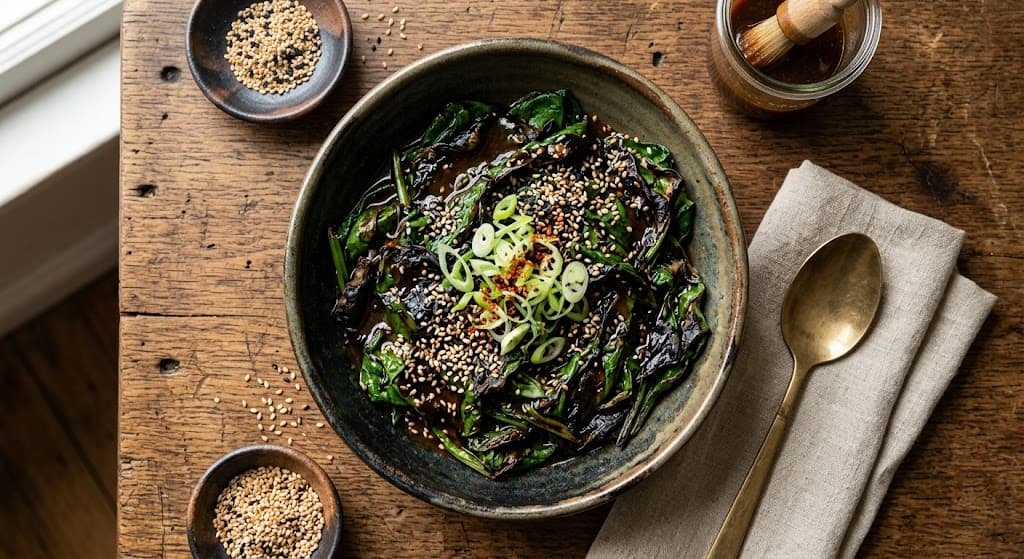
Blackened spinach with miso glazed dressing comes down to one balancing act: enough high heat to actually char the leaves at their edges without turning the whole batch into a watery, wilted mess, and enough miso glaze to coat every leaf without drowning that char in sweetness. There’s no complicated technique here, just a hot pan, a fast hand, and a dressing built to complement rather than compete with the smoky, slightly bitter edge that real charring gives leafy greens.
Getting the Balance Right in This Blackened Miso Spinach
Spinach is mostly water, which is exactly why it’s so easy to accidentally steam it instead of char it. A crowded pan traps moisture and humidity around the leaves, and once that happens, no amount of heat turns them crisp or blackened; they just go limp and gray. The fix is working in batches small enough that every leaf has direct contact with the hot pan surface, rather than piling the whole bag in at once and hoping for the best.
The other ratio worth thinking through is how much miso glaze the spinach actually needs. Too little and the char is all you taste, sharp and slightly bitter with nothing to round it out; too much and the glaze’s sweetness buries the smokiness that makes blackened greens worth making in the first place. About 2 tablespoons of glaze per bunch of spinach is enough to coat lightly without overwhelming it, tossed in right at the end so the heat doesn’t scorch the miso’s sugars into something bitter.
Timing between batches matters more than it might seem for a dish this quick. The first batch of spinach, once transferred to the serving bowl, keeps cooking slightly from residual heat while the second batch chars in the pan. If there’s a long gap between batches, the first one cools and loses some of that just-off-the-heat texture that makes freshly charred greens so good. Working efficiently, with the glaze already whisked and ready before the pan even gets hot, keeps the whole process moving fast enough that both batches land in the bowl close together.
What You’ll Need for This Miso Glazed Blackened Spinach
For the Spinach
- 2 tablespoons vegetable oil, divided
- 12 ounces fresh spinach, thick stems trimmed
- 1/4 teaspoon kosher salt
For the Miso Glaze
- 2 tablespoons white miso paste
- 1 tablespoon rice vinegar
- 1 tablespoon honey
- 1 teaspoon sesame oil
- 1 tablespoon water, plus more to thin
- 1 teaspoon toasted sesame seeds, for garnish
How to Make Blackened Spinach with Miso Glazed Dressing
- In a small bowl, whisk together the miso paste, rice vinegar, honey, sesame oil, and water until smooth. Set aside.
- Heat 1 tablespoon of the vegetable oil in a wide skillet or wok over high heat until it’s shimmering and just beginning to smoke.
- Add half the spinach in a single loose layer. Let it sit undisturbed for about 30 seconds before tossing, so the leaves touching the pan actually char.
- Continue tossing for another 60 to 90 seconds, until the spinach is wilted with visibly blackened edges in places.
- Transfer the first batch to a serving bowl and season with a pinch of salt.
- Repeat with the remaining oil and spinach.
- Drizzle the miso glaze over the warm spinach and toss gently to coat.
- Sprinkle with toasted sesame seeds and serve immediately.
What Turns This Into a Genuinely Good Side Dish
Letting the pan get properly hot before any spinach goes in matters more than almost anything else here; a pan that’s only warm steams the leaves instead of searing them, and there’s no fixing that once it’s already happened. Working in batches, even though it feels slower, actually gets the whole dish done faster in the end, since a crowded pan takes longer to char anything than two quick, hot passes. And toss the glaze in off the heat, never while the pan is still hot, since miso’s natural sugars scorch and turn bitter almost instantly if they hit a hot surface directly. One more detail worth getting right: trim the thick stems off the spinach before it goes anywhere near the pan, since stems take noticeably longer to char than the leaves do, and leaving them in means either undercooked stems or leaves that have gone past charred into actually burnt by the time the stems catch up.
Common Mistakes With This Recipe
The spinach turns soggy instead of charred. The pan was crowded, or it wasn’t hot enough to begin with. Work in smaller batches and wait for real smoke before adding any spinach.
The glaze tastes bitter instead of sweet-savory. It likely hit the hot pan directly rather than being tossed with the spinach off heat. Always add the glaze after the spinach has already been transferred to a bowl.
The dish tastes overwhelmingly salty. Miso brands vary a lot in salt content, and the added kosher salt on top of that can push things too far. Taste the glaze on its own before drizzling, and skip the extra salt on the spinach if your miso runs salty.
The spinach cooks unevenly, with some leaves charred and others still raw. This usually comes from uneven leaf sizes or not tossing enough during the active cooking time. Give the pan a few good tosses throughout, and trim any unusually large leaves down to a similar size as the rest before they go in.
Variations and Substitutions
Baby kale or Swiss chard both work in place of spinach using the same charring method, though chard needs slightly longer since its leaves are thicker. Red miso can replace white miso for a deeper, saltier glaze, though you may want to cut back the honey slightly to balance the stronger fermented flavor. For added crunch, a scattering of crushed peanuts or cashews on top complements the char nicely. If honey isn’t available, maple syrup works as a straightforward substitute in the glaze. For a spicier version, whisk a small pinch of red pepper flakes or a drop of chili oil into the miso glaze before tossing it with the spinach.
Serving This Blackened Spinach and Miso Glaze
This works well as a side dish alongside grilled or roasted protein, especially something with its own smoky char that echoes the spinach. It also holds up as a light meal on its own over a bed of warm rice, with a soft-boiled egg on top for extra protein. For a small dinner party, plating individual portions on warm plates right after tossing keeps the char and the glaze at their best, since the dish loses some of its character the longer it sits.
Storing and Reheating
This dish is genuinely best eaten fresh, since the spinach continues to wilt and release moisture even after it’s off the heat. If you do have leftovers, store them in an airtight container in the refrigerator for up to a day, and expect a softer texture with less of the original char once reheated, closer to a warm spinach side than the crisp-edged version served right out of the pan.
Nutrition at a Glance
These are estimated values per serving and will vary depending on the exact miso and honey brands used.
| Calories | 110 kcal |
| Protein | 4 g |
| Carbohydrates | 13 g |
| Fat | 6 g |
| Fiber | 3 g |
This recipe was tested and refined by bebup.org across several batches to confirm the batch size and pan heat that gets genuine char without steaming the spinach.
The Bottom Line
Blackened spinach with miso glazed dressing doesn’t ask for much beyond a properly hot pan and a light hand with the glaze, and that simplicity is exactly why it works as a fast side dish on a night when there isn’t time for anything more complicated, or patience for anything fussier.