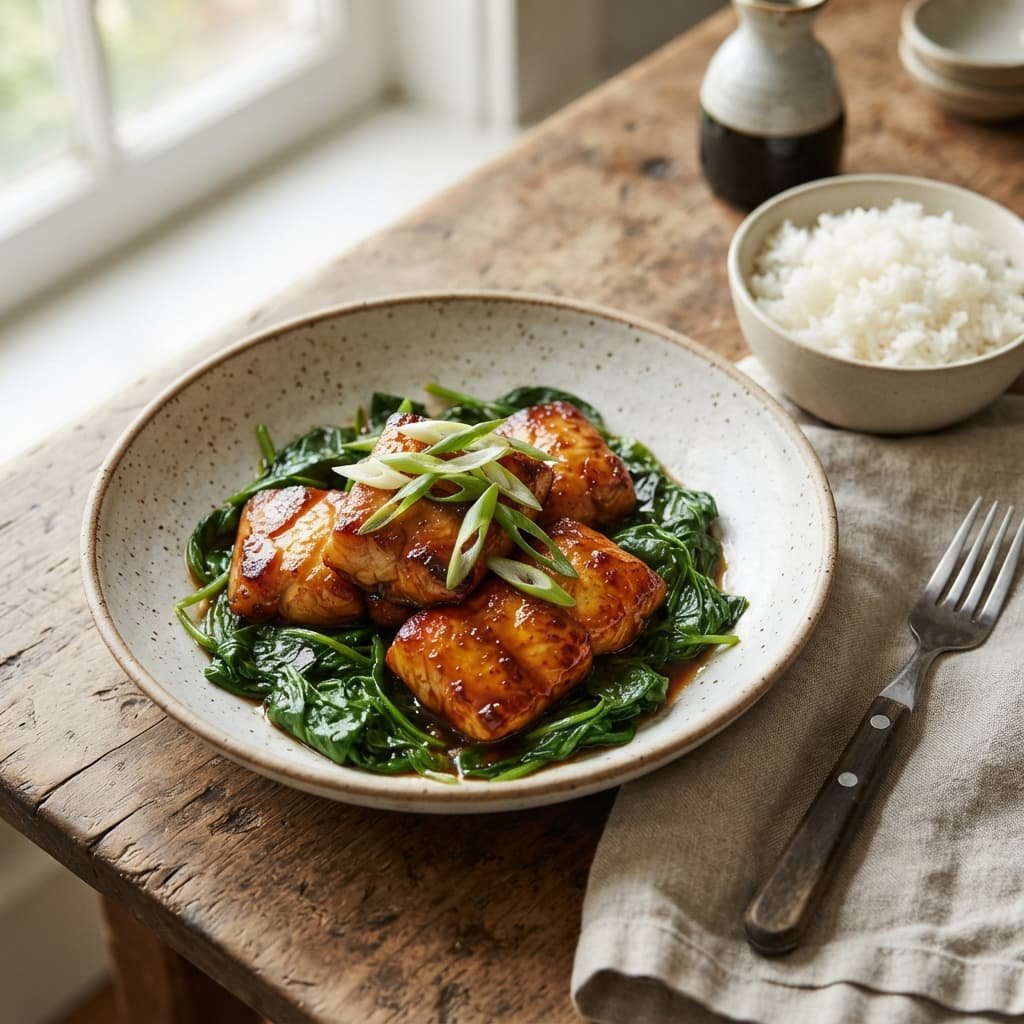
Sugar melted alone in a hot pan passes through a narrow window of real caramelization, turning from clear syrup to pale gold to a deep amber in the space of a minute or two, and from amber to bitter and burnt in a matter of seconds after that. Weeknight Caramelized Mahi Mahi with Spinach lives or dies in that window: the sugar has to hit deep amber, not blond and not scorched, before the fish goes in to pick up that color and flavor.
This technique isn’t invented for the occasion. Caramelizing sugar first, then coating a firm white fish fillet in it, is the backbone of Vietnamese cá kho, traditionally made with catfish, snapper, or halibut and simmered slowly in a clay pot. This weeknight version keeps the same real caramelization step but skips the long braise, searing mahi mahi in the caramel instead for a faster skillet dinner, served alongside a quick sauté of spinach.
| Prep Time | 10 minutes |
| Cook Time | 20 minutes |
| Total Time | 30 minutes |
| Servings | 4 |
| Difficulty | Moderate, one timing-sensitive step |
Key Techniques for Caramelized Mahi Mahi
The caramel itself needs only 3 to 4 minutes to reach deep amber, and the mahi mahi cooks in another 6 to 8 minutes once it’s coated. The spinach wilts in under 3 minutes in a separate pan, so the whole meal is genuinely done in about 30 minutes.
Sugar caramelizes through a real chemical process, breaking down into hundreds of new flavor compounds as it heats past about 170°C (340°F), which is exactly why the color matters so much: pale sugar hasn’t developed those deeper, slightly bitter-sweet notes yet, and sugar taken too far turns acrid and genuinely unpleasant. Watching color rather than trusting a fixed time is the only reliable way to catch that middle point, since stove strength and pan thickness both shift how fast the sugar actually moves through that range.
Ingredients
This serves 4.
For the Caramelized Mahi Mahi
- 1/4 cup (50g) granulated sugar
- 2 tablespoons (30ml) water
- 1.5 lbs (680g) mahi mahi fillets, cut into 2-inch (5cm) pieces
- 2 tablespoons (30ml) fish sauce
- 3 garlic cloves, minced
- 1 shallot, thinly sliced
- 1/2 cup (120ml) water, for the sauce
- Black pepper, to taste
For the Spinach
- 1 tablespoon (15ml) olive oil
- 2 garlic cloves, thinly sliced
- 8 oz (225g) baby spinach
- Salt, to taste
- 2 scallions, sliced, for serving
How to Make Weeknight Caramelized Mahi Mahi
- Pat the mahi mahi pieces dry and season lightly with black pepper. Set aside.
- In a heavy skillet, combine the sugar and 2 tablespoons water. Heat over medium heat without stirring, swirling the pan occasionally instead.
- Cook for 3 to 4 minutes, watching closely as the mixture goes from clear to pale gold to a deep amber, similar in color to strong tea. The moment it reaches that deep amber shade, remove from heat immediately.
- Carefully add the fish sauce to the caramel off the heat, standing back slightly as it will bubble vigorously. Stir to combine.
- Return the pan to medium heat. Add the garlic and shallot, cooking for 1 minute until fragrant.
- Add the mahi mahi pieces, turning gently to coat in the caramel sauce. Pour in the 1/2 cup water for the sauce.
- Simmer gently for 6 to 8 minutes, spooning the sauce over the fish occasionally, until the mahi mahi is opaque throughout and flakes easily with a fork.
- While the fish simmers, heat the olive oil in a separate skillet over medium heat. Add the garlic and cook for 30 seconds, then add the spinach in batches, tossing until just wilted, about 2 minutes. Season with salt.
- Serve the caramelized mahi mahi over the wilted spinach, spooning extra sauce on top and finishing with sliced scallions.
Good vs. Excellent: The Details That Matter
A good version of this dish is already flavorful. An excellent one comes down to a few specific calls.
- Don’t stir the sugar while it caramelizes. Stirring encourages crystallization; swirling the pan gently keeps the sugar melting evenly without seizing up.
- Pull the caramel at deep amber, not darker. A few extra seconds past that point turns the flavor bitter in a way that can’t be corrected once it happens.
- Add the fish sauce carefully and off the heat. The temperature difference causes real, vigorous bubbling, and doing this over direct heat risks splattering.
- Cook the spinach separately, not in the same pan as the fish. The caramel sauce is too concentrated and salty to double as a cooking liquid for the greens.
Troubleshooting Common Problems
Problem: The caramel turned bitter instead of rich and deep. Cause: the sugar cooked past deep amber into genuinely burnt territory, which happens fast once it starts turning dark. Solution: watch the color continuously rather than stepping away, and pull it the moment it matches the color of strong tea.
Problem: the sugar seized into hard, grainy clumps instead of melting smoothly. Cause: it was likely stirred with a spoon rather than swirled, which encourages crystals to form. Solution: swirl the pan by the handle instead of stirring, and if it does seize, a splash more water and continued gentle heat will usually dissolve it back down.
Problem: the mahi mahi turned dry and tough. Cause: it likely simmered too long, since mahi mahi is a leaner fish that overcooks faster than fattier options. Solution: check for doneness at the 6-minute mark, pulling the fish as soon as it flakes easily rather than leaving it the full 8 minutes by default.
Mastering the Technique
The skill that carries over from this dish to other caramel-based sauces is learning to judge sugar by color and smell rather than by a fixed clock. Caramel for savory dishes, caramel for desserts, and even caramelized onions all pass through the same visual stages, from clear to gold to amber to burnt, and the timing of that progression shifts with pan thickness, stove strength, and even altitude. Once the habit of watching color continuously, rather than checking back every so often, becomes automatic, it transfers directly to any other recipe built around a real caramelization step.
Variations and Substitutions
Halibut, snapper, or cod can replace mahi mahi using the same caramelizing method, since all are firm white fish suited to this technique. If fish sauce isn’t available, a mix of soy sauce and a small pinch of salt approximates some of its savory depth, though the flavor will be less complex.
For added heat, a sliced fresh chili added along with the garlic and shallot brings real spice into the sauce. Swiss chard or baby kale can substitute for spinach, though they may need a minute or two longer to wilt fully.
Serving and Pairing
Steamed jasmine rice is the traditional pairing here, soaking up the extra caramel sauce well. A side of quick-pickled cucumbers adds a cooling, acidic contrast to the dish’s richness. Extra scallions and a few slices of fresh chili at the table let everyone adjust the heat to their own taste.
Storage and Reheating
Store the fish and spinach separately in airtight containers in the refrigerator for up to 2 days. Reheat the fish gently in a covered skillet over low heat with a splash of water to loosen the sauce, rather than the microwave, which can toughen it further. This dish generally reheats well, since the sauce keeps the fish moist even after a day or two in the fridge.
Nutritional Information
Values below are estimates per serving and will vary depending on exact brands and quantities used.
| Calories | 280 kcal |
| Protein | 32 g |
| Carbohydrates | 18 g |
| Fat | 7 g |
| Fiber | 2 g |
Weeknight Caramelized Mahi Mahi with Spinach compresses a slow, traditional braise into something that fits a real Tuesday night, without skipping the one step that actually gives the dish its character. Watching that sugar turn from clear to deep amber, and catching it at exactly the right moment, is what separates this from an ordinary pan-seared fish dinner.
Weeknight Caramelized Mahi Mahi with Spinach
Ingredients
Method
- Pat the mahi mahi dry and season with black pepper.
- Combine the sugar and 2 tablespoons water in a heavy skillet. Heat over medium, swirling occasionally, without stirring.
- Cook 3 to 4 minutes, until the sugar turns deep amber, the color of strong tea. Remove from heat immediately.
- Carefully add the fish sauce off the heat, standing back as it bubbles vigorously. Stir to combine.
- Return to medium heat. Add the garlic and shallot, cooking 1 minute until fragrant.
- Add the mahi mahi, turning to coat. Pour in the 1/2 cup water for the sauce.
- Simmer gently 6 to 8 minutes, spooning sauce over the fish, until opaque and flaking easily.
- Heat the olive oil in a separate skillet. Add garlic, cook 30 seconds, then add spinach in batches, tossing until wilted, about 2 minutes. Season with salt.
- Serve the mahi mahi over the spinach, spooning extra sauce on top and finishing with scallions.