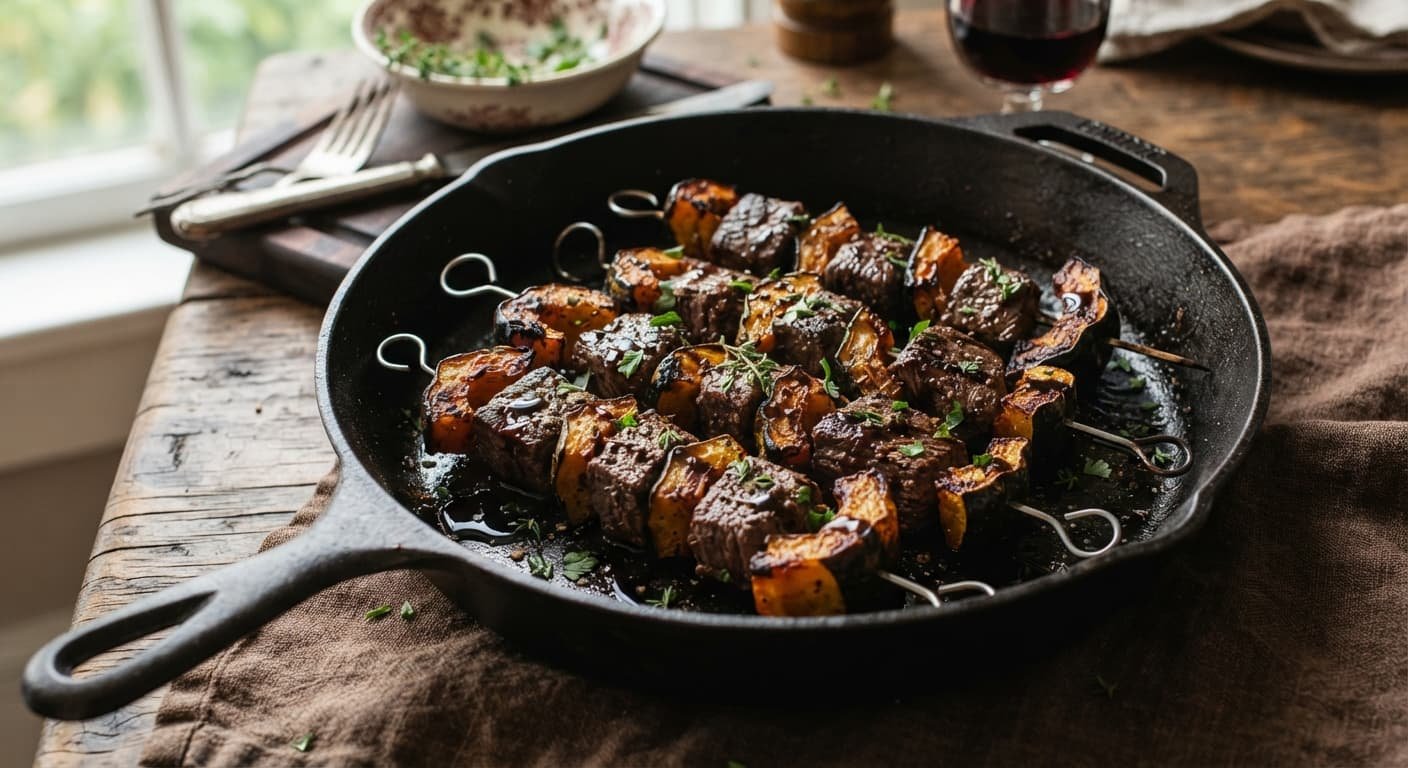
Venison and acorn squash finish cooking at two completely different speeds, and threading them onto the same skewer without accounting for that gap is the single fastest way to end up with tough meat, undercooked squash, or both at once. Venison is exceptionally lean, even leaner than most beef or bison, which means it goes from perfectly rare to noticeably tough within a couple of minutes of extra heat. Dense acorn squash needs far longer than that to soften all the way through. Solving that mismatch, not the skewering or the skillet itself, is really what this recipe is about.
Two Ingredients, Two Different Clocks, One Skewer
This dish takes about 35 minutes total, with a short pre-cook step for the squash before anything touches the skewers. That single extra step is what makes the whole combination workable in the same short sear, since venison and raw acorn squash simply don’t cook at the same speed.
Left raw, acorn squash cubes would need 15 to 20 minutes of direct heat to soften, far longer than venison can tolerate before it toughens. Parboiling the squash briefly beforehand gets it most of the way to tender while it’s still easy to handle and thread onto a skewer, so that by the time it hits the hot skillet, it only needs enough time to pick up color and caramelize at the edges, roughly the same window the venison needs to sear and reach medium-rare. This kind of staggered pre-cooking is a standard fix for any kebab or skewer combining ingredients with mismatched cook times, not a shortcut unique to this recipe.
Ingredients
For the Skewers
- 1 lb venison loin or tenderloin, cut into 1-inch cubes
- 1 small acorn squash, about 1.5 lbs, peeled, seeded, and cut into 1-inch cubes
- 2 tbsp olive oil, divided
- 1 tsp fresh rosemary, chopped
- 1/2 tsp garlic powder
- Salt and black pepper, to taste
- Wooden or metal skewers (soak wooden skewers in water for 30 minutes first)
For the Finishing Glaze
- 2 tbsp unsalted butter
- 1 tbsp balsamic vinegar
- 1 tsp honey
Method
- If using wooden skewers, soak them in water for 30 minutes before starting.
- Bring a pot of water to a boil and parboil the acorn squash cubes for 4 to 5 minutes, until just barely tender but still holding their shape. Drain and pat dry.
- In separate bowls, toss the venison and the parboiled squash each with a share of the olive oil, rosemary, garlic powder, salt, and pepper.
- Thread the venison and squash cubes onto the skewers, alternating pieces.
- Heat the remaining olive oil in a large skillet over high heat until shimmering.
- Sear the skewers for 2 to 3 minutes per side, turning to cook all sides, about 8 to 10 minutes total, until the venison is browned outside and reaches an internal temperature of 130 to 135°F for medium-rare, and the squash has caramelized at the edges.
- Remove the skewers from the skillet and let rest for 3 to 5 minutes; the venison’s temperature will climb a few more degrees during this time.
- Off the heat, add the butter, balsamic vinegar, and honey to the same skillet, stirring until combined into a quick glaze. Drizzle over the skewers before serving.
What Separates Fine From Great Skewered Acorn Squash and Venison Skillet
A fine version has cooked venison and cooked squash on the same skewer. A great one has venison that’s still faintly pink and tender at the center, with a real seared crust, and squash with genuine caramelized color rather than just a pale, boiled look carried over from the parboil. That color depends on giving the squash enough direct contact with the hot skillet during the sear, not just relying on the parboil to finish the job.
Troubleshooting
Why did my venison turn out tough despite a short sear?
Cause: venison has almost no fat to protect it, so even a couple of extra minutes past medium-rare toughens it noticeably. Fix: pull the skewers at 130 to 135°F internal and let carryover heat finish the job during the rest.
Why is my squash still firm in the center after searing?
Cause: the parboil step was skipped or cut too short, leaving the squash underdeveloped before it ever hit the skillet. Fix: give the squash the full 4 to 5 minutes in boiling water, checking with a fork for just-barely-tender before draining.
Why does my squash fall apart on the skewer?
Cause: the squash was parboiled too long, past tender into fully soft. Fix: pull it from the boiling water the moment a fork meets slight resistance rather than sliding through easily.
Variations and Substitutes
Beef tenderloin or bison work in place of venison, using the same searing approach, though beef can handle a slightly longer sear without toughening the way leaner game does. Butternut squash can replace acorn squash with the same parboil-then-sear method, since the two have similar density and cook time. A pinch of smoked paprika added to the seasoning brings a subtle smokiness if you want to lean the flavor in that direction. For a sharper glaze, a splash of red wine vinegar in place of balsamic adds more tang and less sweetness. However the ingredients shift, skewered acorn squash and venison skillet depends on the same fix: getting the slower-cooking half of the skewer most of the way there before it ever touches the hot pan.
Serving and Pairing
Wild rice or a simple mash of potatoes underneath soaks up the glaze nicely and echoes the earthy, autumn character of the dish. A side of sautéed greens, like kale or Swiss chard, adds some contrast and balances the richness of the venison and butter glaze. Skewered acorn squash and venison skillet also works well as a centerpiece for a smaller fall dinner, plated directly on the wild rice with the greens arranged alongside.
Storage and Reheating
Store leftovers in an airtight container in the fridge for up to 3 days. Reheat very briefly in a hot skillet, just enough to warm through, since venison toughens fast on a second pass through heat; a minute or two per side is usually enough. This dish doesn’t freeze particularly well, since both the venison’s texture and the squash’s structure suffer once thawed.
Nutrition (Per Serving, Serves 4)
These are estimated values per serving. Actual numbers will vary depending on the exact venison and squash used.
| Calories | 325 kcal |
| Protein | 28 g |
| Carbohydrates | 19 g |
| Fat | 15 g |
| Fiber | 3 g |
This recipe was tested and refined in bebup.org’s kitchen before publishing, with particular attention paid to the squash parboil timing described above.
Solving the Mismatch, Not the Flavor
Venison and acorn squash already taste right together; game meat and sweet, dense squash have paired well in fall cooking for a long time. The actual challenge skewered acorn squash and venison skillet solves is entirely about timing, not flavor, and once that timing is sorted out with a short parboil, everything else falls into place with very little extra effort.
Mastering the Two-Speed Skewer
Any skewer combining ingredients with different natural cook times runs into the same basic problem: whatever cooks fastest dictates how long the whole skewer stays over heat, and everything else either finishes underdone or gets pulled early to protect it. Pre-cooking the slower ingredient closer to done, without fully cooking it through, closes that gap so both components arrive at roughly the same finish line during the final sear. This principle extends well beyond venison and squash; it’s the same logic behind parboiling potatoes before they go on a kebab with shrimp, or blanching vegetables destined to share a skewer with something that cooks in under ten minutes. The key is stopping the pre-cook at “almost there” rather than “fully done,” since the final sear still needs to do real work, both for texture and for the color that direct heat provides and boiling water simply can’t.
Skewered Acorn Squash and Venison Skillet
Ingredients
Method
- Soak wooden skewers in water for 30 minutes if using.
- Parboil acorn squash cubes for 4 to 5 minutes until just barely tender. Drain and pat dry.
- Toss venison and squash separately with olive oil, rosemary, garlic powder, salt, and pepper.
- Thread venison and squash onto skewers, alternating pieces.
- Sear skewers in hot olive oil for 2 to 3 minutes per side, about 8 to 10 minutes total, until venison reaches 130 to 135°F and squash is caramelized.
- Rest skewers 3 to 5 minutes.
- Off heat, stir butter, balsamic vinegar, and honey into the skillet to make a glaze. Drizzle over skewers before serving.