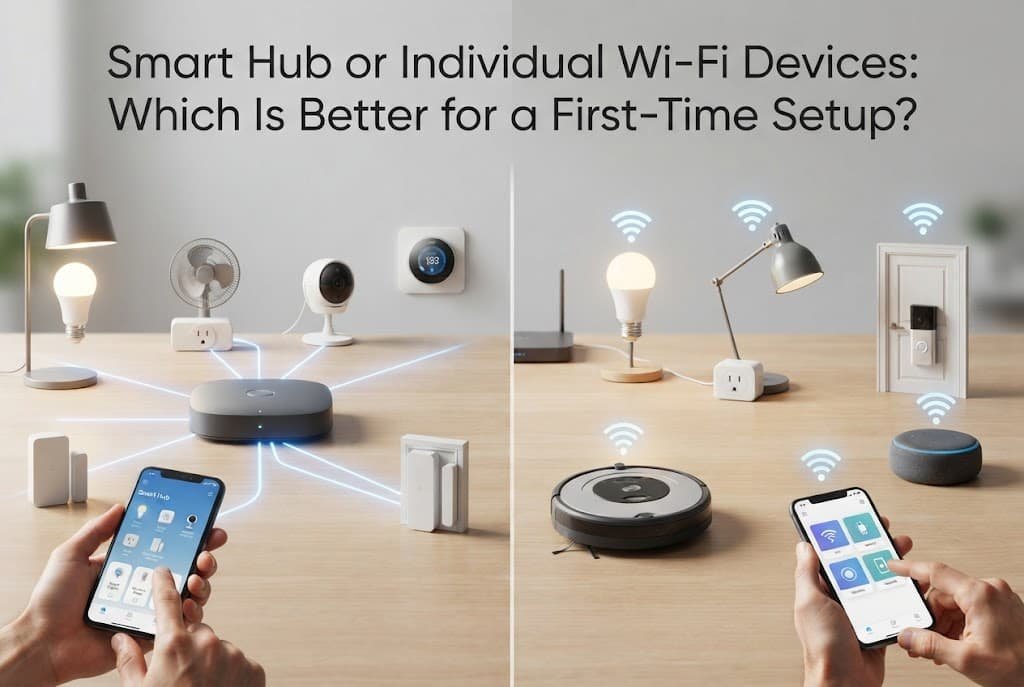
The honest answer depends quite heavily on which specific factor matters most to you personally: the genuine cross-brand coordination and offline reliability a hub provides, or the zero-additional-hardware simplicity of devices connecting directly to your already-existing Wi-Fi. Neither single option is universally the right choice for a genuine first-time setup, and picking based purely on habit or marketing alone entirely misses what actually differs between them at a genuinely practical level.
The one property that decides it
The deciding factor is genuinely how many different device brands and protocols you actually plan to combine together, not simply how many total individual devices you’re genuinely starting with initially. Individual Wi-Fi devices genuinely work well when everything shares a compatible standard and connects directly to your router itself; a hub becomes valuable specifically once you’re genuinely combining devices using genuinely different underlying protocols that can’t otherwise communicate with each other or coordinate together through a single unified app.
This matters considerably because the realistic first-time setup for most households genuinely starts smaller than eventual plans suggest – a few lights, perhaps a sensor – and whether that small starting point will genuinely and consistently stay within one compatible ecosystem, or expand to include devices requiring genuine translation between different standards, is the actual real question that determines which approach genuinely serves you better right from the start.
Head to head
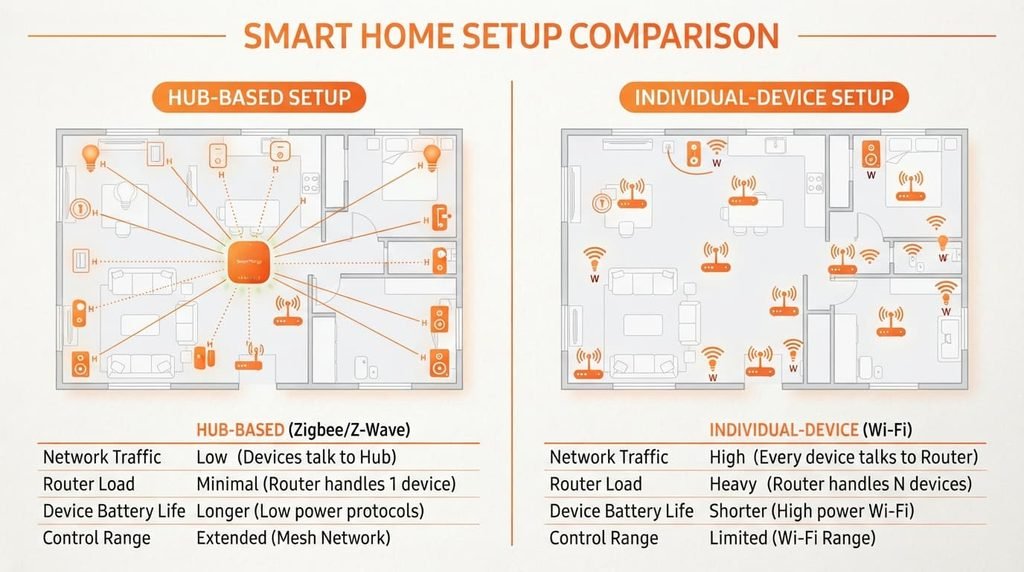
| Smart Hub | Individual Wi-Fi Devices | |
|---|---|---|
| Works across brands | High – bridges different protocols | Limited – depends on shared standards |
| Extra hardware needed | Yes – the hub itself | None – uses existing Wi-Fi |
| Setup effort | Moderate – hub plus device pairing | Simpler – direct app connection |
| Offline local control | Often available | Varies, some require internet |
| Single point of failure | Yes – the hub itself | No shared failure point |
| Room to grow | High for mixed-brand growth | Limited to compatible devices |
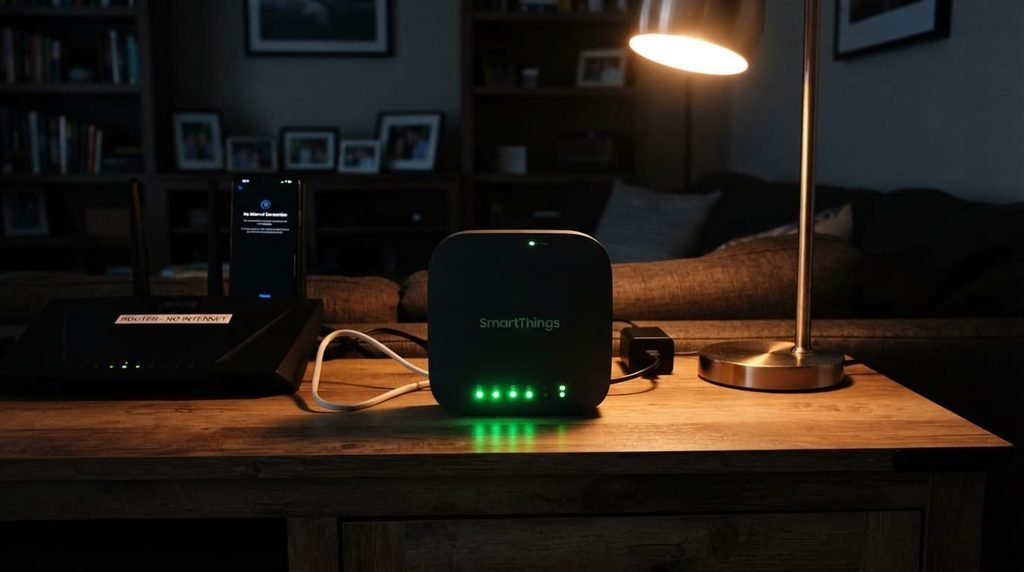
The single row that surprises most people the most is offline local control specifically. Many people naturally assume individual Wi-Fi devices are inherently simpler and therefore automatically more reliable, but a hub with genuine local processing can continue operating core functions during an internet outage, while some individual Wi-Fi devices depend entirely on a distant cloud connection even for genuinely basic local commands.
Where a hub wins
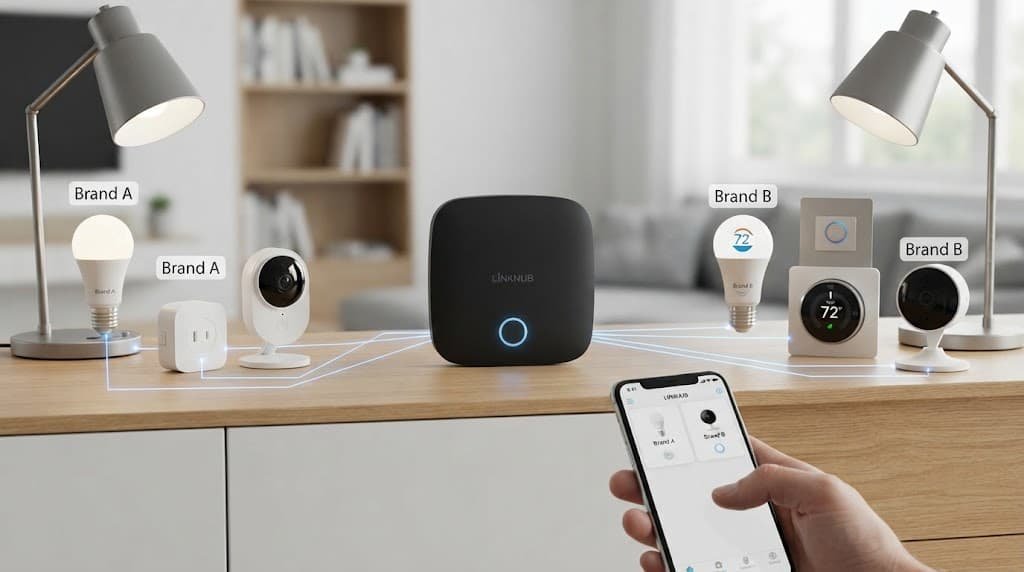
Anyone planning to eventually combine devices from genuinely different brands or ecosystems benefits from a hub’s translation capability from the very start, since starting with a hub-compatible setup avoids a more disruptive transition later if your plans expand beyond a single compatible brand ecosystem. The unglamorous reason: a hub with genuine local processing also tends to keep basic functions working during an internet outage, which genuinely matters more than it might initially seem for anyone who wants genuinely reliable control regardless of their actual connectivity status.
Anyone genuinely wanting centralised automation logic spanning multiple different device types benefits from this same coordination capability in a rather different way, since a hub can genuinely trigger one device type based on another’s status – a sensor triggering a light, for instance – in a way individual Wi-Fi devices operating independently through entirely separate apps generally simply can’t replicate without additional third-party coordination software.
Where individual Wi-Fi devices win
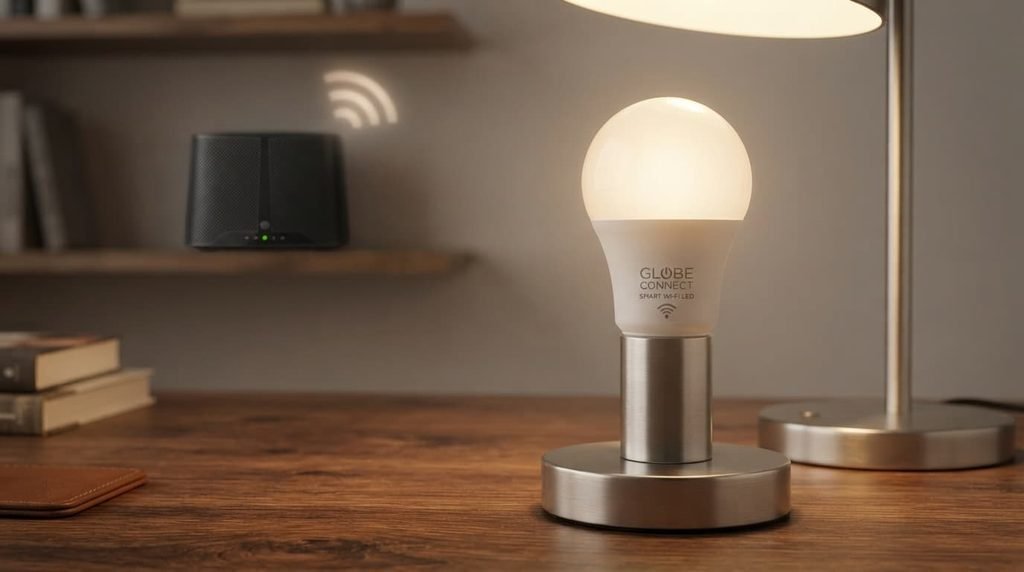
Anyone starting with a small number of devices from a single compatible ecosystem benefits from individual Wi-Fi devices’ simpler setup, since connecting directly to existing Wi-Fi avoids the additional cost and setup complexity a hub introduces for a need that genuinely doesn’t require cross-brand translation. The unglamorous reason: individual Wi-Fi devices also tend to have a genuinely simpler failure mode overall, since there’s no single shared hub whose failure could simultaneously affect every single connected device at once entirely.
Anyone genuinely quite uncertain whether they’ll continue expanding their smart home setup at all benefits from this same lower commitment in a rather different way, since individual Wi-Fi devices represent a considerably smaller upfront investment to genuinely test whether smart home devices actually fit into daily household habits, before committing further to the additional hardware and complexity a hub genuinely represents.
When neither is right
Choosing your approach based purely on which one a single review or advertisement happened to recommend, without considering your own actual planned device mix, is worth ruling out regardless of which option you’d otherwise lean toward.
A genuinely well-suited choice depends quite specifically and directly on your own actual planned devices and brand preferences, not on a generic recommendation written for some average, hypothetical household whose actual plans may differ considerably and meaningfully from your own. Reviewing your own specific planned device list quite carefully against each option’s actual real strengths genuinely matters considerably more than simply following a general recommendation alone.
This particular caution applies with especially strong force to households genuinely delaying a decision entirely specifically because comparing the two options feels overly complicated, while continuing to postpone smart home adoption altogether in the meantime, month after month. Either option, chosen imperfectly and immediately today based on your genuine current plans, represents a genuinely reasonable starting point considerably more valuable than continuing to postpone the decision indefinitely while researching an ever-expanding, endless set of comparisons.
How to decide in thirty seconds
If you’re genuinely planning to combine devices from multiple different brands or ecosystems, choose a hub instead. Its genuine cross-brand translation directly addresses a real coordination need individual Wi-Fi devices structurally simply can’t fully replicate on their own.
If you’re genuinely starting small within one single compatible brand ecosystem, individual Wi-Fi devices remain a perfectly reasonable choice. The simpler setup directly addresses minimal complexity for a genuinely modest, single-ecosystem starting point without unnecessary overhead.
What changes the answer later
Expanding beyond your original single-brand ecosystem into a genuinely and meaningfully mixed setup shifts the entire calculation toward a hub even for someone who previously found individual Wi-Fi devices perfectly adequate for their original, considerably simpler plans.
Experiencing a genuine, real reliability need for offline local control – a security-related device, for instance – is genuinely worth reconsidering the choice at, since a hub’s local processing capability matters considerably more once the specific devices involved carry genuinely higher consequences for any connectivity failure.
Moving to a genuinely different home with different construction or a considerably larger overall footprint is also genuinely worth reconsidering the choice at, since a hub’s typically more robust wireless protocol may handle range and interference quite differently than individual Wi-Fi devices depending entirely on your router’s own coverage throughout a larger or more genuinely challenging space.
Questions readers keep asking
Is it more expensive overall to start with a hub versus individual Wi-Fi devices?
Generally yes, quite genuinely, upfront in most typical cases – since a hub represents an additional hardware cost beyond the devices themselves entirely, though this cost can genuinely be worthwhile if your actual plans genuinely involve combining multiple different brands where a hub’s translation capability actually becomes necessary.
Can I switch from individual Wi-Fi devices to a hub-based setup later without starting over?
Often yes, genuinely, though it depends quite heavily on the specific devices involved – some individual Wi-Fi devices can later be incorporated into a hub-based system without much difficulty, while others remain genuinely standalone regardless of what additional hub you eventually add afterward.
Does a hub genuinely provide better security than individual Wi-Fi devices?
Not inherently at all – genuine security depends more on how well either option is configured and properly maintained specifically, including strong account passwords and genuinely kept-current firmware, than on which basic architecture you actually choose between these two available options.
Do I need technical expertise to set up either option for the first time?
Generally no for either approach whatsoever – both are genuinely designed for typical household setup through a guided app process, though a hub does introduce one additional physical device and pairing step compared to individual Wi-Fi devices connecting straight to your existing network without any intermediary hardware genuinely involved at all.