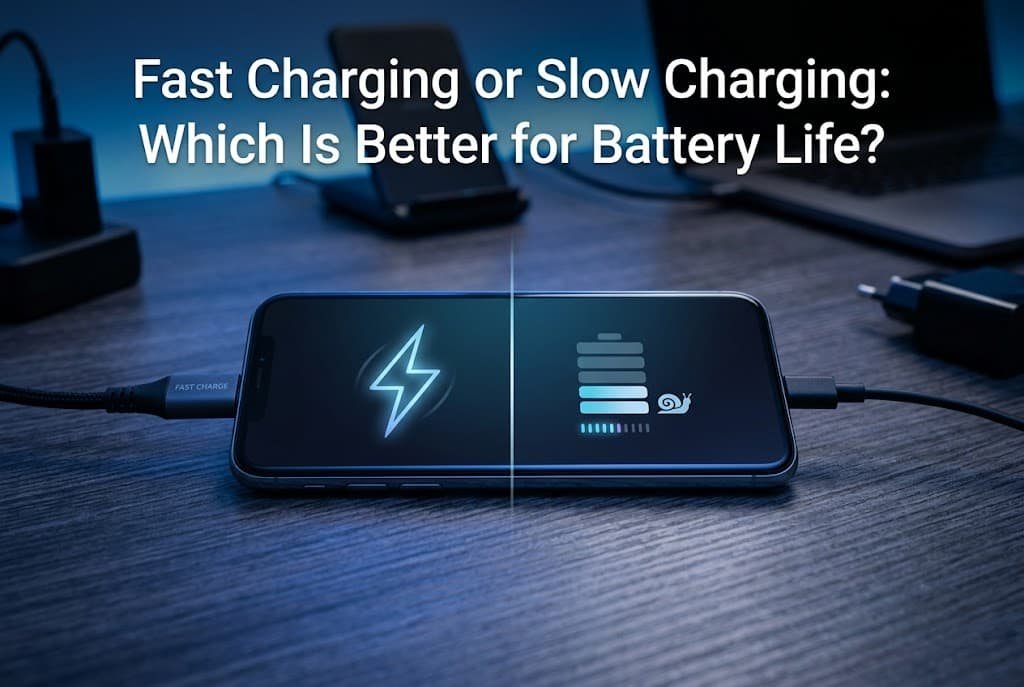
The honest answer depends on which specific trade-off matters more to you: the convenience of a quick top-up, or squeezing out slightly more long-term capacity from the same battery over months and years of use. Neither charging speed is universally better – each genuinely optimises for a different priority, and picking based on habit alone misses what actually differs between them.
The one property that decides it
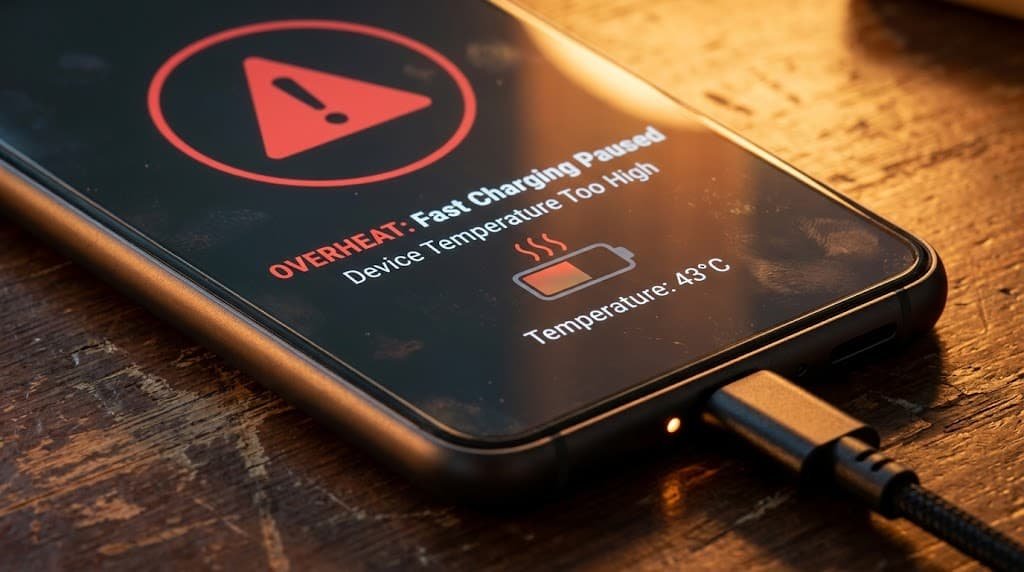
The deciding factor is heat generation during the charging process itself, not the speed number displayed on the charger. Fast charging pushes more energy into the battery over a shorter window, which generates more heat as an inherent side effect of that faster energy transfer; slow charging spreads the same total energy over more time, generating meaningfully less heat at any given moment.
This matters because heat is one of the more significant accelerants of long-term capacity decline, independent of how many charge cycles a battery has actually been through. A charging method that runs cooler, all else equal, tends to be gentler on the battery over months and years of repeated use.
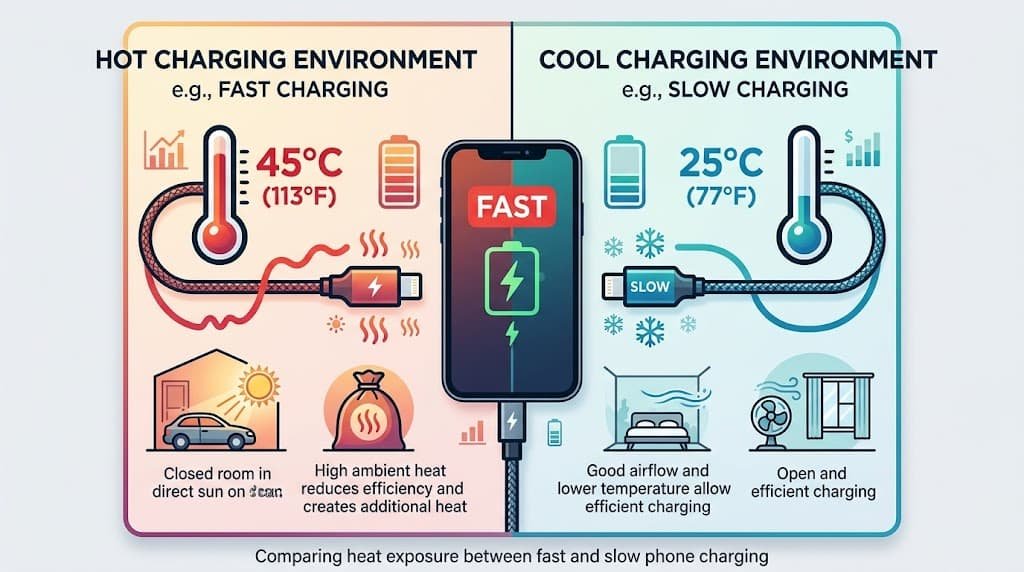
This is also why the debate isn’t really about speed at all, despite how it’s usually framed. Two entirely different charging methods delivering the exact same total energy, but one doing it with genuinely better heat dissipation – a cooler ambient environment, a case removed, better airflow around the device – can end up causing meaningfully less cumulative wear than a nominally “slower” method charging in a hot, poorly ventilated spot. Speed is simply the most visible proxy for the actual mechanism, not the mechanism itself.
Head to head
| Fast Charging | Slow Charging | |
|---|---|---|
| Heat generated during charging | Meaningfully higher | Meaningfully lower |
| Time to reach a usable charge | Short | Long |
| Convenience for last-minute top-ups | High | Low |
| Long-term wear from heat exposure | Higher, if used consistently | Lower |
| Best suited to | Occasional, time-pressured charging | Routine overnight charging |
| Effort required to use correctly | None – works as designed | None – works as designed |
The row that surprises people most is long-term wear specifically. Many people naturally assume fast charging itself directly damages a battery through the charging mechanism itself, but the actual pathway is genuinely indirect – it’s the heat fast charging generates, not the speed or the electrical current itself, that does the accelerating. A fast charger used briefly in a cool environment causes less cumulative heat exposure than the same fast charger used repeatedly in a hot room.
Where fast charging wins
Anyone who genuinely needs a quick top-up before leaving – a short charging window before heading out, a low battery during a busy day – benefits from fast charging’s core advantage in exactly the situation it’s designed for. The unglamorous reason: fast charging also tends to reduce the total time a device spends plugged in and generating any heat at all during a single session, compared to a slow charge that runs for a much longer stretch, even though the heat during that shorter window runs higher.
Frequent travellers benefit from this same trade-off in a different context – a phone charged fast during a short layover, then left alone for the rest of the day, experiences one brief heat spike rather than an extended low-level heat exposure, which many people find preferable even accounting for the wear difference.
Where slow charging wins
Anyone charging overnight, or in any situation with no genuine time pressure, benefits from slow charging’s lower heat generation without sacrificing anything in practice, since the extra time required makes no difference when the device isn’t needed until morning anyway. The unglamorous reason: slow charging also tends to be gentler during the final portion of a charge specifically, when a battery is already near full and most sensitive to additional stress, a phase fast charging typically moves through much more quickly regardless of any smart-charging features attempting to compensate.
People who work from a desk most of the day benefit from this same trade-off differently – a phone charging slowly beside them for hours experiences a long, low-level heat exposure rather than one brief spike, which many people specifically choosing slow charging consider the gentler option even though the total charging duration is considerably longer.
What most comparisons get wrong
Most advice on this topic treats the choice as a fixed, permanent decision – pick one speed and stick with it always. This misses that the actual heat-generation mechanism responds to context, not to a single setting chosen once and forgotten. The same exact phone can reasonably use fast charging during a hectic weekday and slow charging on a relaxed weekend instead, without any inconsistency or wasted effort, since the deciding factor – genuine time pressure – genuinely does change from day to day for most people.
A second common oversight is ignoring ambient room temperature entirely when actually making this specific choice day to day. The exact same fast charger genuinely produces meaningfully different cumulative heat exposure in an air-conditioned room versus a warm bedroom during summer, which means the “right” choice for a given person can shift seasonally even if their actual charging habits and time pressures stay identical year-round.
When neither is right
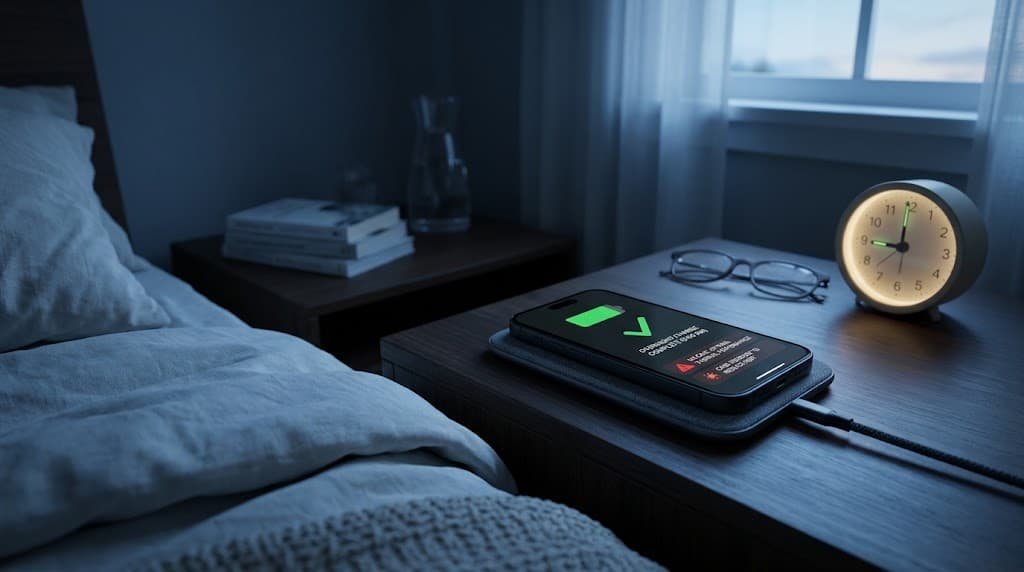
Charging overnight at fast-charging speed while the phone sits under a blanket or inside a heat-trapping case is worth avoiding entirely, regardless of which speed you’d otherwise prefer.
This specific combination – fast charging plus trapped heat plus an extended, unsupervised overnight charging session – genuinely stacks nearly every heat-related risk factor at once, in a way that neither charging speed alone would ever create on its own. Removing the case entirely or charging on an open, well-ventilated surface addresses most of this specific risk without requiring any change in charging speed at all.
How to decide in thirty seconds
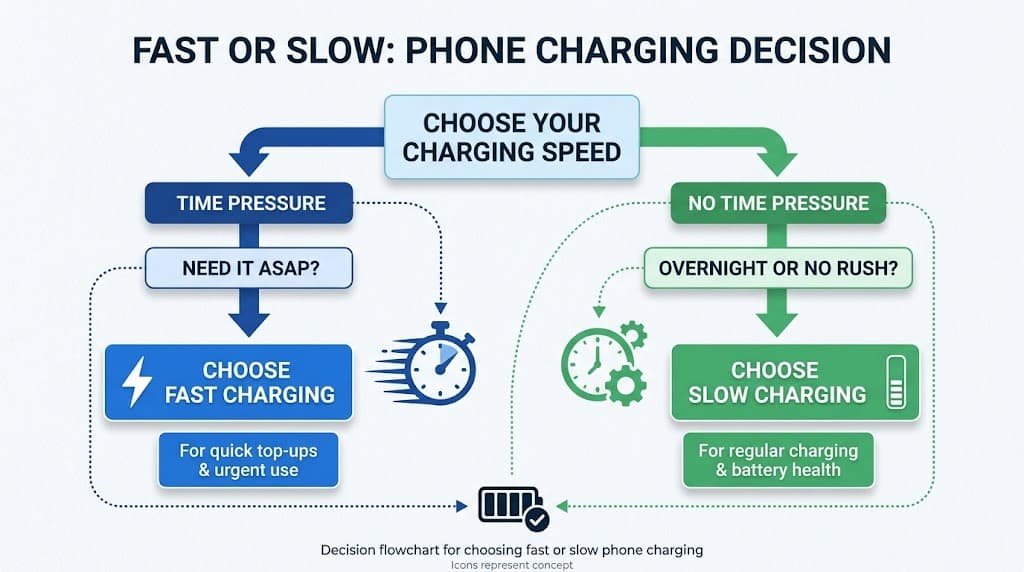
If you’re charging under genuine time pressure, use fast charging. The heat generated during a brief session is a reasonable trade-off for the convenience it provides in exactly the situation it exists for.
If you’re charging overnight or with no time pressure, use slow charging. The heat-generation advantage costs you nothing in practice when time genuinely isn’t a constraint.
What changes the answer later
A battery that’s already several years old and showing meaningfully reduced capacity benefits more from consistently choosing slow charging going forward than a newer battery does, since the remaining capacity has genuinely less margin to absorb additional heat-related wear before daily usability becomes noticeably and practically affected.
Charging in a consistently hot climate or a poorly ventilated space shifts the calculation toward slow charging even for routine top-ups, since ambient heat genuinely compounds with charging-generated heat in a way that a cooler, better-ventilated environment simply doesn’t produce to the same degree.
The real decision isn’t which speed is inherently better – it’s whether your specific charging situation involves genuine time pressure or genuine flexibility. Match the speed to that constraint, and the heat-related wear concern resolves itself without requiring constant attention.
Questions readers keep asking
Does fast charging actually damage phone batteries?
Not directly through the charging mechanism itself – the damage pathway is the additional heat fast charging generates, which is a genuine but indirect effect. Occasional fast charging in a cool environment causes meaningfully less cumulative heat exposure than doing so consistently in a hot room.
Is it worth buying a slower charger specifically to protect battery health?
For overnight or routine charging with no time pressure, yes, it’s a reasonable low-effort choice. For situations requiring a genuine quick top-up, the convenience typically outweighs the modest additional heat-related wear from occasional fast charging sessions.
Should I remove my phone case while fast charging?
If the case is thick or heat-trapping and you notice the device getting warm during a charging session, removing it costs nothing and reduces one of the more significant heat-related risk factors specifically during fast charging, regardless of which speed you ultimately choose to rely on most often.