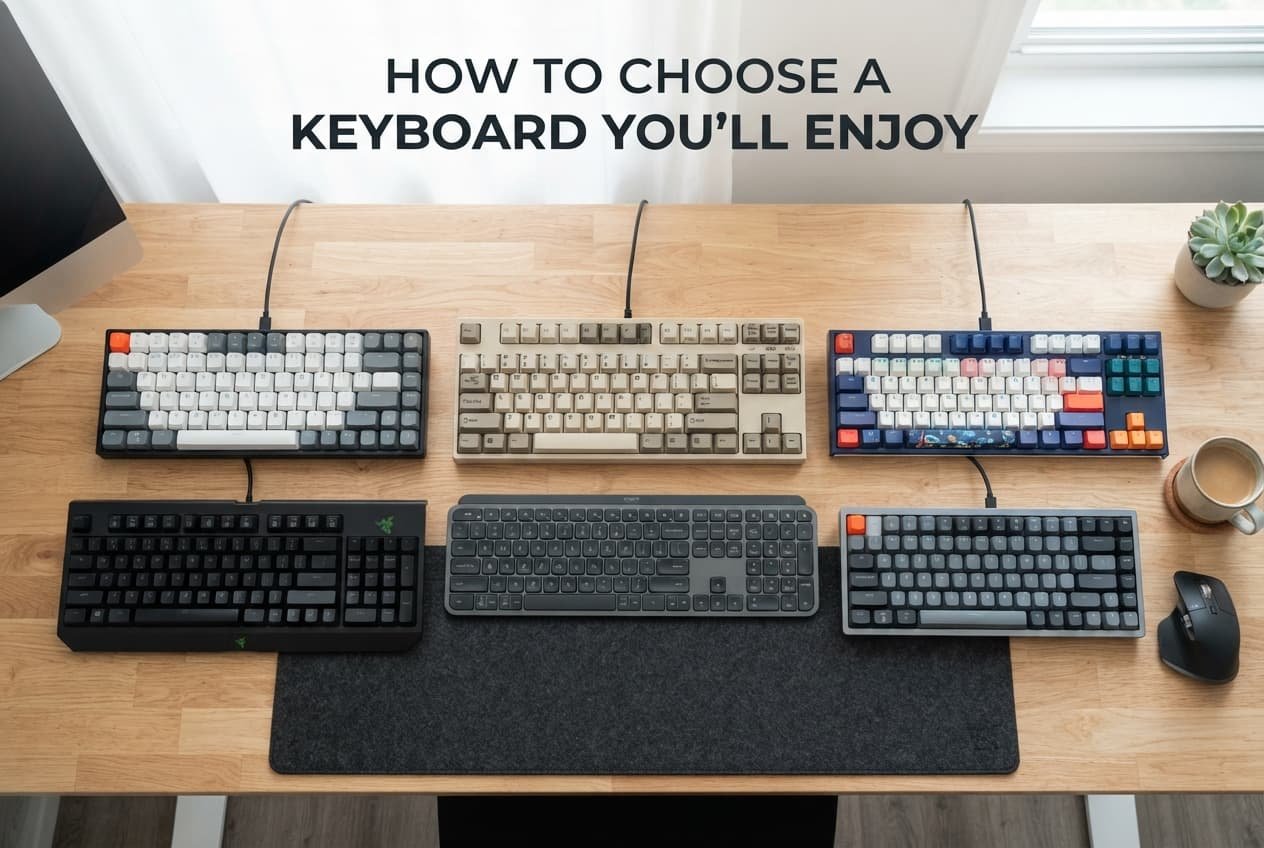
Choosing a keyboard you’ll genuinely enjoy typing on comes down to a handful of specific criteria you can evaluate directly for yourself, not simply which one has the most impressive specification sheet or the highest possible price point. A keyboard chosen purely for its specifications often disappoints once your actual daily typing experience reveals what those specifications alone didn’t communicate.
What actually decides this
The deciding factor is how well a keyboard’s actual tactile and auditory characteristics match your own personal typing preference, not simply how technically advanced or feature-rich it appears on paper. A keyboard genuinely needs to feel right under your specific fingers during actual typing, since even objectively well-reviewed keyboards can feel wrong for someone whose personal preference simply doesn’t align with that particular keyboard’s specific characteristics.
This matters because most keyboard marketing emphasises technical specifications and feature lists, while your actual daily typing experience – how keys feel, sound, and respond under your own specific hands – behaves meaningfully differently from what a specification comparison alone reveals.
The criteria that actually matter, in order
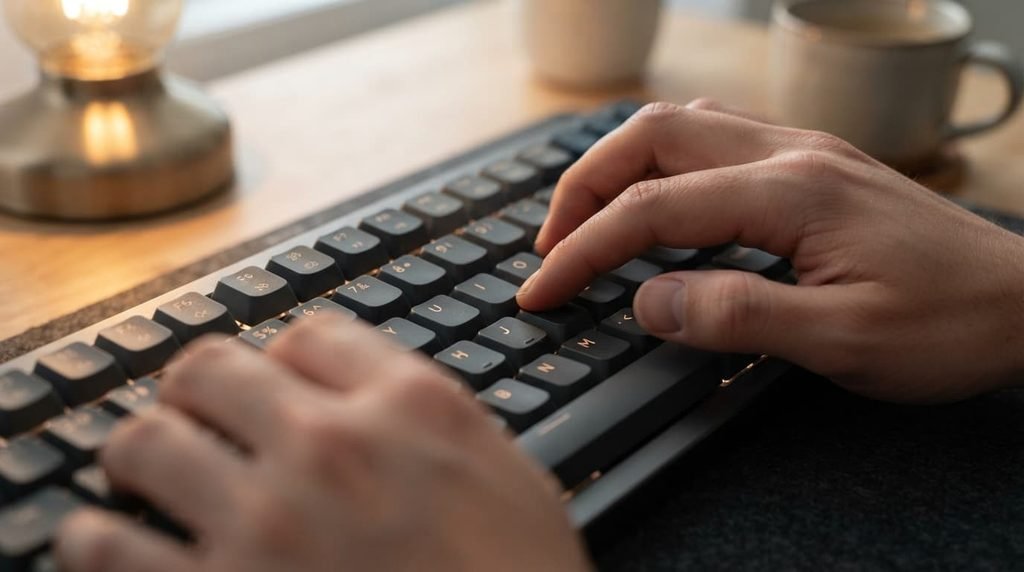
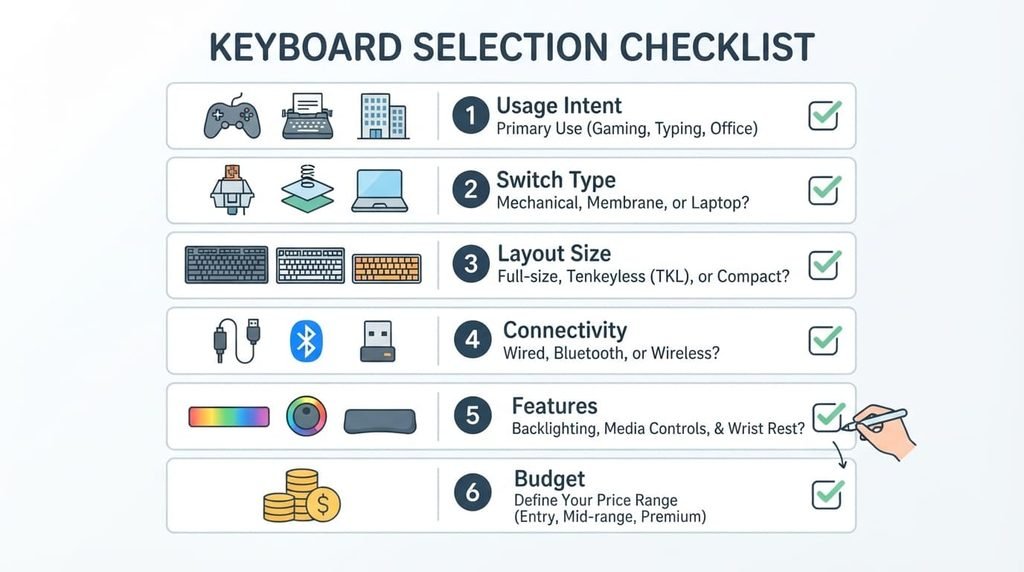
1. Genuine tactile feel suited to your own personal typing preference. Look specifically for a keyboard whose actual key feel – resistance, travel distance, tactile feedback – genuinely suits how you personally prefer to type, since this single factor affects your daily typing experience more directly than almost any other consideration.
2. Genuine build quality and durability for your actual use pattern. A keyboard’s construction quality affects both how it feels during use and how long it genuinely lasts, mattering more for long-term satisfaction than headline features you might rarely actually use.
3. Layout and key size genuinely suited to your actual hands and typing style. A keyboard with cramped or unusually sized keys creates ongoing friction regardless of how impressive its other specifications are, making this worth confirming directly against your own typical typing needs.
4. Genuine noise level appropriate for your actual typing environment. A keyboard that’s wonderfully tactile but genuinely too loud for a shared space or quiet environment creates a different kind of daily friction worth considering before purchase specifically.
5. Connectivity and compatibility genuinely matching your actual devices. A keyboard with connection capabilities mismatched to your actual devices creates practical friction regardless of how well it performs in other respects.
What doesn’t matter as much as it’s made out to
Elaborate customisable lighting and extensive software features are oversold for typical everyday typing specifically, and they’re often the most prominently marketed specifications. For most people typing for genuine daily work or communication, these elaborate features add considerably less genuine daily value than a keyboard’s actual core typing feel and build quality.
Premium branding and price alone get more attention in purchasing decisions than they deserve relative to the tactile-fit criteria above. An expensive keyboard that doesn’t genuinely suit your personal typing preference still results in a worse daily experience than a more modest keyboard that happens to feel genuinely right under your own hands.
Matching the choice to your situation
If you’re genuinely typing for extended periods regularly – substantial daily work, for instance – prioritise tactile feel and build quality more heavily, since your actual cumulative daily use amplifies both the benefit of a genuinely good fit and the frustration of a poor one.
If you’re genuinely sharing your typing space with others regularly, prioritise noise level more heavily than you might otherwise, since a keyboard’s sound profile affects not just you but everyone genuinely nearby during your actual typing sessions.
What to walk away from
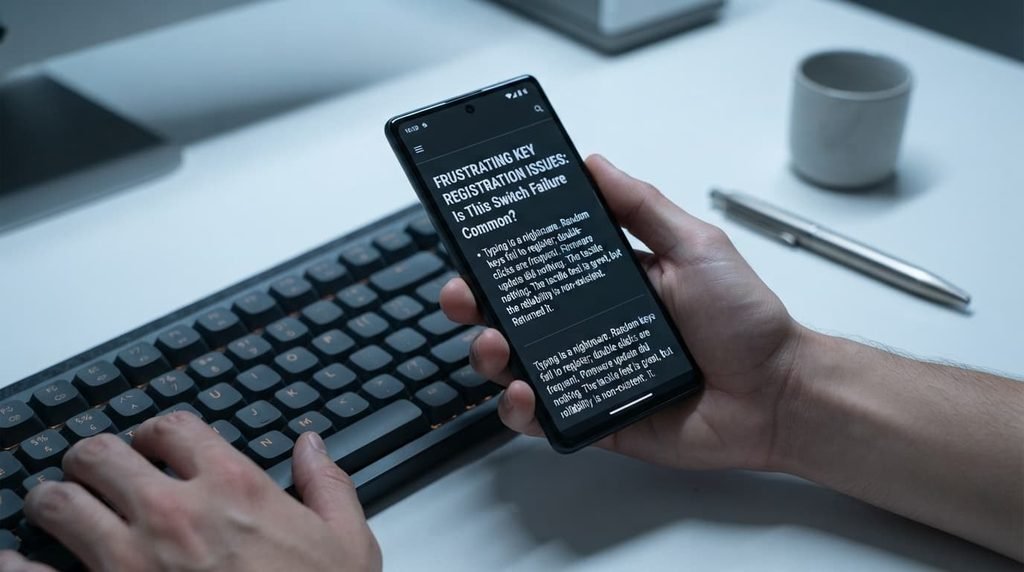
Any keyboard whose reviews consistently mention key registration issues or build quality problems during typical everyday use, should end your interest regardless of how appealing its other features or price point otherwise appears.
A specification sheet doesn’t reveal genuine daily reliability the way consistent reviewer and user experience does, and a keyboard with a known, unaddressed quality issue will likely create recurring frustration regardless of how attractive its other characteristics initially seemed.

The check before you commit
Before finalising any keyboard purchase, genuinely try typing on that specific model directly if at all possible, rather than relying solely on specifications or reviews describing someone else’s personal experience.
This single check reveals genuine personal fit far more reliably than any specification or review does, since typing feel is genuinely subjective in a way that makes direct, personal experience considerably more valuable than secondhand description for this particular purchase decision.
Does trying a display model in a store genuinely give an accurate sense of how a keyboard will feel over regular daily use?
To a reasonable degree, yes, though display models sometimes experience heavier wear than a new unit would have, so treating that in-store impression as a helpful indicator rather than a perfect prediction of your own eventual unit’s exact feel is a reasonable, balanced approach.
What people get wrong about choosing a keyboard
The most common mistake is assuming a keyboard universally praised in reviews will automatically suit your own personal typing preference, when typing feel is genuinely subjective enough that even widely well-reviewed keyboards can feel wrong for a specific individual’s own particular preference and typing style.
A second common mistake is prioritising a keyboard’s compatibility with elaborate customisation software over its fundamental typing feel, when for most people, genuine daily satisfaction depends considerably more on how the keyboard actually feels to type on than on software features used only occasionally, if ever, during typical daily use.

What changes if you’re choosing a keyboard specifically for a shared workspace
If you’re genuinely choosing a keyboard multiple people will actually use regularly, prioritise a genuinely moderate, broadly acceptable tactile feel and noise level over your own strongest personal preference specifically, since a keyboard perfectly suited to one individual’s taste may not serve a shared group’s varied preferences as comfortably as a more universally agreeable middle-ground option would.
Questions readers keep asking
Is it worth buying an expensive keyboard without trying it first if in-person testing genuinely isn’t available?
Researching detailed reviews that specifically describe the keyboard’s actual tactile feel, rather than relying purely on specifications, can help approximate this in-person testing when it’s genuinely unavailable, though some uncertainty remains until you actually experience the keyboard directly yourself.
Does keyboard size genuinely matter beyond simply fitting on your desk?
Yes, meaningfully – a keyboard’s overall size affects hand and wrist positioning during typing, meaning a size genuinely suited to your own comfortable reach and posture matters for long-term comfort beyond simply whether it physically fits your available desk space.
Is it worth asking to borrow a friend’s or colleague’s keyboard before making a purchase decision?
If genuinely available, yes – trying an actual keyboard someone else already owns, even briefly, provides considerably more genuine insight into your own personal preference than specifications or reviews alone, making this a worthwhile option to pursue if you happen to know someone with a keyboard genuinely similar to what you’re considering.
How long should I genuinely try a new keyboard before deciding whether I actually like it?
Allowing at least a few genuine days of regular use before forming a final judgment is reasonable, since some keyboards require a brief adjustment period before their actual characteristics become genuinely comfortable and familiar during typical daily typing.