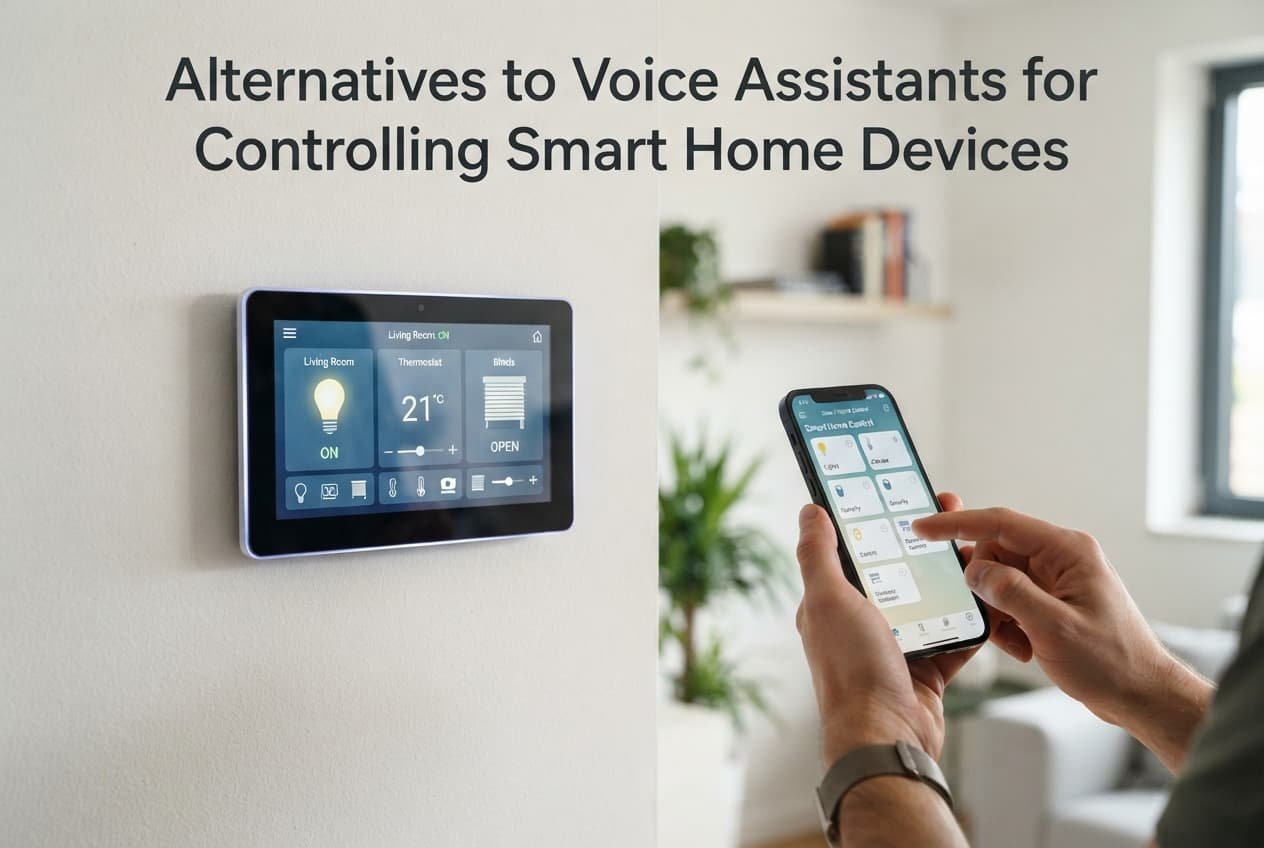
Voice assistants genuinely are the most heavily marketed way to control smart home devices, and there’s nothing wrong at all with using one – but “most marketed” and “the only genuinely reliable option” are genuinely different things, and the gap between them is exactly where the case for a real alternative starts to make sense. If you’ve found voice control inconvenient or unreliable and want to understand what else is genuinely available, the realistic path depends on understanding what voice control specifically gets wrong and what each alternative trades away to fix it.
What voice control is actually doing
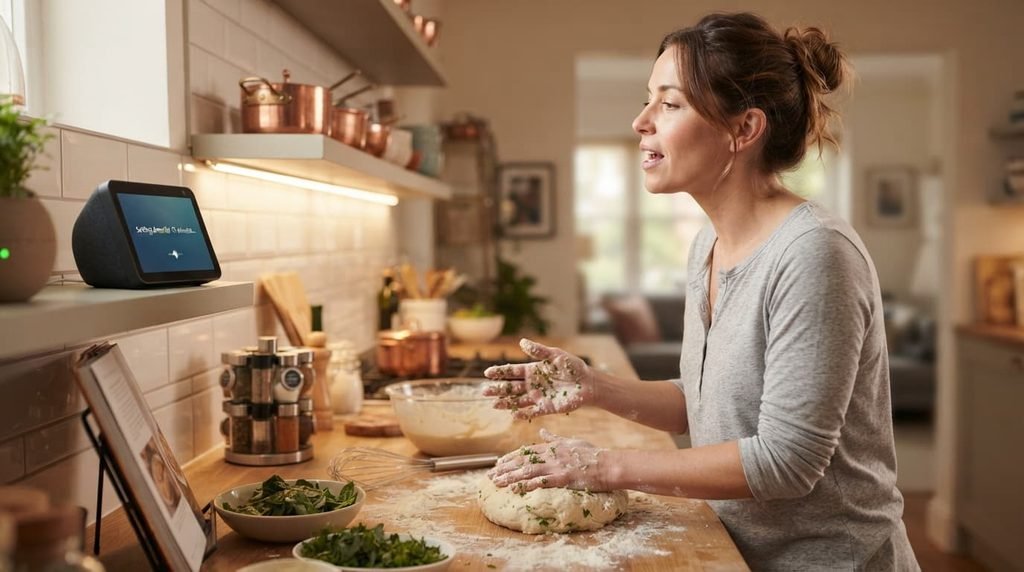
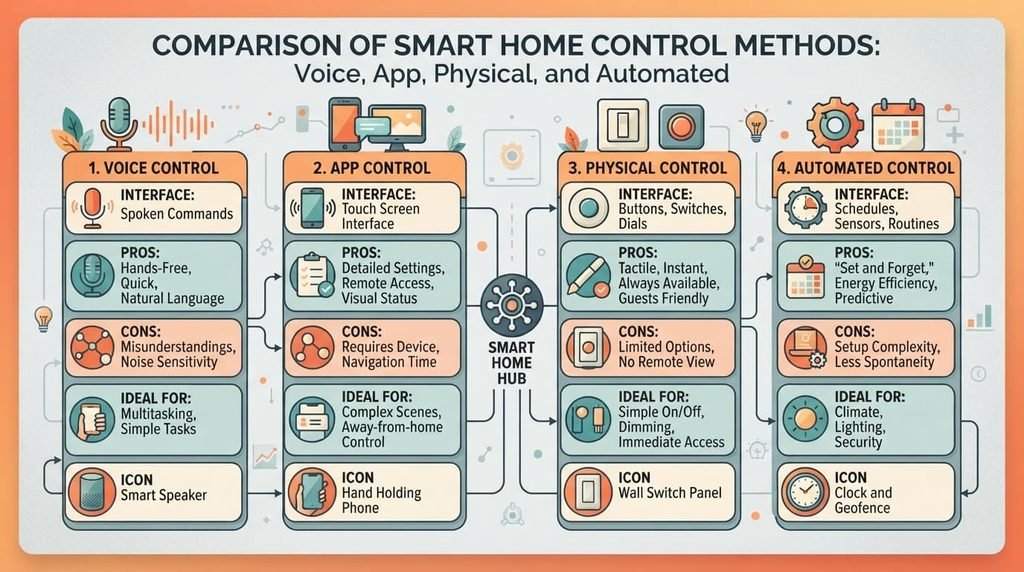
The core function a voice assistant serves is interpreting spoken natural language and converting it into a specific device command, which genuinely does offer hands-free convenience in situations where physically touching a control isn’t practical – cooking with messy hands, for instance. This is a real, meaningful benefit, which is why voice control remains widely used despite its specific known limitations.
Those specific limitations are where the case for alternatives begins. Voice recognition genuinely depends on clear audio input reaching the device correctly, which introduces a dependency on ambient noise levels, accent recognition accuracy, and microphone placement that a physical or app-based control simply doesn’t share, since those alternatives don’t require the system to correctly interpret spoken language at all.
This dependency genuinely matters most specifically in households with genuinely challenging acoustic conditions – open-plan spaces with considerable background noise, multiple people talking simultaneously, or rooms positioned quite far from any available microphone. For a household with genuinely quiet, well-controlled acoustic conditions and a single clear speaker, voice recognition accuracy issues are considerably less likely to genuinely arise in the first place at all, which is part of why experiences with the exact same voice control feature vary so noticeably between quite different households.
The kinds of alternative, and what each costs you
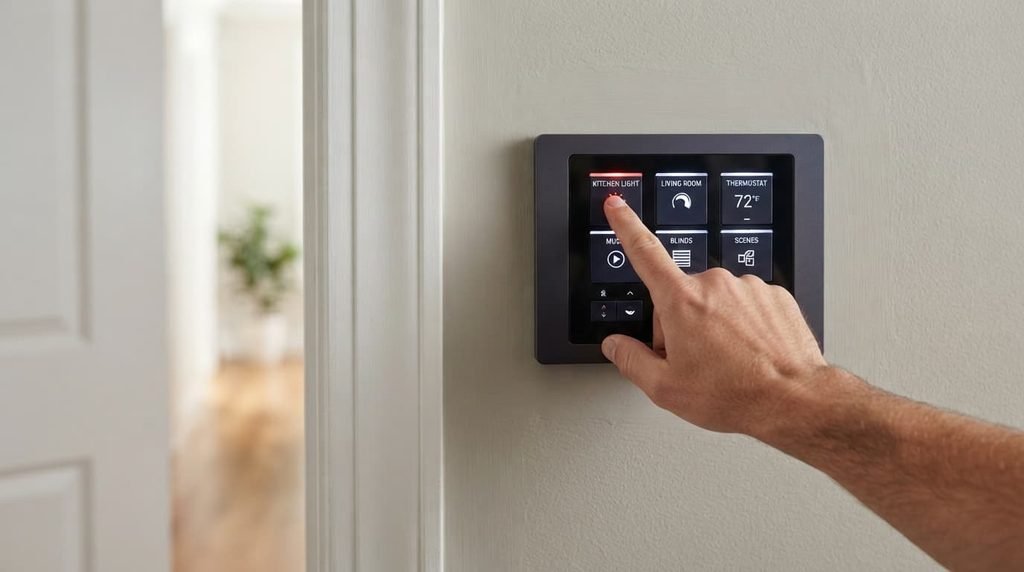
A dedicated physical remote or wall-mounted control panel for your smart home devices. This directly and genuinely eliminates the speech-recognition dependency entirely, since a physical button press requires absolutely no interpretation of spoken language and works identically regardless of ambient noise or accent. The trade-off: you’re now responsible for that specific physical device remaining accessible and charged if battery-powered, and it typically controls only devices specifically programmed into it, offering less flexibility than voice control’s more open-ended command structure.
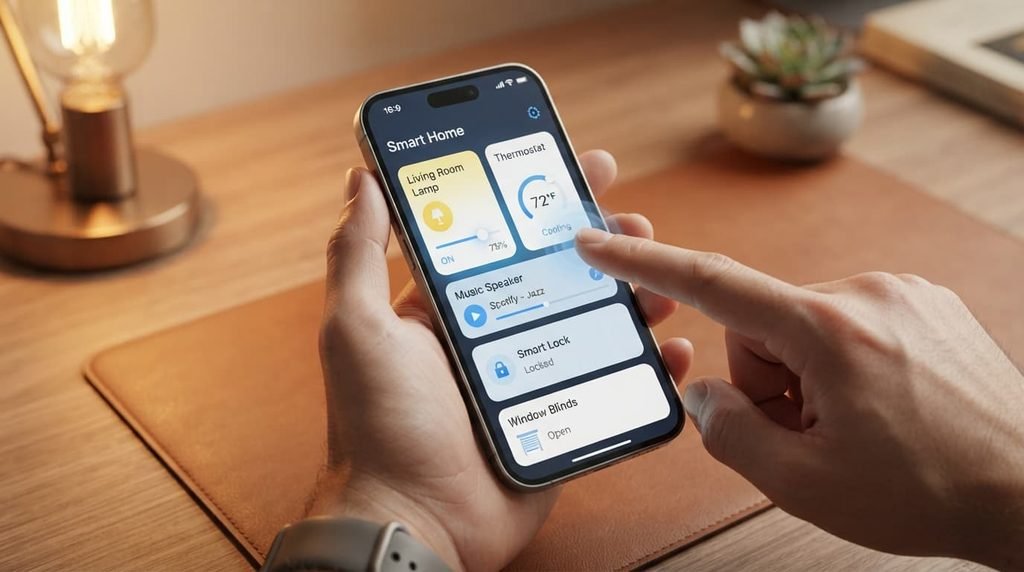
App-based control directly through your smartphone. This genuinely preserves flexibility quite similar to voice control – naming any connected device by its own label rather than needing a dedicated physical button for each device – while eliminating the speech-recognition dependency entirely, since you’re tapping a clearly labelled on-screen control rather than speaking a command that needs interpretation. The trade-off: this specifically requires your phone to be physically nearby and unlocked at the moment you want control, which a voice assistant positioned centrally in a room doesn’t require in the same way.
Automated triggers based on sensors or schedules, requiring no manual command at all. This genuinely removes the need for any manual interaction whatsoever – voice, app, or physical button – for routine, predictable actions, since the automation itself handles the triggering condition entirely automatically. The trade-off: this genuinely only works well for truly predictable, routine actions; it doesn’t help with a spontaneous, one-off command that doesn’t fit a pre-configured automated pattern.
The trade-off nobody warns you about
The cost that shows up mid-transition isn’t the setup effort – it’s discovering how much of your household’s existing habit around voice commands needs to be consciously relearned, since muscle memory built around speaking a command doesn’t automatically transfer to reaching for a physical control or an app instead.
Most advice about moving away from voice control focuses entirely on the technical setup of the alternative. Nobody mentions clearly enough that a household genuinely accustomed to speaking commands experiences a real adjustment period switching to a different control method, regardless of how objectively more reliable that alternative method actually is in practice.
How to switch without losing convenience
Start with the specific devices or situations where voice control has genuinely proven most unreliable for your household – a particular room with poor microphone pickup, a specific accent recognition issue – rather than switching every single device at once, since this specifically targets the actual real pain points first.
Keep voice control genuinely active alongside the new method initially, rather than disabling it immediately, giving your household a genuinely working fallback while everyone adjusts to the new primary method before fully and completely committing to the switch.
Choose an alternative that genuinely fits your household’s actual physical layout and everyday habits – a wall-mounted panel makes sense near a frequently used doorway, while app-based control suits a household already reaching for phones fairly constantly throughout the day.
When voice control remains the reasonable choice
If your household genuinely and consistently values hands-free operation for specific frequent situations – cooking, holding a child, physically occupied hands generally – voice control remains a reasonable, meaningfully convenient choice specifically for those exact situations, rather than something to feel obligated to entirely replace.
I’ll say this plainly: voice control gets criticised considerably more harshly than the actual inconvenience genuinely justifies for many typical households, whose voice recognition genuinely works reliably enough for genuine daily use most of the time. The genuine frustration with voice control is often specific to particular accents, noisy environments, or specific device brands with weaker recognition capability, not a universal failure of the entire approach for every single household.
The one check worth doing before you switch everything
Before replacing voice control entirely across your whole household, check specifically which situations actually motivated the switch, rather than assuming every use case shares the same underlying problem.
This one single check genuinely prevents unnecessarily abandoning a genuinely convenient method for situations where it actually worked perfectly fine, focusing the switch specifically on the genuine pain points that motivated it in the first place, rather than a blanket replacement that discards real convenience you were previously getting.
Questions readers keep asking
Is voice control actually unreliable, or just less ideal in certain specific situations?
It’s genuinely quite reliable for many households in most typical everyday situations – the criticism is usually specific to particular circumstances like noisy environments or accent recognition issues, not a genuine claim that voice control provides no real value whatsoever.
Do I need to switch every device away from voice control at once?
Not necessarily at all – prioritising the specific devices or rooms where voice control has genuinely and repeatedly proven unreliable for your household, and switching those particular ones first, captures most of the available benefit without requiring any kind of all-at-once transition.
Can I use multiple control methods for the same device simultaneously?
Yes, and many smart home devices genuinely support this – voice, app, and physical control can typically coexist on the same device, letting you choose whichever method suits a specific moment rather than being locked into just one approach permanently.
Does household size affect which control method works best?
It genuinely can, quite meaningfully – a larger household with multiple people wanting simultaneous or frequent control often genuinely benefits from having several accessible methods available rather than relying on just one, since a single voice assistant or app account can become a genuine bottleneck when several household members want to control devices at overlapping moments throughout a typical day.
What people get wrong when switching away from voice control
The most common mistake by far is assuming the actual problem is voice control itself as an entire concept, when the actual real issue is often just one specific device’s weaker microphone or recognition software, rather than the underlying general approach broadly. Switching every single device away from voice control based on frustration with one particularly unreliable device can genuinely mean abandoning genuine convenience on other devices that were actually working perfectly well all along regardless.