Choosing smart home devices that genuinely work for a family comes down to a handful of specific criteria you can evaluate on any device sitting in front of you, not simply which one offers the most impressive individual features on paper. A device chosen for a single tech-savvy user’s convenience often falls apart once multiple family members, each with different comfort levels and needs, actually start relying on it together.
What actually decides this
The deciding factor is how well a device supports genuinely simple control for every family member, regardless of their individual technical comfort, not simply how many advanced features it offers on paper. A family genuinely and truly needs devices that work predictably for the least technically confident household member just as reliably as for the most enthusiastic one, since a device only one person can operate correctly isn’t actually serving the whole family.
This matters because most smart home device marketing targets an individually tech-enthusiastic buyer, while a family’s actual daily use pattern – multiple users, varying comfort levels, shared physical spaces – behaves meaningfully differently from that single-enthusiast assumption most reviews are built around.
This is genuinely counterintuitive to many first-time buyers, who naturally assume the most feature-rich device is automatically the best family choice, treating advanced capability as inherently superior rather than recognising that a family’s actual need is consistent, predictable usability across every household member, not maximum individual sophistication for the one person setting everything up.
The criteria that actually matter, in order
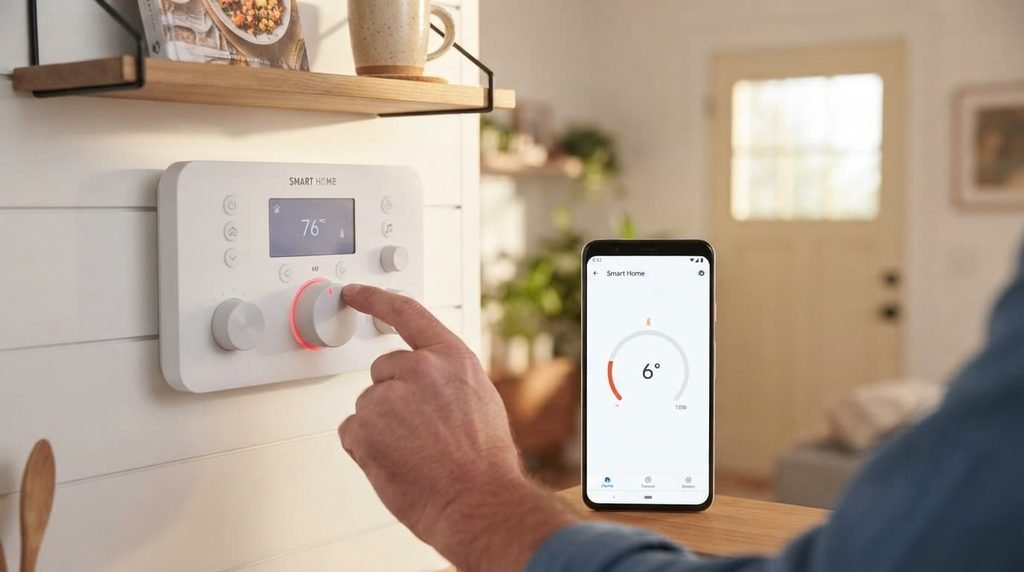
1. Physical control that doesn’t require the app at all. Look quite specifically for devices that retain a genuine physical switch, button, or dial alongside their smart features, since a family member unfamiliar with the app, or simply wanting a quick manual action, needs a reliable fallback that doesn’t depend on technical comfort or even the app being installed on their specific phone.
2. Genuinely simple, predictable behaviour without surprising automation. A device that genuinely behaves consistently and predictably over time, without unexpected automated changes a family member didn’t personally configure, builds genuine trust and reduces confusion across a household with varying technical familiarity, more than a device with more sophisticated but less predictable automated behaviour does.
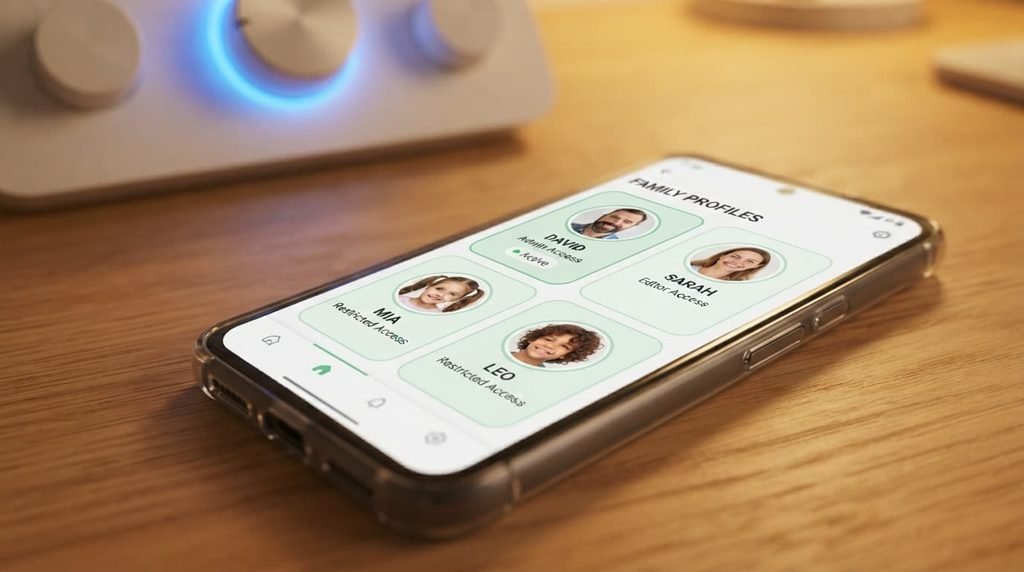
3. Support for multiple user profiles or shared household access. A family genuinely needs every single relevant household member to have appropriate access to control shared devices, not just the one specific person who initially set everything up entirely – a device or system requiring everything to route through a single person’s account creates an unnecessary bottleneck for genuinely shared household devices.
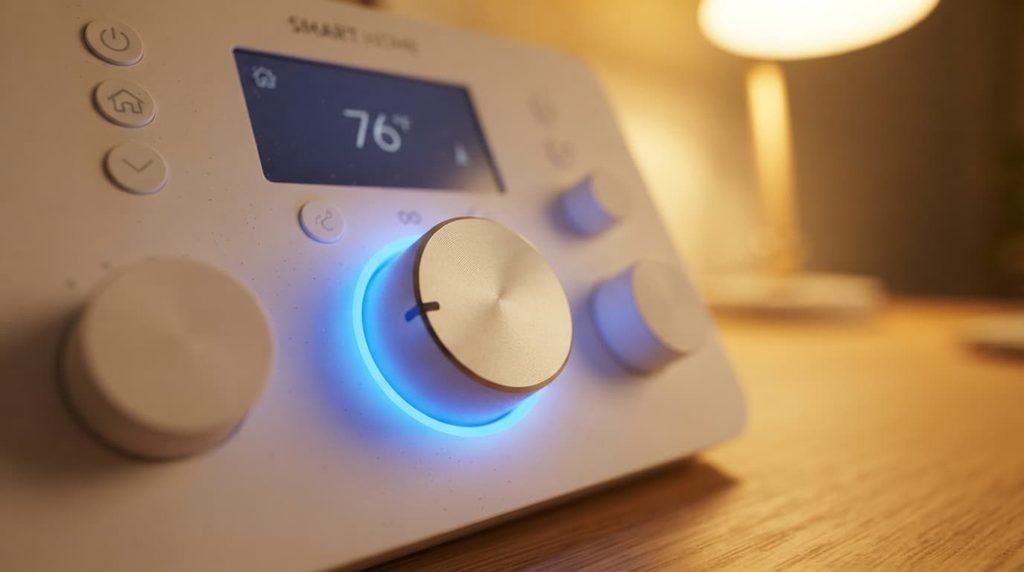
4. Clear, immediate physical or app feedback confirming an action worked. A family member who genuinely isn’t confident checking an app for confirmation benefits considerably from a device providing clear, immediate feedback – a light changing, a sound, a visible indicator – that confirms their action actually worked, without requiring a separate app check to verify.
5. Genuinely quick setup and pairing process. A lengthy, genuinely technical setup process becomes a real, genuine barrier specifically when a family member wants to add or replace a device themselves without needing to ask the household’s designated tech-savvy person for help every single time it happens.
What doesn’t matter as much as it’s made out to
The single most advanced feature set or the largest number of supported integrations is oversold for family use specifically, and it’s the specification many reviews lead with. A device genuinely bristling with advanced features that most family members never actually use or fully understand provides remarkably little practical daily value compared to one with fewer features that every household member can genuinely operate confidently and reliably.
Voice assistant sophistication genuinely gets far more attention in reviews than it truly deserves relative to the basic-usability criteria covered above for typical everyday family use. Impressive natural-language understanding genuinely matters considerably less day to day than whether every family member, including less tech-confident ones, can reliably operate the device through its simplest, most basic control method available.
Matching the choice to your situation
If your family genuinely includes young children or less tech-confident older relatives, prioritise physical controls and predictable, non-surprising behaviour most heavily above all else, since these specific factors genuinely determine whether the device is actually usable by everyone, rather than becoming one single person’s ongoing responsibility to operate on behalf of the entire household.
If your family is genuinely relatively similar in technical comfort across all household members, prioritise the multi-user access and quick-setup criteria more heavily instead, since your main practical need is likely coordinating shared access smoothly, rather than accommodating a genuinely wide range of varying comfort levels.
What to walk away from
Any device requiring every family member to share one single account login, rather than genuinely supporting separate individual profiles under one shared household setup, should end your interest immediately regardless of how appealing the price or feature list appears.
Shared single-account access genuinely removes any way to track who actually made a specific change, creates real confusion when multiple family members configure conflicting automations under the exact same identity, and means a single compromised credential affects the entire household’s access simultaneously and completely. A device built around genuinely separate individual profiles avoids these problems by design.

The check before you commit
Before finalising any purchase decision, have the least technically confident family member attempt to perform a genuinely basic action – turning the device on or off – using only the physical control, not the app, to confirm this specific fallback genuinely works exactly as expected in practice.
This single check reveals genuine everyday usability far more reliably than reading a feature list does, since a device that seems intuitive to someone comfortable with technology can be genuinely confusing to a family member with less technical confidence, undermining the actual shared, reliable use a family device is meant to provide.

Questions readers keep asking
Are smart home devices genuinely worth it for families with young children specifically?
Yes, quite genuinely, for many households, provided the specific devices chosen genuinely retain reliable physical controls and predictable, consistent behaviour, since these two particular factors matter considerably more for a household including young children than any advanced automation feature ever does.
Do all smart home devices support multiple user profiles for a household?
No, genuinely not – this varies quite considerably by specific device and manufacturer, so checking explicitly and carefully whether a device supports genuinely separate individual profiles, rather than simply assuming this is a universal standard feature across the board, is worth confirming before committing specifically for family use.
Is it worth starting with just one or two devices before expanding to a full smart home setup?
Yes, quite genuinely and generally – starting small lets your household carefully confirm the chosen devices genuinely work well for every single family member’s actual comfort level before investing further, rather than committing broadly to an approach that might not genuinely suit everyone in the household equally well throughout.
Does it matter which room a family’s first smart device goes in?
It genuinely can, quite meaningfully – choosing a genuinely high-traffic, shared space like a main living area or entryway for the first device tends to expose it to every family member’s actual daily use fairly quickly, revealing genuine usability issues considerably sooner than placing it somewhere only one specific person regularly encounters.
Where family-specific reviews get the recommendation wrong
Many reviews explicitly labelled “best for families” still quite primarily evaluate devices through an individually tech-savvy reviewer’s own personal lens, testing advanced features and integrations rather than genuinely and carefully assessing whether a less technically confident household member could actually operate the device confidently. This particular gap between a review’s stated audience and its actual real evaluation criteria is genuinely worth being aware of specifically when researching family-oriented smart home purchases, since the label alone simply doesn’t guarantee the review actually genuinely tested for the criteria that matter most to your own household.