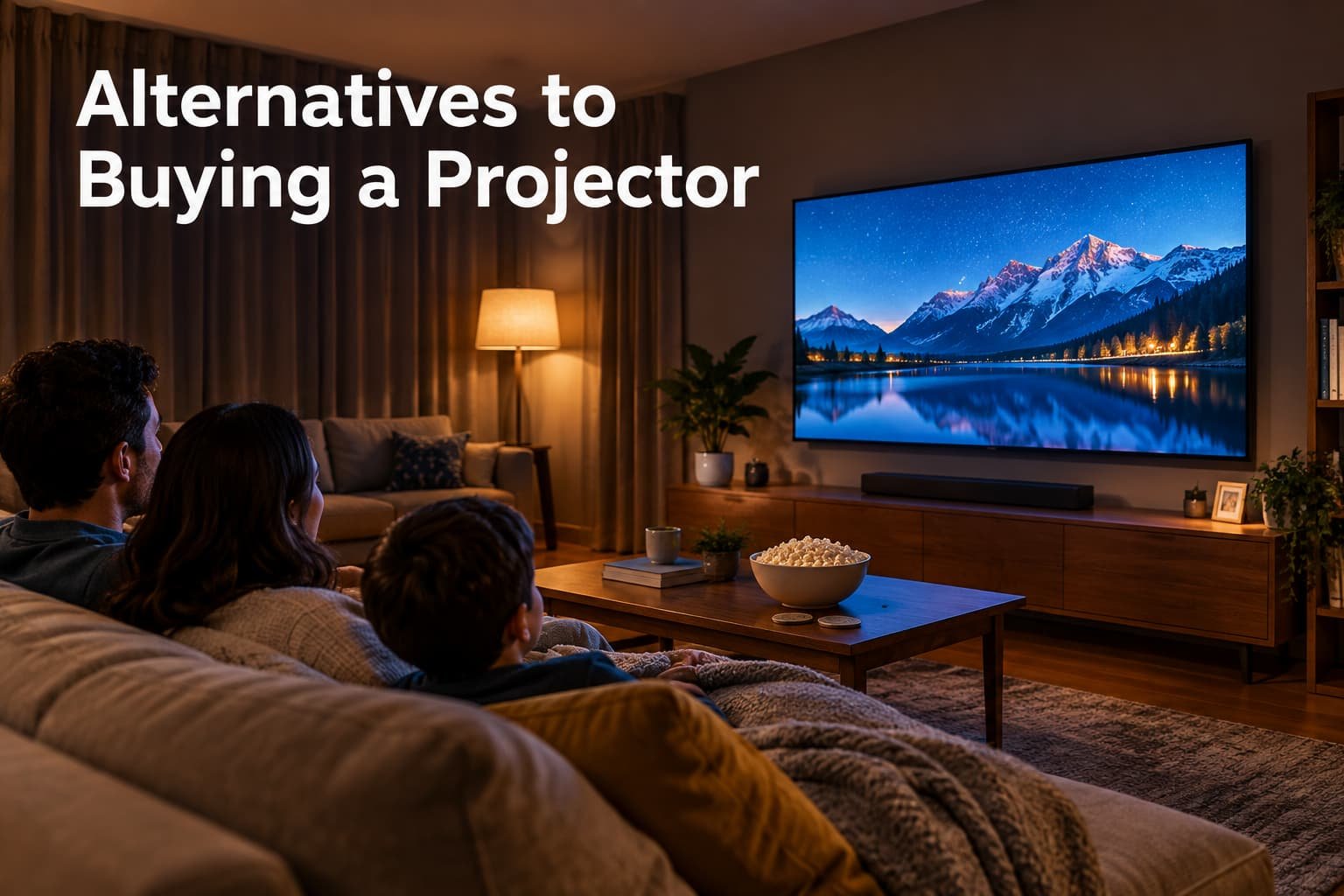
A projector promises a cinema in the living room. The promise is real, but so are the conditions attached to it: a dim room, a flat wall, a few minutes of setup and a fan humming in the background. If what you really want is a big-screen evening a few times a month, there are other ways to get it, and the best choice depends on a question about your habits that most buyers never ask.
What a projector is actually giving you
A projector gives you two things a television rarely can: a picture far larger than any ordinary screen, and a room with no screen in it when the film is over. Those are real advantages.
It also brings conditions that a television never asks for. The room has to be dim, the wall has to be clear and fairly smooth, and someone has to switch it on, check the picture and sometimes adjust it. Whether those conditions are a pleasure or a nuisance decides whether a projector suits you.
The kinds of alternative, and what each costs you
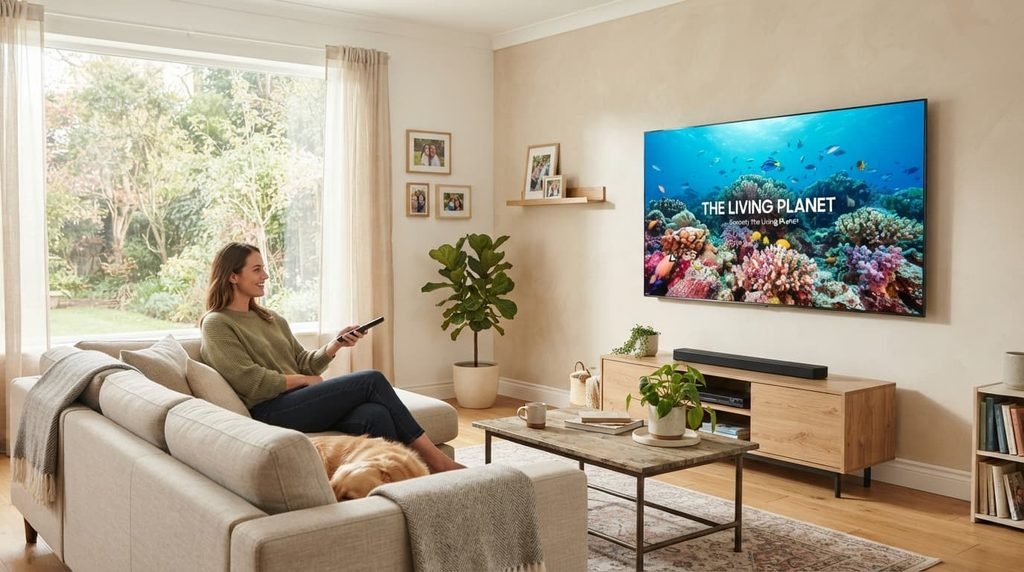
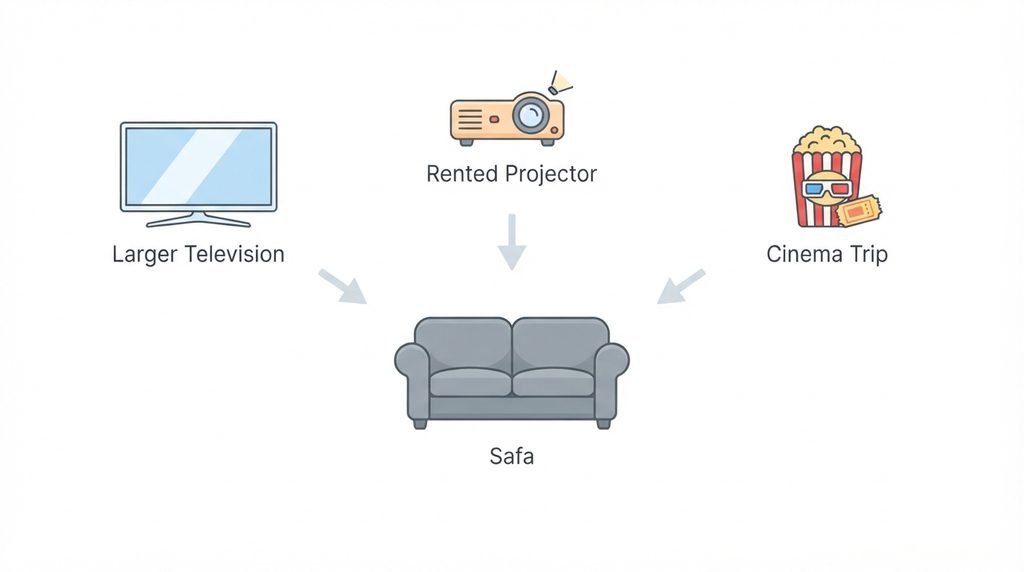
A larger television where the projector would have gone. It works in daylight, switches on at once, needs no setup and has no lamp to replace. The cost is a size ceiling, since the largest screens cost a great deal, and a big black rectangle that stays on the wall when the television is off. Heavy screens also need a wall mount rated for their weight and fixed into a suitable wall, so ask a qualified installer if you are unsure.
Borrowing or renting a projector for the evenings you want one. This gives you the big-screen feeling without owning, storing or maintaining anything, and it lets you test your own room before you spend money. The cost is availability and effort, because you set it up every time, and rental fees add up if you rent often.
Going out for the event feeling. A cinema or a community screening suits the evenings that are meant to feel special. The cost is travel, tickets and fixed showing times, but there is no equipment to buy or look after.
The trade-off nobody warns you about
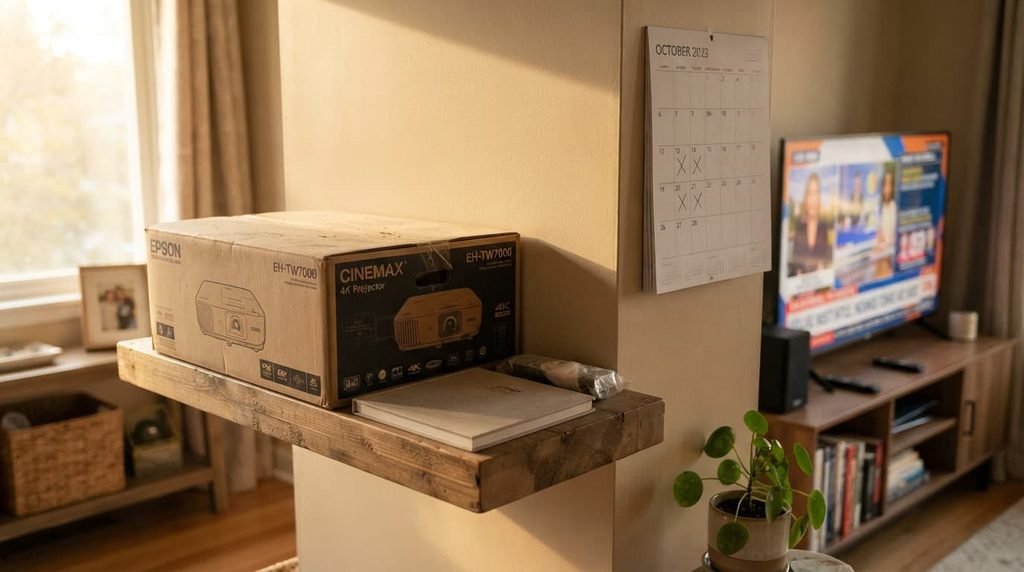
The cost that shows up later isn’t money. It is how rarely the projector gets used.
Because it needs a dim room and a little setup, a projector tends to suit planned evenings, while spontaneous viewing in a bright room tends to go to the television. If most of your viewing is unplanned and your living room is bright, the projector can sit idle between film nights, and the price of each actual use rises with every week it waits in its box.
How to figure out what you actually need
Three questions settle most cases.
How many evenings a month do you really want a big screen? Two or three planned evenings point toward renting or going out. Several a week point toward owning.
Can you dim the room when you want to? Curtains or blinds that block daylight make a projector workable. A room that cannot be darkened makes a large television the better answer.
Do you have a clear wall and somewhere to put the unit? A wall full of shelves, windows or radiators leaves little room for a picture, whichever way you look at it.
A cheap way to test the idea
Borrow or rent a projector for two evenings and use it exactly as you would if you owned it, with your usual shows rather than a demonstration film. Notice how long the setup takes, how much you mind the fan, and whether you reached for it again on the second night. Two ordinary evenings tell you more than any review.
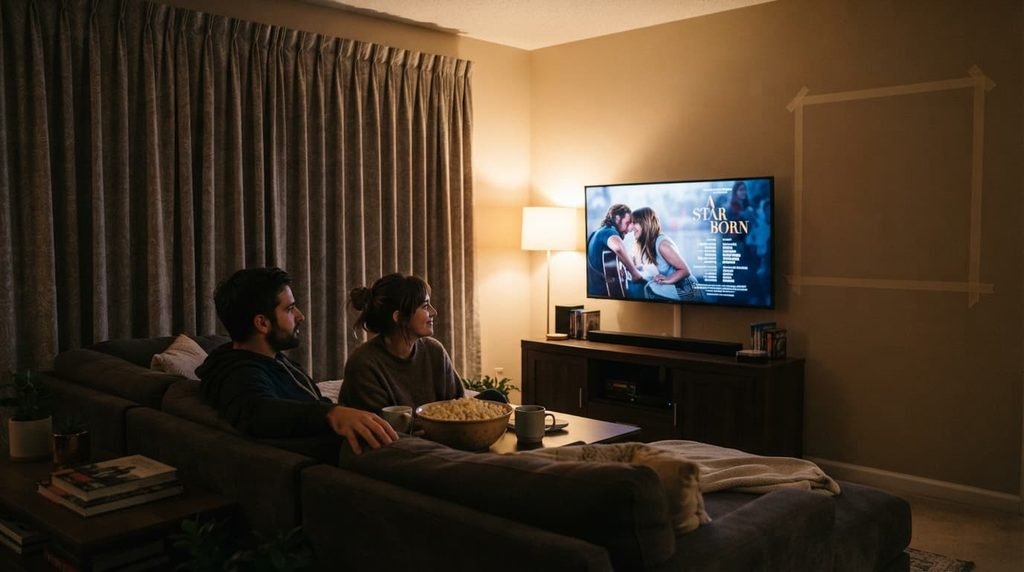
If you cannot borrow a projector, test the dimming part on its own. Choose an evening, close the curtains, switch off the main lights and watch on your usual screen with one soft lamp behind it. If you do not enjoy the dim room, a projector will not change that, and you have learned it for free.
Getting the cinema feeling without the equipment
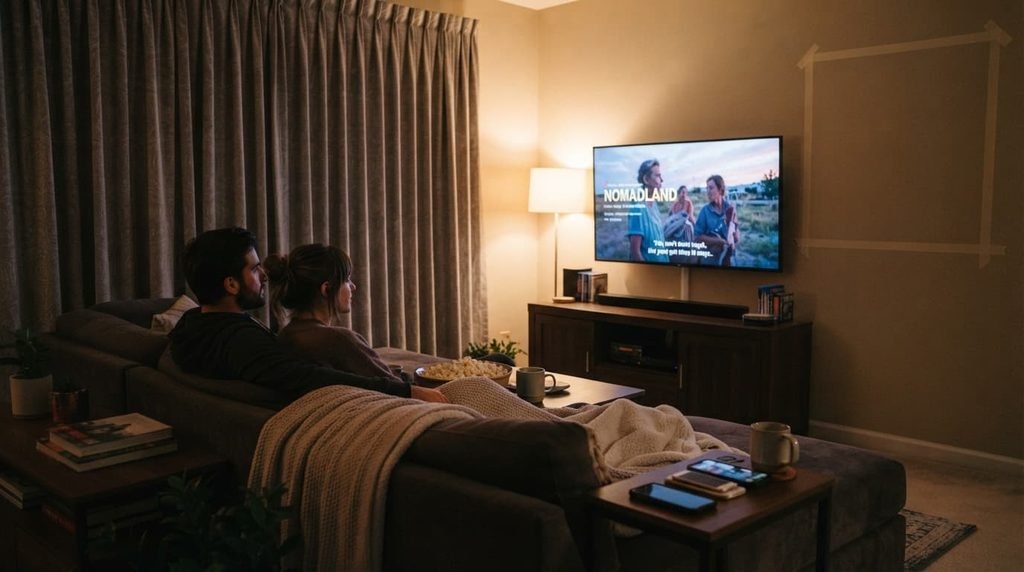
Much of what makes a film night feel like a cinema comes from conditions rather than size: dim, indirect light, a screen that is not fighting reflections, decent sound and a clear start to the evening. A soft lamp behind the television, curtains drawn, phones in another room and the volume turned up a notch can change an ordinary evening more than extra inches would. Sound is the upgrade many people notice most, and a modest speaker or soundbar improves dialogue and action alike, whichever screen you choose. These steps cost little and apply to every option above, including a projector you decide to buy later.
When buying a projector remains the reasonable choice
I’ll say this plainly: projectors get dismissed as gadgets more readily than the situation justifies.
For the size of picture you get for the money, a projector is hard to beat. It disappears when it is off, it can move between rooms or out to the garden, and for a household with a dark room and a habit of film nights it is simply a better fit than a television of the same cost. Choosing an alternative is only an improvement when the alternative really suits how you watch.
The one check worth doing before you decide
Look back at your last ten evenings of watching something. Count how many took place after dark in a room you could have dimmed, and how many began with a decision such as “tonight we watch a film” rather than “let’s see what is on”. If most did, a projector fits you. If most were in daylight or spontaneous, the alternatives fit better.
What people get wrong
The first mistake is treating a projector as a bigger television. It is an evening device with its own conditions, and the people who are happiest with one are those who plan around them.
The second is buying for one big occasion, such as a final or a premiere, rather than for the weekly habit that will decide whether it gets used.
The third is comparing a projector’s price with a television’s price instead of the whole cost. Add the surface to project on, audio, a mount or stand and, for lamp models, replacement lamps, then compare.
Questions readers keep asking
Is a projector cheaper than a very large television?
Often per inch of picture, but you need to add the screen or a suitable wall, audio and, for lamp models, replacement lamps. Compare the whole cost, not the price on the box.
Can I use a projector in the daytime?
You can, with curtains or blinds that darken the room and a model bright enough for the conditions. In a room that cannot be darkened, a television will give the better picture.
Is renting before buying really worth it?
For most people, yes. A rental costs far less than a wrong purchase, and it answers the question that matters, which is whether you will use it.
What about a smaller projector for a bedroom?
The same questions apply. Check that you can dim the room and that the wall is clear, and think about whether you would use it often enough to justify keeping it.