Choosing between stick-on tiles or tile paint on a rented kitchen splashback is easy to get wrong. Both promise a fresh look without a builder, and they behave very differently when the lease ends. On a wall of 300 by 60 cm, stick-on tiles add about 20 metres of seams that can lift. Paint adds about 7 metres of edge and can’t be taken back. This guide compares the two on time and heat. It also covers grease and removal. It then offers a third route that keeps what you have, and it closes with two short rules for choosing. Every sum uses a Dutch kitchen with 15 cm tiles.
How stick-on tiles or tile paint compare on a rented kitchen splashback
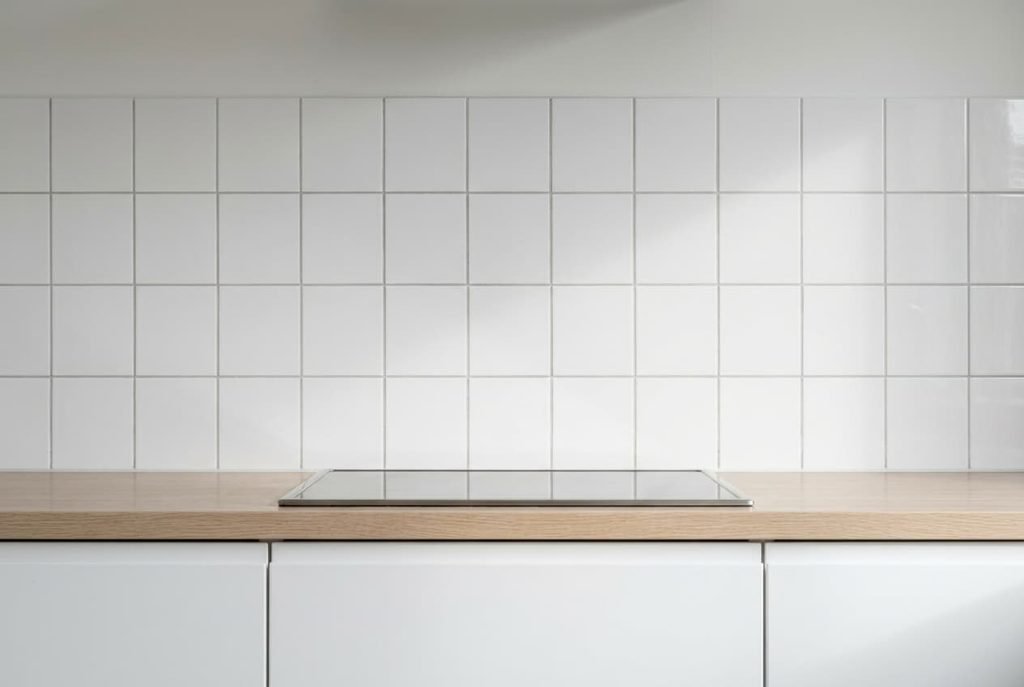
The splashback is the one kitchen wall that takes heat, then steam, then grease every day, so any cover has to survive each of them. This one is 300 cm in length and 60 cm in height, which makes 1.8 m². It’s tiled with 15 cm squares set 3 mm apart, so the wall has 20 columns and 4 rows. That makes 80 tiles and about 20.4 m of grout lines. Vertical runs give 11.4 m of that, and horizontal runs give 9 m.
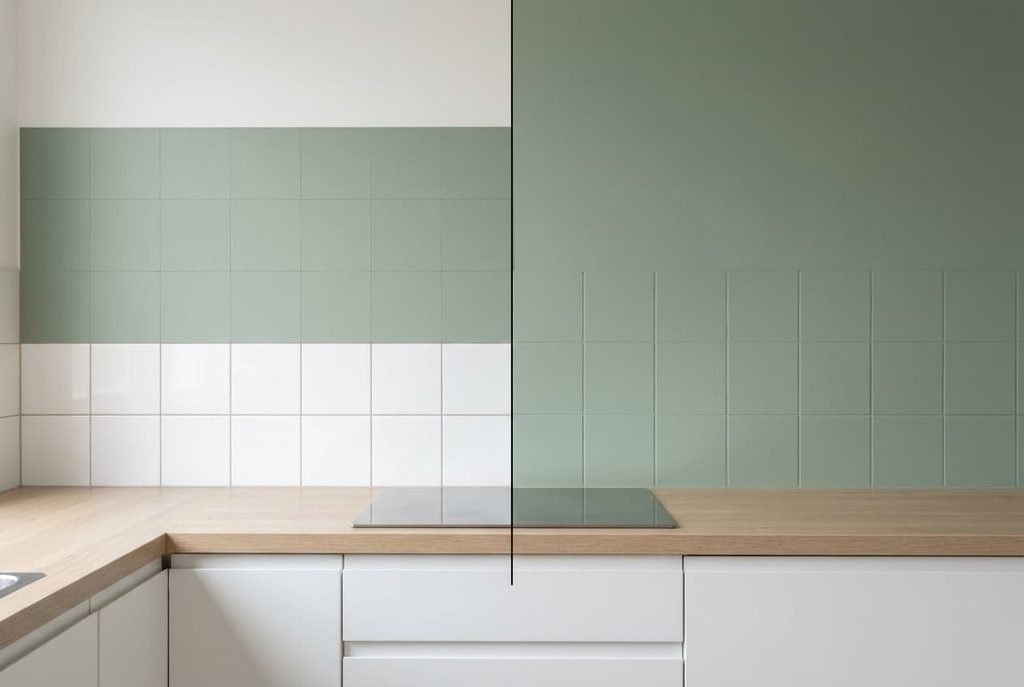
Both options sit on those lines. Each handles them in its own way. Stick-on tiles lay a vinyl layer held by adhesive over the old tiles, while tile paint bonds a thin hard film to the glaze. The first stays a separate sheet that can be peeled away. The second becomes part of the surface and goes wherever the wall goes.
Two numbers show the difference, and they’re easy to check on your own wall. A stick-on wall has 20.4 m of seams where an edge can rise, and a painted wall has only its 7.2 m outer border. Seams are where steam gets under a layer. Edges are where grease collects. So the first number matters more near the hob than anywhere else.
What decides a rental is whether the choice can be reversed.
The two options side by side
Six properties separate the two, and each one is stable. They don’t depend on the maker or on a particular product. That’s why a table helps more here than a review of any single kind. Read the rows from top to bottom, and notice that the first two favour paint while the last two favour tiles that peel off. Anything you buy will behave the same way. The differences come from what the layers are made of and how they hold to the wall.
| Property | Stick-on tiles | Tile paint |
|---|---|---|
| Hands-on time for 1.8 m² | about 2.5 hours, including degreasing | about 1.5 hours, with two coats |
| Wait before normal use | none once pressed flat | two to three days to harden |
| Seam length that can lift | 20.4 m across the whole wall | 7.2 m, outer edge only |
| Grout lines | partly hidden as shallow ridges | still visible as grooves 3 mm deep |
| Behind the hob | edges may curl in strong heat | no edges, so nothing to curl |
| Reversible | yes, using warm air | no, only by stripping |
Stick-on tiles win on reversal and speed of use, while paint wins on edges and heat. Between tiles or tile paint, that last row decides most tenancies.
How stick-on tiles behave day to day
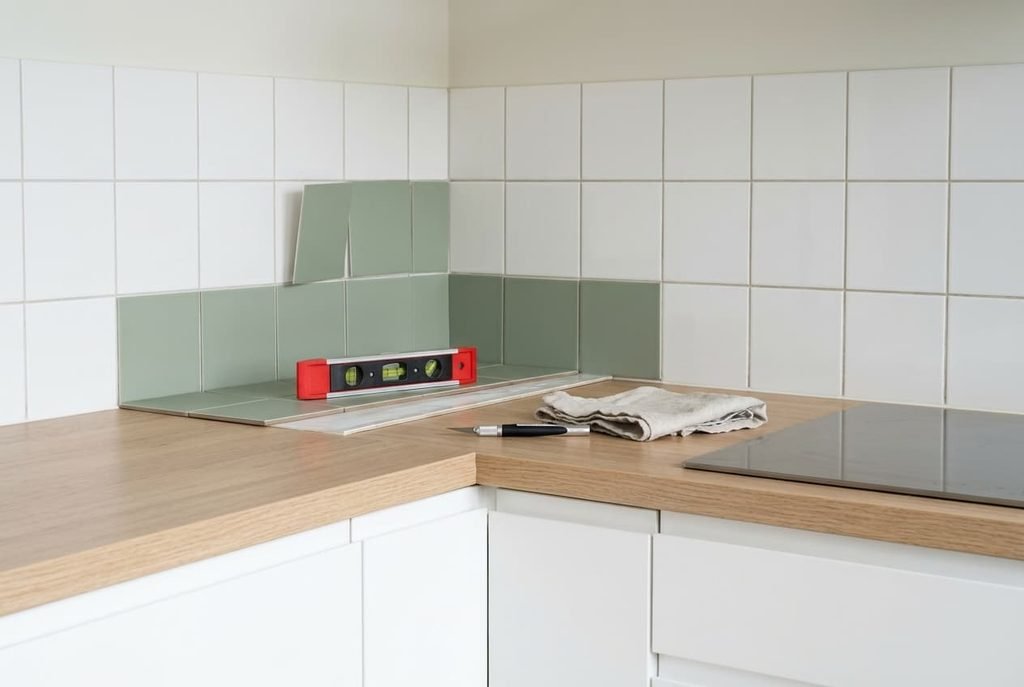
Laying 80 tiles takes about 1.5 minutes each. That’s two hours at the wall, plus 30 minutes to degrease the old surface. Begin on the lowest line at worktop height. Check each row with a spirit level, because a 2 mm tilt in the first row grows to 10 mm by the fourth. Cut around sockets with a sharp knife, and press each tile from the centre outwards so the air escapes.
The 20.4 m of seams is the weak point. Grease collects in them, and the edges within about 30 cm of the hob are the ones that curl first. A soft cloth and warm water keep them clean.
When the tenancy finishes, warm air softens the adhesive. Peeling 80 tiles at a minute each takes about 80 minutes. Tired or chipped glaze underneath can come away with the adhesive, so test one tile in a corner before you do the whole wall. A tenant leaving within a year can accept that risk. It isn’t worth taking on a wall you’ll keep.
How tile paint behaves day to day
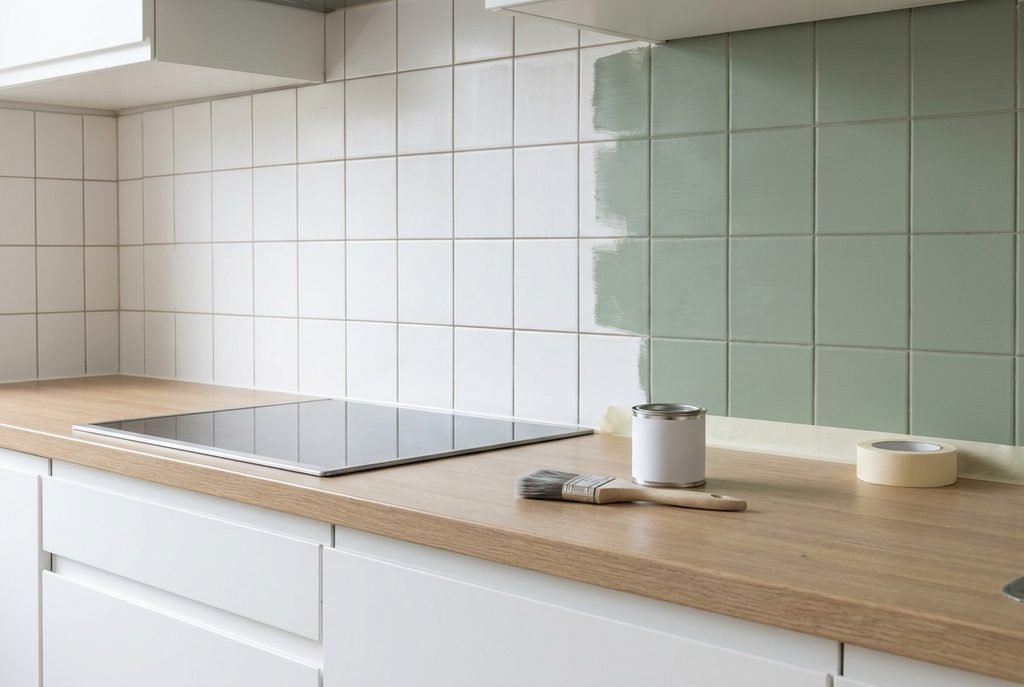
Tile paint starts with preparation. Degrease the wall, sand the glaze lightly so the film can grip, and wipe off the dust. Two coats go on with four to six hours between them, and the film then needs two or three days before it takes scrubbing. Hands-on work is about 90 minutes. Yet the wall stays out of full use for three days.
The film is continuous, so only the 7.2 m of outer edge can lift, and nothing curls near the hob. That’s why people who pick tiles or tile paint for a long tenancy usually end up choosing the paint. The grout lines stay 3 mm deep and hold grease unless you fill them first. Painting straight over them leaves a grid of fine grooves that catch the light.
Paint can’t be peeled. Stripping 1.8 m² takes a day with chemical remover and may dull the glaze. Because the change is permanent, written permission from the landlord matters here more than for any other kitchen change. A photograph of the agreed finish saves an argument later.
Permanence is the price of a smooth finish.
The third option: keep the tiles you have
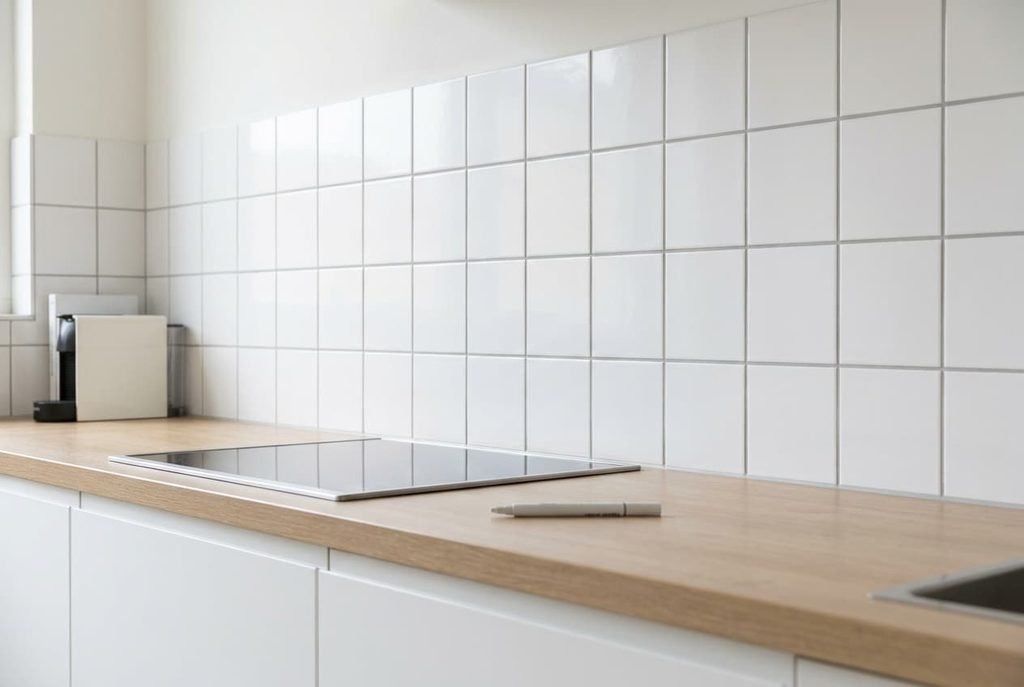
Plain white or cream tiles often need nothing more than a good clean. The part that looks dated is usually the grout, which covers about 4% of the wall yet supplies nearly all of its colour contrast. So re-colour only the grout lines with a grout pen, and leave the tiles themselves alone.
The 20.4 m of grout takes roughly 45 minutes with a 3 mm pen. Wipe the lines clean, run the pen along each one, then lift the excess from the tile face before it dries. A light grey over dull white lines changes the whole wall, and nobody can tell the tiles are the originals.
This route fails on a tile with a strong pattern, such as brown flowers, because no grout colour hides a print. On a plain tile, though, it asks for the least work and it leaves nothing to remove when you move out. Check the result in daylight and again under the evening lamps, since a pen colour can look different under each.
Which suits a rented kitchen splashback: tile paint or stick-ons?
If the tenancy may end within two years, pick stick-on tiles and test one corner first. The cost is edge care near the hob. You gain a full return of the original wall. The landlord sees nothing different on the day you hand back the keys. Test the adhesive on one corner first and give it a day to settle.
If you hold written permission and expect to stay beyond three years, pick tile paint and fill the grout lines before you start. The cost is permanence. You gain a surface with no seams to lift behind the cooker, and you can wipe it daily without worrying about edges. Ask for the permission in writing and note which finish and colour you mean.
In both cases, clean the wall properly first. Grease under either layer is the main reason a splashback fails, and no product removes the need to degrease. Spend an extra 15 minutes on the strip nearest the hob. Whichever of the tiles or tile paint you pick, the wall will hold for years if it starts clean. That’s the cheapest insurance you can buy.
Questions readers keep asking
Which one lasts longer behind a hob?
Paint usually lasts longer in the hot zone because it has no edges to curl. Stick-on tiles can last for years on the cooler parts of the wall. Leave a gap beside the hob if you can, and paint that strip instead of tiling it.
How do I clean each one?
Wipe both with a soft cloth and warm water. Stick-on tiles need extra attention along the seams, where grease collects, while painted grout grooves need a soft brush. Avoid scrapers and harsh scourers on either surface, because both scratch more easily than glazed ceramic.
Which suits a short tenancy?
Stick-on tiles suit a short tenancy because they come off and the old wall returns. Paint suits only a long stay with the landlord’s agreement. If neither feels safe, re-colouring the grout is the lowest-risk move for any length of lease.