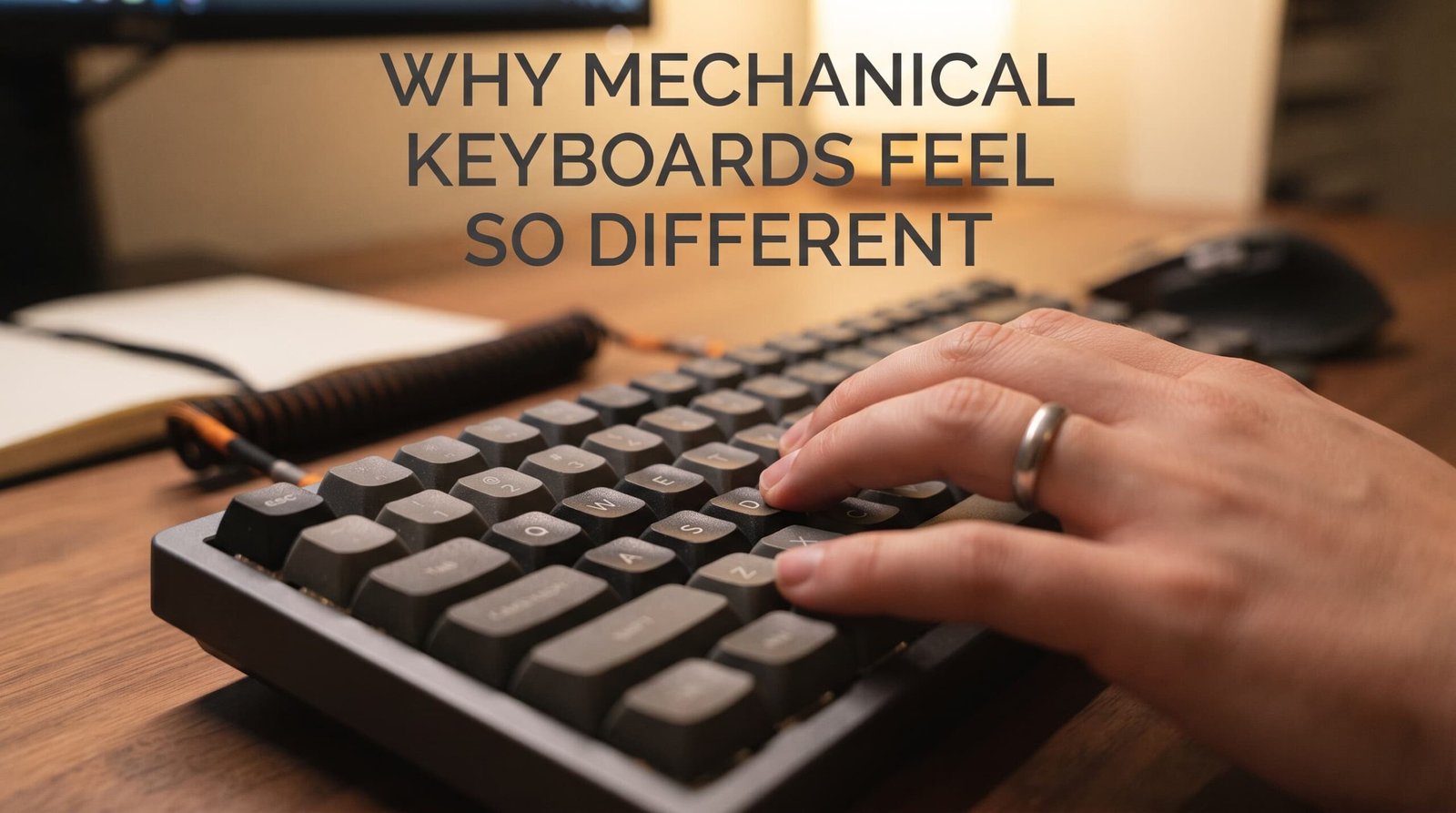
Mechanical keyboards genuinely use individual physical switches beneath each and every key, each containing their own dedicated spring and contact mechanism, rather than the single shared rubber membrane sheet most standard keyboards rely on for all their keys simultaneously and uniformly. This fundamental construction difference explains both why mechanical keyboards feel and sound so distinctly different, and why that difference isn’t purely a matter of marketing or preference alone.
The short answer, and what it leaves out
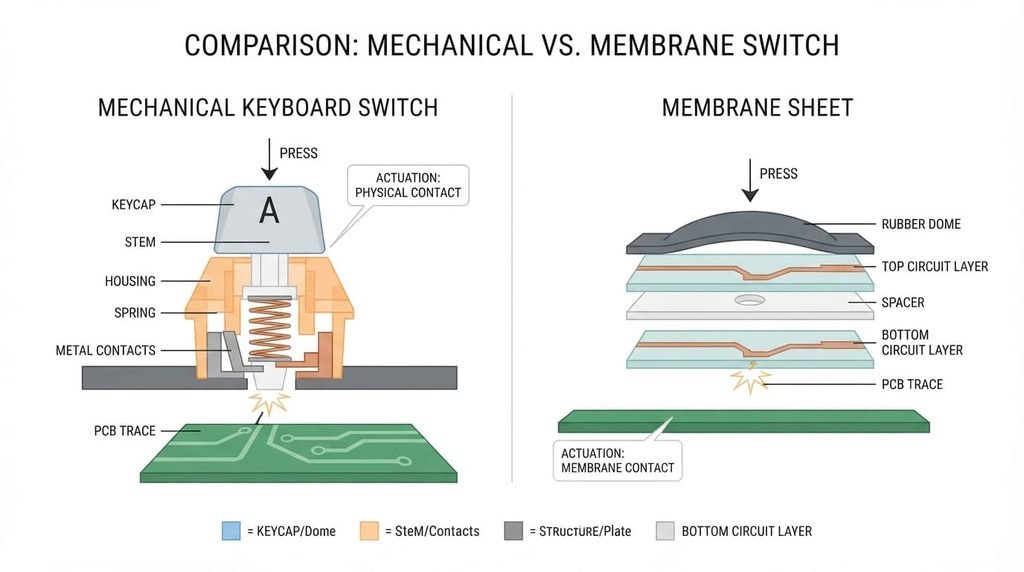
Each key on a mechanical keyboard operates its own genuinely independent switch, providing consistent, individually-tuned resistance and travel distance, while a membrane keyboard’s keys all press down onto one continuous rubber sheet that must deform to register each keystroke.
What that leaves out is why this specific construction difference actually matters for the typing experience itself – individual switches allow each key to be engineered with a genuinely precise, consistent actuation point, while a shared membrane’s more variable deformation can produce a less consistent, mushier feel that changes somewhat depending on exactly where and how a key is pressed.
How it actually works, step by step
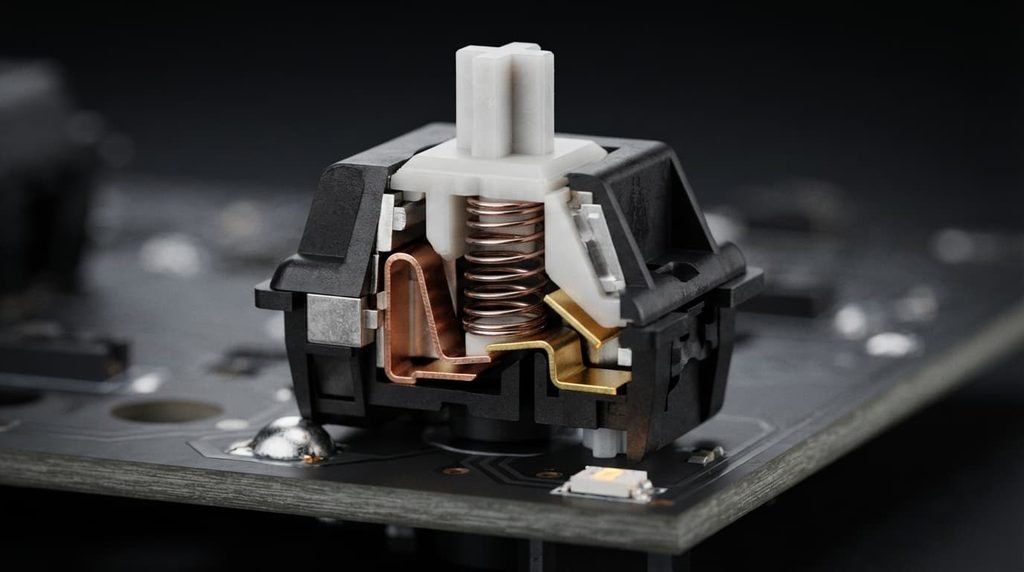
When you press a mechanical key, that specific key’s individual switch compresses a dedicated spring, and at a genuinely precise, engineered point during that compression, the switch’s contact mechanism completes an electrical circuit, registering the keystroke.
This precise actuation point can be engineered to occur at different specific distances into the keystroke depending on the switch’s actual design, which is why different mechanical switch types genuinely feel different from each other even within the broader mechanical category, not just compared to membrane keyboards generally.
When you press a membrane key, your finger’s pressure must deform the rubber membrane sheet beneath that specific key sufficiently for it to make contact with the circuit board underneath, a process that’s inherently less precisely defined than a mechanical switch’s dedicated, individually-engineered mechanism.
Why switch colour naming can be genuinely confusing
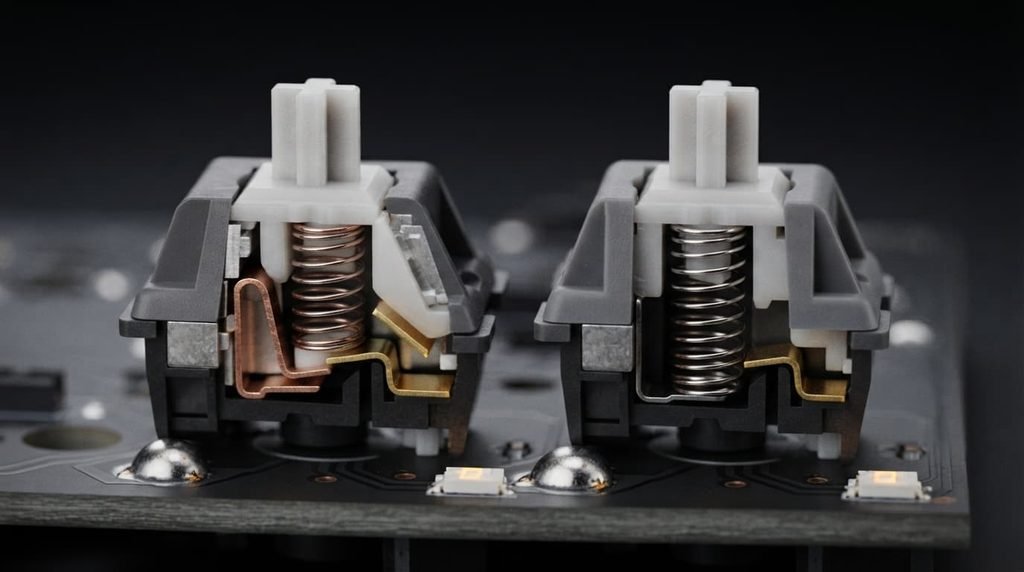
Mechanical switches are often referred to by colour names specifically, a naming convention originating from one particular manufacturer that’s since become a broader industry shorthand, even when used by other manufacturers producing their own genuinely distinct switches. This means the same colour name doesn’t always guarantee identical characteristics across every manufacturer, since different companies may apply similar naming conventions to switches with genuinely different actual specifications.
This is genuinely part of why researching a specific switch’s actual stated characteristics – actuation force, travel distance, tactile or linear feedback – matters considerably more than relying purely on colour naming alone, particularly when comparing switches across different manufacturers rather than staying within one single manufacturer’s own consistent internal naming system throughout.
The analogy, and where it breaks
Mechanical switches are sometimes compared to individual, dedicated light switches for each room versus one shared dimmer control adjusting several lights simultaneously – each mechanical switch operates independently with its own precise, defined action, while a membrane’s shared sheet behaves more like that single shared control affecting everything somewhat uniformly.
The analogy holds for the core independent-versus-shared-mechanism distinction. It breaks because a dimmer control still provides genuinely precise, intentional control despite being shared, while a membrane keyboard’s shared sheet doesn’t offer this same intentional precision – it’s more a structural limitation of the shared design than a deliberately engineered characteristic the way a dimmer’s shared control actually is.
What this does not explain
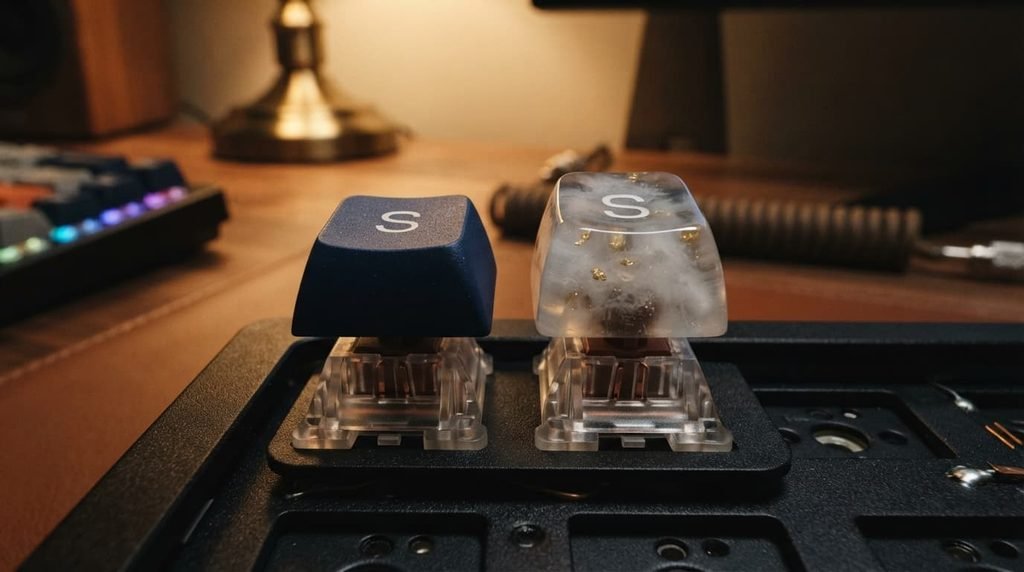
The switch-mechanism explanation clarifies why mechanical and membrane keyboards feel different, but it doesn’t explain or address every typing experience factor – keycap material and shape also genuinely affect tactile feel independently of the underlying switch mechanism, meaning two mechanical keyboards with identical switches can still feel somewhat different based on this separate factor.
It also doesn’t explain why mechanical keyboards are often considered more durable specifically, since this durability difference stems from each individual switch typically being rated for a genuinely higher number of keystrokes than a membrane’s shared sheet material typically withstands before genuine degradation becomes noticeable.
What people get wrong about it
The belief that all mechanical keyboards feel essentially identical to each other, differing only from membrane keyboards as a category. This forms because “mechanical” gets discussed as one broad category, but different specific switch types within that category – varying in actuation force, travel distance, and tactile feedback – can feel considerably more different from each other than some marketing suggests, making the specific switch type worth understanding beyond simply “mechanical versus membrane.”
The belief that mechanical keyboards are always louder than membrane keyboards. While some mechanical switch types are genuinely louder, others are specifically engineered to be quieter than typical membrane keyboards, meaning volume isn’t a universal, defining characteristic of the mechanical category as a whole.
Where the popular explanation oversimplifies
Advice describing mechanical keyboards as simply “better” or “more premium” than membrane keyboards glosses over the meaningful variation within the mechanical category itself, treating it as one uniform upgrade rather than accurately reflecting that different switch types serve genuinely different typing preferences and use cases.
This distinction matters practically: understanding that “mechanical” encompasses genuinely varied specific switch characteristics helps explain why someone might try a mechanical keyboard and dislike it, despite mechanical keyboards’ generally positive reputation, if that specific switch type simply doesn’t suit their own particular typing preference.
Mechanical keyboards work through genuinely individual, precisely-engineered switches beneath each key, not a single shared membrane – this construction difference explains the distinct feel, but the mechanical category itself contains meaningful internal variation worth understanding beyond the broad mechanical-versus-membrane distinction. Understanding it as a category with genuine internal diversity, rather than one uniform experience, is the detail most explanations skip, and it’s the one that actually explains why individual experiences with mechanical keyboards vary so considerably.
Questions readers keep asking
Do all mechanical keyboards require the same amount of force to actually press a key?
No, genuinely not at all – different switch types are specifically engineered with meaningfully different actuation force requirements, meaning some mechanical switches require noticeably less or more pressure than others, making this a genuine factor worth considering based on your own typing style and preference.
Is a mechanical keyboard genuinely worth the typically higher price compared to a membrane keyboard?
This genuinely depends considerably on how much you personally value the specific tactile and auditory feedback mechanical switches actually provide, alongside their generally greater durability, since these genuine benefits matter more to some typists than others relative to the typical price difference involved.
Does switch colour naming mean the same thing across every keyboard brand?
Not necessarily at all, as genuinely covered above – while certain colour conventions are widely followed, checking a specific switch’s actual stated specifications rather than relying purely on colour name alone is genuinely worth doing, particularly when comparing switches from different manufacturers rather than staying within one single consistent brand’s own internal system throughout.
Can keycaps from one mechanical keyboard genuinely be used on a different mechanical keyboard?
Often yes indeed, provided the underlying switch stem type is genuinely compatible between the two specific keyboards, though checking this particular compatibility detail directly is genuinely worth doing before assuming universal interchangeability across every mechanical keyboard and keycap combination available.