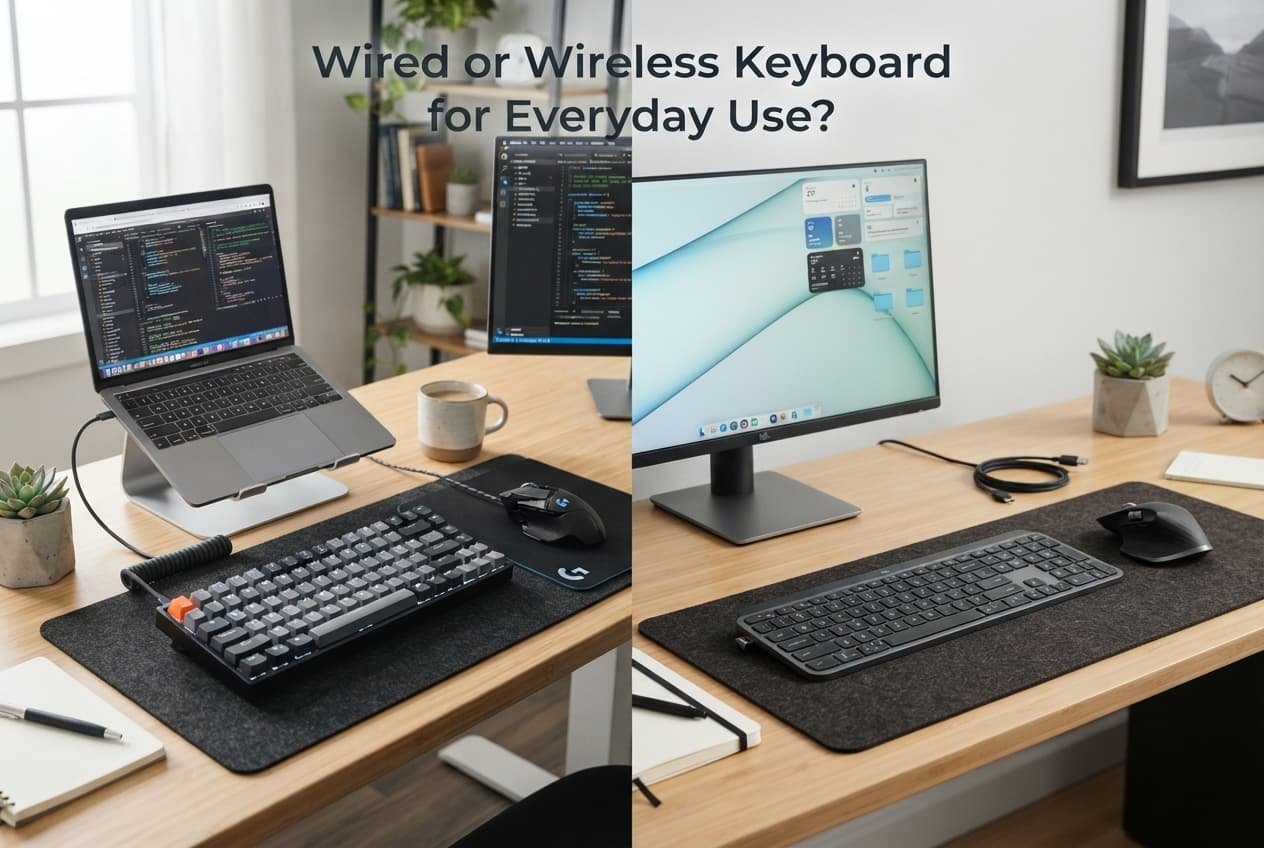
The right choice genuinely isn’t decided by which one sounds more modern or convenient – it’s decided by how much genuine desk clutter actually concerns you and how much you genuinely trust ongoing battery management versus a permanent, entirely uninterrupted connection. A wired and a wireless keyboard solve genuinely different priorities, and defaulting to whichever seems more contemporary misses what actually determines which one serves your particular daily use better.
The one property that decides it
The deciding factor is whether you genuinely prioritise a clutter-free desk with fewer visible cables, or a connection that never requires battery management and never experiences even occasional wireless interference, not simply which technology sounds more current. A wireless keyboard directly addresses desk tidiness and cable-free flexibility, while a wired keyboard prioritises a permanent, unbroken connection that structurally can’t experience battery depletion or wireless dropout.
This matters because your actual daily priorities – visual desk tidiness versus absolute connection reliability – determine which keyboard’s core characteristic genuinely serves you better, rather than either being universally superior regardless of your specific working habits.
Head to head
| Wired | Wireless | |
|---|---|---|
| Needs battery care | No | Yes |
| Desk cable clutter | Yes | Minimal |
| Stays connected | Consistently direct | Can experience dropout |
| Typical input lag | Essentially none | Usually negligible |
| Easy to move around | Less convenient | More convenient |
| Ease of setup | Minimal | Slightly more involved |
The single row that surprises people most is input lag quite specifically. Many assume wireless keyboards inherently introduce noticeable lag compared to wired, but modern wireless keyboards typically achieve genuinely negligible lag for typical everyday typing, meaning this once-significant difference has narrowed considerably for most common daily use cases.
Where wired wins
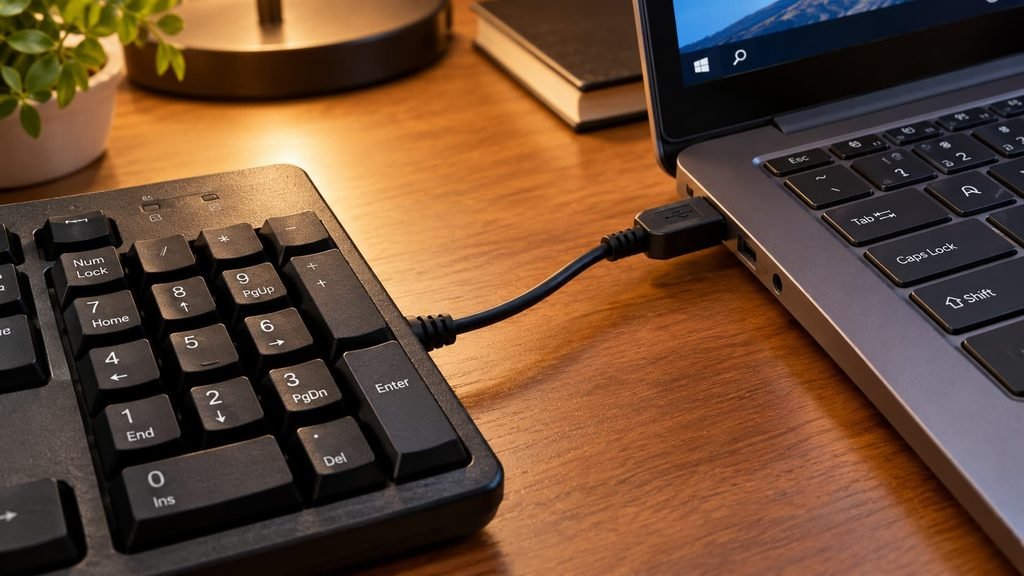
Anyone who genuinely prioritises absolute connection reliability without any battery management responsibility benefits from a wired keyboard’s permanent connection, since this directly addresses a desire for zero interruption risk in a way a wireless keyboard’s battery-dependent nature structurally can’t match regardless of how reliable that specific wireless keyboard otherwise is. The unglamorous reason: a wired keyboard also typically costs less than a comparable wireless model, which matters more than it might initially seem for budget-conscious purchases where the wireless-specific technology adds cost without corresponding benefit for that particular buyer’s actual priorities.
Anyone genuinely using their keyboard for latency-sensitive tasks also benefits from wired’s structurally guaranteed absence of any wireless-related lag in a related way, since even the negligible lag modern wireless keyboards typically achieve remains a theoretical possibility wired connections simply don’t carry at all.
Where wireless wins
Anyone who genuinely values a clutter-free desk and the flexibility to easily move their keyboard between different devices or locations benefits from wireless’s cable-free convenience, since this directly addresses both visual tidiness and genuine portability in a way a wired keyboard’s tethered nature structurally can’t provide. The unglamorous reason: a wireless keyboard also eliminates any cable management hassle entirely, which matters more than it might initially seem for anyone who’s dealt with a wired keyboard’s cable repeatedly tangling or catching on other desk items during regular use.
Anyone genuinely working across multiple locations or devices regularly also benefits from wireless’s easier transportability in a related way, since a wireless keyboard can typically pair with a new device more conveniently than repeatedly connecting and disconnecting a wired keyboard’s physical cable each time.

When neither is right
Assuming every household’s priorities are similar enough to default to whichever technology is currently more popular, without genuinely considering your own actual desk habits and reliability needs, is worth ruling out regardless of which option you’d otherwise lean toward.
A household’s actual balance between desk tidiness and connection reliability determines which keyboard’s core strengths genuinely apply, meaning a generic recommendation misses this real variation in what different households genuinely need from their everyday keyboard.
How to decide in thirty seconds
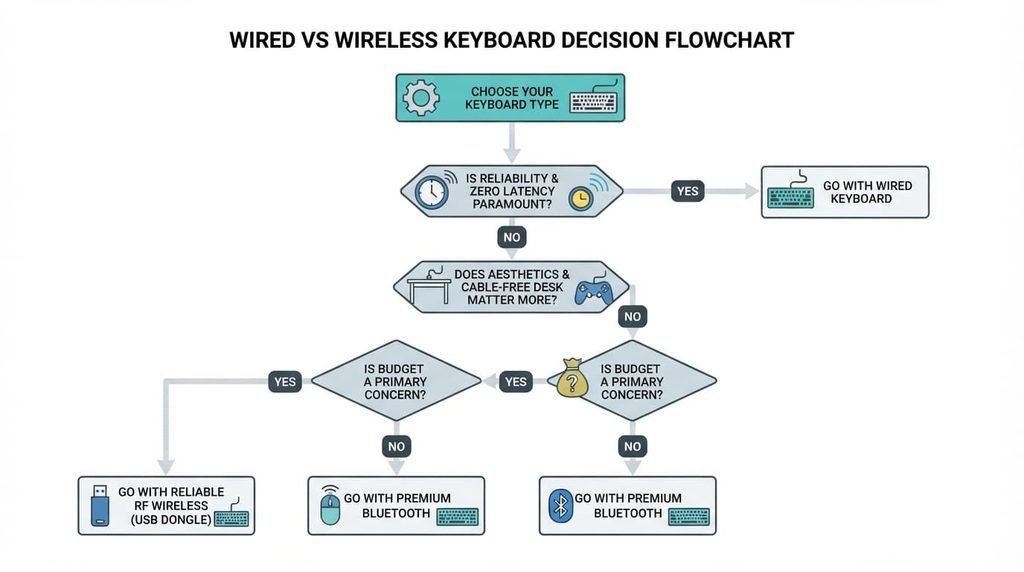
If you genuinely prioritise absolute connection reliability without battery concerns, choose wired. Its permanent connection directly addresses this specific priority in a way wireless technology structurally can’t match.
If you genuinely value a clutter-free desk and portability, choose wireless. Its cable-free convenience directly addresses this specific priority in a way a wired keyboard’s tethered nature doesn’t provide.
What changes the answer later
Your actual desk setup genuinely changing – moving to a considerably more visually minimal workspace, for instance – is worth reconsidering the choice at, since this specific shift favours wireless’s clutter-free appeal more than your previous setup may have required.
Your own genuine tolerance for battery management changing – finding yourself repeatedly frustrated by unexpected battery depletion, for instance – is also worth reconsidering the choice at, since this shift favours wired’s zero-maintenance reliability over wireless’s ongoing battery responsibility.
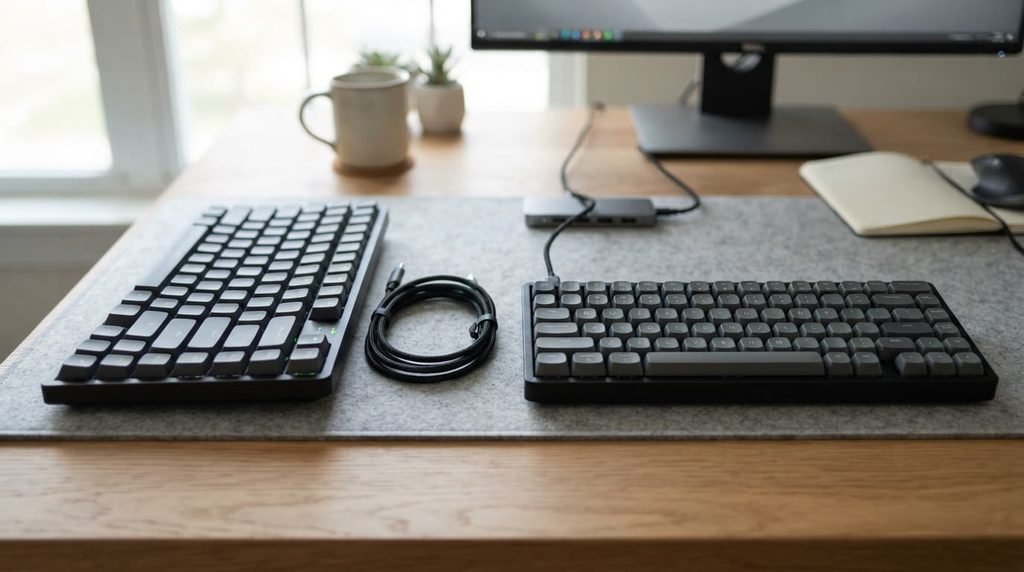
What people get wrong when choosing between them
The most common mistake is assuming wireless keyboards are automatically the more “modern” or objectively better choice, treating this as a straightforward upgrade rather than a genuine trade-off between two different sets of priorities. Wired keyboards aren’t an outdated compromise – they genuinely serve reliability-focused priorities better than wireless technology structurally can, regardless of how much wireless technology has generally improved.
A second common mistake is not accounting for genuine battery type and replacement convenience when choosing a wireless keyboard specifically. Some wireless keyboards use easily replaceable standard batteries, while others require proprietary charging, a difference worth confirming directly since it affects the actual ongoing convenience of wireless ownership considerably.

What changes if you’re setting up a shared or multi-user desk
If you’re genuinely setting up a keyboard for a desk multiple people will actually use regularly, prioritise the option requiring less individual habit management specifically – a wired keyboard removes any risk of a shared device being left with a depleted battery when someone else needs it unexpectedly, a consideration less relevant for a single dedicated personal user managing their own consistent battery habits independently.
Questions readers keep asking
Do wireless keyboards genuinely experience noticeable interference in typical home environments?
For most typical home environments specifically, no, genuinely not noticeably – modern wireless keyboard technology generally handles typical household wireless conditions quite well, though genuinely dense environments with many competing wireless devices can occasionally introduce minor interference worth being genuinely aware of beforehand.
Is it worth paying more for a wireless keyboard with genuinely longer battery life?
For genuinely frequent, heavy daily use specifically, yes, often quite genuinely – reducing how frequently you need to manage battery replacement or charging can meaningfully improve daily convenience overall, making this a genuinely reasonable factor to weigh against the typical additional cost involved here.
Is it worth owning both a wired and a wireless keyboard for different specific situations?
For some households genuinely, yes – keeping a wired keyboard as a reliable backup for situations where wireless reliability genuinely matters most, alongside a primary wireless keyboard for everyday clutter-free convenience, can serve varied needs considerably better than committing entirely to one single approach for every situation encountered.
Does a wired keyboard’s cable length genuinely matter for typical desk setups?
Yes, quite meaningfully – confirming a wired keyboard’s actual cable length genuinely accommodates your specific desk layout and device positioning before purchasing avoids the frustration of a cable that’s inconveniently short for your actual particular setup entirely.