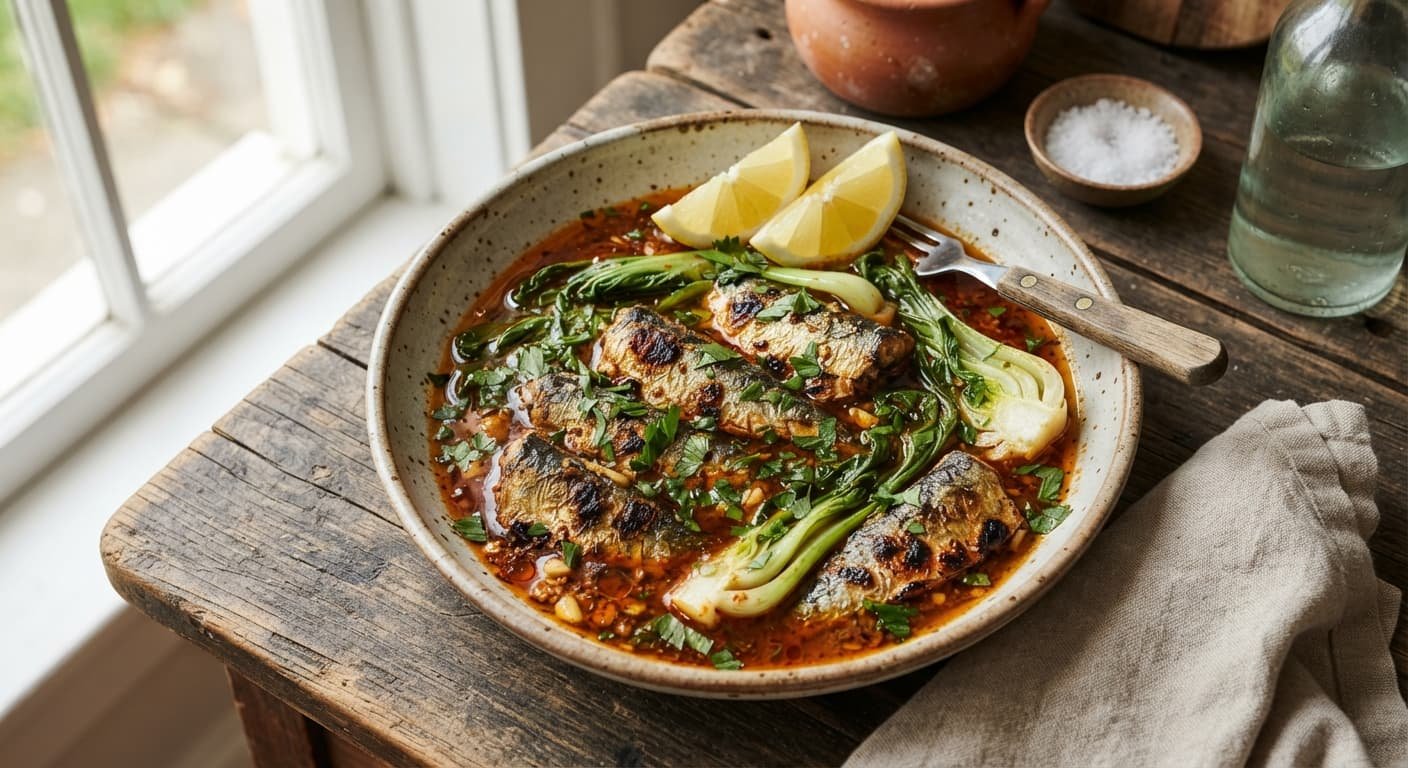
There is a particular sound sugar makes in the seconds before it turns — a thin, steady hiss that deepens into something closer to a crackle, right as pale granules collapse into a dark, glassy liquid. It happens fast, faster than most people expect the first time, and it is the sound that opens every batch of Caramelized Sardines with Chimichurri Sauce made in this kitchen, long before the fish or the herbs ever enter the pan.
Caramelizing small, oily fish in a savory sugar glaze is a real technique with real roots — it echoes the caramel-braised fish dishes found across Southeast Asian home cooking, where sugar is melted to a deep amber before savory liquid is added to build a glossy, salty-sweet coating. Pairing that glaze with chimichurri, the parsley-and-garlic sauce that developed alongside grilled meat and fish in Argentina and Uruguay, is a newer combination, but each half is built from techniques that already exist and already work — nothing here is invented for novelty’s sake.
The Technique Behind Caramelized Sardines with Chimichurri Sauce
The dish depends on getting the sugar to a deep amber color, not pale gold, before anything else touches the pan. Pale caramel tastes only sweet; deep amber caramel carries faintly bitter, toasted notes that balance the sardines’ richness, and that shift happens in the final 20 to 30 seconds of cooking.
Sugar melts through a straightforward path: it liquefies, then breaks down through caramelization, a process where heat splits the sucrose molecules apart and rebuilds them into hundreds of new flavor compounds, ranging from buttery to faintly smoky. Most recipes call this step “risky” because the difference between a rich amber and a burnt, bitter mess is a matter of seconds once the color starts shifting. The fix is simple: keep the heat at medium, never walk away once the sugar starts to color, and have every other ingredient measured and within reach before it goes into the pan.
Ingredients
This chimichurri sardines dish serves 3 to 4 as a main course with rice.
For the Caramelized Sardines
- 8 fresh sardines, cleaned and gutted, or 2 tins (about 400g) tinned sardines in oil, drained
- 3 tablespoons granulated sugar
- 2 tablespoons neutral oil, divided
- 3 tablespoons fish sauce
- 2 tablespoons rice vinegar
- 3 garlic cloves, thinly sliced
- 1-inch piece ginger, thinly sliced
- 1/4 cup water
For the Chimichurri
- 1 cup fresh parsley, finely chopped
- 2 garlic cloves, minced
- 1 teaspoon dried oregano
- 1/2 teaspoon red chili flakes
- 3 tablespoons red wine vinegar
- 1/2 cup olive oil
- Salt and black pepper, to taste
How to Make Chimichurri Sardines with a Caramelized Glaze
- Make the chimichurri first, so it has time to sit while the sardines cook. Combine the parsley, garlic, oregano, chili flakes, and red wine vinegar in a bowl. Whisk in the olive oil, season with salt and pepper, and set aside at room temperature.
- Pat the sardines dry with paper towels. If using fresh sardines, season lightly with salt.
- In a small bowl, stir together the fish sauce, rice vinegar, and water. Set this next to the stove — once the caramel starts, there is no time to measure anything.
- Heat the sugar in a dry, wide skillet over medium heat. Do not stir at first; swirl the pan gently once the edges begin to liquefy. Continue until the sugar turns a deep amber color, about 3 to 4 minutes total.
- Immediately pour in the fish sauce mixture — it will bubble and seize briefly. Stir until the caramel dissolves back into a smooth, glossy sauce, about 1 minute.
- Add the garlic and ginger and simmer for 2 minutes. Add the sardines, spooning the caramel sauce over them, and cook for 3 to 4 minutes per side (or just 2 minutes total if using tinned sardines, since they are already cooked) until glazed and heated through.
- Transfer the sardines to a serving plate, spoon over any remaining glaze, and finish with a generous spoonful of chimichurri over the top or on the side.
Good vs. Excellent: The Small Calls That Matter
A good version of this dish still tastes good. An excellent one comes down to timing and contrast.
- Trust the color, not the clock. Every stove runs slightly differently. Pull the caramel the moment it turns the color of dark honey, even if that happens sooner than the times listed above.
- Add the chimichurri cold, or close to it. The contrast between the warm, sweet-salty glaze and the sharp, herby sauce is the whole point of pairing them; warming the chimichurri flattens that difference.
- Don’t crowd the pan. Sardines need contact with the glaze on all sides. If the pan is too full, work in two batches rather than layering fish on top of fish.
- Rest the chimichurri for at least 15 minutes. The flavors sharpen and settle together in that time, rather than tasting like separate ingredients thrown into one bowl.
Common Mistakes and How to Fix Them
The caramel turned bitter and dark before I could add the liquid. The heat was likely too high, or the pan sat unattended for too long once color started developing. Lower the heat slightly next time and stay at the stove for the full process — it only takes a few minutes.
The sardines fell apart in the pan. Fresh sardines are delicate once cooked through. Use a thin fish spatula and turn them gently, only once, rather than repeatedly checking or flipping.
The chimichurri tastes flat. It usually needs more acid or salt, not more herbs. Add the vinegar in small increments and taste again before reaching for anything else.
Variations and Substitutions
Mackerel fillets or small trout work in place of sardines using the same glazing method, though cooking time may run a minute or two longer depending on thickness — both make a fine chimichurri sauce with caramelized fish for anyone who can’t find sardines locally. Tinned sardines are a legitimate shortcut here, not a compromise — since they are already cooked, they only need enough time in the glaze to heat through and take on flavor.
For a milder chimichurri, swap half the parsley for cilantro and reduce the chili flakes by half. If red wine vinegar isn’t on hand, white wine vinegar or a mild rice vinegar works nearly as well, though the flavor will be slightly less sharp. Honey can replace part of the sugar in the glaze for a rounder sweetness, though it caramelizes faster and needs closer watching.
Serving and Pairing
Serve the caramelized sardines with chimichurri sauce over steamed jasmine or basmati rice, letting the rice soak up any glaze left on the plate. A side of quick-pickled cucumber or thinly sliced radish adds a clean, crisp contrast to the richness of the glaze. Lime wedges on the side let each person adjust the balance of sweet, salty, and acidic to their own taste.
Storage and Reheating
Store the sardines and chimichurri separately in airtight containers in the refrigerator for up to 2 days; combining them before storage softens the herbs and dulls their color. Reheat the sardines gently in a covered pan over low heat with a splash of water to loosen the glaze, then spoon fresh chimichurri over them just before serving. This dish is not well suited to freezing, since the glaze separates and the sardines lose their texture once thawed.
Nutritional Information
Values below are estimates per serving and will vary depending on exact brands and quantities used.
| Calories | 410 kcal |
| Protein | 26 g |
| Carbohydrates | 12 g |
| Fat | 30 g |
| Fiber | 1 g |
What Stays With You
This recipe was tested and refined in the bebup.org kitchen, with several rounds spent specifically on pinning down the exact moment the caramel needs to come off the heat before publishing.
What stays with you after making Caramelized Sardines with Chimichurri Sauce isn’t the recipe card, it’s the sound — that first hiss of sugar breaking down, and later, the quieter scrape of a spoon against the bowl of chimichurri, pulling together herbs that had been sitting apart just long enough to become something sharper than the sum of their parts. Small fish, a few minutes of attention, and two techniques that had no reason to know each other end up tasting like they always did.
Caramelized Sardines with Chimichurri Sauce
Ingredients
Method
- Make the chimichurri first. Combine the parsley, garlic, oregano, chili flakes, and red wine vinegar in a bowl. Whisk in the olive oil, season with salt and pepper, and set aside at room temperature.
- Pat the sardines dry with paper towels. If using fresh sardines, season lightly with salt.
- Stir together the fish sauce, rice vinegar, and water in a small bowl. Set next to the stove.
- Heat the sugar in a dry, wide skillet over medium heat. Swirl gently once the edges liquefy. Continue until the sugar turns deep amber, about 3 to 4 minutes.
- Immediately pour in the fish sauce mixture; it will bubble and seize briefly. Stir until smooth and glossy, about 1 minute.
- Add the garlic and ginger and simmer 2 minutes. Add the sardines, spooning sauce over them, and cook 3 to 4 minutes per side (or 2 minutes total for tinned sardines) until glazed.
- Transfer the sardines to a plate, spoon over remaining glaze, and top with chimichurri.