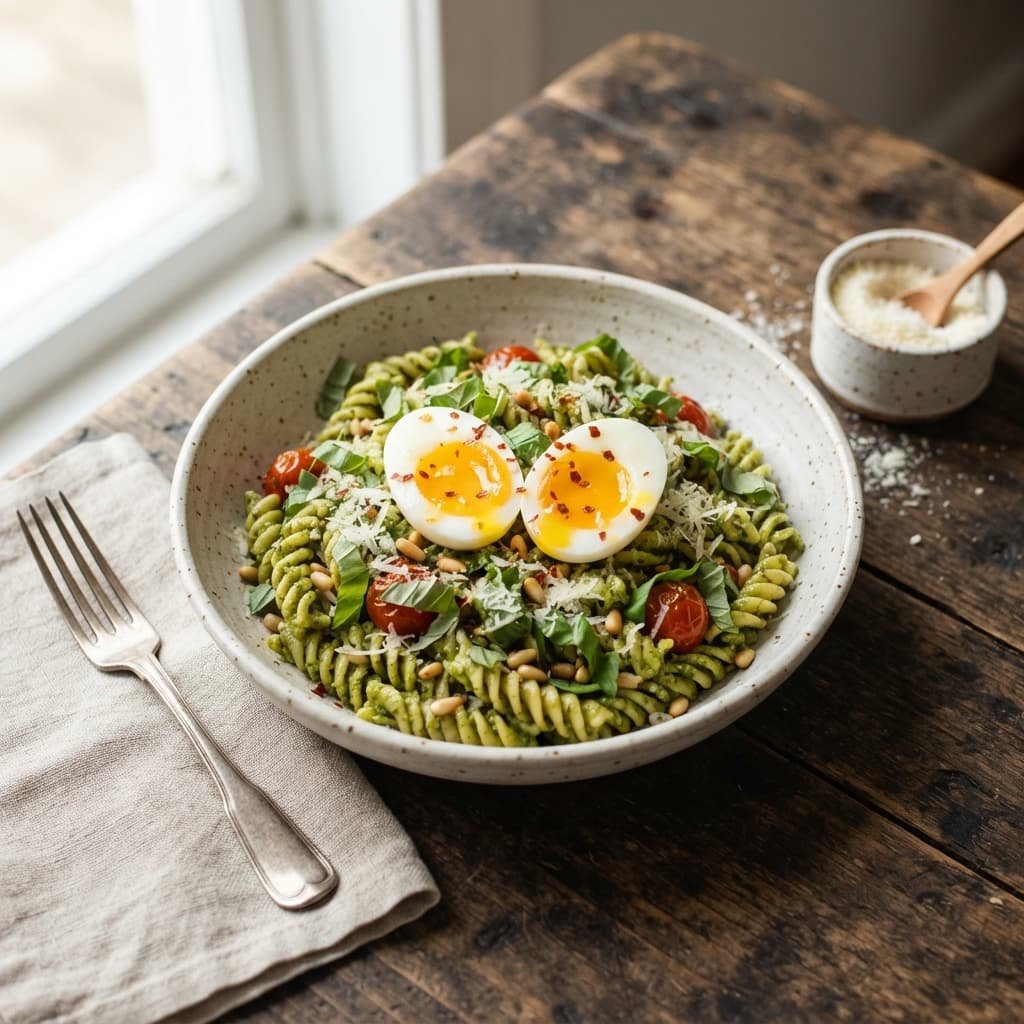
There’s no elaborate technique hiding inside Creamy Pesto Eggs Pasta. Pesto gets loosened with a little cream, pasta gets tossed through it, and a soft-cooked egg goes on top so its yolk becomes part of the sauce the moment you cut into it. What actually separates a forgettable bowl from a genuinely good one isn’t a hidden step — it’s two ratios: how much cream against how much pesto, and how soft the egg is cooked before it lands on the plate.
Both halves of this dish are already real and documented on their own. Creamy pesto pasta, made by loosening basil pesto with cream or half-and-half, is a common weeknight staple across countless home kitchens. Topping pesto pasta with a soft-boiled or poached egg, so the runny yolk mixes into the sauce, is also a documented pairing, showing up in recipes that pair pesto pasta with poached eggs specifically for that reason. This dish just keeps that combination simple and direct, without any extra steps beyond what each half already needs.
Getting the Balance Right in Creamy Pesto Eggs Pasta
This dish takes about 25 minutes, and it comes down to two ratios: roughly 3 parts pesto to 1 part cream so the sauce stays herby rather than creamy, and an egg cooked until the white sets fully but the yolk stays fully runny, since a firm yolk defeats the point of adding it.
Too much cream and the basil flavor gets buried under dairy richness; too little and the sauce stays thick and clumpy instead of coating the pasta smoothly. The egg works on its own separate timing: a few seconds too long in the pot and the yolk sets solid, turning from a sauce ingredient into just another chunk of protein sitting on top. Getting both of these right at the same time is really the entire skill this dish asks for, and neither one takes more than careful timing to manage once you know what to watch for.
Ingredients
This serves 2.
For the Pasta
- 8 oz (about 225g) short pasta, such as fusilli or farfalle
- 1/2 cup basil pesto (store-bought or homemade)
- 3 tablespoons heavy cream
- 2 tablespoons grated Parmesan, plus more for serving
- Salt and black pepper, to taste
For the Eggs
- 2 large eggs
- Red chili flakes, for serving (optional)
- Fresh basil leaves, torn, for serving
How to Make Creamy Pesto Pasta with Soft-Cooked Eggs
- Bring a large pot of salted water to a boil. Cook the pasta according to package directions. Reserve 1/2 cup of pasta water before draining.
- While the pasta cooks, bring a small saucepan of water to a gentle boil for the eggs. Carefully lower the eggs in and cook for exactly 6 minutes for a fully set white and a runny yolk.
- While the eggs cook, whisk together the pesto and heavy cream in a large bowl until smooth.
- Transfer the eggs to a bowl of cold water to stop the cooking. Peel gently once cool enough to handle.
- Add the drained pasta to the pesto-cream mixture, tossing to coat. Add a splash of reserved pasta water if needed to loosen the sauce, then stir in the Parmesan and season with salt and pepper.
- Divide the pasta between two bowls. Halve each soft-cooked egg and place on top.
- Finish with extra Parmesan, torn basil, and a pinch of chili flakes if using. Serve immediately.
Good vs. Excellent: The Details That Matter
A good bowl of this pasta still tastes good. An excellent one comes down to a handful of specific calls.
- Time the egg precisely. Six minutes is the target for a fully set white and a fully runny yolk, but every stove and every egg’s starting temperature shifts that slightly, so use a timer rather than guessing.
- Add the cream to the pesto off the heat. Pesto’s fresh basil flavor dulls if it’s heated too aggressively, so whisking the cream in cold, rather than simmering the two together, keeps the flavor brighter.
- Save pasta water before draining. The starch in it is what lets you loosen the sauce back to the right consistency if it seems too thick once the pasta is added.
- Cut into the egg at the table, not before. Letting the yolk break right as you serve it keeps that golden run intact for the photo and the first bite, rather than letting it soak in while the bowl sits.
Common Mistakes and How to Fix Them
Yolk came out fully hard instead of runny: the eggs cooked too long, even by just a minute or two. Set a timer for exactly 6 minutes next time and have the ice water bath ready before the eggs even go in, so you can pull them the moment time is up rather than fumbling for a bowl and losing precious seconds.
Sauce tasted mostly like cream instead of pesto: the ratio leaned too far toward cream. Start with less next time, closer to 2 tablespoons rather than 3, and add more gradually only if the sauce genuinely needs loosening rather than defaulting to the higher amount out of habit.
Sauce turned clumpy instead of smooth: it likely needed pasta water to loosen it, or the cream and pesto weren’t whisked together thoroughly before the pasta went in. Whisk the two together fully first, then add reserved pasta water a splash at a time until it coats the pasta evenly rather than sitting in separate patches.
Variations and Substitutions
A poached egg can replace the soft-boiled version if you prefer that method for your pesto pasta with poached egg, using the same runny-yolk target and roughly the same total cooking time. Half-and-half or whole milk can replace heavy cream for a lighter sauce, though it will coat the pasta slightly less richly and may need a touch more to reach the same consistency.
Cherry tomatoes halved and tossed in with the pasta add color and a little acidity to balance the richness. For a spicier version, stir a pinch of red chili flakes directly into the pesto-cream mixture rather than only adding it as a garnish at the end.
Serving and Pairing
This pasta is rich enough to stand alone with just a simple green salad and a sharp vinaigrette on the side. Crusty bread works well for anyone who wants to mop up any extra sauce and leftover egg yolk pooled in the bowl. Extra Parmesan and chili flakes at the table let everyone adjust the dish to their own taste. This eggs and pesto pasta also reheats reasonably well for lunch the next day if a fresh egg is added.
Storage and Reheating
Store leftover pasta (without the egg) in an airtight container in the refrigerator for up to 2 days after cooking. Reheat gently in a skillet over low heat with a splash of water or milk to loosen the sauce, rather than the microwave, which can cause the cream sauce to separate. Cook a fresh egg for any leftovers rather than trying to store or reheat a soft-cooked one, since it doesn’t hold up well once made.
Nutritional Information
Values below are estimates per serving and will vary depending on exact brands and quantities used.
| Calories | 570 kcal |
| Protein | 20 g |
| Carbohydrates | 58 g |
| Fat | 29 g |
| Fiber | 3 g |
Final Thoughts
This recipe was tested and refined in the bebup.org kitchen, with several rounds spent specifically timing the eggs so the yolk stays reliably runny before publishing.
Creamy Pesto Eggs Pasta doesn’t ask for much beyond getting two ratios right at the same time — a sauce that tastes like pesto with a little cream rather than the other way around, and an egg timed precisely enough that its yolk becomes part of the dish rather than sitting apart from it. Once both pieces line up, the whole bowl comes together in under half an hour, start to finish.
Creamy Pesto Eggs Pasta
Ingredients
Method
- Bring a large pot of salted water to a boil. Cook the pasta according to package directions. Reserve 1/2 cup pasta water before draining.
- Bring a small saucepan of water to a gentle boil. Lower in the eggs and cook exactly 6 minutes.
- Whisk together the pesto and heavy cream until smooth.
- Transfer the eggs to cold water to stop cooking. Peel once cool enough to handle.
- Add the drained pasta to the pesto-cream mixture, tossing to coat. Add pasta water if needed, then stir in Parmesan and season.
- Divide the pasta between two bowls. Halve each egg and place on top.
- Finish with extra Parmesan, torn basil, and chili flakes if using. Serve immediately.