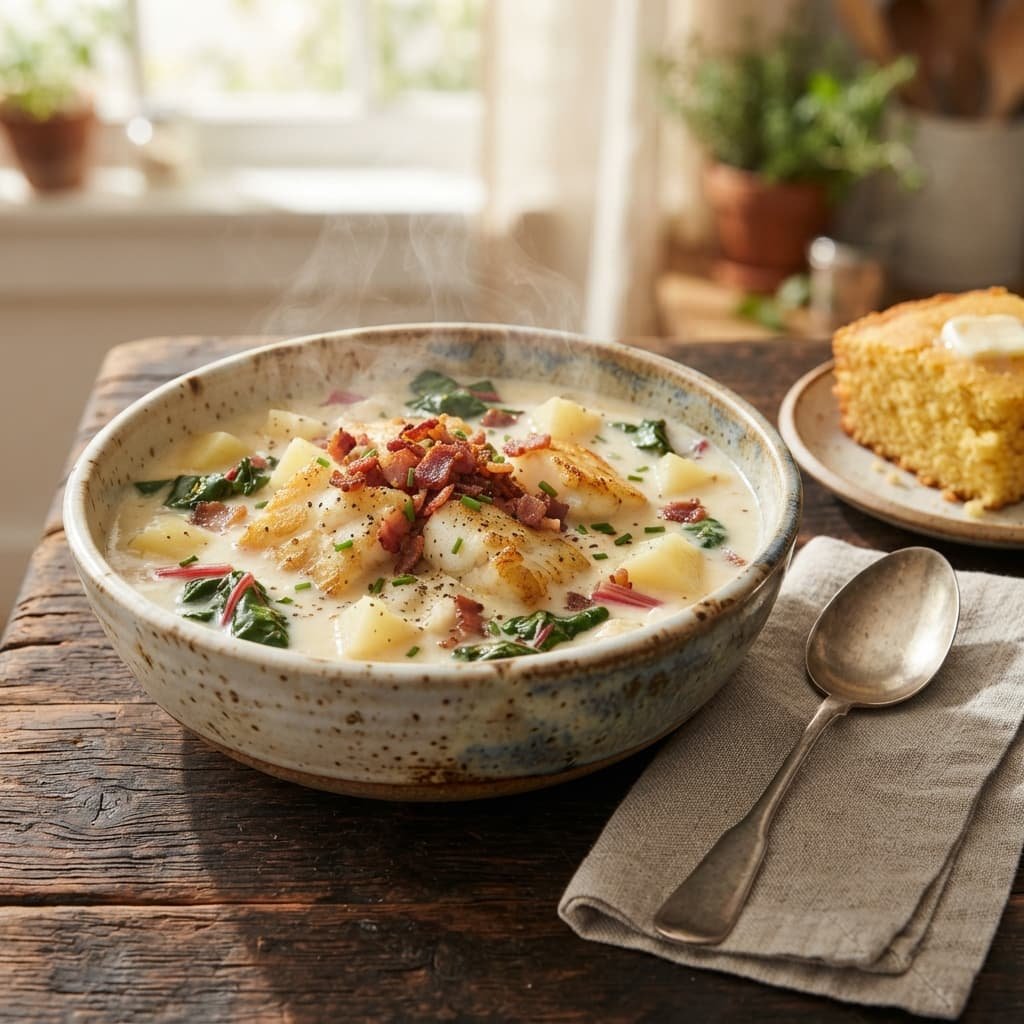
Set a bowl of this down on a cold table and watch the steam do something almost theatrical — it doesn’t drift so much as rise in a single visible column, holding its shape for a second against the cooler air before dissolving. That contrast, a bowl hot enough to fog a window against a kitchen that’s anything but, is the whole reason Broiled Catfish Chowder with Swiss Chard belongs to the colder months, and why it earns its place at a table more than most weeknight soups do.
Catfish chowder is a real, well-established dish across Southern cooking, usually built by simmering the fish directly in a cream-and-potato base until it flakes apart. Swiss chard is a documented, if less common, addition to fish chowders elsewhere, stirred in for its earthy, slightly mineral edge against the richness of the cream. Broiling the catfish separately before it goes into the pot, rather than poaching it in the liquid, is the one real departure here — a technique borrowed from how chowders are sometimes built with pan-seared or broiled fish for a deeper, caramelized flavor instead of a purely poached one.
Why Broiled Catfish Chowder with Swiss Chard Is Worth the Extra Step
This chowder takes about 45 minutes, and the broiling step adds only 6 to 8 minutes while the base simmers on the stove. Broiling the catfish first gives it a browned, slightly caramelized surface that plain poaching never develops, and that flavor carries into every spoonful once the pieces are folded into the finished chowder.
Catfish simmered directly in the chowder liquid is tender, but it stays pale and mild the whole way through, since nothing about gentle poaching encourages browning. A few minutes under the broiler changes that completely, developing color and a faint char at the edges before the fish ever touches the pot. It’s a small extra step, five minutes at most beyond what a fully stovetop version would take, but it’s the difference between a chowder that tastes like simmered fish and one that tastes like it.
Ingredients
This serves 4 to 6.
For the Catfish
- 1.5 lbs (about 700g) catfish fillets
- 2 tablespoons olive oil
- 1 teaspoon paprika
- Salt and black pepper, to taste
For the Chowder
- 4 slices thick-cut bacon, chopped
- 1 medium onion, diced
- 2 celery ribs, diced
- 2 garlic cloves, minced
- 1/3 cup all-purpose flour
- 4 cups chicken or vegetable stock
- 1 lb (about 450g) Yukon Gold potatoes, peeled and cubed
- 1 cup heavy cream
- 4 cups Swiss chard, stems removed and chopped, leaves torn
- Salt and black pepper, to taste
How to Make Catfish Chowder with Swiss Chard and Broiled Fish
- Preheat the broiler. Pat the catfish dry, rub with olive oil, and season with paprika, salt, and pepper. Broil 6 inches from the heat for 6 to 8 minutes, until browned and just cooked through. Set aside and let cool slightly, then flake into bite-sized pieces.
- In a large pot, cook the bacon over medium heat until crisp. Remove with a slotted spoon and set aside, leaving the fat in the pot.
- Add the onion and celery to the bacon fat and cook for 5 minutes until softened. Add the garlic and cook 30 seconds more.
- Sprinkle the flour over the vegetables and stir constantly for 2 minutes to cook out the raw flour taste.
- Gradually whisk in the stock, stirring to prevent lumps. Add the potatoes and bring to a simmer.
- Cook for 15 to 18 minutes, until the potatoes are fork-tender.
- Stir in the heavy cream and Swiss chard, and simmer for 3 to 4 minutes until the chard wilts.
- Fold in the flaked broiled catfish, season with salt and pepper, and warm through for 2 minutes. Ladle into bowls and top with the reserved crispy bacon.
Good vs. Excellent: The Details That Matter
A good version of this chowder still warms you up nicely. An excellent one comes down to a few specific choices.
- Watch the broiler closely. Six inches from the heat and a few minutes is all it takes to go from browned to burnt, since catfish is thin enough to cook fast under direct heat.
- Cook the roux fully before adding stock. Two full minutes of stirring the flour into the fat removes the raw, pasty taste that undercooked roux leaves behind in the finished chowder.
- Add the catfish last, off direct heat. It’s already fully cooked from broiling, so folding it in gently at the end keeps the pieces intact rather than breaking apart in a simmering pot.
- Don’t overcook the chard. A few minutes is enough to wilt it fully; longer than that and it turns dull and loses the slight bite that makes it a good contrast to the cream.
Common Mistakes and How to Fix Them
Catfish came out dry after broiling: it likely sat under the heat a minute or two too long. Check it at the 6-minute mark and pull it the moment it flakes easily, since carryover heat continues cooking it slightly even off the broiler, and thin fillets in particular can go from just-done to overcooked in the time it takes to grab a plate.
Chowder tastes floury or pasty: the roux wasn’t cooked long enough before the stock went in. Give it the full 2 minutes next time, stirring constantly, until it smells faintly toasted rather than raw, since that smell is the clearest sign the flour has actually cooked through rather than just been mixed with fat.
Chard turned bitter: it was likely overcooked, or the stems weren’t fully removed before chopping the leaves. Stems carry most of the bitterness in Swiss chard, so trim them thoroughly and keep the simmer time short once the chard goes in, since even an extra minute or two past wilting can tip it toward bitter rather than just tender.
Variations and Substitutions
Tilapia or cod work in place of catfish using the same broiling method, though cooking time may run a minute shorter depending on thickness. Kale or spinach can replace Swiss chard, with kale needing slightly longer to wilt and spinach needing considerably less.
For a lighter version, half-and-half can replace the heavy cream, though the chowder will be noticeably thinner. Corn kernels added alongside the potatoes bring the dish closer to a more traditional Southern catfish chowder if a touch of sweetness is welcome.
Serving and Pairing
Serve this chowder with crusty bread or cornbread for soaking up the last of the broth. A simple green salad with a sharp vinaigrette cuts through the richness nicely if you want something lighter alongside it. A dash of hot sauce at the table lets everyone add heat to their own bowl. This swiss chard and catfish chowder also travels well in a thermos for a packed lunch on a cold day.
Storage and Reheating
Store leftovers in an airtight container in the refrigerator for up to 3 days. Reheat gently on the stovetop over low heat, stirring occasionally, rather than the microwave, which can make the catfish rubbery. This chowder doesn’t freeze particularly well, since the cream base tends to separate once thawed and reheated.
Nutritional Information
Values below are estimates per serving and will vary depending on exact brands and quantities used.
| Calories | 420 kcal |
| Protein | 27 g |
| Carbohydrates | 26 g |
| Fat | 24 g |
| Fiber | 3 g |
What Stays With You
This recipe was tested and refined in the bebup.org kitchen, with several rounds spent specifically dialing in the broiling time so the catfish browns without drying out before it ever meets the chowder.
What lingers after Broiled Catfish Chowder with Swiss Chard isn’t just the warmth, but that first rising column of steam over a bowl on a genuinely cold night — proof that the extra six minutes under the broiler is never really about technique for its own sake. It’s about making sure the thing that’s supposed to warm you up actually tastes like it earned the job.
Broiled Catfish Chowder with Swiss Chard
Ingredients
Method
- Preheat the broiler. Pat the catfish dry, rub with olive oil, and season with paprika, salt, and pepper. Broil 6 inches from the heat for 6 to 8 minutes until browned. Flake into bite-sized pieces.
- In a large pot, cook the bacon until crisp. Remove and set aside, leaving the fat in the pot.
- Add the onion and celery and cook 5 minutes. Add the garlic and cook 30 seconds more.
- Sprinkle the flour over the vegetables and stir constantly for 2 minutes.
- Gradually whisk in the stock. Add the potatoes and bring to a simmer.
- Cook 15 to 18 minutes, until the potatoes are fork-tender.
- Stir in the heavy cream and Swiss chard, and simmer 3 to 4 minutes until wilted.
- Fold in the flaked catfish, season, and warm through 2 minutes. Top with the reserved bacon.