Start with cut size, because a bank statement cut into strips can be pieced together again by anyone with an hour to spare. The second check is the pile you actually shred each month. Buying a document shredder for home paperwork goes wrong when the box shouts about sheet capacity and says little about what the blades leave behind. Our worked household is a flat in Bristol with about 40 sheets of statements and letters a month. All numbers here are example values, so use your own figures instead. The sums fit on one page and need nothing beyond a calculator.
What Decides Buying a Document Shredder for Home Paperwork
Skip the feature list, because the size of the pieces it leaves decides whether the machine does its job at all. Shredding exists to make a page unreadable. A page that can be rebuilt has only been inconvenienced.
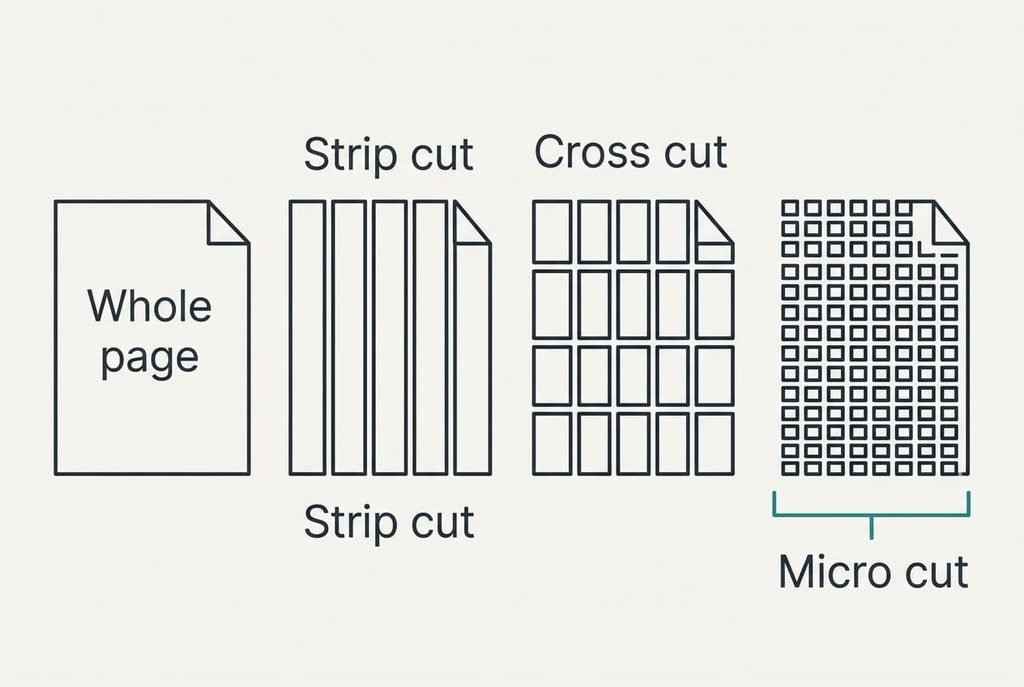
Take an A4 sheet, 210 by 297 mm, with an area of 62,370 mm². Cut in strips of 6 mm, it gives 35 strips, every one the full length of the page. A cross cut of 4 by 40 mm gives about 390 pieces of 160 mm². A micro cut of 2 by 15 mm gives about 2,080 pieces of 30 mm². Each step up multiplies the pieces someone would have to match. Across our 40 sheets a month, that is 1,400 strips, 15,600 cross-cut pieces or about 83,000 micro pieces.
Account numbers and signatures sit on the pages that arrive every month. Size the cut to the most sensitive page in your pile, since the average page says little about your exposure. A heap of leaflets and a single mortgage statement are not the same risk, and the blade can’t tell them apart.
Four Checks in Priority Order
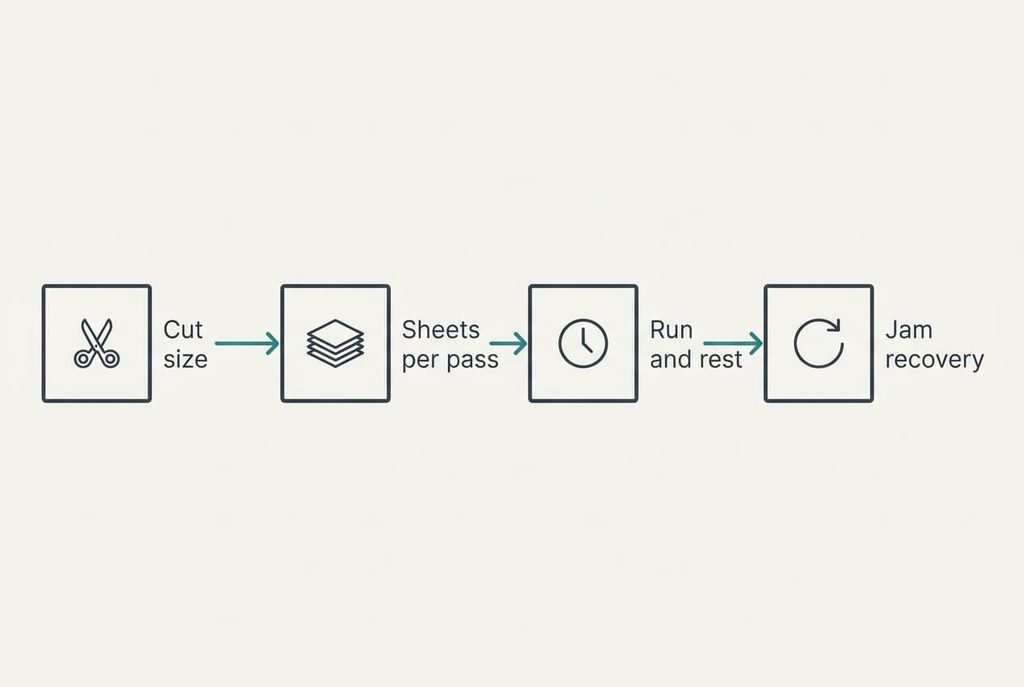
1. Cut size comes first. A decent listing gives the width and length of the pieces in millimetres, so look for two numbers and treat a bare “cross cut” label as a reason to keep reading. A finer cut costs nothing at the desk and removes any worry about what sits in the bin. Choose too coarse a cut and a patient person could line the strips up again.
2. Sheets per pass against your pile comes next. The figure works like a time bill. With 8 flat sheets per pass, 40 sheets need 5 passes of about 20 seconds, which is under two minutes a month. Divide your monthly sheets by the pass figure, then multiply by the seconds per pass. Pick a figure that is too low and the job becomes a chore you postpone.
3. Run time before a rest matters after that. Assume the motor runs for 3 minutes and then cools for 20. Five passes totalling 100 seconds fit easily, while a backlog of 120 sheets is 15 passes and 5 minutes, which doesn’t. Find both figures in the listing and treat a missing pair as a missing answer, because a motor that overheats stops until it has cooled. Ignore them and the machine stalls halfway through a stack, leaving you to finish the job later.
4. Jam recovery is the one that buyers skip. A reverse function clears a jam, and a plain statement tells you what else the machine will swallow, such as a folded corner. If you must remove staples first, assume 30 seconds a pass, which adds 2.5 minutes a month to 5 passes. Read for the reverse function and for the note on staples. Without them a jam means taking the head apart with the pile half done, and you’ll remember that evening for a long time.
Specifications That the Box Oversells
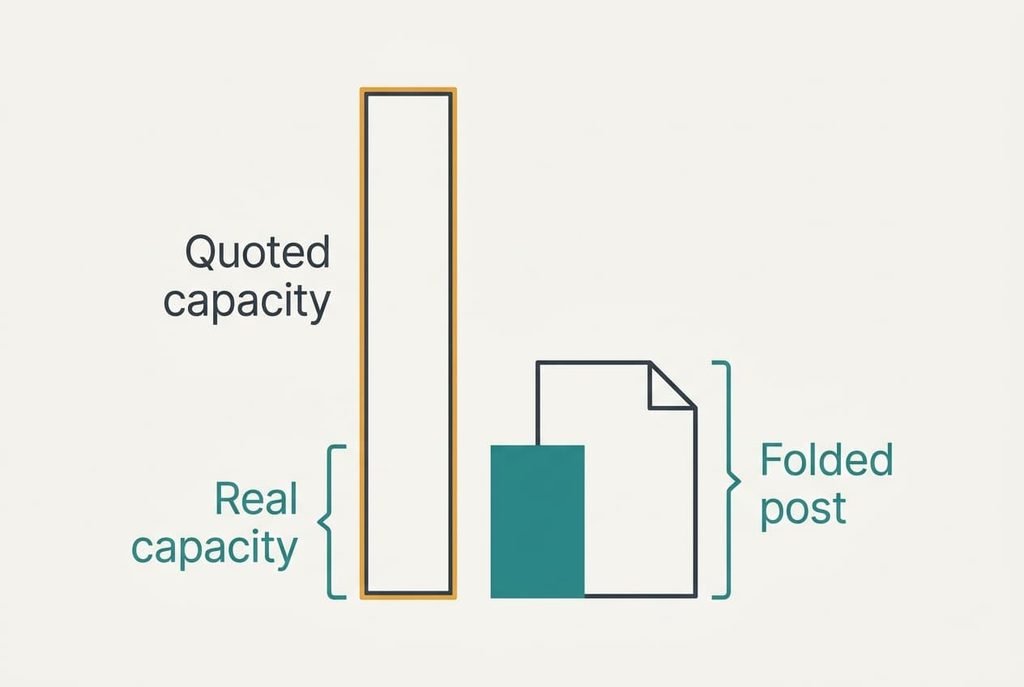
The loudest number is the sheet capacity, and the quoted capacity per pass deserves the least weight. It comes from thin plain sheets fed flat, whereas a letter folded in three is thicker at the folds.
Assume the box says 12 sheets and your folded post manages 8. For our 40 sheets that is 4 passes against 5. The gap is one pass, about 20 seconds a month, and nobody chooses a document shredder for home paperwork to save 20 seconds.
Capacity is promoted because it is easy to print in large type and easy to compare at a glance. Cut size guards your account numbers, yet it sits in the specification table in small print.
“Heavy duty” is another oversold phrase. Without run and rest times in minutes, it tells you nothing you can use, and a confident adjective is a poor substitute for a figure you can check.
Document Shredder Choices for Home Paperwork, Reader by Reader
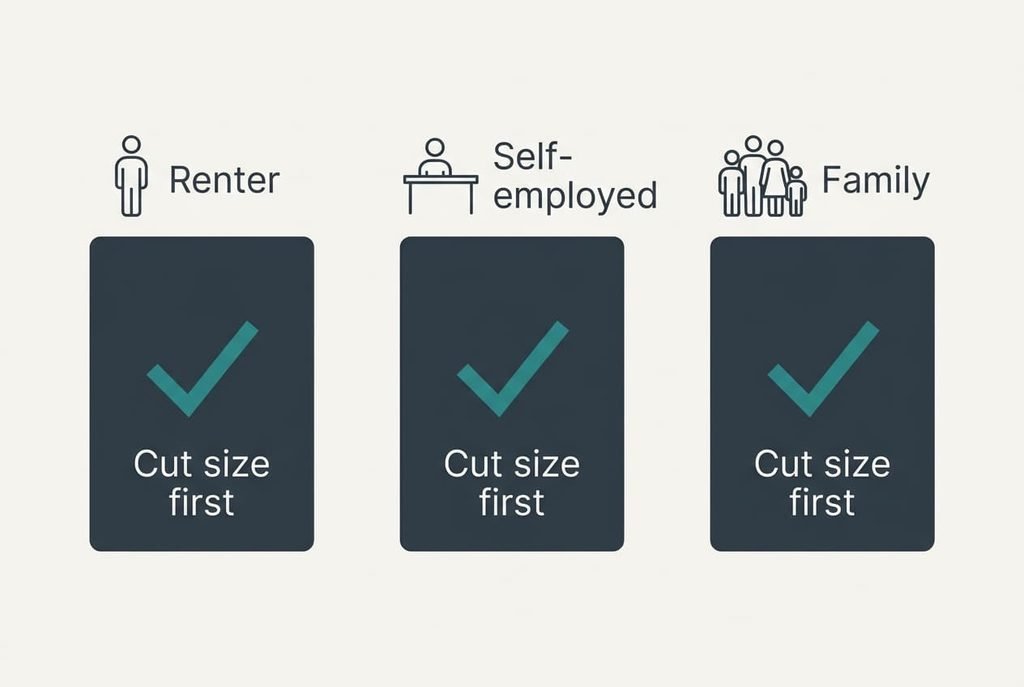
Three readers move the checks around.
A renter with one monthly pile of 40 sheets gains most from cut size. Capacity hardly matters. A cross cut or finer covers the whole pile, and a basic motor copes with it.
Someone self-employed, with 60 sheets of receipts and invoices a week, needs the run time. At 8 sheets a pass that is 8 passes, about 160 seconds, which sits inside a 3 minute run with little to spare.
Four people sharing 150 sheets a month hit the rest time. That’s 19 passes. At 20 seconds each, that is 380 seconds, longer than one 3 minute run, so the machine must pause. Weekly shredding in small piles means the pause never arrives.
When to Walk Away From a Listing
Leave any listing that gives no cut size in millimetres. A machine described only as “cross cut” or “micro” with no dimensions hides the figure that matters most, and you can’t compare what isn’t stated.
Move on from a listing that gives a sheet capacity without naming the paper, or one that promises continuous running with no rest time. A machine that never needs to cool doesn’t exist, so the claim itself is a warning.
A machine that takes one sheet a pass is a poor fit too. Our 40 sheets would need 40 passes at 20 seconds, about 13 minutes a month, and a job that dull gets skipped.
Strip cut machines are out for anything carrying account numbers. Each page leaves 35 pieces as long as the page, and sorting them takes an afternoon. A document shredder for home paperwork should make that afternoon pointless.
A Two-Minute Check Before You Buy
Write your monthly sheet count on paper first. Then divide the count by the number of sheets per pass and multiply by 20 seconds, and set the result against the run time. For our 40 sheets that gives 5 passes and 100 seconds, inside a 3 minute run.
Next, find the cut size in millimetres and ask whether your most sensitive page could be rebuilt from it. Finish by looking for a reverse function and a note on staples.
If one of the four checks stays blank, read the listing again before you decide on a document shredder for home paperwork.
The figures in your own pile decide the rest of the choice. Keep the paper note beside the listing, and a machine that suits you will stand out within two minutes. A blank line on that note is also useful, because it shows you which question to ask the seller.
Questions Readers Keep Asking
What cut size is enough for bank statements?
Choose a cross cut or finer, with both dimensions given in millimetres. A strip cut leaves pieces as long as the page, 35 of them for an A4 sheet, which can be lined up again. A cross cut of 4 by 40 mm makes about 390 pieces from the same sheet.
How much should I spend compared with the risk?
Spend on cut size first and on capacity last. A big machine is unnecessary when you shred 40 sheets a month, because 5 passes take under two minutes. Pay for a finer cut and stated rest times. A wider feed slot you won’t use isn’t worth the extra.
Will I regret a basic machine in a year?
Only if the pile grows. A basic cross cut with clear run and rest times handles 40 sheets comfortably. If your paperwork rises to 150 sheets a month, that makes 19 passes. Together they take 380 seconds, so the rest time comes into play. Weekly shredding is the free fix.