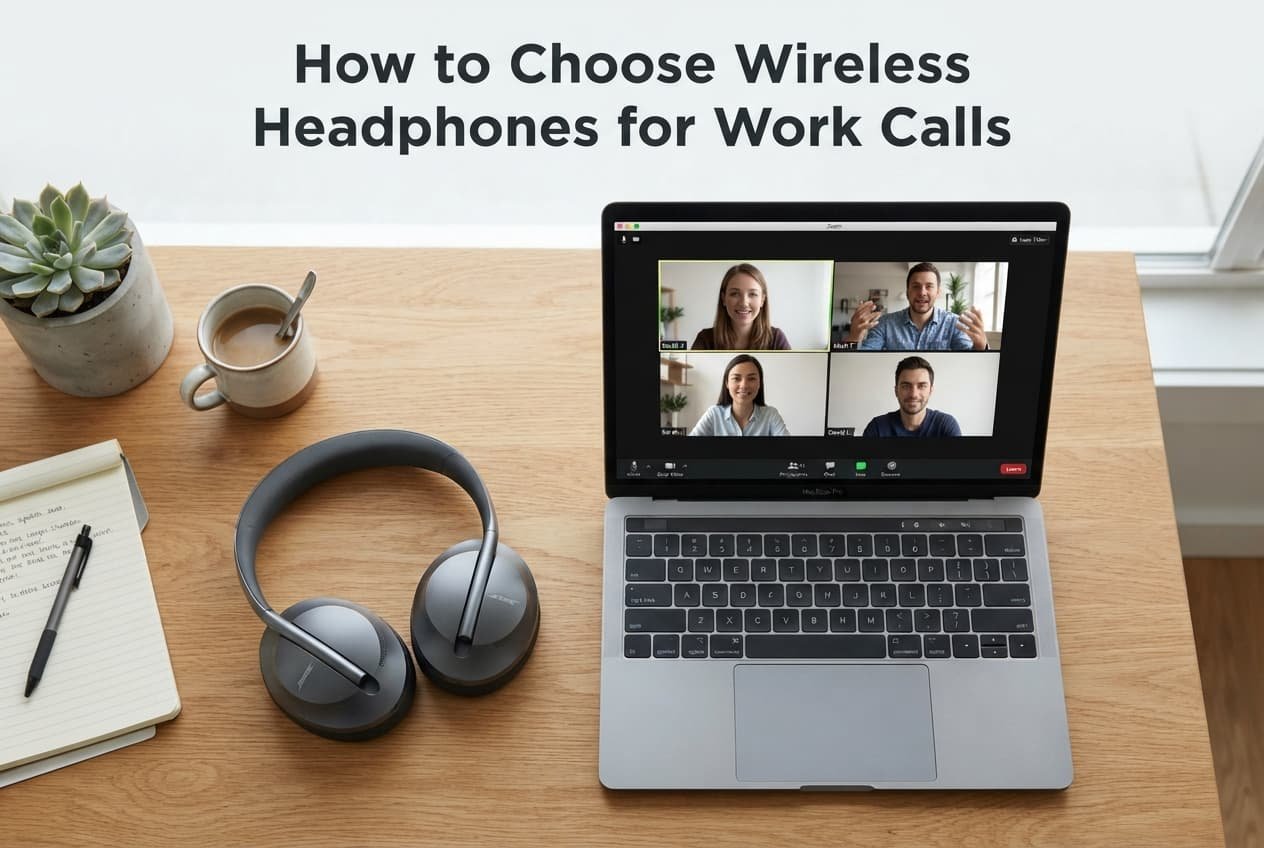
Choosing wireless headphones genuinely suited to work calls comes down to a handful of specific criteria you can evaluate on any pair sitting in front of you, not simply which one has the most impressive general audio specifications on paper. Headphones chosen purely for music listening quality often genuinely disappoint specifically for calls, where different priorities genuinely matter more than they do for general everyday audio enjoyment.
What actually decides this
The deciding factor is how well headphones handle the specific demands of voice calls – clear microphone pickup, comfortable extended wear, reliable connection stability – not simply how impressive their music playback sound quality is. Headphones genuinely excellent for music can still perform poorly on calls if their microphone quality or connection stability doesn’t match that same standard.
This matters because most headphone marketing emphasises music listening quality specifically, while work calls involve a genuinely different set of priorities – your voice being heard clearly, comfort during potentially long meetings, dependable connection throughout an entire call – that general audio specifications don’t fully capture.

The criteria that actually matter, in order
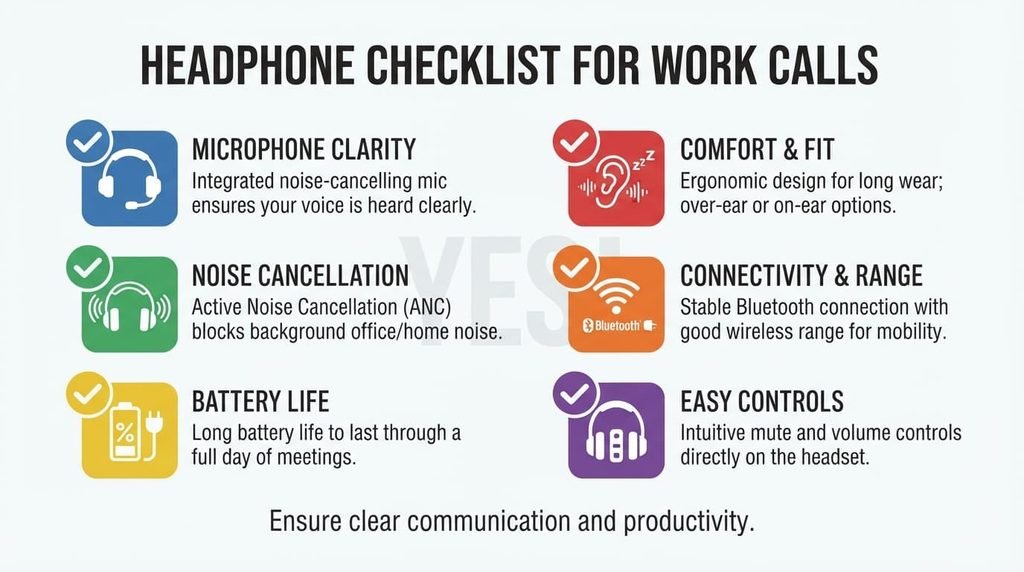
1. Genuine microphone clarity specifically for voice, not just overall audio specifications. Look specifically for how clearly your own voice comes through on the other end of a call, since this is the single most important factor for work calls specifically, mattering more than music playback quality for this particular use case.
2. Comfortable extended wear for potentially long meeting durations. A pair that becomes genuinely uncomfortable after thirty minutes undermines their usefulness for work calls specifically, where meetings can run considerably longer than a typical music listening session might.
3. Reliable connection stability throughout an entire call. Headphones that disconnect or experience audio dropouts during a call create genuine professional friction in a way the same issue during casual music listening simply doesn’t carry the same consequence for.
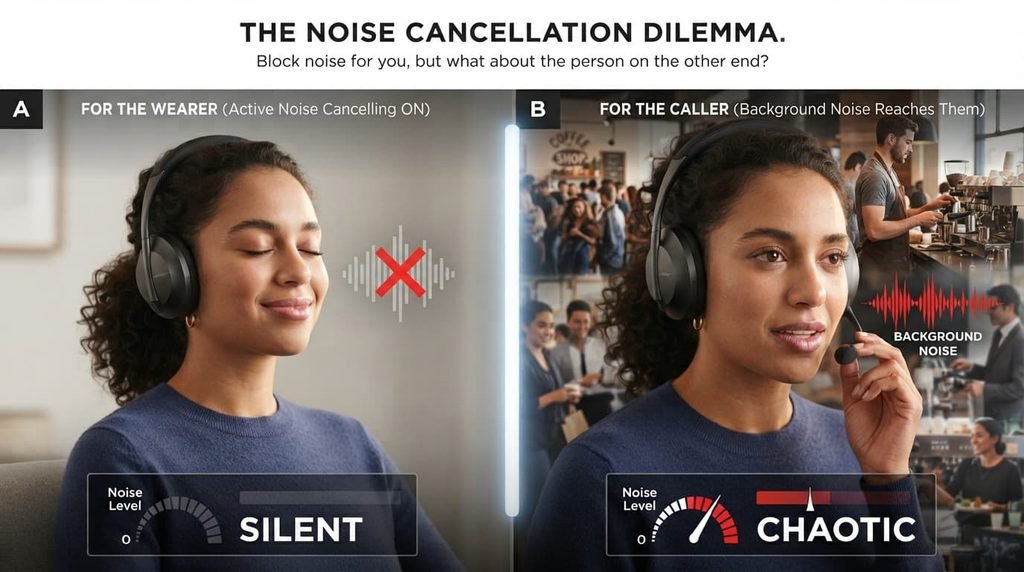
4. Background noise reduction on the microphone side specifically, not just for your own listening. Many noise cancellation features focus on what you hear, but work calls specifically benefit from features that also reduce background noise transmitted to whoever you’re speaking with, a distinct and important consideration for this particular use case.
5. Genuinely quick, reliable pairing and switching between devices if you use multiple devices for calls. A pair that requires a lengthy or unreliable process to switch between your phone and computer, for instance, creates friction specifically for someone genuinely managing calls across multiple devices throughout a typical workday.
What doesn’t matter as much as it’s made out to
The single most impressive music audio quality specification is oversold for work call use specifically, and it’s the specification many general headphone reviews lead with. For work calls specifically, considerably more modest music audio quality combined with genuinely excellent microphone clarity serves this particular purpose better than exceptional music quality paired with a mediocre microphone, since your actual daily use for this specific purpose centres on being heard clearly, not on music reproduction.
Elaborate design aesthetics get more attention in headphone marketing than they deserve relative to the practical criteria above for work call use specifically. These purely visual features provide no genuine call-quality benefit, and prioritising them over microphone clarity and comfort serves your actual work needs considerably worse for comparable spending.
Matching the choice to your situation
If you genuinely take calls from noisy or unpredictable environments regularly – shared workspaces, environments with background activity – prioritise background noise reduction on the microphone side more heavily, since this specific factor matters more for your particular situation than it would for someone taking calls exclusively from a quiet home office.
If you genuinely switch between multiple devices throughout your workday – a work phone and a computer, for instance – prioritise quick, reliable multi-device pairing more heavily, since friction in this specific area compounds considerably across a day involving frequent switching.

What to walk away from
Any pair whose reviews consistently mention callers on the other end struggling to hear clearly, despite the headphones otherwise performing well for music, should end your interest regardless of how appealing their other specifications appear.
A specification sheet doesn’t reveal genuine call-quality performance the way consistent reviewer and user experience does, and headphones with a known, unaddressed microphone weakness will likely create recurring professional friction regardless of how strong their other capabilities are on paper.
The check before you commit
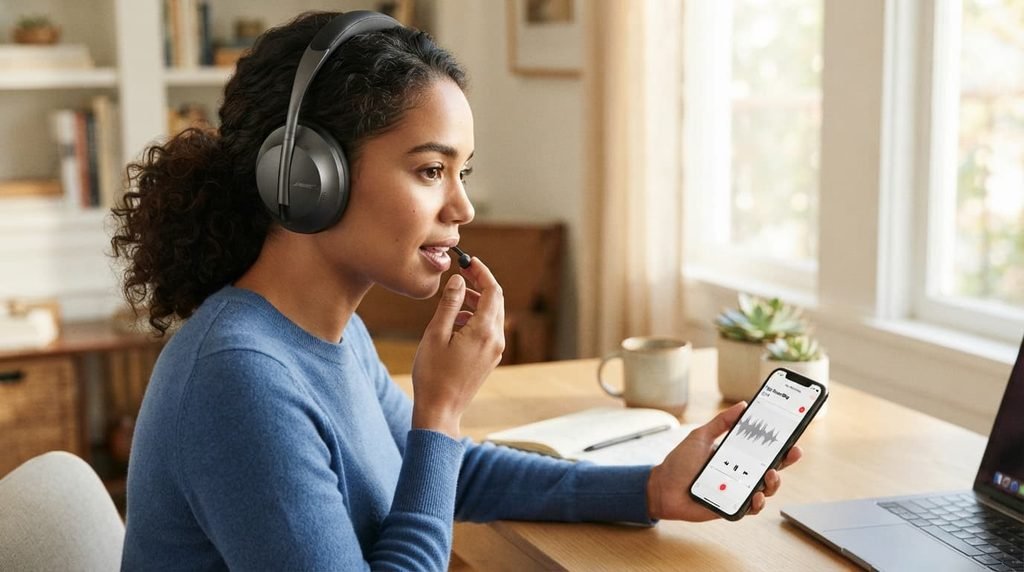
Before finalising any purchase specifically for work call use, test the microphone quality directly if possible – recording a sample or making an actual test call – rather than relying solely on general audio quality reviews that may not specifically address microphone performance in detail.
This one single check reveals genuine call performance far more reliably than general reviews ever do, since a pair’s music-focused review coverage often doesn’t specifically address the microphone clarity that matters most for your actual particular use case.
Does the number of microphones a pair has genuinely affect call quality?
Generally yes – more microphones typically allow better background noise isolation from your voice specifically, since multiple microphones can help the system distinguish your speech from surrounding ambient sound more effectively than a single microphone alone can achieve.
What people get wrong about choosing headphones for calls
The most common mistake is assuming any headphones marketed with “noise cancellation” automatically handle background noise well for the person you’re calling, when this feature typically addresses what you hear rather than what background noise gets transmitted through your microphone to the other person specifically.
A second genuinely common mistake is prioritising battery life above the core call-quality criteria covered above, when a pair with excellent battery life but poor microphone clarity still creates the same recurring professional friction regardless of how long it lasts on a single charge between uses.
Questions readers keep asking
Does a more expensive pair of headphones always have a meaningfully better microphone for calls?
Not necessarily in every single respect – price correlates broadly with overall quality, but microphone performance specifically doesn’t always scale directly with price the way some other features do, meaning a less expensive pair genuinely strong in microphone quality specifically can outperform a pricier one focused more on music audio quality.
Is it worth using a separate dedicated microphone instead of headphones with a built-in one for important calls?
For particularly important calls specifically, this can genuinely provide a noticeable improvement, since dedicated microphones are often engineered specifically for voice clarity in a way a headphone’s built-in microphone, designed to serve multiple purposes, sometimes can’t fully match.
Is it worth choosing headphones specifically marketed for “business” or “professional” use over general options?
Not automatically – the specific marketing label matters less than whether the actual criteria covered above genuinely apply to that particular pair, so evaluating the specific product against these criteria directly is more reliable than assuming a “business” label guarantees genuinely superior call performance.
How can I test a pair’s call quality before actually buying them?
Checking genuine reviews that specifically address call and microphone performance, rather than general audio reviews alone, or testing an in-store demo unit if available, both provide more reliable insight into this specific use case than general specifications alone.