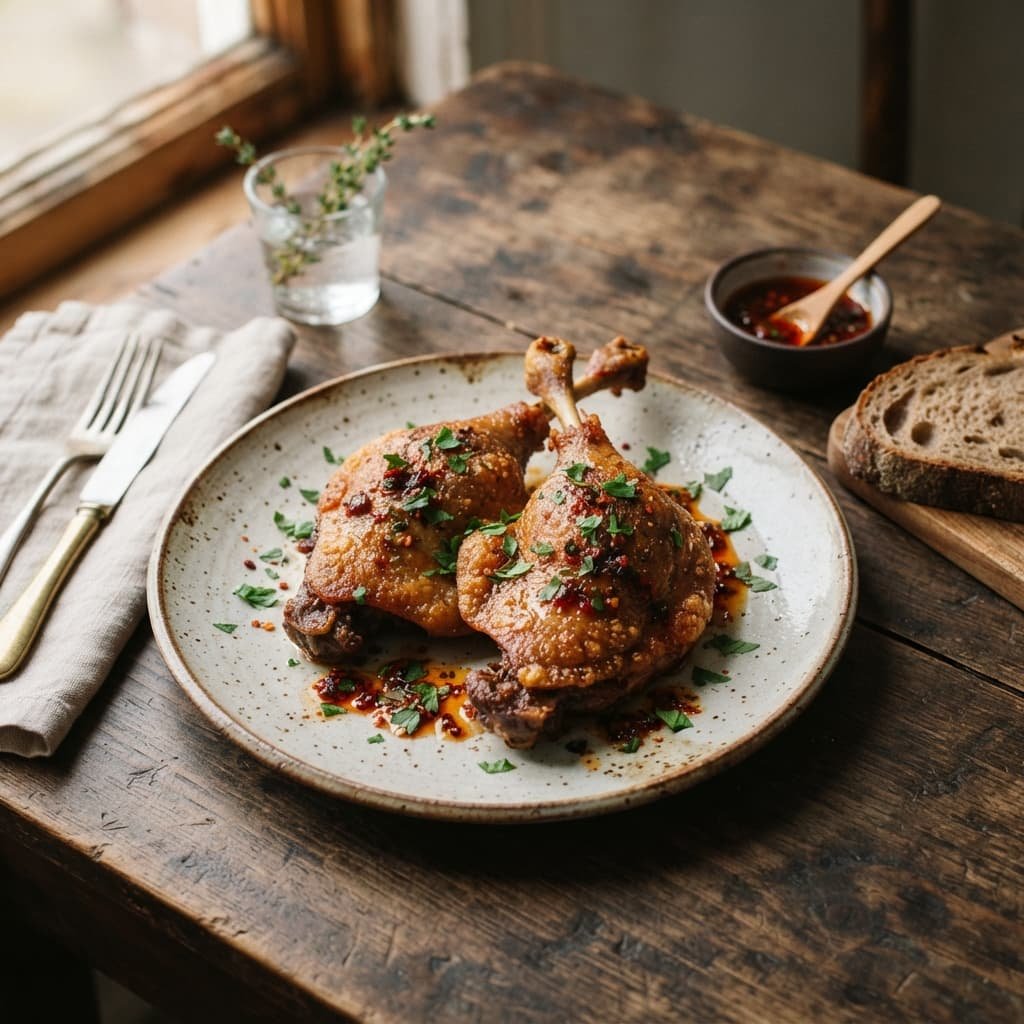
Duck skin holds a thick layer of fat directly beneath it, and that fat has to render out and the moisture beneath it has to evaporate before the skin can ever turn genuinely crisp. Rush the process and you get skin that’s merely browned on the outside while staying rubbery and fat-laden underneath. Deep-Fried Duck with Calabrian Chili Sauce depends on managing that rendering process carefully — a slow initial cook to push the fat out, followed by a hot fry to finish and crisp the skin — paired with a chili sauce whose sharp acidity cuts directly through all that richness.
Deep-fried duck with a crisp, rendered skin is a real, well-documented technique across Chinese and Vietnamese cooking, where whole or half ducks are steamed or poached first, then fried to finish. Calabrian chili sauce paired with duck is also real and documented — a Calabrian chili-spiked duck ragù is a known dish in its own right, and the sauce shows up widely alongside grilled meats and fried chicken for the same reason it works here: sharp heat cutting through rich, fatty protein.
Key Techniques for Deep-Fried Duck with Calabrian Chili Sauce
This dish takes about 1 hour 15 minutes total. The duck needs roughly 45 minutes of gentle poaching or steaming first to render fat and partially cook the meat, followed by just 8 to 10 minutes of hot frying to crisp the skin, so the two stages work at completely different temperatures and speeds.
Duck fat begins rendering noticeably around 150°F (65°C) and continues steadily as temperature climbs, which is why the first stage stays low and slow rather than jumping straight to a hot fryer. Frying cold, unrendered duck straight into hot oil browns the surface before the fat underneath has any chance to melt out, leaving greasy, chewy skin no amount of additional frying time can fix. The chili sauce needs no special technique beyond blooming the garlic briefly in oil before the chilies and vinegar go in, which is enough to round out its raw sharpness into something more balanced.
Ingredients
This serves 4.
For the Duck
- 4 duck leg quarters, skin on
- 1 teaspoon salt
- 1/2 teaspoon black pepper
- 4 cups neutral oil, for frying
For the Calabrian Chili Sauce
- 3 tablespoons Calabrian chili paste, chopped (jarred, in oil)
- 2 tablespoons olive oil
- 2 garlic cloves, minced
- 2 tablespoons red wine vinegar
- 1 tablespoon honey
- Salt, to taste
- Fresh parsley, chopped, for serving
How to Make Crispy Fried Duck with Calabrian Chili Sauce
- Season the duck legs generously with salt and pepper.
- Place the duck in a wide pot or deep skillet and add enough water to come about halfway up the sides. Bring to a gentle simmer, cover, and cook for 40 to 45 minutes, until the meat is tender and much of the fat has rendered into the liquid.
- Remove the duck legs and pat them very dry with paper towels. Let them rest uncovered for 10 minutes so the surface dries further.
- While the duck rests, make the sauce: heat the olive oil in a small saucepan over medium heat. Add the garlic and cook for 30 seconds until fragrant. Stir in the chopped Calabrian chili paste, vinegar, and honey. Simmer for 2 minutes, then season with salt. Set aside.
- Heat the frying oil in a deep, heavy pot to 375°F (190°C).
- Carefully lower the duck legs into the hot oil, working in batches if needed to avoid crowding. Fry for 8 to 10 minutes, until the skin is deeply golden and crackling.
- Remove the duck to a wire rack to drain briefly.
- Drizzle or brush the Calabrian chili sauce over the duck, or serve it on the side, and finish with fresh parsley.
Good vs. Excellent: The Details That Matter
A good version of this dish still tastes rich and satisfying. An excellent one comes down to a few specific calls.
- Dry the duck thoroughly before frying. Any surface moisture left after poaching causes violent spattering in the hot oil and blocks the skin from crisping evenly.
- Don’t skip the resting step after poaching. Those extra 10 minutes uncovered let more surface moisture evaporate before the duck ever touches hot oil.
- Keep the oil temperature steady. A thermometer matters here; oil that’s too cool steams the duck rather than frying it, while oil that’s too hot burns the skin before the inside is properly warmed through.
- Sauce at the very last moment. Sauce applied too early softens the crisp skin fast, so drizzle it on right before serving rather than while the duck is still resting.
Troubleshooting Common Problems
Why did the skin stay chewy instead of crisping? This almost always traces back to insufficient rendering during the poaching stage, or duck that wasn’t dried thoroughly before frying. Give the poaching stage the full 40 to 45 minutes, and don’t rush the drying step afterward.
Why did the oil spatter violently when the duck went in? Surface water is almost always the cause. Pat the duck completely dry, including between skin folds, and let it air-dry a few extra minutes if the surface still looks damp.
Why does the chili sauce taste harsh instead of balanced? It likely needed more time simmering, or the honey and vinegar weren’t in the right proportion. Taste after the full 2 minutes of simmering, and adjust with a touch more honey if the sharpness still dominates.
Variations and Substitutions
Chicken leg quarters work with this same poach-then-fry method if duck isn’t available, though chicken skin renders less fat and may need slightly less poaching time. If Calabrian chili paste isn’t available, a mix of crushed red pepper flakes and a splash of olive oil approximates some of the heat, giving a serviceable duck with chili sauce even without the real Calabrian version, though the flavor will be less complex and fruity.
For a milder sauce, reduce the chili paste by half and add a bit more honey to balance. A squeeze of fresh lemon juice stirred into the finished sauce brightens the whole dish further if extra acidity is welcome.
Serving and Pairing
Serve the duck with crusty bread or a simple polenta to soak up the sauce. A crisp, slightly bitter green salad, such as arugula with a sharp vinaigrette, cuts through the richness nicely. Roasted or mashed potatoes also make a satisfying, simple side if a heartier meal is the goal. This calabrian chili duck also works well cut into smaller pieces for a shareable appetizer platter.
Storage and Reheating
Store leftover duck and sauce separately in airtight containers in the refrigerator for up to 3 days. Reheat the duck in a 375°F (190°C) oven for about 10 minutes to re-crisp the skin, rather than the microwave, which leaves it soft. This dish freezes reasonably well for up to a month, though the skin loses its crispness once thawed and is best eaten fresh.
Nutritional Information
Values below are estimates per serving and will vary depending on exact brands and quantities used.
| Calories | 480 kcal |
| Protein | 32 g |
| Carbohydrates | 7 g |
| Fat | 36 g |
| Fiber | 1 g |
Final Thoughts
This recipe was tested and refined in the bebup.org kitchen, including a side-by-side batch that skipped the poaching stage entirely, just to confirm how much of a real difference that step makes to the final texture before publishing.
Deep-Fried Duck with Calabrian Chili Sauce rewards patience with the rendering process more than any special equipment. Once the fat has genuinely melted out and the skin is properly dry, the actual frying takes less than ten minutes, and the sharp, fruity heat of the chili sauce does the rest of the work cutting through all that richness.
Mastering the Technique
The skill that carries over from this dish to other fatty, skin-on proteins is separating rendering from crisping into two distinct stages rather than trying to accomplish both at once over high heat. Pork belly, chicken thighs, and duck breast all benefit from the same basic logic: a slower first stage that melts fat and firms the meat, followed by a short, hot finish that crisps the surface once most of the moisture and fat have already left. Trying to rush both steps into one hot pan almost always trades crisp skin for greasy, undercooked results underneath it.
Deep-Fried Duck with Calabrian Chili Sauce
Ingredients
Method
- Season the duck legs generously with salt and pepper.
- Place the duck in a wide pot with water halfway up the sides. Bring to a gentle simmer, cover, and cook 40 to 45 minutes, until tender and much of the fat has rendered.
- Remove the duck and pat very dry. Let rest uncovered 10 minutes.
- Heat the olive oil, add garlic, cook 30 seconds. Stir in the chili paste, vinegar, and honey. Simmer 2 minutes, then season with salt.
- Heat the frying oil in a deep, heavy pot to 375°F (190°C).
- Carefully fry the duck legs, in batches if needed, for 8 to 10 minutes, until deeply golden and crackling.
- Remove the duck to a wire rack to drain.
- Drizzle the Calabrian chili sauce over the duck and finish with fresh parsley.