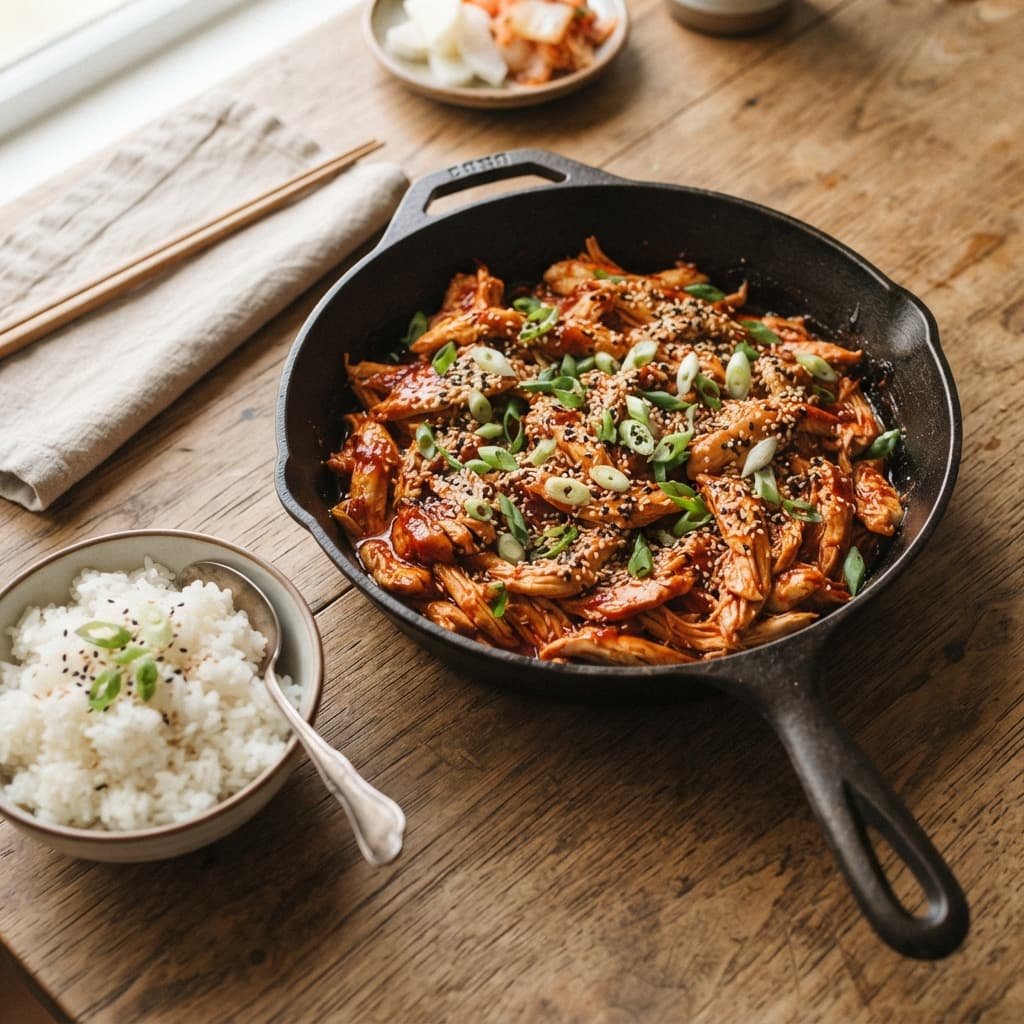
Open a jar of gochujang and the smell arrives before you’ve even lifted the lid all the way — something deep and faintly funky, sweet at the edges but sharp underneath, closer to the smell of a fermented thing than a simple chili paste. Stir that same smell into hot oil with garlic and ginger, and it changes again, rounding out into something warmer that fills the kitchen fast. Easy Gochujang Rotisserie Chicken for Weeknights depends on that second smell, the bloomed one, arriving before the store-bought chicken ever gets tossed into the pan.
Using a store-bought rotisserie chicken as the base for a quick gochujang dish isn’t a shortcut invented for this article — it’s a documented technique, specifically recommended in cookbooks built around pantry staples and weeknight speed, where gochujang gets called out directly as a way to transform an already-cooked chicken into something with real, punchy flavor in minutes rather than hours. This recipe leans on that same logic, treating the rotisserie bird as a legitimate starting point rather than a compromise.
Why Easy Gochujang Rotisserie Chicken for Weeknights Works So Fast
This dish takes about 15 minutes total, since the chicken is already cooked before it ever touches the pan. The only real cooking happening is the gochujang sauce coming together and warming through the shredded chicken, which means the entire meal moves from fridge to table faster than it takes rice to finish steaming.
A rotisserie chicken solves the slowest part of any chicken dinner before you’ve even started cooking. What’s left is really just building a sauce with enough depth to make already-cooked meat taste freshly made, and gochujang does most of that work on its own, given thirty seconds of contact with hot oil to bloom its flavor before the liquid ingredients go in. Skip that blooming step and the sauce tastes flat, more like sweetened paste than something built with real depth, which is really the only place this recipe can actually go wrong.
Ingredients
This serves 4.
For the Chicken
- 1 store-bought rotisserie chicken, meat shredded (about 4 cups)
- 1 tablespoon neutral oil
For the Gochujang Sauce
- 3 tablespoons gochujang paste
- 2 tablespoons soy sauce
- 2 tablespoons honey
- 1 tablespoon rice vinegar
- 1 tablespoon toasted sesame oil
- 2 garlic cloves, minced
- 1 teaspoon fresh ginger, grated
- 2 tablespoons water
- 2 scallions, sliced, for serving
- Toasted sesame seeds, for serving
How to Make Quick Gochujang Chicken from a Rotisserie Bird
- Shred the rotisserie chicken meat by hand, discarding the skin and bones, and set the shredded meat aside.
- Heat the neutral oil in a large, heavy skillet over medium heat. Add the garlic and ginger and cook for 30 seconds until fragrant.
- Add the gochujang paste directly to the hot oil and stir constantly for 30 to 40 seconds, until it darkens slightly and smells deeply fragrant rather than sharp and raw.
- Stir in the soy sauce, honey, rice vinegar, toasted sesame oil, and water. Simmer for 1 minute until slightly thickened and glossy.
- Add the shredded chicken to the skillet and toss thoroughly to coat evenly in the sauce.
- Cook for 2 to 3 minutes, stirring occasionally, until the chicken is thoroughly warmed through and the sauce clings evenly to every piece.
- Scatter fresh scallions and toasted sesame seeds over the top and serve immediately while hot.
Good vs. Excellent: The Details That Matter
A good version of this dish is already a fast weeknight win. An excellent one comes down to a few specific calls.
- Bloom the gochujang before adding any liquid. Thirty seconds in hot oil with the garlic and ginger makes a real, noticeable difference in depth compared to just dumping everything into the pan at once and hoping it works out.
- Buy the freshest rotisserie chicken available. A chicken that’s been sitting under a heat lamp for hours dries out, and no sauce fully disguises that texture once it’s shredded and tossed together.
- Don’t overcook the chicken in the sauce. It’s already cooked, so 2 to 3 minutes is genuinely enough; longer than that just toughens meat that was already perfectly tender to begin with.
- Taste the sauce before adding the chicken. It’s much easier to adjust sweetness or heat in a small pot of sauce than after it’s already coating four cups of shredded meat.
Common Mistakes and How to Fix Them
Sauce tasted flat instead of deep: this almost always means the gochujang wasn’t bloomed in oil first, or it was added straight into cold liquid instead of hot fat. Give it that brief moment in the pan before anything else goes in next time, since that thirty-second contact with heat is doing more work than any single other ingredient in the sauce.
Chicken turned dry and stringy: it was likely overcooked in the sauce, or the rotisserie chicken itself wasn’t very fresh to begin with. Pull it from the heat the moment it’s warmed through, and buy the chicken as close to cooking time as your schedule allows, since a bird that’s been sitting for hours under a warming lamp starts drying out before it ever reaches your kitchen.
Sauce turned out too sweet: the honey-to-gochujang ratio leaned too far toward honey. Cut it back slightly next time, or balance it with an extra splash of rice vinegar or soy sauce to sharpen things back up, tasting as you adjust rather than guessing at the right amount all at once.
Variations and Substitutions
Leftover roasted or grilled chicken works just as well as rotisserie chicken if that’s what’s on hand, giving you gochujang chicken from a rotisserie shortcut or from any leftovers using the exact same method and timing regardless of how the meat was originally cooked. For a milder version, cut the gochujang by a third and add a touch more honey to keep the balance sweet rather than sharp.
A handful of thinly sliced cabbage or a quick, simple cucumber salad stirred in at the end adds crunch and freshness against the rich glaze. If gochujang isn’t available, a mix of sriracha and a spoonful of miso paste approximates some of its funky depth, though the flavor won’t be quite the same and will lean sharper rather than rounded.
Serving and Pairing
Serve this over steamed rice to soak up the extra sauce pooling in the bowl. Quick-steamed or stir-fried vegetables, like bok choy or snap peas, round out the whole meal without much extra effort or additional cooking time. Extra scallions and a drizzle of sesame oil at the table let everyone adjust the finishing touches to their own taste. This rotisserie chicken gochujang bowl also makes a great next-day lunch straight from the fridge.
Storage and Reheating
Store leftovers in an airtight, well-sealed container in the refrigerator for up to 3 days after cooking. Reheat gently in a skillet over low heat with a splash of water to loosen the sauce, rather than the microwave, which can dry the chicken out further and unevenly. This dish freezes reasonably well for up to a month, though the texture softens slightly once thawed and reheated, so it’s best enjoyed fresh when possible.
Nutritional Information
Values below are estimates per serving and will vary depending on exact brands and quantities used.
| Calories | 320 kcal |
| Protein | 31 g |
| Carbohydrates | 14 g |
| Fat | 16 g |
| Fiber | 1 g |
What Stays With You
This recipe was tested and refined in the bebup.org kitchen, with a few rounds spent specifically confirming how much the blooming step actually changes the finished sauce before publishing.
What lingers after Easy Gochujang Rotisserie Chicken for Weeknights isn’t just how little time it took, but that early smell of gochujang meeting hot oil and garlic, filling the kitchen before the sauce even hits the pan. It’s a small reminder that a shortcut chicken doesn’t have to taste like one, not when the ten minutes you actually spend cooking go toward the one thing that matters most.
Easy Gochujang Rotisserie Chicken for Weeknights
Ingredients
Method
- Shred the rotisserie chicken meat, discarding skin and bones, and set aside.
- Heat the neutral oil in a large skillet over medium heat. Add the garlic and ginger and cook 30 seconds until fragrant.
- Add the gochujang paste and stir constantly 30 to 40 seconds, until fragrant.
- Stir in the soy sauce, honey, rice vinegar, sesame oil, and water. Simmer 1 minute until thickened.
- Add the shredded chicken and toss to coat evenly in the sauce.
- Cook 2 to 3 minutes, stirring occasionally, until warmed through and the sauce clings to every piece.
- Scatter scallions and sesame seeds over the top and serve immediately.