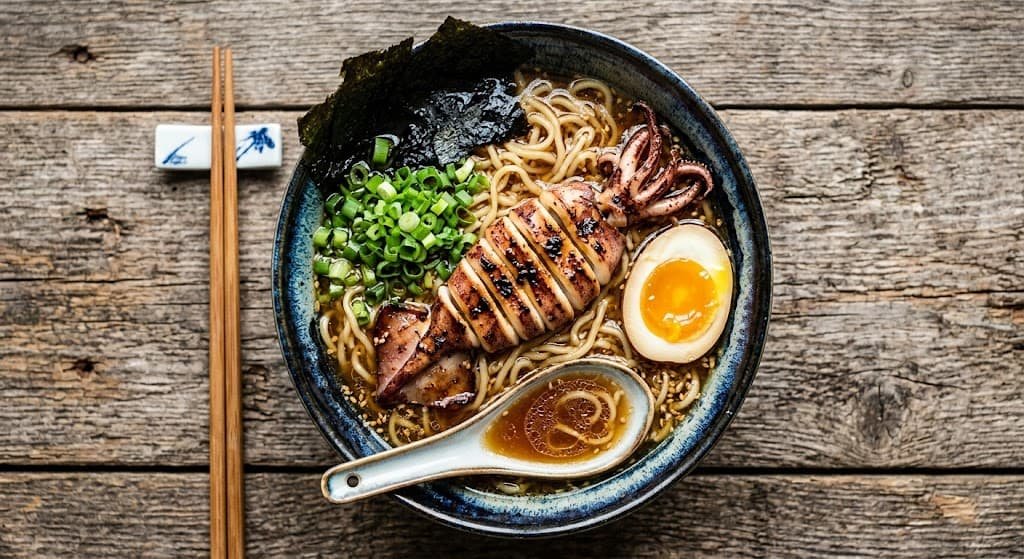
Drop a knob of anchovy butter into a pot of hot broth and watch the surface change: pale gold streaks spread and swirl before dissolving completely, leaving the liquid a shade darker and noticeably glossier than it was a moment before. That’s the visual cue that anchovy butter squid ramen is close to finished, the fat finally emulsified into the broth instead of sitting on top of it. The squid goes in only at the very end, seared just long enough to turn opaque, because everything about this bowl depends on timing things so the broth, the butter, and the squid all arrive at the table at their best moment, not a minute past it.
Why Anchovy Butter Works So Well in This Squid Ramen
Anchovies dissolve almost completely when melted into hot fat, breaking down into a savory, umami-rich base that reads as deep and meaty rather than fishy once it’s mixed into butter and stirred through broth. That’s the same logic behind anchovy butter finishing sauces for pasta and grilled fish, just redirected here into a ramen bowl instead of a skillet. Squid pairs naturally with anchovies in Mediterranean and Japanese cooking alike, and the pairing holds up just as well swimming in broth as it does pan-seared on its own.
Most seafood ramen recipes treat the seafood as an afterthought, tossed into simmering broth and left there until it’s rubbery and gray. Squid in particular punishes that kind of carelessness more than most; it needs either a very quick, hot sear of under two minutes, or a long, slow braise of well over thirty, with almost nothing worth eating in between. This bowl uses the fast route: seared hard in a separate pan while the broth finishes, then added to the bowl at the last possible moment so it never actually sits in hot liquid long enough to toughen.
There’s a reason searing squid separately from the broth works better than dropping it straight into the pot, and it comes down to heat transfer. A hot, dry skillet can hit temperatures well above what simmering liquid ever reaches, which means the squid’s surface sears and firms almost instantly rather than slowly cooking through the way it would surrounded by broth. That fast, high-heat contact is what locks in a tender bite instead of the tough, curled texture squid gets when it spends even a few extra minutes in a simmering pot.
What You’ll Need for This Anchovy Butter Ramen
For the Anchovy Butter
- 4 tablespoons unsalted butter, softened
- 4 anchovy fillets, finely minced
- 2 garlic cloves, finely minced
- 1 teaspoon lemon zest
For the Ramen
- 4 cups seafood or chicken broth
- 1 tablespoon soy sauce
- 1 pound squid tubes, cleaned and sliced into rings
- 1 tablespoon vegetable oil
- 2 packages fresh or dried ramen noodles
- 2 soft-boiled eggs, halved
- 2 scallions, thinly sliced
- Nori sheets, torn, for garnish
How to Make This Anchovy Butter Squid Ramen, Step by Step
- Mash together the softened butter, minced anchovies, minced garlic, and lemon zest until fully combined. Set aside.
- Bring the broth to a simmer in a pot and stir in the soy sauce.
- Bring a separate pot of water to a boil and cook the ramen noodles according to package directions. Drain and divide between two bowls.
- Pat the squid rings completely dry with paper towels.
- Heat the vegetable oil in a skillet over high heat until shimmering. Add the squid in a single layer and sear for 60 to 90 seconds per side, until just opaque. Remove immediately and set aside.
- Whisk the anchovy butter into the simmering broth, a spoonful at a time, until fully melted and glossy.
- Ladle the hot broth over the noodles in each bowl.
- Top each bowl with the seared squid, a halved soft-boiled egg, sliced scallions, and torn nori.
- Serve immediately while the broth is still steaming.
What Separates a Good Bowl From a Genuinely Great One
Drying the squid thoroughly before it hits the pan matters more here than almost anywhere else in the recipe; any surface moisture steams instead of searing, and steamed squid turns rubbery almost instantly. Whisking the anchovy butter into the broth off the direct hardest heat, rather than letting it boil hard, keeps the fat properly emulsified instead of splitting into visible oily pools on the surface. And build the bowl in the right order: noodles first, hot broth poured over them, then toppings added last, so the egg and squid stay distinct instead of getting lost or overcooked sitting in liquid too long. One more small thing worth doing: warm the bowls themselves before ladling in the broth. A cold ceramic bowl pulls heat out of hot broth surprisingly fast, and a few seconds of warming with hot tap water or a quick rinse under the kettle keeps the whole bowl hot for longer once it hits the table.
Common Mistakes With This Squid Ramen
The squid turns rubbery. It almost always sat too long in the hot pan or, worse, in the broth itself. Sear it fast, under two minutes total, and add it to the bowl only at the very end.
The broth tastes fishy instead of savory. This usually means the anchovy butter wasn’t fully melted and stirred in, leaving concentrated pockets of anchovy flavor instead of an evenly distributed base. Whisk it in gradually and taste as you go.
The butter separates and floats on top. The broth was likely boiling too hard when the butter went in. Bring it down to a gentle simmer first, then whisk the butter in off the strongest heat.
Variations and Substitutions
Shrimp can substitute for squid if that’s easier to find, though it needs slightly less searing time, closer to 45 seconds per side. For a spicier bowl, whisk a spoonful of chili crisp into the finished broth right before serving. If anchovy fillets aren’t available, anchovy paste works in roughly the same quantity, though the flavor will be slightly less nuanced than fresh fillets mashed by hand. A soft poached egg can stand in for the soft-boiled version if that’s easier to manage on a weeknight. For a version with more vegetables, wilted baby bok choy added to the broth in the last minute of simmering brings a fresh, slightly bitter contrast to the richness of the butter.
Serving This Anchovy Butter Squid Ramen
This is a full meal on its own, though a small side of quick-pickled cucumbers cuts nicely through the richness of the butter. Serve it immediately while it’s hot; ramen broth loses its glossy sheen and the noodles start absorbing liquid within minutes of sitting.
Storing and Reheating
Store the broth, noodles, and squid separately in airtight containers in the refrigerator for up to 2 days; assembled ramen doesn’t hold up well as leftovers. Reheat the broth gently on the stovetop, and quickly re-sear cold squid in a hot pan for about 30 seconds just to warm it through rather than microwaving it, which toughens it fast.
Nutrition at a Glance
These are estimated values per serving and will vary depending on the exact broth and noodle brands used.
| Calories | 510 kcal |
| Protein | 33 g |
| Carbohydrates | 48 g |
| Fat | 19 g |
| Fiber | 2 g |
What Stays With You
This recipe was tested and refined by bebup.org to confirm the squid sear time and the exact point where the anchovy butter fully emulsifies into the broth.
What stays with you after this bowl isn’t just the richness of the butter or the char on the squid, but the reminder that a single dissolved fillet of fish can quietly reshape an entire pot of broth without ever announcing itself directly. Anchovy butter squid ramen doesn’t ask you to taste anchovies; it just asks you to taste something deeper than you expected from a weeknight bowl of noodles.
Anchovy Butter Squid Ramen
Ingredients
Method
- Mash together the softened butter, minced anchovies, minced garlic, and lemon zest until fully combined. Set aside.
- Bring the broth to a simmer in a pot and stir in the soy sauce.
- Bring a separate pot of water to a boil and cook the ramen noodles according to package directions. Drain and divide between two bowls.
- Pat the squid rings completely dry with paper towels.
- Heat the vegetable oil in a skillet over high heat until shimmering. Add the squid in a single layer and sear for 60 to 90 seconds per side, until just opaque. Remove immediately and set aside.
- Whisk the anchovy butter into the simmering broth, a spoonful at a time, until fully melted and glossy.
- Ladle the hot broth over the noodles in each bowl.
- Top each bowl with the seared squid, a halved soft-boiled egg, sliced scallions, and torn nori.
- Serve immediately while the broth is still steaming.