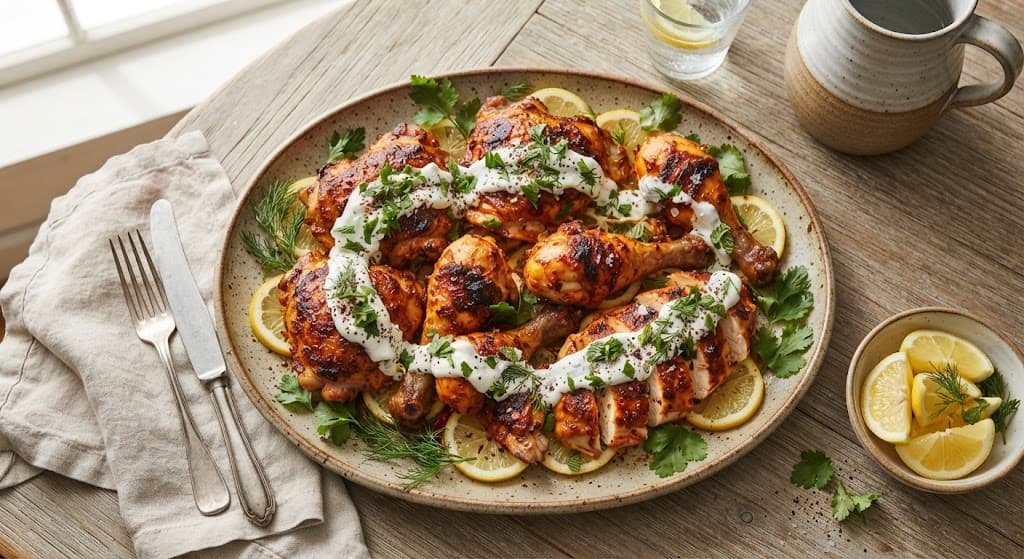
A store-bought rotisserie chicken is already cooked, which means the only real job left here is making it taste like it wasn’t picked up on the way home. A quick harissa glaze does that in about twenty minutes, with almost none of the actual cooking a from-scratch chicken dinner would demand. The one thing worth getting right is heat: rotisserie chicken has already been cooked once, so anything more than a gentle warm-through risks drying it out before the glaze even has a chance to do its job. That short list of concerns is really what easy harissa rotisserie chicken for weeknights comes down to.
Rotisserie Chicken, Glazed With Harissa the Right Way
This comes together in about 30 minutes, and nearly all of that time is hands-off oven time rather than active cooking. Whisking the glaze together takes five minutes at most, since the chicken is already cooked and just needs to warm through and pick up flavor from the sauce.
Harissa paste on its own is intense, mostly heat and smoke without much else to round it out, so the glaze depends on balancing it against honey for sweetness and lemon juice for brightness. Too much harissa relative to the honey and lemon, and the glaze just tastes hot without depth; too little and the chicken barely tastes seasoned at all. A rough two-to-one ratio of harissa to honey, cut with a spoonful of lemon juice, keeps the heat present without letting it dominate. The other balance to watch is heat itself, in the literal sense: since the chicken is already fully cooked, the oven’s job is only to warm it through and let the glaze set slightly, not to cook it again from scratch. Covering the dish loosely with foil for most of the bake traps enough moisture to keep the meat from drying out under that second round of heat.
Store-bought harissa varies a fair amount from brand to brand, which is worth knowing before you commit to the full quarter cup listed here. Some jars are closer to a smooth, pourable sauce, while others are thick enough to need thinning with a splash of water or extra olive oil before they’ll brush onto the chicken evenly. Tasting the harissa on its own before mixing the glaze together is the easiest way to gauge how much of the other ingredients you’ll actually need to balance it.
Ingredients
For the Chicken
- 1 whole rotisserie chicken, cut into pieces
For the Harissa Glaze
- 1/4 cup harissa paste
- 2 tbsp olive oil
- 1 tbsp honey
- 1 tbsp fresh lemon juice
- 1 clove garlic, minced
- 1/2 tsp ground cumin
- Salt, to taste
To Serve
- 1/2 cup plain yogurt
- Fresh cilantro or parsley, chopped
- Lemon wedges
- Warm flatbread or rice
How to Put It Together
- Preheat the oven to 350°F.
- Whisk together the harissa paste, olive oil, honey, lemon juice, garlic, cumin, and a pinch of salt in a small bowl until smooth.
- Arrange the chicken pieces in a baking dish. Brush or toss them generously with the harissa glaze, reserving about two tablespoons for serving.
- Cover the dish loosely with foil and bake for 15 to 20 minutes, until heated through.
- Remove the foil for the last 5 minutes to let the glaze set slightly and caramelize a little at the edges.
- Drizzle the reserved glaze over the top, along with a swirl of yogurt, and scatter with fresh herbs.
- Serve with lemon wedges and warm flatbread or rice.
What Makes Easy Harissa Rotisserie Chicken for Weeknights Worth Repeating
A decent version tastes like rotisserie chicken with some sauce on it. A great one tastes genuinely built around the harissa, with the yogurt cutting through the heat rather than just sitting on top as a garnish, and chicken that’s still moist rather than dried out from a second trip through the oven. That moisture depends almost entirely on the foil staying on for most of the bake and only coming off at the very end.
Common Mistakes and Easy Fixes
Baking the chicken uncovered the whole time is the most common one, and it’s what dries out already-cooked meat fastest, since there’s nothing trapping moisture while the oven works. Using too much harissa without balancing it against the honey and lemon is another easy misstep; taste the glaze on its own before brushing it on, and adjust rather than assuming the ratio in the recipe will suit every brand of harissa, since spice levels vary a lot between jars. Skipping the yogurt at serving time is worth avoiding too, since without it the dish reads as one-note heat rather than something balanced. One more worth mentioning: leaving the chicken in the oven far longer than the 15 to 20 minutes it actually needs, out of an instinct to make sure it’s “fully cooked.” It already is, and extra time in the oven at this stage only works against the texture rather than improving anything, no matter how careful or well-intentioned the extra minutes felt in the moment.
Ways to Change It Up
A spoonful of tomato paste stirred into the glaze deepens the color and adds a little body if the harissa on hand is thinner than usual. Swapping honey for maple syrup works fine and shifts the flavor only slightly. For a smokier version, a pinch of smoked paprika added to the glaze pairs well with the harissa’s existing smokiness. If yogurt isn’t available, a squeeze of extra lemon juice over the finished dish provides some of the same brightness, though it won’t cut the heat quite as effectively. However you adjust it, easy harissa rotisserie chicken for weeknights stays forgiving as long as the glaze itself stays balanced between heat, sweetness, and acidity.
Serving and Pairing
Warm couscous or rice underneath soaks up any extra glaze left on the plate. A simple cucumber and tomato salad on the side adds some freshness against the richness of the chicken and yogurt. This also works well shredded off the bone and piled into pita or flatbread with the same yogurt and herbs for a faster, handheld version of the same flavors. However it’s served, easy harissa rotisserie chicken for weeknights is flexible enough to move between a sit-down dinner and something eaten standing at the counter without any real changes to the recipe itself.
Storage and Reheating
Store leftovers in an airtight container in the fridge for up to 3 days. Reheat gently, covered, in a low oven or in short bursts in the microwave, adding a splash of water or stock to keep the chicken from drying out on this second reheat. I don’t recommend freezing this one, since the chicken has already gone through one round of cooking and reheating, and a third trip through heat after thawing tends to leave it noticeably tougher. If you know ahead of time that you won’t finish it within a few days, it’s better to portion out only what you’ll actually eat and freeze the rest of the untouched, unglazed rotisserie chicken instead, adding the harissa glaze fresh whenever you get around to using it.
Nutrition (Per Serving, Serves 4)
These are estimated values per serving. Actual numbers will vary depending on the exact rotisserie chicken and harissa used.
| Calories | 385 kcal |
| Protein | 33 g |
| Carbohydrates | 8 g |
| Fat | 24 g |
| Fiber | 1 g |
This recipe was tested and refined in bebup.org’s kitchen before publishing, including a few rounds spent settling on the harissa-to-honey ratio above.
A Shortcut Worth Keeping
There’s no shame in starting from a store-bought chicken, and this recipe is really an argument for treating that shortcut with a little more intention rather than apologizing for it. Twenty minutes and a well-balanced glaze turn something purely convenient into something that actually tastes considered, which is a fair trade for almost no extra effort on a weeknight when effort is usually in short supply anyway.
Easy Harissa Rotisserie Chicken for Weeknights
Ingredients
Method
- Preheat oven to 350°F.
- Whisk harissa paste, olive oil, honey, lemon juice, garlic, cumin, and salt into a glaze.
- Arrange chicken in a baking dish and coat generously with the glaze, reserving 2 tbsp for serving.
- Cover loosely with foil and bake 15 to 20 minutes until heated through.
- Uncover for the last 5 minutes to let the glaze set.
- Drizzle with reserved glaze, add a swirl of yogurt, and scatter with herbs.
- Serve with lemon wedges and warm flatbread or rice.