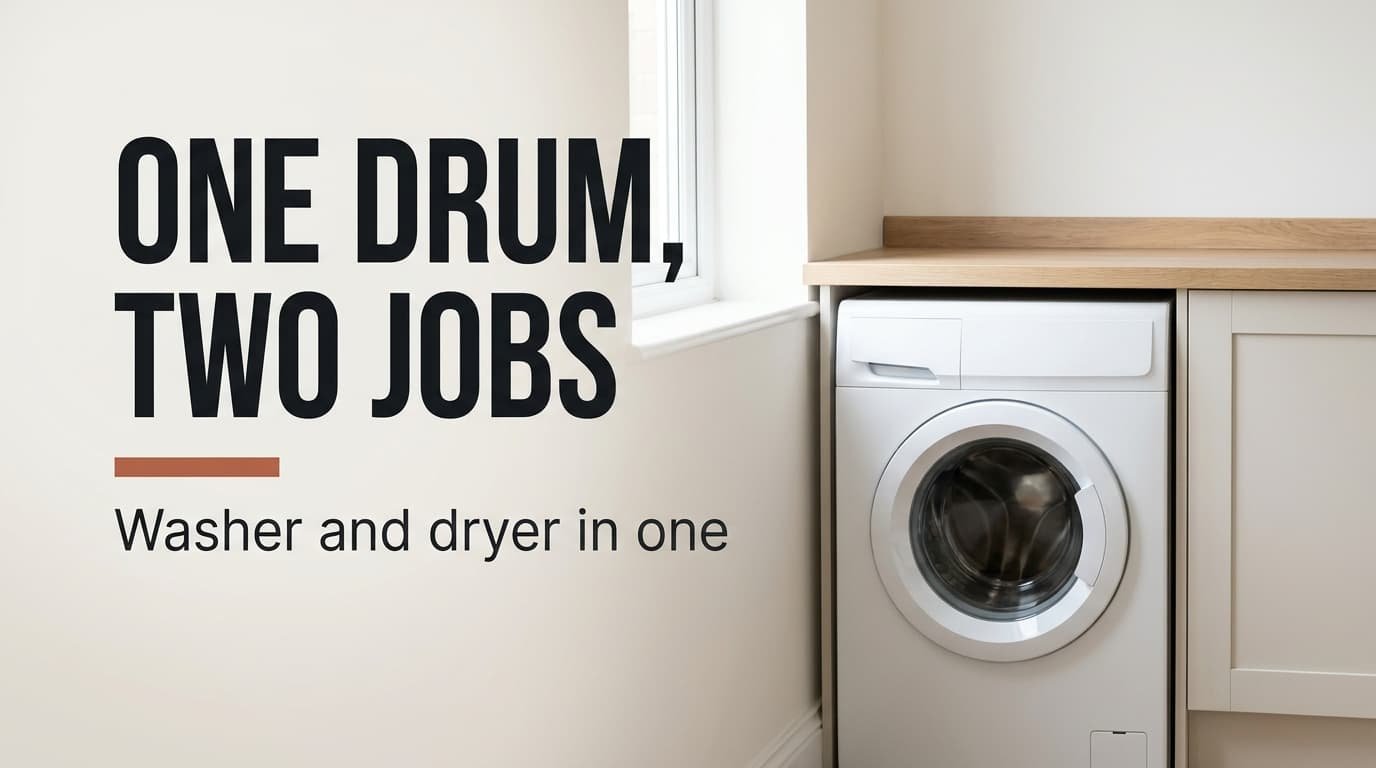
Two machines side by side take 1.2 m of wall, while one drum that does both jobs takes 0.6 m. That gap explains why a combined washer and dryer has reached so many small Dutch kitchens. The floor gain is 0.36 m² in an alcove of 2.0 m. Its price is a drying load about half the size of the washing load. The example is a flat of 38 m², and the question is which households come out ahead. Every number below is invented for one flat, so check your own alcove before you act.
Where the Combined Washer and Dryer Came From
The single-drum machine began where a vent was impossible. A tumble dryer must send warm, wet air somewhere. A flat on an inner courtyard may have no outside wall for it, and a duct through a shared wall is rarely welcome in a building with many owners. The single drum dries inside the vessel that did the washing. Warm air passes through the clothes, cold water condenses the steam, and the result runs away through the drain the washer already uses.
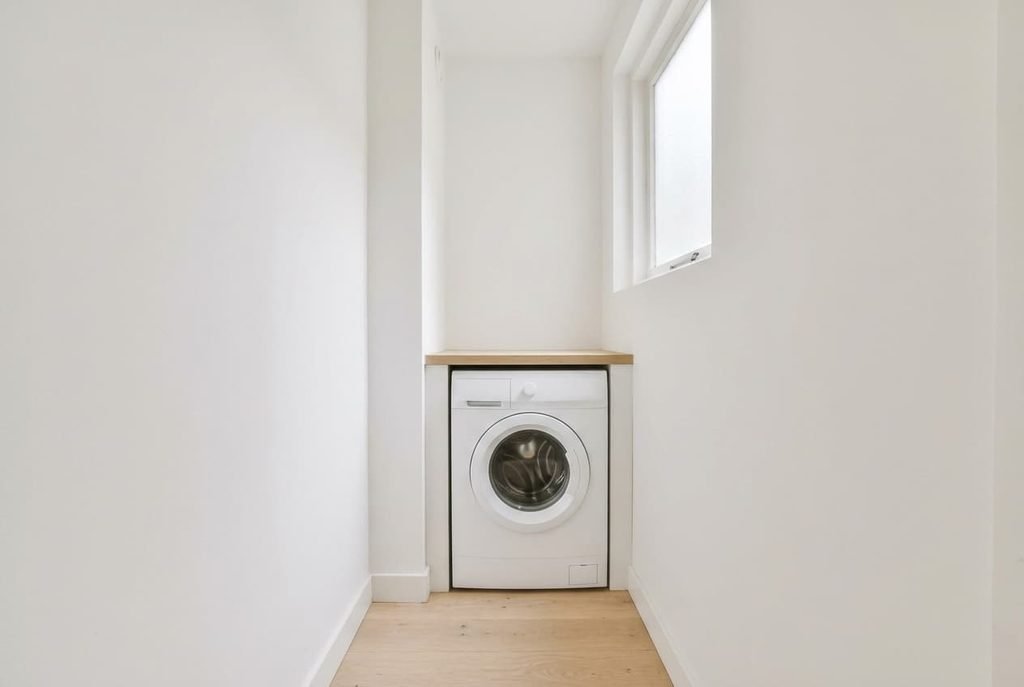
That design brought a second benefit. One machine needs a single inlet and a single drain, with one socket behind it. Many Dutch kitchens were built with exactly one slot for a 60 cm machine, at a worktop height of 85 cm. A second machine can only join it if the alcove is wider, or if the household accepts a stack that climbs to 1.8 m.
Households with a courtyard flat or a rented kitchen noticed that the slot could do both jobs. The next section puts numbers on that trade.
What One Machine Changes in Centimetres and Hours
Start with the pair. Two machines of 0.6 × 0.6 m occupy a strip of 1.2 × 0.6 m, which is 0.72 m² of floor. They need two sockets and two sets of hoses, and each takes a load of about 8 kg. Now swap them for one combined washer and dryer of the same footprint. The strip halves to 0.36 m². Sockets fall from two to one, and the hoses fall from two sets to one.
The swap halves the drying load as surely as it halves the floor, because the single drum washes about 8 kg and dries only about 4 kg. A wash of 6 kg therefore needs two drying passes of 3 kg each. On the pair, that load takes 1 hour 50 minutes to wash and 2 hours to dry, and the dryer works while the next wash runs. On the single drum the wash takes the same 1 hour 50 minutes, the two passes add 4 hours, and nothing else can start for 5 hours 50 minutes. A separate dryer can use a larger drum, so its 8 kg load dries in about the time a 4 kg pass takes in the single drum. The doors are the same size either way, so the walkway before the alcove keeps its width.
So the floor improves by 0.36 m² and the busy time for each load roughly triples.
You can check both on your own machine. A kitchen timer and a bathroom scale will show you what a load weighs and how long each cycle runs.
Which Flats Gain Most From a Dryer Inside the Washer
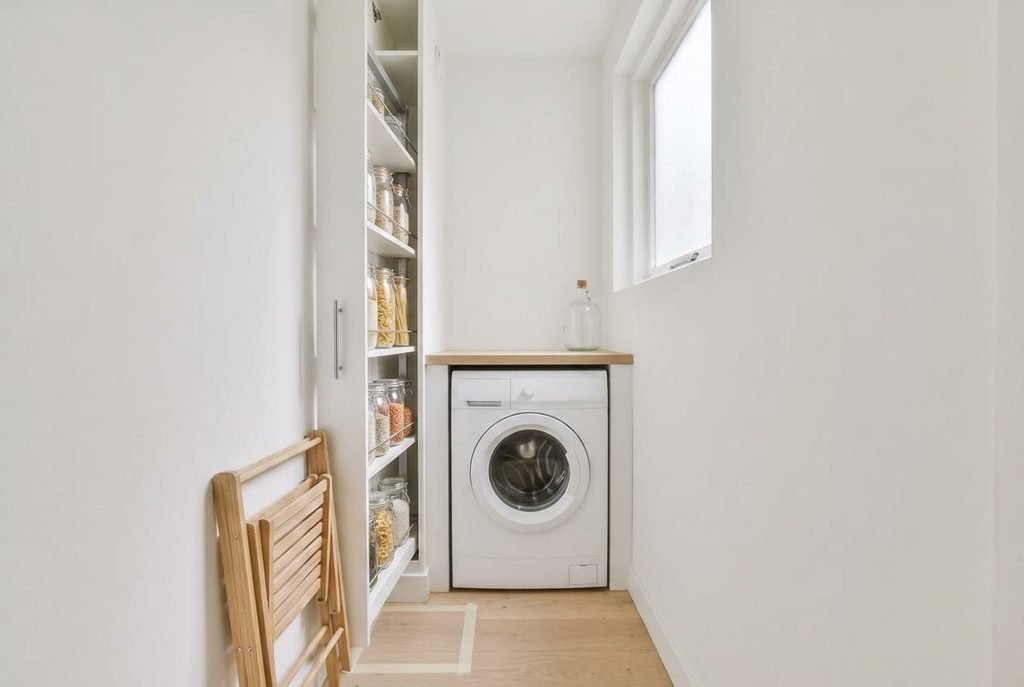
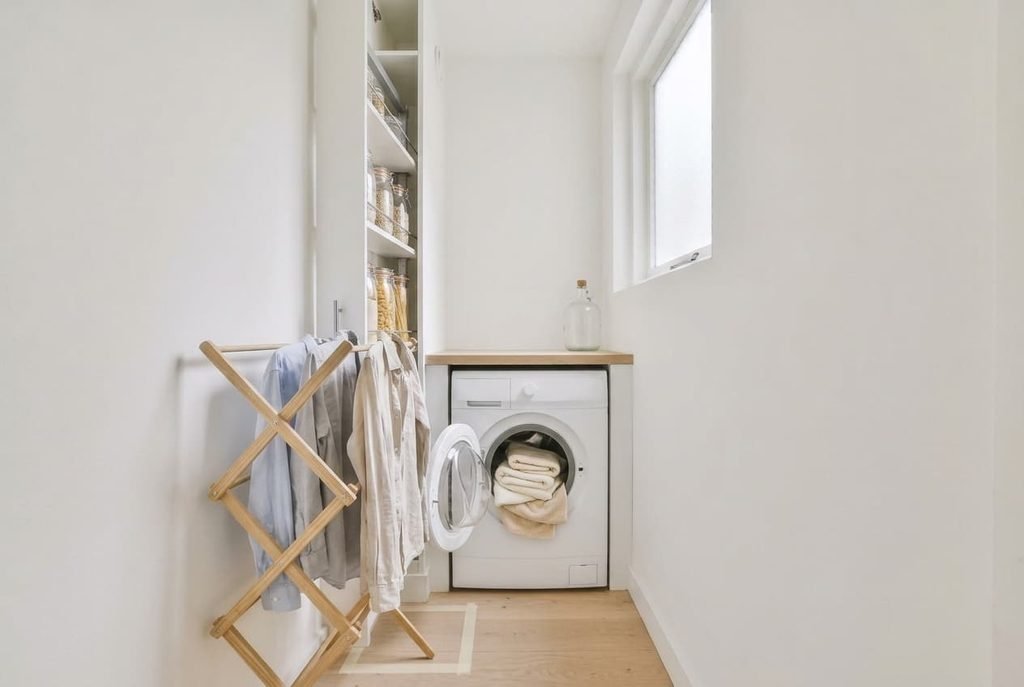
The gain is largest where floor is scarce and laundry is light. Take a flat of 38 m² with a kitchen alcove 2.0 m across. The pair uses 1.2 m of it and leaves 0.8 m. The single drum uses 0.6 m and leaves 1.4 m, enough for a pull-out pantry unit and a gap beside the fridge.
A household of two adults washing three loads of 6 kg a week fits the pattern. They dry two loads in the drum and hang the third on a rack, so the drum runs about 13.5 hours a week. That’s long, yet most of it falls overnight, when the kitchen is quiet and nobody needs the socket.
Flats with no balcony or outdoor line gain more again, since nothing can hang outside in good weather. A single person who washes one load every few days gains most of all, because the drum is rarely busy.
The households that lose are the larger ones. A family washing eight loads a week and drying each one would need 8 × 5 hours 50 minutes, which is 46 hours 40 minutes of drum time, almost two full days.
Light users gain space for little cost, and heavy users pay for it every week.
Is a Washer and Dryer in One Drum Worth It?
Whether it pays turns on which shortage hurts more. If floor is the shortage, the swap is a fair trade. A strip of 0.36 m² can hold a cupboard for coats and shoes, and the alcove stops feeling like a corridor.
If time is the shortage, the swap costs more than it gives. Our two adults spend about 9.5 hours of machine time a week on the pair, because the two jobs overlap. The single drum asks for 13.5. Count drum hours, not loads, before you decide, since a drum busy for 5 hours 50 minutes can’t wash a second load until the first has dried.
For most small flats the answer is a cautious yes. Wash small loads, and dry only what you must. The rack takes the rest.
The Extreme Version Nobody Needs
The extreme version removes every alternative: no rack and no line, with every load put through the drying cycle. A household that dries all its washing in the drum turns a space saving into a full-time job for the machine. Our two adults would run it for 17.5 hours a week, since each 6 kg load needs 1 hour 50 minutes of washing and 4 hours of drying.
The clock isn’t the only cost. The drum stays warm for most of the week, and each load spends 4 hours in hot air. Wool shrinks and elastic loosens. A busy evening goes wrong when the drum is still running at the hour you’d start a second wash.
Nobody needs that in a flat of 38 m². A rack of 1 m² set in a corner for two days a week dries the lightest items at no cost to the drum. A combined washer and dryer works best as a helper and never as the only way to dry.
A Tape Test Before You Commit
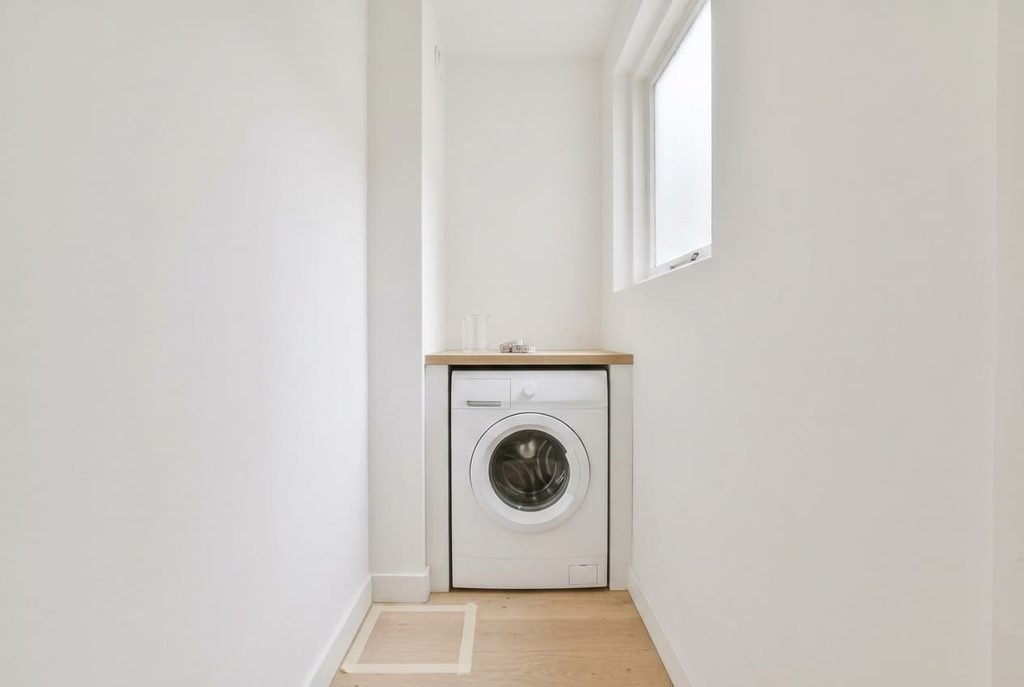
Mark a square of 0.6 × 0.6 m on the alcove floor with masking tape. Leave a clear strip of the same depth in front so the door can swing. Then weigh one wet load on the bathroom scale and note the figure. If your loads stay under about 4 kg and you dry at most one a week, the single drum will serve you well. A heavier week points back to a pair. Run the test for seven days and log each load in a notebook. Run the test over seven days, and write down each load’s weight and whether you hung it or dried it.
The real test of a combined washer and dryer is whether the freed strip earns its keep. If the 0.36 m² you win holds something you use daily, the swap has paid. If it only holds an empty gap, keep the pair. Spend the effort on a better rack. Check again after a month, because a household’s laundry changes with the seasons and the people in it.
Questions Readers Keep Asking
Should I swap a working pair for one machine?
Only when floor is the problem. A pair that works costs you nothing to keep, while a swap costs money and halves the drying load. If you have a spare strip that you’d use for storage, the change pays back in space. Otherwise wait until one machine fails.
Who is a combined machine best for?
Single people and couples who wash small loads and have a rack for the rest. It suits a flat without a vent and a kitchen with one 60 cm slot. A family with daily full loads won’t gain, because drying in two passes ties the drum up for much of the day.
How long does a combined machine last?
No fixed figure applies, because lifespan follows use. A drum that only washes wears less than one that dries as well, since the warm cycle works the seals and bearings harder. Using the dry cycle for part of the week keeps the wear modest.